




NEET the Beatles: India’s Young Need Love, Not Insanely Competitive Examinations

- On this Global Beatles Day, India’s leaders, or at least some parents and their children, can come together to talk about not the usual topics like exams and national development but just simple things like the songs of The Beatles.
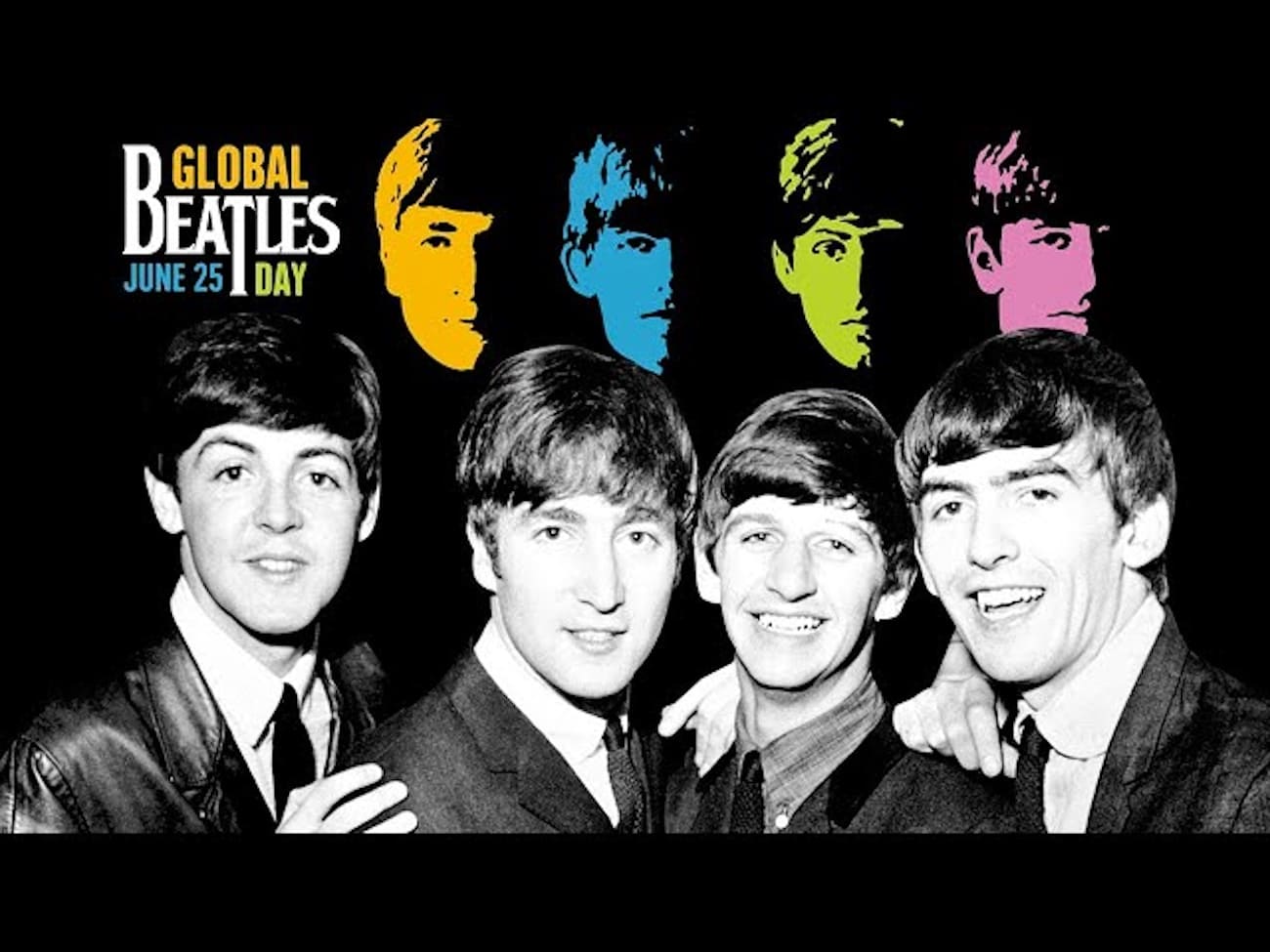

June 25 is Global Beatles Day. On that day in 1967, the Beatles stormed the world’s imagination with both medium and message through a live satellite broadcast of ‘All You Need is Love.’ Long before the internet or Live Aid or the Gulf War, the Beatles’ performance became synonymous for many countries with the experience of becoming, even if for a few moments, a global audience.
But unlike the interests that drive most global media events, the Beatles are remembered not for commerce or empty celebrity but for what their music stood for. Joy. Love. Freedom. These three words are used by Ian McDonald in his monumental study “Revolution in the Head.” It is to honor this message, to send a “love letter” back to the Beatles, that Global Beatles Day founder Faith Cohen started the annual event in 2009. This year, it promises to be even bigger as Apple Corps. is officially marking the event as well.
The 1960s are often parodied in the West as a time of ungodly excess (by conservatives) or as inadequately politically revolutionary (by progressives). Yet, the Beatles seem to embody a dream, a hope, and an ideal that goes beyond Left and Right, and East and West, and even the generation gaps of “Boomers” and “Gen Z’s.”
The pop culture concerns of one generation may pass somewhat from one decade to the next, coexisting uneasily with newer tastes and fads. But the elegance and affection with which the Beatles are remembered (in the case of older fans), or discovered (in the case of younger fans) is perhaps unsurpassed. I have seen this affection over two and a half decades of teaching undergraduate media students.
My students were at first younger members of my own cohort (“Gen X”), and then came the Millennials, and now the storied Gen Z. They worried about Wall Street and globalization and economic inequality, and then climate change and Gaza and LGBT rights. They lived through transformations in technology, especially communication technology, earning the label of the “anxious generation” after having been hit so hard by social media algorithms and influences.
If the Beatles and their children, and their fans and their children, generations and generations still to come, find meaning and love here, why is it that Indians are rushing still into the soul-crushing tyranny people in societies more “advanced” than us are seeking to escape from?
Older generations like mine can sympathize, analyze, criticize, preach, and try to represent the young. But their lives and ours, their voices and ours, can only find harmony in rare and small ways. We are fading. They are rising. We love them, and are loved by them. And when we see the world they confront, the suffering and oftentimes the utter needlessness of their suffering, we weep; sometimes quietly, and sometimes in full view of the world.
The biggest thing that India’s Gen Z and its parents have just lived through of course is not some Boomer dad’s nostalgia but the gritty reality of the NEET (National Eligibility cum Entrance Test) re-examination held recently after the scandalous exam paper leak earlier this year. If children in war zones are cruelly deprived of their lives because of bombs and shrapnel, it is unconscionable that children are snuffed out because of the bizarre circus of performative demands placed annually by the gatekeeping rituals of a supposedly egalitarian, meritocratic, competitive hi-tech hi-growth economy. Watching reports of students taking their own lives before the exam, or viral videos of fathers and daughters rolling on the hot earth weeping for being denied entry after insane traffic delays, or casual blame-games on social media about how everyone should learn “discipline,” one can only wonder when the insanity, and the normalized cruelty of our ways, will end.
The irony of course will not be lost on anyone who has lived through life’s struggles and heartbreaks with the Beatles that it was India and Hinduism that gave the Beatles (especially George Harrison and John Lennon at first) something luminous and wonderful to catalyze their creative and spiritual yearnings. Reading “Across the Universe,” Ajoy Bose’s book about their legendary trip to Rishikesh, one can see the magic and innocence of the moments that would give to the world songs like “Dear Prudence” and “Julia.”
If the Beatles and their children, and their fans and their children, generations and generations still to come, find meaning and love here, why is it that Indians are rushing still into the soul-crushing tyranny people in societies more “advanced” than us are seeking to escape from? Why can we not see beyond the engineering-medicine rat-race and allow children and their parents to learn and nurture talent and purpose together as best fits each family and local tradition? Why can’t we redirect our policies to cultivating the next Pandit Ravi Shankar or George Harrison instead of the next Indian-origin CEO for some Silicon Valley company or “disciplined” IT- worker ready to work weekends too?
Almost every serious study of the Beatles has noted the important role that public arts colleges played in the 1950s and 1960s music revolution by giving a home to creatively-inclined youth instead of forcing them into other, more “productive” paths. My late friend and colleague, Andrew Goodwin, used to say that few things helped the British working class escape the dehumanizing demands of industrial capitalism in his generation than these arts programs.
Maybe, on this Global Beatles Day, India’s leaders, or at least some parents and their children, can come together to talk about not the usual topics like exams and national development but just simple things like the songs of The Beatles. As the movie “Yesterday” shows us so nicely, there is something to be said for contentment in the small things. Happy ever after. Jai Guru Deva. Om.
Vamsee Juluri is Professor of Media Studies, University of San Francisco. He is the author of “Becoming a Global Audience: Longing and Belonging in Indian Music Television” (Peter Lang, 2003), “The Mythologist: A Novel” (Penguin India, 2010), and “Bollywood Nation: India through its Cinema (Penguin India,” 2013), “Rearming Hinduism: Nature, Hinduphobia and the Return of Indian Intelligence “ (BluOne Ink, 2024) and “The Guru Within” (in progress).