




A Robinhood Who Wears White: ‘Matka King’ Paints an Engrossing Portrait of the Indian Gambling Kingpin

- The eight-episode Amazon Prime series stars Vijay Varma as Brij Bhatti, who delivers a masterful performance.
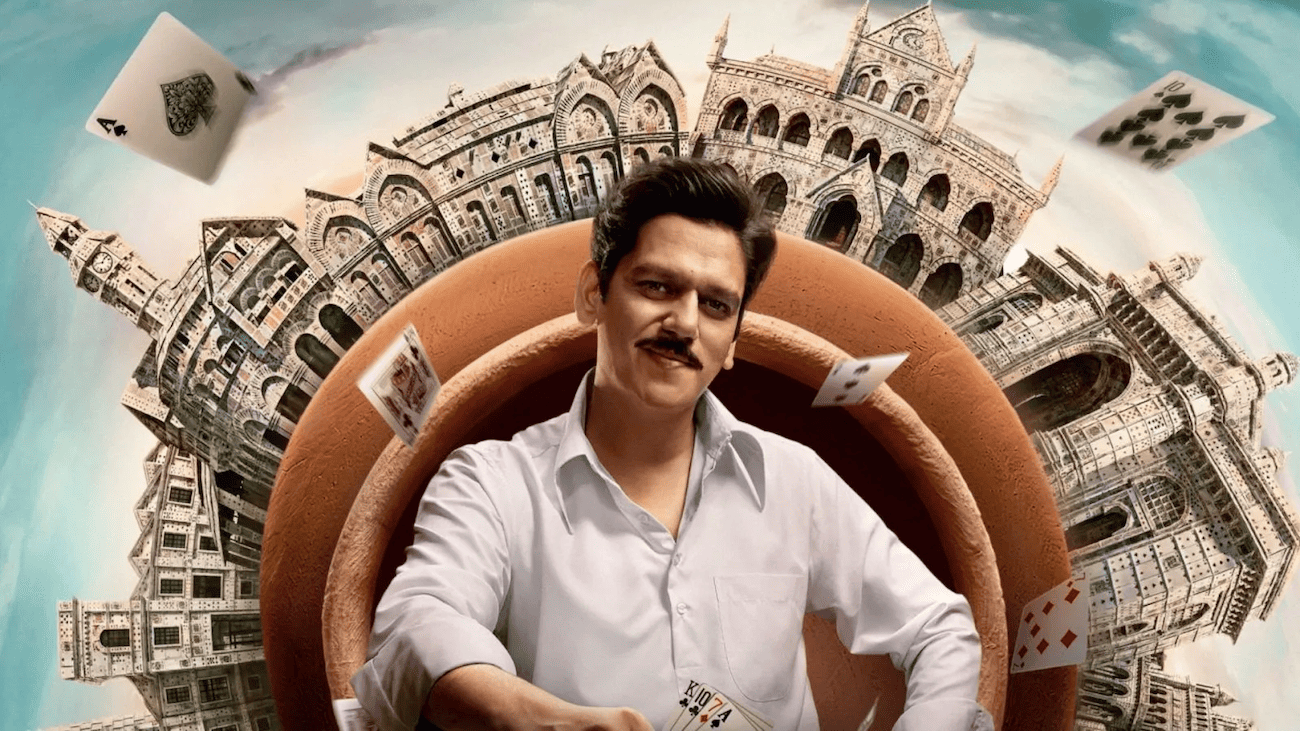

“Matka King” is a 2026 Hindi-language period crime drama written by Abhay Koranne and directed by Nagraj Manjule. Produced by Siddharth Roy Kapur, set in 1960s and 1970s Bombay, the eight-episode series stars Vijay Varma as Brij Bhatti, who delivers a masterful performance. He carries himself with a quiet, effortless confidence reminiscent of Akshay Kumar in “Rustom” and the grounded gravitas of Manoj Bajpayee in “The Family Man.” Varma clearly becomes the influential Mumbai outsider (inspired by the life of Ratan Khatri, an Indian gambling kingpin and film producer) skillfully navigating ambition, and intense personal pressure.
Brij’s journey begins as a Partition refugee from Karachi, Pakistan working as a cotton trader. He is intimately aware of the struggles of the city’s mill workers, who frequent the local “matka,” a betting game originating in 1962. Traditionally, players bet on random numbers drawn from an earthen pot (matka), with odds reaching up to a very high stake.
Early in the series, Brij realizes how easily the game can be rigged after witnessing a poor woman named Rukmani being duped out of 50 rupees in broad daylight. Driven by this injustice, Brij opens his own lottery-style gambling ring. By replacing the dishonest slip system with a transparent method of pulling three cards from a deck, he revolutionizes the trade. His fair approach quickly makes Brij Bhatti a household name, as the mill workers crown him their undisputed “Matka King.”
Even though growing up in Mumbai I thought Matka was a water pot, and not a street game, mawalis, and punters played to make extra cash. Watching this well-made thriller, I can’t wait for the second season.
I like Bhatti’s “Clear conscience” aesthetic. Dressed like an “atmaan” in an all-white attire, he stands out in the glitzy world of Mumbai “the City of Dreams” with mill owners, real estate developers, industrialists, diplomats, heirs of small kingdoms, budding filmmakers, and profiteers. They find Bhatti intriguing, and he feels awkward in the race course, art deco cinema halls, gymkhana club, and ritzy bars with a swinging night life, but his choice reflects his belief that he is not a “villain” but a conjurer of humble dreams.
Other speculators try to pin him down because he has made money from a “vice”, but the common public views Brijas a fair businessman. He wears white as a badge of a conscience unriddled by guilt. The narrative paints a vivid picture of a city in transition, moving between the glitz of the elite and the desperate lives of the working class. But as his coffers grow, Brij’s ambition knows no bounds. At one point, he even moves an international cricket match to host his brother’s wedding at Wankhede Stadium!
Bhatti realizes that hotels have their own private exchanges, and appoints his own “operator” to announce the numbers and enjoy the illicit thrill of “jamming phone lines” during the 9pm-12midnight window. This highlights the era’s unconventional business tactics.
Bhatti keeps the stakes soaring by “opening his cards” mid-air in a flight delayed by infamous bad weather.
Gulshan Grover as the arch-rival Laalji brings a palpable menace to the plot. In a sharp twist, he engages his daughter with Brij’s baby brother, Lacchu, who lacks Brij’s core ethics and adds a layer of familial tension.
The series shows the personal cost of Brij’s lifestyle emerging in his somewhat neglected Family. Sai Tamhankar portrays Brij’s wife, Barkha, with stoic resilience. Despite her accounting degree, she struggles for work because of Brij’s notoriety and grows distant. At one time she admonishes him by saying that “tum poore bure bhi nahin ho”. Another time, Brij seems taken aback by the fact that Barkha is having dinner with her male friend at home, but says: “whatever you think is right, you do.”

To escape unwanted attention and harassment on the streets, Brij is forced to send his young son to a boarding school in Panchgani. These incidents exacerbate the deep isolation that comes with his crown. Kritika Kamra (as the high society widowed Parsee girlfriend Gul) complicates Brij’s chaotic life, while unwanted pressure from smugglers (like Shafiq) and corrupt money-hungry ministers continually tests his resolve.
Ultimately Brij’s empire collapses when cotton mill owner Pestonji decides to close the Phenix mill, now replaced by the fancy Phenix Mill Mall! Brij stands with the mill workers, but the rest of the denizens want to ruin him. In the final scene Brij is alone. Stripped off his title, relations, and his bundles of money are going up in a blaze. Yet he has the determination to change the losing hand into a winning one.
Even though growing up in Mumbai I thought Matka was a water pot, and not a street game, mawalis, and punters played to make extra cash. Watching this well-made thriller, I can’t wait for the second season.
“Matka King” is streaming on Amazon Prime video.
With one foot in Huntsville, Alabama, the other in her birth home, India, and a heart steeped in humanity, Monita Soni writes as a contemplative practice. She has published hundreds of poems, movie reviews, book critiques, and essays, and contributed to combined literary works. Her two books are “My Light Reflections” and “Flow Through My Heart.” You can hear her commentaries on Sundial Writers Corner, WLRH 89.3 FM.