




The Dangers of Normalizing Hate: Why Priya Patel’s Views are Intellectually Shallow and Socially Harmful

- Calling an entire culture or religion “inferior” is not critique. It assigns a negative value to groups of people, regardless of their internal diversity or lived realities.
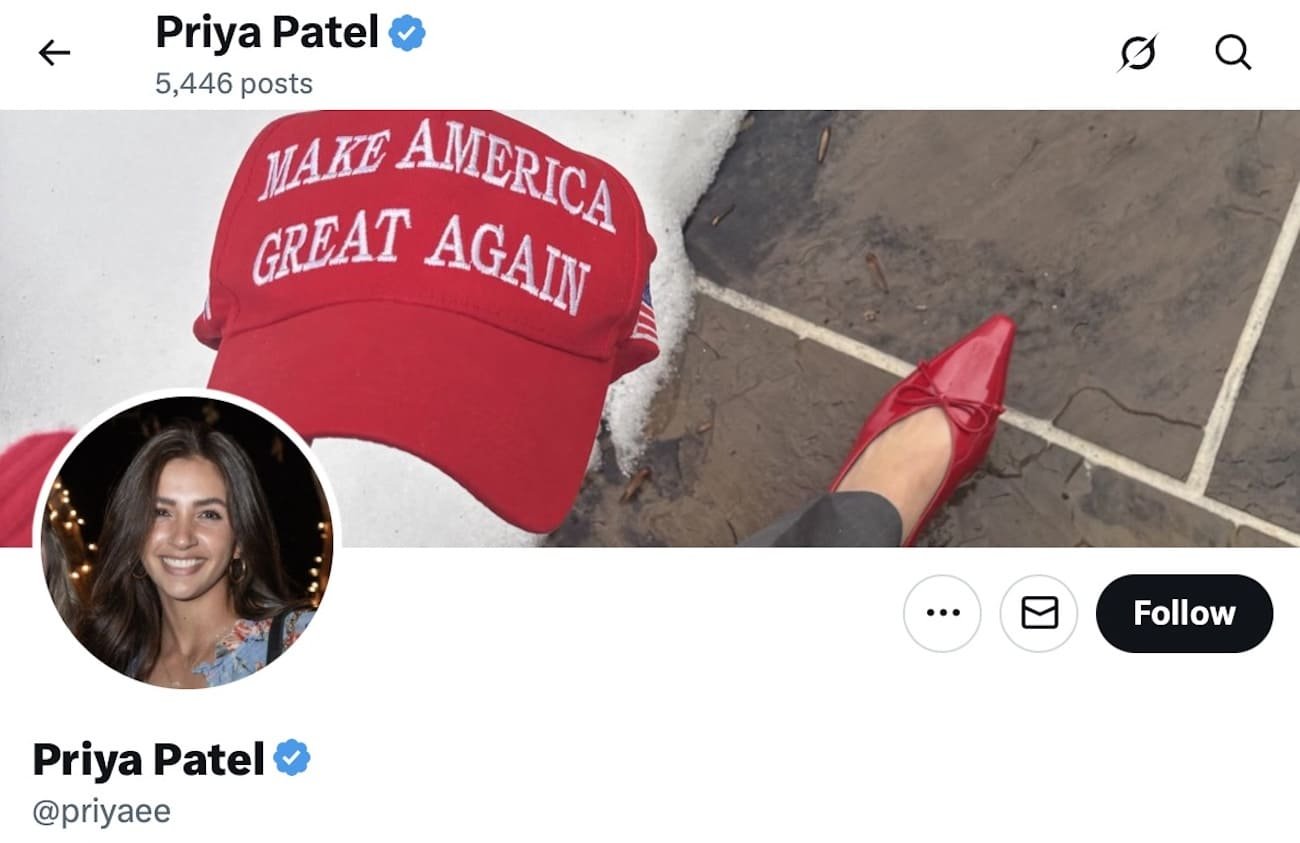

Priya Patel, an entrepreneur and conservative influencer, who has built a following through outspoken views on culture and identity, is no stranger to disseminating hate. Her recent remarks labeling India as “third world” and describing Muslim culture as “inferior” may be framed as blunt opinion, but her narrow views rest on a set of assumptions that are intellectually shallow and socially harmful.
The harm should be obvious in what she says, which is why I’m more concerned about the danger it validates. The normalization of this type of hate collapses complex societies into crude hierarchies ranking entire civilizations, histories, and belief systems as if they can be neatly organized into categories of “better” and “worse.”
Sadly, that framework is not new. It echoes colonial methods of viewing the world, where countries and cultures were categorized to justify dominance rather than to understand and accept difference. Repackaging those ideas in modern language doesn’t make them more honest, it makes them more insidious.
There is a very important distinction that must be laid out between critique and essentialism. Any society, religion, or nation can and should be open to critique whether on issues of governance, inequality, or human rights.
However, calling an entire culture or religion “inferior” is not critique. It assigns a negative value to groups of people, regardless of their internal diversity or lived realities. Often the end goal is to shut down conversation and to silence entire communities.
Indians, Hindus and Muslims already navigate layered stereotypes and biases. Normalizing language that devalues entire identities reinforces those patterns and makes them easier to justify.
Most importantly, the consequences of that language don’t remain abstract. In diasporic communities, rhetoric like this filters into everyday interactions. It shapes how people are perceived, treated, and included or excluded.
Indians, Hindus and Muslims already navigate layered stereotypes and biases. Normalizing language that devalues entire identities reinforces those patterns and makes them easier to justify.
It also fractures communities that share more common ground than difference. Immigrant experiences across religion, region, and language are often defined by overlapping struggles such as building stability, negotiating identity, and seeking belonging in places that don’t always make space for complexity. Framing one group as inherently lesser erodes the possibility of solidarity in favor of division.
Perhaps most dangerous is what this does to the standard of public discourse and the health of a democratic system. When sweeping, dehumanizing claims are treated as acceptable commentary, the bar for what counts as “reasonable” shifts downward.

The result is more polarization and provocation replacing substantiative conversation. This is why we must draw a line around dehumanization. We can have rigorous conversations and disagreements about culture, politics, and social challenges.
However, those conversations must be grounded in specificity, humility, and a recognition of shared humanity.
Anything less is a step backward.
Bhavini Patel is the Executive Director of Sustainable Pittsburgh, an organization committed to advancing a more equitable, resilient, healthy, and prosperous future for southwestern Pennsylvania. In 2023, Bhavini was a congressional candidate in Pennsylvania’s 12th District.