




Beyond The Game of Thrones: A Journey Through Croatia — a Seamless Mix of Old and New, Warm and Strikingly Alive

- From warm coastal towns layered with history to forests where waterfalls build their own path, a country that has it all.

I booked my trip to Croatia almost grudgingly, keeping one natural attraction in mind — we’ll talk about that later. I figured it would be more of the same, like every other European country — good food, history and culture, great architecture, museums, and a rip-off from a budget perspective. Croatia is, in fact, all of that. But like most of my other European trips, I enjoyed it all thoroughly — even more so, its competitive advantage: its natural wonder.
The grudging trip started in Zagreb, the capital, after a trans-Atlantic flight with a connection in Paris. I don’t enjoy flying, but my girlfriends — my travel companions for this trip — and I were glued to the window on the Paris to Zagreb leg. The Alps from above were worth the cramped flight.
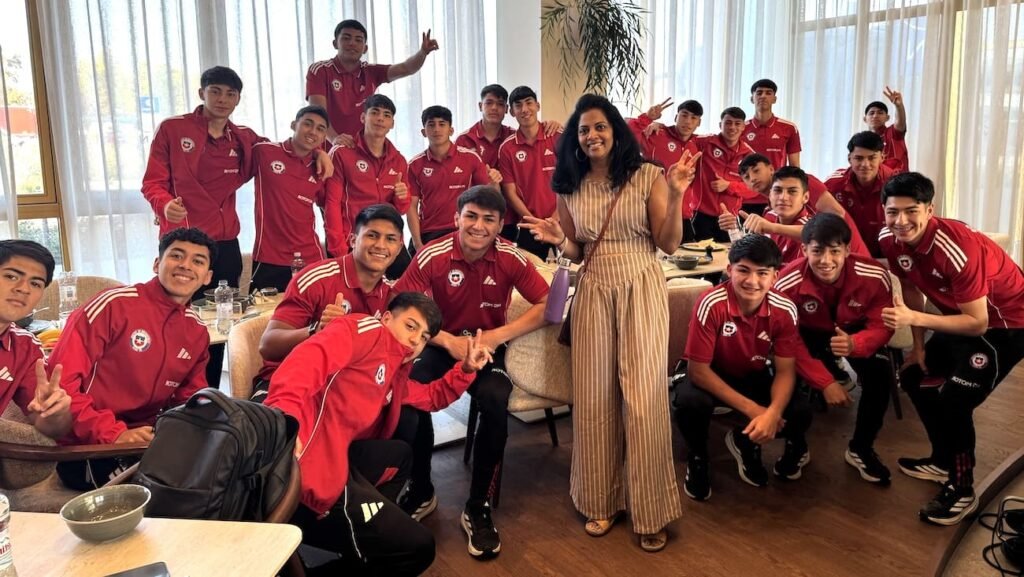
We killed time before check-in with our first meal in Croatia and watched the hotel lobby buzz with guests — soccer players from several countries in town for a tournament. Exoticca had left a nice surprise in the room: a bottle of wine with fruit and nuts. The next surprise was less pleasant — no guide. Note to self: read the fine print. That night, jet-lagged, we just Ubered to the city center and hung out there.
Croatia sits in Southeastern Europe, almost at the meeting point of Central Europe, the Balkans, and the Mediterranean. It’s shaped like an arrow, more like a crescent, with Bosnia and Herzegovina tucked into the curve. I kept wondering if Croatians have to cross two borders just to visit countrymen in the other arm. It borders Slovenia to the northwest, Hungary to the northeast, and most other former Yugoslav states to the south and east. On this trip, we spent most of our time in Dalmatia. that narrow coastal arm, with the Adriatic Sea separating it from Italy.
The drive from Zagreb to Split took over five hours, with multiple restroom breaks. It’s interesting to the point of annoying how many restroom breaks people, especially Americans, demand when traveling. I know the problem is me, I don’t drink enough water to feel the need to go, which isn’t healthy, but I avoid public restrooms whenever possible. Plus, with all the money I saved on pay-to-use WCs in Croatia, I’m buying myself another trip.
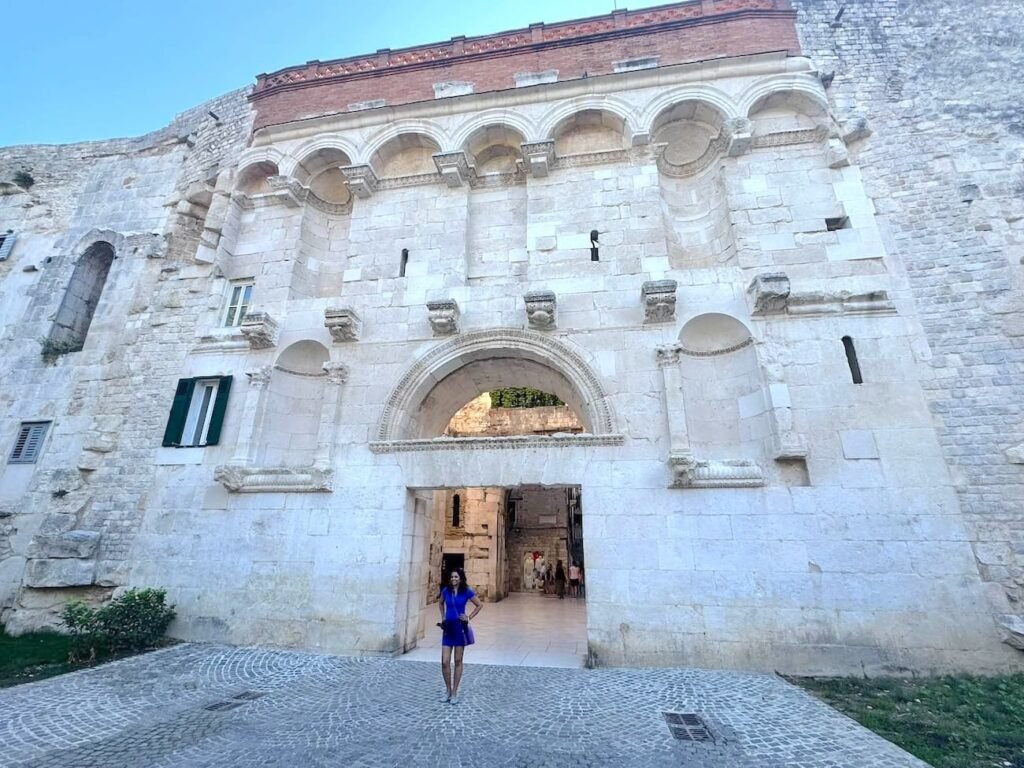
Split has almost all of its attractions in and around Diocletian’s Palace, an ancient Roman palace complex, not just a fortress, with layers of history. Unlike Roman ruins in Rome, which are museums today, this one is still in use. There are restaurants, shops, temples, and even apartments where people actually live, all within the walls.
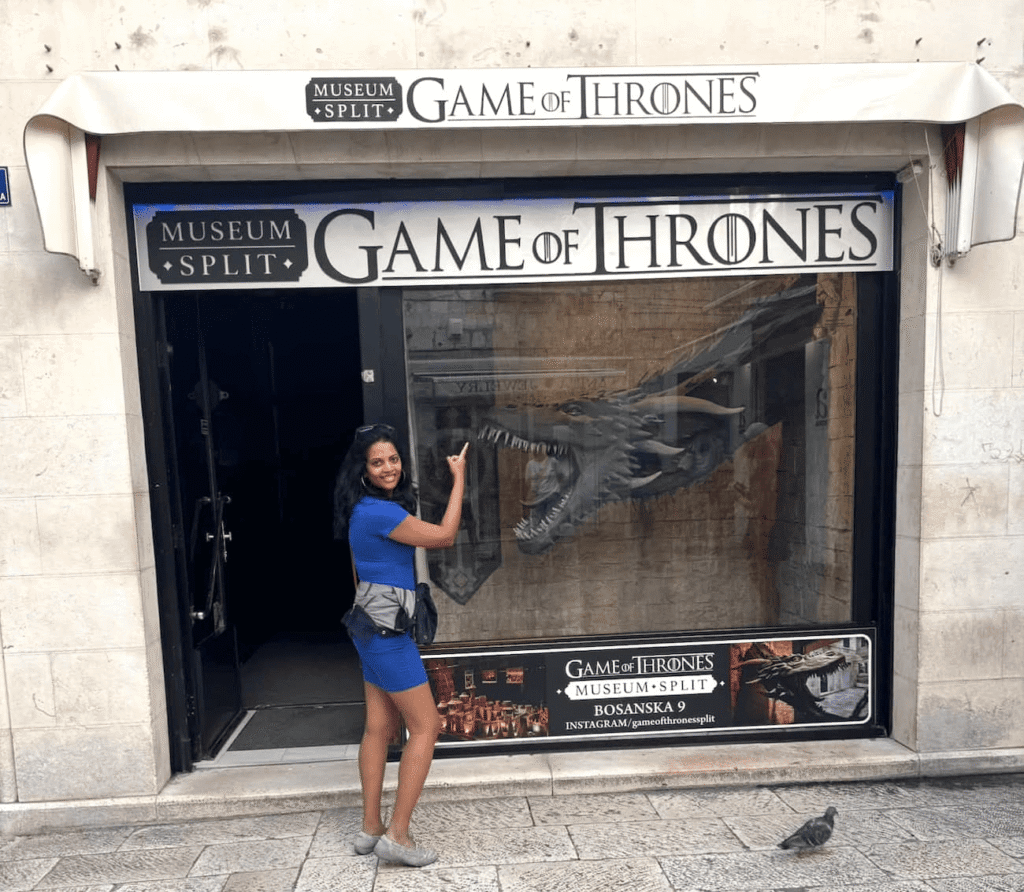
The guide we hired that day showed us around, but since we were based in Split for three nights, we decided to explore it more thoroughly later. But wait, I have to get this off my chest for my Game of Thrones fans: the palace was a filming location and I took pictures for you all. That night we ate at a Michelin star restaurant, my net new experience in this trip.
I was in Indonesia earlier this year and I knew it had a lot of islands, but I didn’t know or expect Croatia to have 1,200 islands, though only about 50 are inhabited. If I live long enough to finish all the countries on my wish list, and if I retire with a ton of money to spare, I may come back and visit one or two or ten of those islands. For now, they all have to wait.
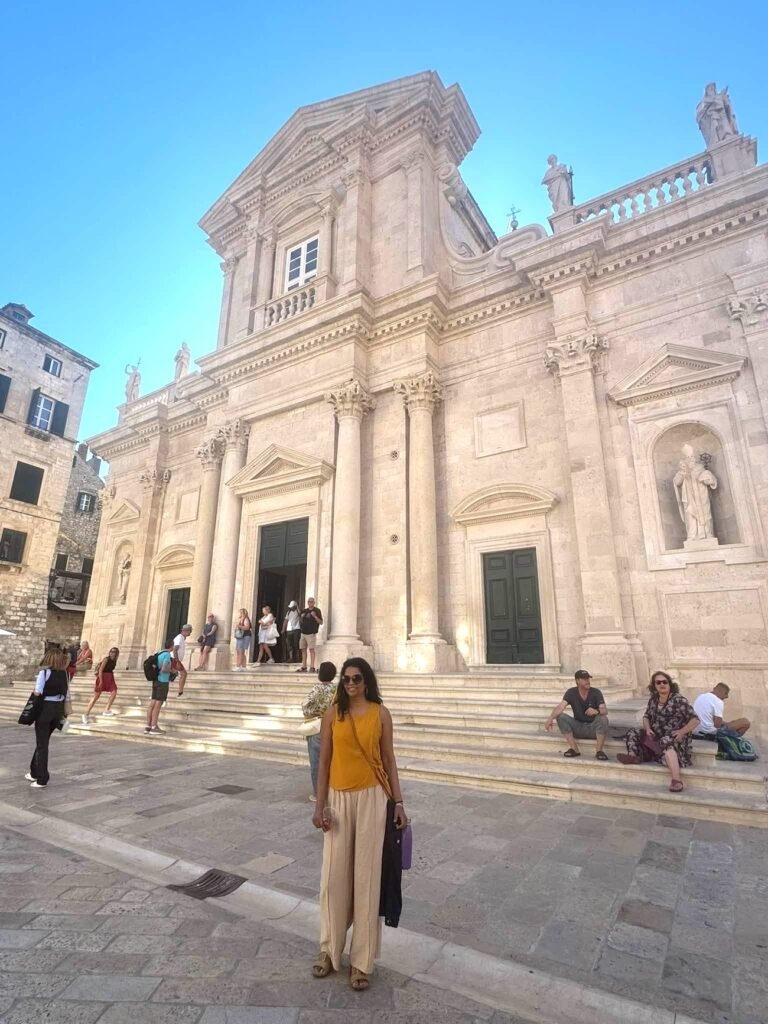
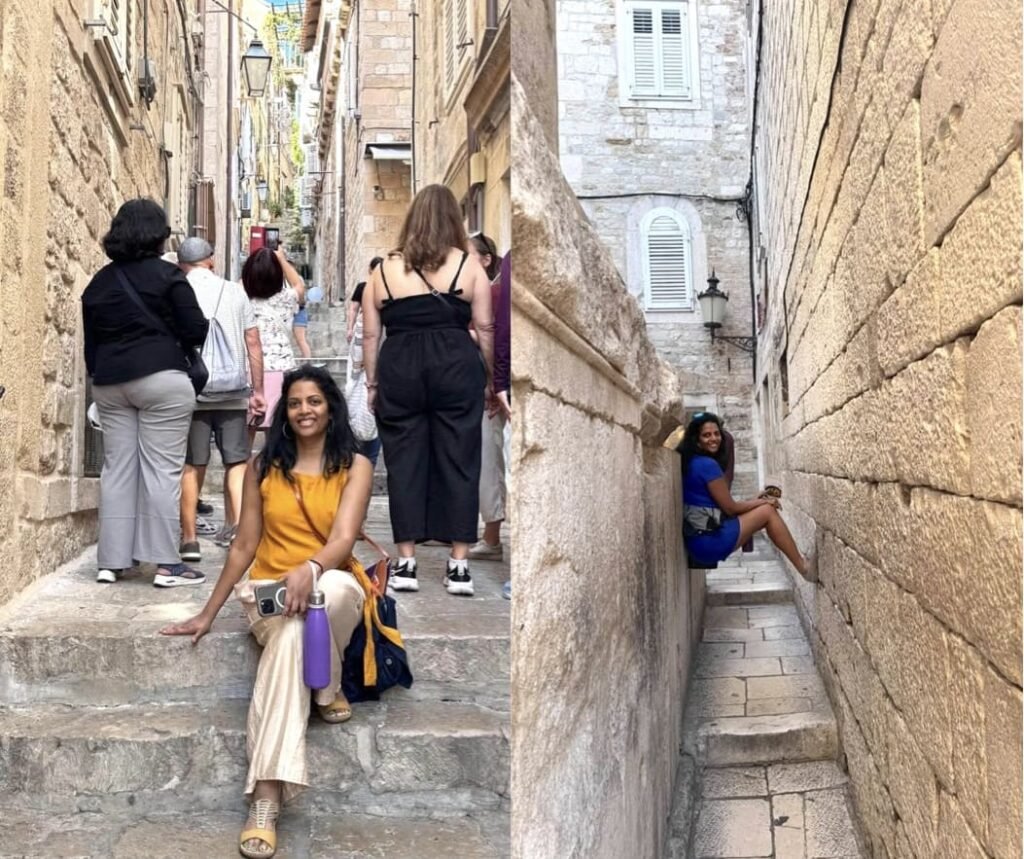
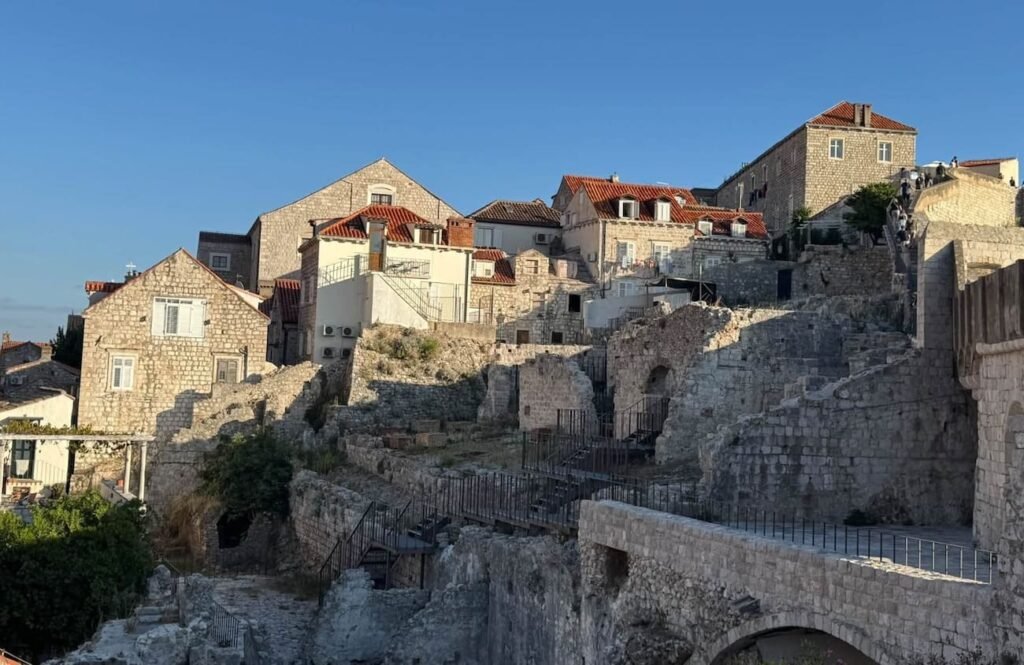
I know I complain that all European cities are the same, but I also always need more time to explore each one. Dubrovnik is one of those cities where I realized I need four days, not the four hours we got, especially when you spend twice that time driving back and forth from Split. It is a historic, pedestrian-only walled city — an architectural marvel with its white limestone streets and terracotta rooftops. Its walls are walkable, so we walked the walls, which offered spectacular views of the Adriatic Sea.
Dubrovnik is also where we realized we are not all welcome here. There is a real overtourism issue, especially in Dubrovnik, with cruise ships, even though they are now capped at two a day dumping thousands of visitors each day. Their short visits aren’t very profitable for the city but cause bottlenecks and traffic everywhere. The Game of Thrones filming locations only made it worse. Well, I deserve my spot, and I intend to reserve it for three more days in the future.
I expected Croatia to feel like the rest of Central Europe, but the outer/coastal arm felt completely Mediterranean, with bright sun and dry heat. The vegetation here — the pines and the colorful bougainvilleas, citruses, olives, and pomegranates. tell the same beautiful Mediterranean story.
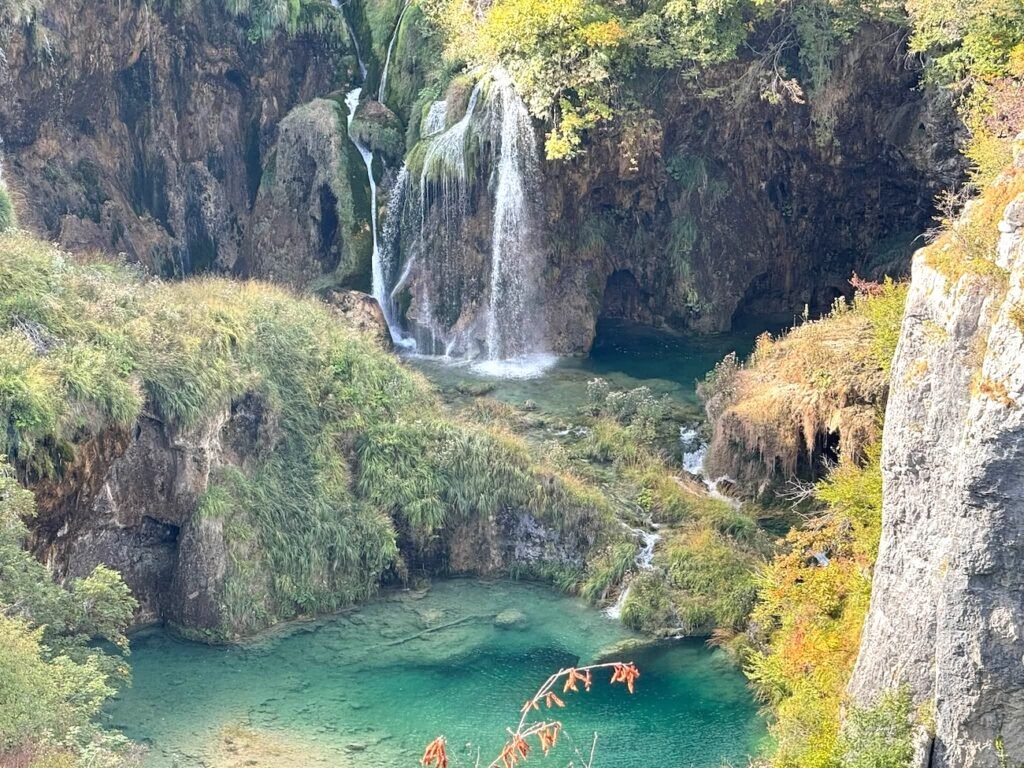
The hour-long drive the next morning to Krka National Park was easier on us. Krka, I learned, is not an acronym — it is pronounced KER-kah (come on, some of us are used to having more vowels). Forget the name, this park was just beautiful and, with its waterfalls and lakes, felt like a teaser for the much bigger attraction coming later. Some in our group were disappointed that swimming had ended just two days before.
As we left early that evening, we got to spend some time walking on the waterfront promenade of the Riva next to the fortress in Split, and pampered ourselves with good food and some shopping. On that note, according to me (that’s a source), Croatia is one of the places with the highest gelaterias per capita, and their pistachio flavor was to die for.
Living in Minnesota, the land of 10,000 lakes, you would think I would have had enough of the lakes? No, I had to fly halfway across the world searching for more lakes and waterfalls. Croatia delivered on both, stacked and in fifty shades of blue!
Silliness got the better of us after a few drinks and we even went to the SPLIT city sign and made funny videos — doing the splits, splitting our sides, banana split, split personalities, and even splitting hairs. Well, you get the idea. One of the most enjoyable nights of the trip.
Let’s touch a little bit on history. Romans conquered the area in the 1st century, Slavs arrived in the 6th-7th centuries and a major mixing of cultures happened with Roman Catholicism being adopted. The First Croatian Kingdom was established in the 10th century and in the 12th century, a union of sorts was agreed upon with Hungary. Croatia faced threats from Venetians and Ottomans in the 15th and 16th centuries.
After the Austro-Hungarian Empire, Croatia joined Serbs and Slovenes to form Yugoslavia and you can tell they hated the fascist rule they were under during WWII. Croatia became a republic within Yugoslavia after 1945, along with five other republics. It only became a fully independent nation in 1991, when Yugoslavia broke up.
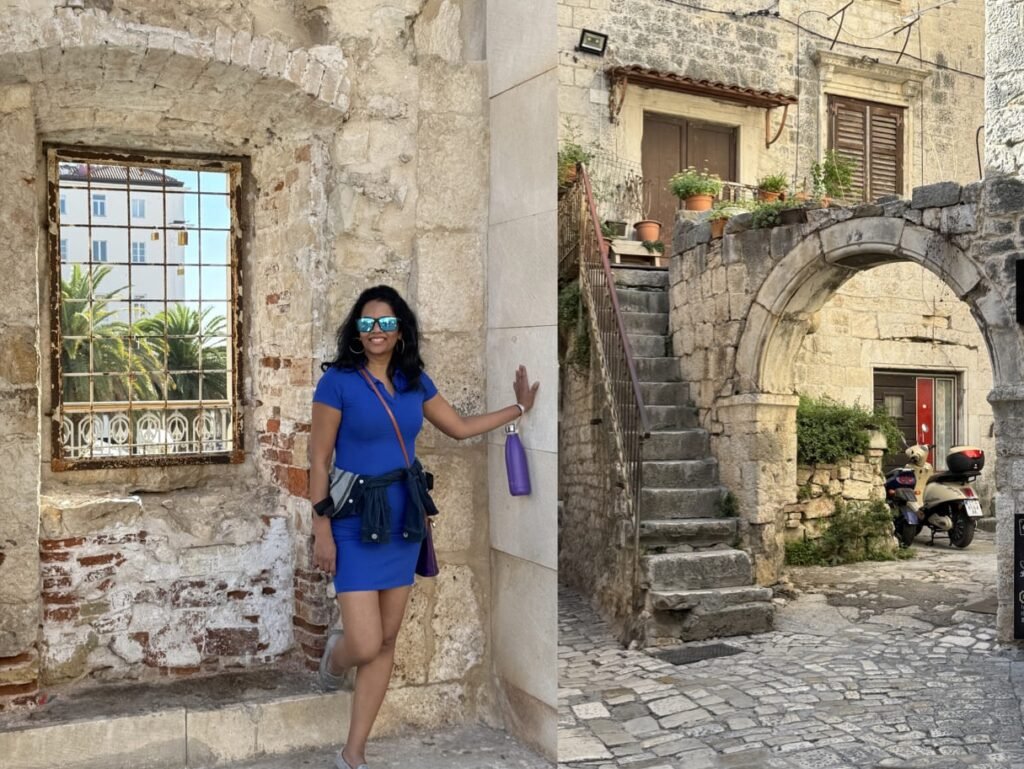
On our way from Split to Zadar, we had a quick stop in Trogir, another cute coastal town. For fear of sounding like a broken record, I will not say I needed more time here. After arguing about how we should spend our time there, we managed equal parts sightseeing, shopping, and tasting a local delicacy — Trogirski rafioli, a pastry filled with almonds and sugar. It was good, but I do not want to move on from Trogir without mentioning their linen clothing. Needless to say, I caved.
In the food and drinks category, I loved this sweet red wine liqueur called Teranino and brought two bottles home to “share.” Their orancello, a variation of the more popular limoncello, deserved some tasting and buying too – so good I am definitely not sharing. I did not care for Maraschino, this clear liqueur made from sour marasca cherries, and I was willing to share/donate whatever I got.
I thought strukli was like sweet lasagna but was way too rich for my taste. They claim milk chocolate originated in Croatia, but that is disputable. Neckties and ballpoint pens definitely did originate here, but since we have plenty of those in the US, I didn’t bother acquiring any. Nikola Tesla is their biggest claim to fame — he was born in what is now Croatia.
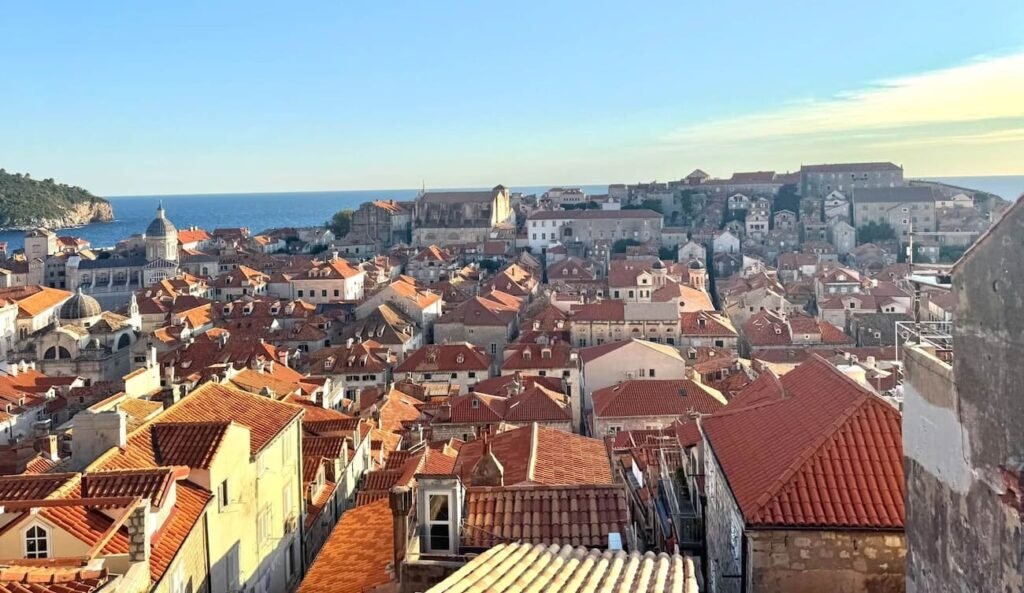
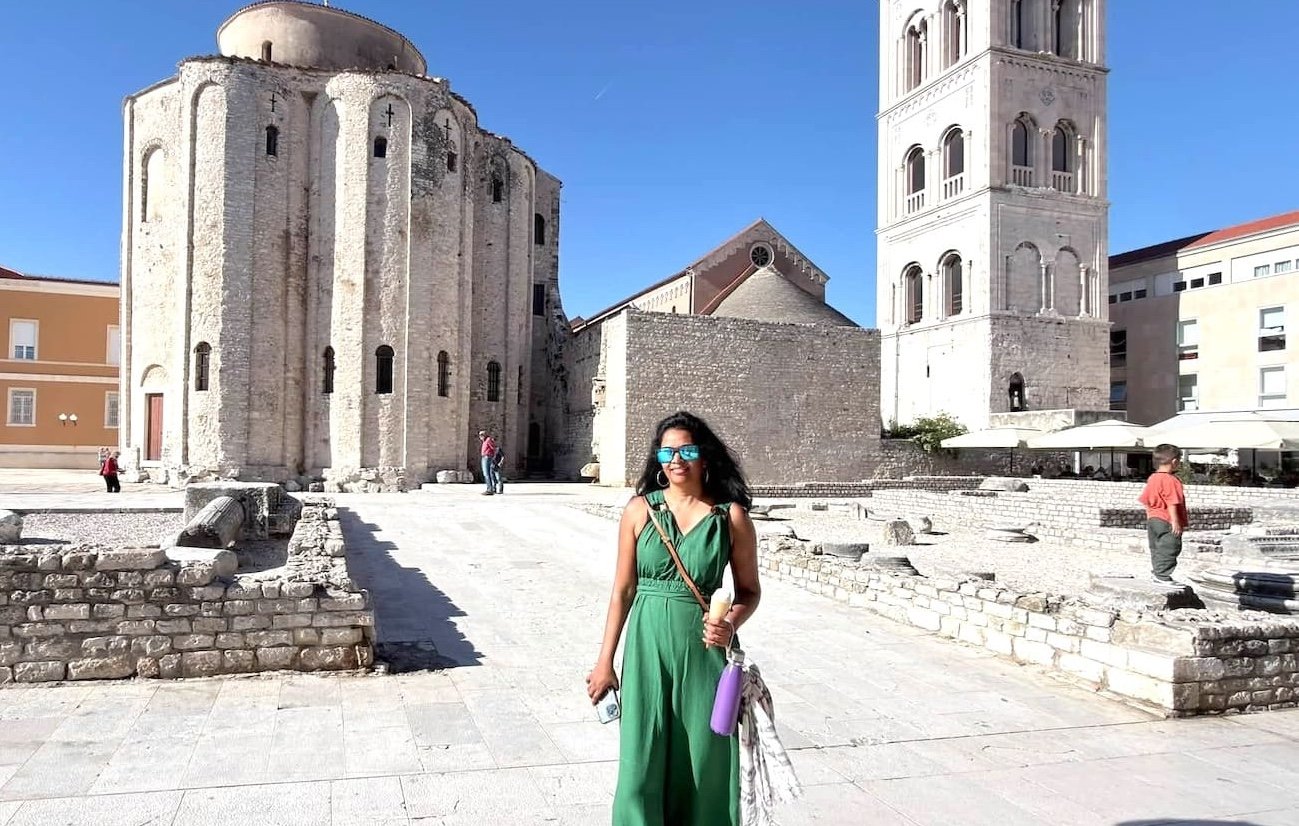
We got a guided walking tour in Zadar just to get a taste of this coastal town. We walked back and forth so many times to get a better taste, literally and figuratively, of the many attractions this town had to offer. This old-meets-new town has the Roman Forum and the Church of St. Donatus in the ancient category.
Modern installations include the Sea Organ and The Greeting to the Sun — the former transforms Adriatic waves into sound and the latter is a public disco floor that glows at night, with features representing planets and a calendar. The most popular attraction, however, falls in the nature category — per Hitchcock, Zadar has the most beautiful sunset in the world, and we enjoyed the same with some fast food and drinks.


The language story was a little confusing to me. We were told that Croatian is the official language spoken by the majority, but it has three dialects depending on the region you are in. English, German, and Italian are popular as well, and minority languages include Serbian, Bosnian, and other Balkan variations. For such a small country, I thought that was one too many.
Heaven on Earth? Fairy tale? Treat to your eyes? How do I describe Plitvice National Park (PLEET-veet-seh)? Probably all three and many more. I may have teased you all about it, but this beauty is the competitive advantage Croatia has over other European nations and definitely deserves the hype. A series of lakes with colors ranging (and changing) from turquoise to blue to green and many more variations.
Boardwalks make it easy to walk through the park and enjoy the many lakes and waterfalls. We were told that algae, bacteria, and moss help build and maintain the “tufa” dams that separate the lakes. The park is ever-evolving and changes slightly with each passing year.
We were told we could only cover the Lower Lakes owing to lack of time, but we unanimously agreed to skip lunch to cover the Upper Lakes as well, and that was one of the best decisions of my life. My heart was full, my phone heavy with images, and with beauty I tried to capture.
Like some other popular European destinations, a country with so many positives has some negatives from a tourist perspective. I am sure overtourism is frustrating, but with some coastal towns depending almost entirely on tourism revenue, the directness, sometimes bordering on rudeness. toward visitors stood out. It happened a little too often to not mention it.
The last day was spent in Zagreb with a long list to cover. The Zagreb Cathedral reminded me a little of La Sagrada Familia in Spain, it was under construction but I am glad we got to see the interior. The Gric Tunnel was constructed as a bomb shelter and is now a cool tourist attraction and walkway. Unlike other European museums, the Museum of Broken Relationships was not expensive but it was emotional.
Other highlights included the Bloody Bridge (so bloody we didn’t stay too long), the world’s shortest funicular (so short we decided to skip the ride and just watch it), and the fruit and meat markets at Dolac. The food scene was great and, as is our custom, we enjoyed lunch at an Indian restaurant to wrap up the trip.
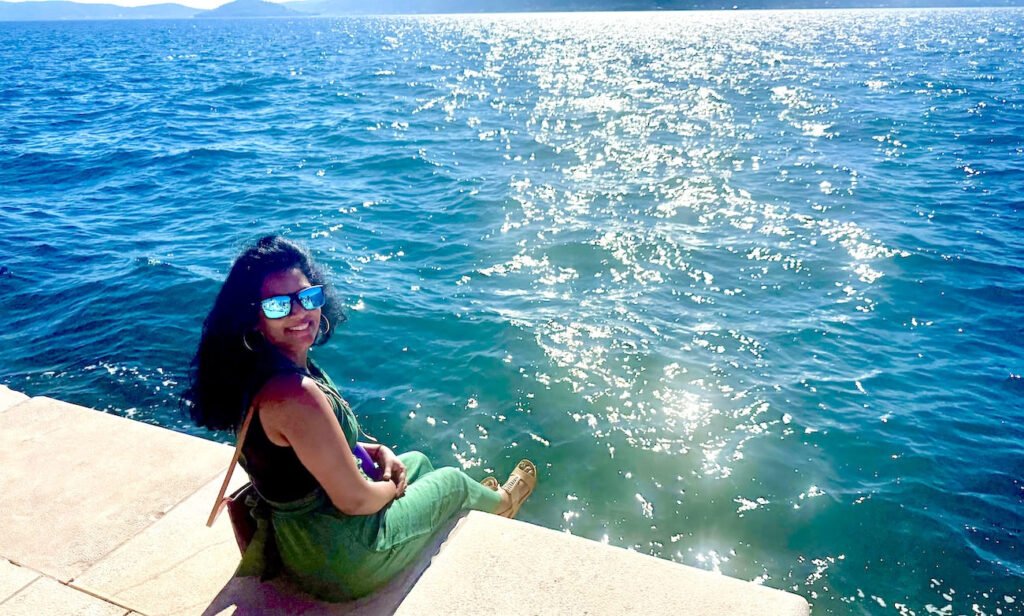
Living in Minnesota, the land of 10,000 lakes, you would think I would have had enough of the lakes? No, I had to fly halfway across the world searching for more lakes and waterfalls. Croatia delivered on both, stacked and in fifty shades of blue!
Instead of counting lakes, I flew homeward counting my blessings. Truly blessed to have seen such a beautiful country — rich in culture and historic significance, elegant in both its manmade and natural offerings, and diverse in its seamless mix of old and new. Warm and strikingly alive, Croatia lingers with you long after you left.
Padma Nadella is an IT professional who lives in Eagan, Minnesota, with her husband and 19-year-old son. She manages a Facebook group for Minnesotans to collaborate on events and activities related to health and fitness. The group now has over two thousand members. Jill of all trades, she enjoys playing volleyball, traveling the world, and entertaining, mostly, but dabbles in everything else.