




Your Surname Is Not Your Destiny: What My Vedic Birth Chart Taught Me About Caste, Krishna, and Human Dignity

- I will admit that discovering the Brahmin classification in my horoscope gave me a sense of validation.
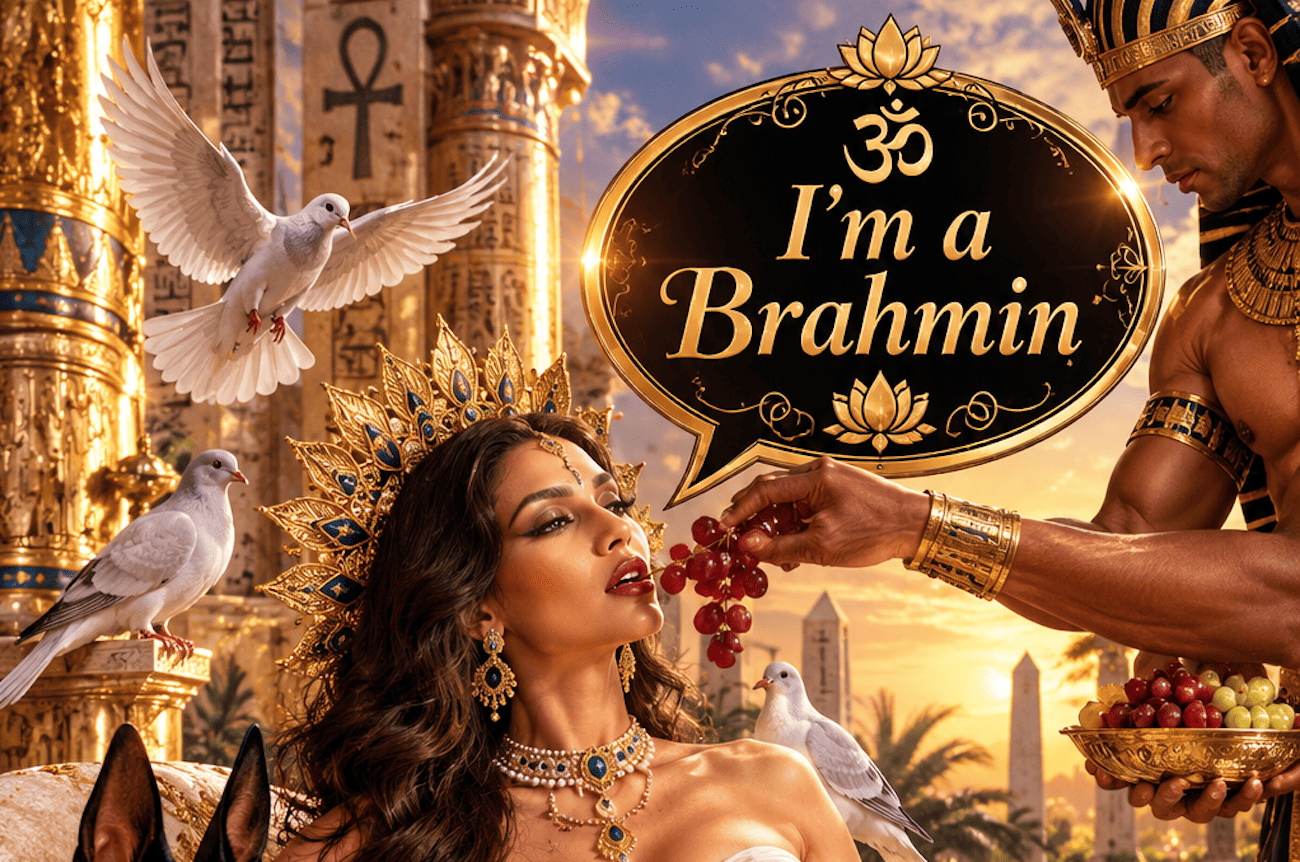

For much of my life, I believed I belonged to a lower caste because of my surname. Then an unexpected discovery made me question everything I had been taught about caste, identity, and human worth. I was born into a Bengali family with the surname Saha, traditionally associated with mercantile communities. Growing up, I learned that a surname could determine how others treated you before they had even taken the time to know you.
I remember being ridiculed, excluded from social activities, and made to feel inferior by people who believed their family backgrounds placed them above mine. Some of these people were my friends. We shared interests, conversations, and experiences. Yet when questions of caste arose, my surname suddenly seemed more important than my character.
Imagine being a child and discovering that people have already assigned you a position in society. Not because of your intelligence, compassion, achievements, or conduct. But because of the family into which you happened to be born. I carried those experiences into adulthood. And although I eventually developed a strong sense of self-worth through my relationship with God, the memories of caste-based humiliation remained.
Then something unexpected happened.
The Horoscope That Challenged My Assumptions
Recently, I had my Vedic birth chart prepared by Vish Chatterji, an astrologer whose work I trust. To my astonishment, the horoscope identified my astrological varna as Brahmin.
I was stunned.
For decades, I had associated my surname with the caste identity society had assigned to my family. Yet here was another traditional Hindu system offering an entirely different classification. The Brahmin ideal is traditionally associated with knowledge, spiritual inquiry, self-discipline, teaching, and the pursuit of wisdom. These qualities resonated with my life’s journey through medicine, spiritual study, yoga, education, and humanitarian advocacy.
But what surprised me most was not the label itself.
It was realizing how much emotional power an inherited social classification had once held over me. I had spent years feeling judged by a surname, only to discover that the identity others imposed upon me was not the only framework through which my spiritual life could be understood. My horoscope did not change my ancestry. Nor can an astrological classification establish someone’s hereditary caste or spiritual superiority. But it challenged an assumption I had carried since childhood: that other people’s judgments about my birth should determine how I understood myself.
What Did Krishna Actually Say?
This experience brought me back to one of the most important passages in the Bhagavad Gita.
In Chapter 4, Verse 13, Lord Krishna states: Chātur-varṇyaṁ mayā sṛṣṭaṁ guṇa-karma-vibhāgaśaḥ. Krishna describes the fourfold varna system according to guna, or qualities, and karma, or actions. He does not prescribe determining a person’s caste by their last name. This distinction deserves serious attention.
The historical relationship between varna and hereditary jati is complex, and Hindu traditions have interpreted these teachings differently. Yet Krishna’s emphasis on qualities and actions provides a meaningful basis for questioning the assumption that a surname reveals a person’s character or spiritual potential.
How did inherited labels become so powerful that entire communities could be denied opportunities because of them? How did social hierarchy become confused with spiritual worth? And how often have religious and cultural traditions been used to preserve the privileges of those already holding social power?
Caste hierarchy has been reinforced through generations of social customs, economic structures, and patriarchal institutions. Its consequences have extended far beyond individual prejudice. For those on the receiving end, caste discrimination can affect education, employment, marriage, friendships, and the most basic experience of belonging. This is not merely a theological debate. It is a human-rights issue.
A Conversation at the United Nations
During my participation in a United Nations event, I met human-rights advocate Daksha Murthy, who spoke to me about his work supporting people affected by caste discrimination. He described children being humiliated, bullied, and excluded because of their caste identities. I remember hearing accounts of children being separated from classmates and subjected to degrading treatment.
The greatest revelation was not that my horoscope called me Brahmin. It was realizing that I had always deserved dignity, even when society told me otherwise.
I found those stories heartbreaking. Imagine arriving at school, eager to learn and make friends, only to be treated as inferior because of your surname. What happens to a child’s confidence when society teaches them that their birth determines their value? What happens to their ambitions when they repeatedly encounter barriers they did nothing to deserve?
My own experiences of caste prejudice were painful. But hearing about children facing such humiliation reminded me that the problem extends far beyond my personal story.
No child should have to overcome caste-based shame before being allowed to discover their potential.
Know Your Rights Before Accepting Someone Else’s Judgment
This is the message I most want to share with anyone who has experienced caste discrimination. Before accepting someone else’s judgment about your worth, question the assumptions behind it. If Vedic astrology is meaningful within your spiritual tradition, consider exploring your birth chart with a knowledgeable practitioner. You may discover interpretations of your temperament, qualities, and spiritual inclinations that differ from the assumptions people have made about you. That exploration may be personally meaningful, as it was for me.
But understand the distinction: a birth chart is a spiritual interpretive tool, not an official test of caste identity or a requirement for claiming equal rights. You do not need a horoscope identifying you as Brahmin to challenge discrimination. You do not need to prove that you possess particular intellectual or spiritual qualities before being treated with respect. Your rights do not depend on whether someone considers you high caste, low caste, or outside the caste system altogether.


India’s Constitution prohibits specified forms of caste discrimination under Article 15 and abolishes untouchability under Article 17. Those protections matter because equality must not depend on someone’s willingness to recognize your spiritual potential. Know your rights. Understand the cultural assumptions being used against you. And never mistake another person’s prejudice for evidence of your inferiority.
The Validation I Had Already Found
I will admit that discovering the Brahmin classification in my horoscope gave me a sense of validation. After years of being judged by my surname, it felt extraordinary to encounter a traditional classification that described me differently. But there was something even more important about that moment. I had already found my worth before I ever saw that horoscope.
Through my relationship with God, years of spiritual practice, healing, and service, I had developed an understanding of myself that no surname could adequately describe. I had learned that love, compassion, wisdom, and dignity were not privileges bestowed upon me by society. They were qualities I could cultivate and express through my life.
The horoscope did not give me those qualities. It did not make me a better person. And it did not elevate me above anyone else. It simply helped me recognize how unnecessary the shame imposed upon me had always been. That realization is what I want others to experience. Not necessarily through astrology. But through the discovery that the labels used to diminish them never defined their full humanity.
We Must Stop Confusing Privilege With Spiritual Worth
Human beings have an unfortunate tendency to establish hierarchies and then use those hierarchies to justify exclusion. When someone benefits from an inherited position of privilege, it can become tempting to treat that privilege as evidence of personal merit. But a privileged surname does not guarantee wisdom. A Brahmin identity does not guarantee compassion. A mercantile background does not determine someone’s morality. And no caste designation makes one human being inherently more deserving of freedom than another. The deeper challenge is not to replace one hierarchy with another. It is to question why we allow inherited labels to determine opportunities and dignity in the first place.
To Every Child Who Has Been Made to Feel Inferior
If you have ever been mocked because of your surname, I want you to hear this. You are not the stereotype someone has assigned to your family. You are not limited by the occupations your ancestors practiced. You are not spiritually inferior because another person claims a more prestigious lineage. And you do not have to spend your life proving your worth to people who refuse to see it.
Explore your heritage. Study your spiritual traditions. Ask questions about the beliefs you inherited. If you wish, explore your Vedic birth chart as one way of reflecting on your identity. But never allow any classification—hereditary or astrological—to become the measure of your humanity. My discovery gave me a new perspective on the caste identity I had carried since childhood. It also deepened my compassion for those who continue to face discrimination because of theirs.
The greatest revelation was not that my horoscope called me Brahmin. It was realizing that I had always deserved dignity, even when society told me otherwise. That is the freedom I hope every person who has experienced caste discrimination will discover. Your surname is not your destiny. Your ancestry is not a measure of your potential. And your dignity was never someone else’s to grant.
Suparna Saha is a former physician, International Human Rights Ambassador, and founder of 50 Shades of DV Inc., an organization dedicated to education and awareness concerning domestic violence, coercive control, and human trafficking.