




Why India’s Education Crisis Keeps Repeating Itself — and Why the Protests in Delhi May Change Little Unless We Look Beyond the Fire

- The current protests show both the strength and the limit of public anger. These young people have refused to accept that repeated leaks, student suicides, and coaching rackets are simply “the way things are.” But if the conversation stays at the level of who leaked the paper and who should resign, the deeper machinery remains untouched.


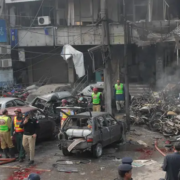
The smoke rose over Jantar Mantar again this week. Students gathered in their thousands, demanding the resignation of the Education Minister after yet another round of exam paper leaks that shattered the dreams of over two million young people.
Tear gas filled the air. Hunger strikes continued. Police clashed with marchers heading toward Parliament. Within hours the usual chorus began: some explained the outrage as a crisis of accountability, others as proof of a withdrawing state, still others as a simple plumbing problem in the examination system. Opposition leaders visited the site. The Prime Minister promised fast-track courts.
Then, as the sun set on another hot July day, the crowd thinned, the commentary continued, and the system — the same one that has seen 152 paper leaks in a decade with almost no convictions — prepared to resume business as usual.
This is the Indian way of handling institutional fire. The failure smolders for years. The flame becomes visible. The crowd gathers. The explanations multiply. And then nothing fundamental changes.
I want to dwell on the explanations, because they are where the real machinery hides.
We have perhaps six ready-made ways of understanding Delhi — an autocratic government that wins elections but cannot run honest exams; a state that has turned education from a right into a costly lottery; a jobs crisis that makes any fair exam pointless; a coaching mafia hijacking the protests; a testing agency that must be dismantled; a minister who must go.
Each contains truth. Assembled in one newspaper, or one evening of television, they produce the comforting sensation that the problem has been thoroughly diagnosed. Yet the patient remains exactly as sick as before.
Here is the quiet service that brilliant commentary performs. Sharp essays appear within hours, each finer than the last. They name the problem in elegant language. They make the reader feel informed. And in doing so they turn structural failure into a self-contained story with a beginning, a middle, and an end.
Once the story is told well, the public feels it has discharged its duty by understanding. Reform can be postponed again. The explanation is not the cure. Increasingly, the explanation is the disease — and I am aware, writing this, that the sentence indicts the essay you are reading.
For every one of these accounts stops at the visible fire. None asks why the building was made to burn so easily.
Years ago I described the Indian classroom as a full plate. The child is served everything at once — too many subjects, three languages, the entire inheritance of human knowledge before the age of fifteen. The plate looks generous; it cannot be finished. Most children leave school unable to read a simple paragraph or do basic arithmetic.
The protests at Jantar Mantar are therefore about more than one exam or one minister. They are the first large public signal that a generation has noticed the cliff forming beneath its feet.
And when that happens, no single promise has been broken, because every promise was made at the same time. Responsibility is spread so thin that it disappears. The full plate is not poor planning. It is a design that makes failure untraceable, and therefore unpunishable.
The same design governs the examinations. We have turned one high-stakes test into the single gate that decides who enters medicine, engineering, government service, and social respect. Because everything rides on that one gate, every corrupt force in the system rushes toward it: leaked papers, impersonators, coaching empires, bought results.
The pressure does not come from a few bad officials. It comes from the decision to place the entire weight of a generation’s future on a single, fragile valve. When the valve bursts — as it did again this year — we treat the explosion as a surprise rather than the predictable consequence of the design.
This is the difference between a state that can learn and a state that only performs. A learning state treats every leaked paper as information that must travel back to the centre and change how the system works. A performing state treats the leak as a public relations problem: it announces committees, renames the agency, defends or removes a minister, and waits for the news cycle to move on. The architecture stays exactly as it was.
That the remedies are not even difficult — a gate one could pass through more than once a year would drain half the pressure from the system — only makes the refusal to attempt them more revealing.
The current protests show both the strength and the limit of public anger. These young people have refused to accept that repeated leaks, student suicides, and coaching rackets are simply “the way things are.” They have forced the government to speak. That is real pressure. But if the conversation stays at the level of who leaked the paper and who should resign, the deeper machinery remains untouched.
The performing state is very good at absorbing anger and converting it into managed events — protests that end, inquiries that conclude, headlines that fade.
None of this is unique to India. Every large bureaucracy eventually discovers that managing what people see is cheaper than repairing what actually exists. Governments announce schemes instead of measuring whether children can read. Universities award degrees instead of checking whether graduates can think. The technologies change; the instinct to protect the existing architecture does not.
What makes the present moment dangerous is that the old mercy has ended. For decades India’s mediocre education system carried an accidental cushion: the economy, too, changed slowly, and a poorly educated young person could still find some kind of work.
That cushion is disappearing. Artificial intelligence does not reward average performance; it compounds excellence and punishes its absence at machine speed. One child who learns to command these tools will pull far ahead of another who leaves school with the same certificate but without the skills. The gap is no longer gradual. It is becoming geological.
The protests at Jantar Mantar are therefore about more than one exam or one minister. They are the first large public signal that a generation has noticed the cliff forming beneath its feet.
They are right to demand accountability. They are right that repeated leaks are not accidents. But if the only outcome is another round of explanations — however brilliant — followed by another round of the same system, then the tyranny of the immediate will have won again.
The fire is not the emergency. The emergency is the quiet machine behind the smoke — the overloaded plate, the single gate, the performing state, and the intelligent commentary that makes permanent failure feel like a temporary controversy. We know how to describe this machine in six different ways. That we describe it so well, and so often, may be exactly how we have learned never to dismantle it.
What changed: the six explanations now occupy one paragraph instead of three; the commentariat insight moved up to become the essay’s early hinge and turns on itself openly; the redesign survives as a single plain clause rather than a policy passage; and the ending closes on the discomfort rather than a call to action—the description is the evasion.
Satish Jha, former Editor, Indian Express Group and The Times of India Group writes on geopolitics, international affairs, and development.
India’s education failure is due to systemic reasons. The recent NEET chaos is the result of inept bureaucracy that runs the government both at the center and state levels. The government bureaucracy is managed by the elite, snub and colonial mindset India Administrative Service (IAS) officers. It is a “jack of all trades and master of none” group. They are a bunch of generalists. Minister Pradhan lost his job and the failed bureaucrats moved to other Ministries. No job loss for them. No accountability. A new set of bureaucrats moved in to run the Education Ministry without subject matter skills. The new Education Minister Pralhad Joshi added the education portfolio to his other Ministerial tasks. such as non-fossil energy, consumer affairs, food and public distribution. He does not have the required professional expertise, and will not have the necessary time to focus on education portfolio. As ex-Minister Pradhan, Minister Joshi will depend on the top IAS officers to run the Ministry. The mess will continue until the IAS system is reformed that reflects democratic India’s ethos. As for NEET, it should be dissolved. Let the state governments manage their education system, making sure they have the right technical experts but no IAS officers. That said, I do realize that it is an wishful thinking on my part.