




Long Before Gloria Steinem: Hindutva is One of History’s Most Complete Feminist Frameworks

- At the theological core of Hinduism sits a concept unlike almost any other major religious tradition: Divinity is not gendered as singularly male.
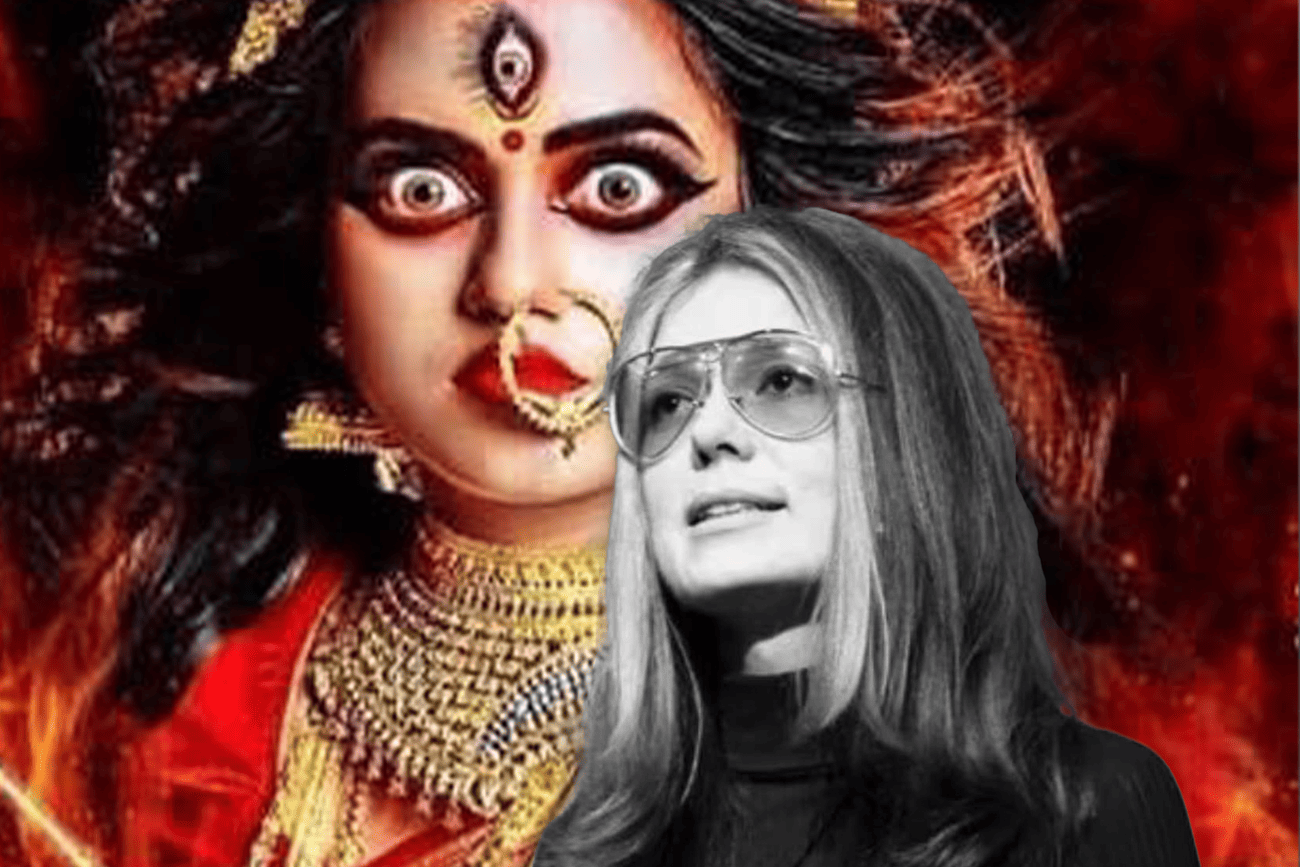

Gloria Steinem once said that a feminist is simply anyone who believes in the full humanity of women. Her decades of activism were built on one insistent question: why should divinity, power, and authority be imagined as exclusively male? It is a question that, curiously, Hindu civilization answered thousands of years before the word “feminism” existed.
At the theological core of Hinduism sits a concept unlike almost any other major religious tradition: Divinity is not gendered as singularly male. The image of Ardhanarishvara, Shiva and Parvati fused into a single body, half-male and half-female, is not a poetic flourish. It is a doctrinal statement that the ultimate reality, Brahman, contains masculine and feminine energy in inseparable balance. Shakti, the feminine principle, is not an accessory to male gods; she is the animating force as stated in the opening verse of Soundarya Lahiri by Adi Shankara. Power itself, in Sanskrit, is grammatically and theologically feminine.
Steinem spent her career arguing that women’s strength had been written out of history and mythology. In Hindu thought, that strength was never absent, rather it was foundational.
Consider Durga, invoked in the Devi Mahatmya as the combined energies of the male gods, sent to do what none of them could: destroy the buffalo demon Mahishasura when he had become unstoppable. Or Kali, the fierce mother who dances on chaos and dissolves ego and illusion. These are not gentle, decorative goddesses. They are martial, sovereign, and terrifying embodiment of shakti unleashed.
The same pattern appears in the epics. Satyabhama, wife of Krishna in the Bhagavata Purana, rides beside him into battle against the demon Narakasura and, in several tellings, delivers the decisive blow herself. She is not a passive consort but an active agent of justice.
History carried this template forward. Rani Lakshmibai of Jhansi led cavalry charges against the British with her infant son, Damodar strapped to her back. Ahilyabai Holkar governed Malwa for three decades, commissioning temples and public works still in use today. Rudrama Devi ruled the Kakatiya empire as a sovereign in her own right, sometimes appearing in courtly records under a male name to ease the transition of authority. These are evidence not of women’s exclusion from power, but of a system that recognized and accommodated it.
The image of Ardhanarishvara, Shiva and Parvati fused into a single body, half-male and half-female, is not a poetic flourish. It is a doctrinal statement that the ultimate reality.
Perhaps most remarkable are the women intellectuals embedded in Hinduism’s oldest philosophical texts. Gargi Vachaknavi, in the Brihadaranyaka Upanishad, publicly challenges the sage Yajnavalkya in a royal debate on the nature of the universe, pressing him with questions he cannot fully answer. Maitreyi, in the same Upanishad, rejects material wealth in favor of philosophical liberation, asking her husband the question that defines Vedantic inquiry: “What should I do with that which will not make me immortal?” Lopamudra, wife of the sage Agastya, is credited as a rishika which means a composer of Rigvedic hymns, thereby placing a woman’s voice directly inside the most sacred Hindu scripture, not as a subject of the text but as its author. Vak Ambhrini is credited with Rigveda 10.125 (the Devi Sukta).
Steinem often argued that oppression usually arrives dressed as tradition. However, in Hinduism it is a later distortion of something which was originally more equal. This is precisely the distinction worth drawing in Hinduism. Practices like sati, child marriage, or the exclusion of women from ritual and inheritance were never mandated by the Vedas or Upanishads. They emerged from centuries of regional custom, invading empires, and patriarchal social pressure layered on top of the scripture, not from the scripture itself. The formation and functioning of the Rashtra Sevika Samiti can be read as a modern institutional expression of the same female agency embedded in Hindu scripture; women organizing, leading, and building independent structures of authority on their own terms, much as Gargi debated unchallenged or Durga acted where the male gods could not. These examples describe a civilization that encoded gender equality into its metaphysics from the start.


Read this way, Hindutva as a lived, scripturally grounded practice is arguably one of history’s most complete feminist frameworks: one where the feminine is not granted rights by permission of the masculine, but is recognized as co-equal and, in some tellings, prior to it.
The author acknowledges that this is a hotly contested stand. Many scholars and feminists distinguish sharply between Hinduism as a spiritual-philosophical tradition and patriarchal practices in general Hindu Society. The unfair social history is real, sustained, and often defended using religious language of their own era. It cannot and should not be white-washed. Others argue that no single “correct” scriptural reading is universally agreed upon, given the tradition’s vast regional and textual diversity.
Given the facts stated above, the case for Hindu scripture as an ancient feminist blueprint is a compelling one. But it does exist alongside serious counter-arguments and adverse lived experiences that deserve equal consideration. It behooves all Hindus (those who call themselves Hindus, those who are civilizationally Hindus, and all those who think and behave as Hindus) to thrive to make the former, — a lived modern reality.
Mandar Pattekar, a radiologist by profession, is the regional vice president of the Hindu Swayamsevak Sangh, USA. His service interest is in the education of children in underserved urban areas of America as well as improving urban food deserts. He likes to share the universally applicable Hindu Dharma principles with interested people.
Interesting information about Hinduism.