




Debates Over the BJP, the RSS, and Hindu Nationalism Have Intensified Concerns About India’s Secular Future

- We must remember Vedanta provides a philosophical vision of pluralism; constitutional secularism makes equal freedom a public obligation.
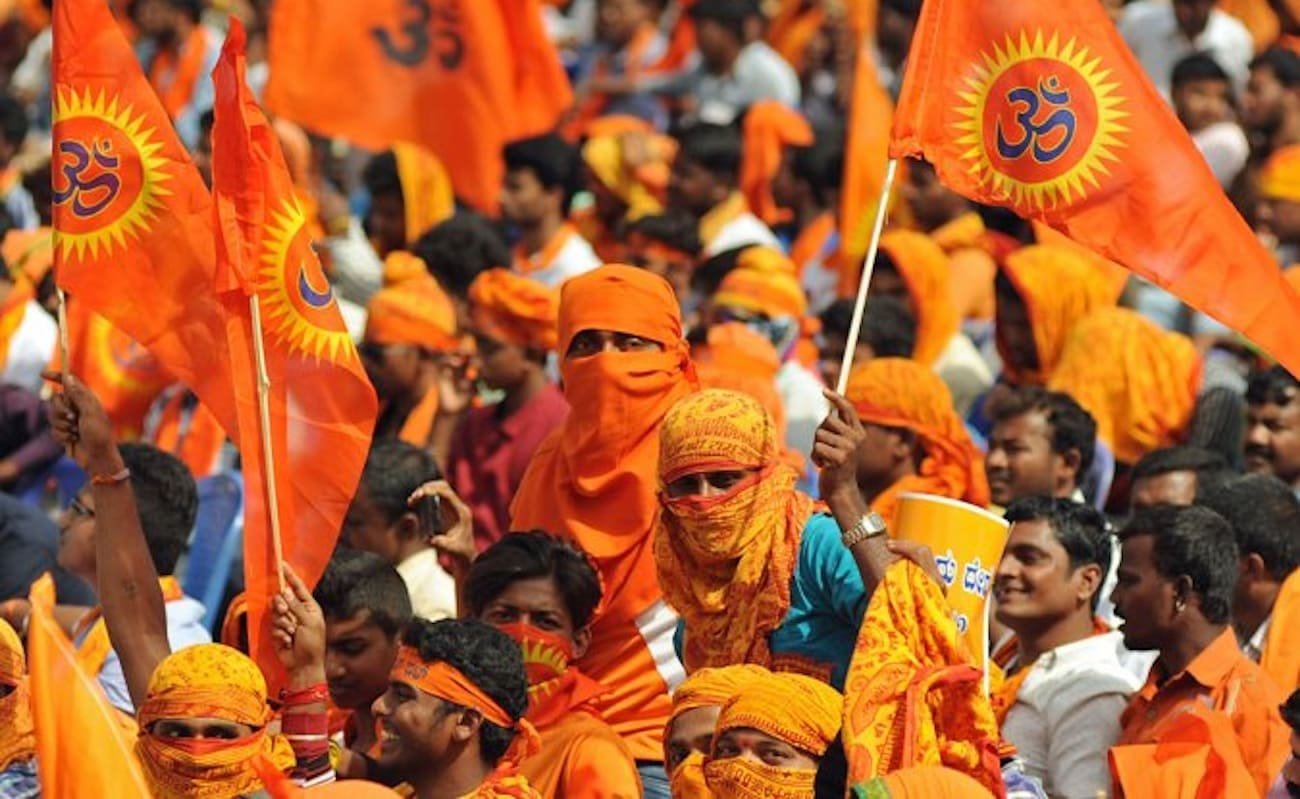
Secularism is defined as the principle of separating religion from civil affairs, government, and public institutions to ensure state neutrality and equal treatment for all citizens regardless of their beliefs.
But to me, secularism is not alien to India’s Vedantic civilizational spirit. It finds a natural philosophical home in the pluralistic wisdom of Vedanta—the recognition that truth is greater than any single interpretation of it, that human beings may approach the ultimate reality through different paths, and that diversity need not become division.
I call this the Vedantic soul of India.
I do not mean that secularism belongs exclusively to Hinduism, that the Indian state should adopt Hindu theology, or that every Vedantic school teaches the same philosophy. I mean that important strands of Vedantic thought offer a profound intellectual foundation for religious pluralism: the willingness to recognize that our understanding of truth may be partial, that spiritual inquiry can take different forms, and that disagreement need not deny another person’s dignity.
This distinction matters. Vedanta provides a philosophical vision of pluralism; constitutional secularism makes equal freedom a public obligation. The former can inspire the latter, but neither should be confused with the other.
Vedanta: Unity Without Uniformity
The pluralistic spirit I find in Vedanta begins with a profound question: Can ultimate truth be greater than our individual understanding of it?
The Rig Veda offers a celebrated expression of this idea:
“Ekam sat vipra bahudha vadanti.”
Truth is one; the wise speak of it in many ways.
This verse is not a complete definition of secularism, nor does it mean that every religion teaches identical doctrines. Its significance lies in the intellectual humility it encourages: our way of describing truth need not exhaust truth itself.
Vedantic traditions explore the relationship between ultimate reality, the self, and the universe in different ways. Their interpretations are not identical, and Indian philosophy has always included vigorous disagreement. Yet this diversity of thought demonstrates that India’s philosophical heritage cannot be reduced to a single, unquestionable formulation.
The Upanishadic vision of interconnected existence, expressed in the idea of Vasudhaiva Kutumbakam—the world is one family—offers a related ethical ideal. It invites us to widen our sense of belonging beyond narrow divisions of community and identity.
Together, these ideas suggest a principle of enduring relevance: unity does not require uniformity, and difference need not destroy our common humanity.
This is the philosophical bridge I see between Vedantic pluralism and secularism. If human understanding is limited, humility is wiser than religious arrogance. If people follow different spiritual paths, coexistence is more constructive than coercion. And if our humanity is shared, citizenship must never depend on religious conformity.
Vedanta does not, by itself, establish the modern legal doctrine of secularism. Nor does philosophical pluralism automatically eliminate prejudice or discrimination. But it offers a powerful intellectual and ethical resource for a society determined to respect freedom of conscience.
I Learned Pluralism Before I Knew the Word
My conviction is not based on philosophy alone. I grew up in two princely states in Odisha, where people of different faiths lived alongside one another.
Muslims participated in community life, served royal households, and practiced their religion. Local rulers supported mosques. Difference was part of the social landscape, not necessarily a barrier to belonging.
Near Sonepur, where my father practiced law, lived a Sufi holy man we called Fakir Baba. His name was Hazrat Syed Shah Abdul Shakur Khan, and we were told he had come from Kandahar, Afghanistan.
Before examinations, we Hindu schoolchildren visited Fakir Baba with our parents’ encouragement to seek his blessings. Nobody considered this unusual. We did not need to abandon our own faith to respect his. We did not need to resolve theological differences before recognizing his spiritual standing.
My school headmaster was also Muslim. He taught us, disciplined us, and encouraged us. His religion did not diminish his authority or our respect for him.
I did not learn pluralism from a textbook. I experienced it in everyday life.
Odisha’s celebrated devotional poet Bhakta Salabega offers another powerful example. Born into a Muslim family in the seventeenth century, he became an ardent devotee of Lord Jagannath. According to tradition, Jagannath’s chariot waited for Salabega during the Rath Yatra when illness delayed his journey to Puri. His samadhi stands on the Grand Road, where tradition associates the chariot’s pause with his devotion.
Whether approached as history, legend, or an expression of faith, Salabega’s place in Jagannath culture carries a remarkable message: spiritual belonging cannot always be confined by the boundaries of religious identity.
My own marriage has given this principle a personal meaning. My wife, Beverly, is Christian, and I come from a different religious and cultural background. We have built our life together through mutual respect, honesty, tolerance, forgiveness, and unconditional love. Neither of us has needed to erase our identity to honor the other’s.
These experiences have shaped my understanding of pluralism. It is not indifference to religion, nor a demand that everyone believe the same thing. It is the conviction that differences in belief need not prevent friendship, affection, shared responsibility, or equal belonging.
From Vedantic Pluralism to Constitutional Secularism
India’s pluralistic inheritance extends beyond Vedanta. Buddhist, Jain, Sikh, Islamic, Christian, Zoroastrian, Jewish, and other traditions have contributed to its intellectual and social life. Emperor Ashoka advocated respect among religious communities, while Mughal emperor Akbar promoted sulh-i-kul, or universal peace, as a principle of accommodation.
Mahatma Gandhi gave interfaith respect a memorable expression through the prayer:
“Ishwar Allah Tero Naam,
Sabko Sanmati De Bhagwan.”
Ishwar and Allah are your names; O God, grant wisdom to all.
Gandhi was not asking people to surrender their faiths or pretend that religious differences did not exist. He was calling for moral understanding across those differences.
These traditions do not establish that ancient India possessed modern secularism in its present constitutional sense. India’s past, like that of other civilizations, included exclusion, hierarchy, religious conflict, and periods of intolerance. We should neither romanticize our history nor deny its pluralistic achievements.
The more persuasive argument is that India possesses philosophical and historical resources that can strengthen modern secular democracy.
Indian secularism does not require religion to disappear from public life. Nor is Hindu cultural expression inherently incompatible with secular democracy. The decisive question is whether the state treats every citizen equally and protects individual freedom of conscience.
India’s Constitution transforms the aspiration of coexistence into a system of rights and obligations. Articles 25–28 protect freedom of religion, while Articles 29–30 safeguard important cultural and educational rights. The word secular was added to the Preamble in 1976, but constitutional guarantees of equality and religious freedom predated that amendment.
Here lies the essential distinction: Vedantic pluralism can encourage us to respect different paths; the Constitution requires the state to protect people regardless of which path, if any, they follow.
A Hindu must be free to practice Hinduism. A Muslim must be free to practice Islam. Christians, Sikhs, Buddhists, Jains, Jews, and others must enjoy the same freedom. Those who question religion, change their faith, or follow none must receive equal protection.
No citizen should have to prove religious loyalty to establish national belonging.


Indian secularism does not require religion to disappear from public life. Nor is Hindu cultural expression inherently incompatible with secular democracy. The decisive question is whether the state treats every citizen equally and protects individual freedom of conscience.
The Test Is Equal Citizenship
Debates over the BJP, the RSS, and Hindu nationalism have intensified concerns about India’s secular future. These concerns deserve serious examination, as do arguments about whether Hindu identity is sometimes portrayed too readily as incompatible with pluralism.
Neither alarm nor reassurance is sufficient. The test must be evidence: Does the law protect every citizen equally? Can people practice, question, or reject religion without intimidation? Are public institutions impartial? Does religious identity determine access to rights, opportunity, or political protection?
A pluralistic philosophy cannot excuse discrimination, and a glorious civilizational past cannot substitute for present-day accountability. Equally, secularism should not be used to treat religious devotion itself as a threat.
The true challenge is to prevent the political power of any religious identity from diminishing the citizenship of others.
Nor can secularism survive through constitutional language alone. It must be practiced in schools, neighborhoods, workplaces, and public institutions. It lives when children of different faiths learn together, when families respect one another’s festivals, and when disagreement does not become hostility.
This is where the pluralistic spirit I associate with Vedanta becomes socially meaningful. It encourages us to approach differences with humility rather than superiority, dialogue rather than coercion, and respect rather than exclusion.
But pluralism must also recognize a fundamental limit: no person should be forced to accept another’s religious or philosophical beliefs. Respecting another’s freedom means protecting that person’s right to disagree with us.
That is the point at which philosophical openness and constitutional secularism reinforce one another.
Secularism: India’s Shared Inheritance and Responsibility
I do not regard Indian secularism as merely a Western import. Nor do I claim that modern constitutional secularism existed unchanged in ancient Bharat. I see it as a democratic achievement that can draw strength from India’s long, complicated, and diverse philosophical inheritance.
Vedanta offers me a language for this conviction: truth may exceed any single formulation, the search for understanding can take different paths, and human dignity need not depend on religious agreement. Other Indian and global traditions offer their own resources for coexistence. India’s secular democracy must make room for them all.
After living much of my life outside India, I still return in memory to what I learned in Odisha. We did not need to agree on the name of God to share a school, a community, or a friendship. We did not need to become alike to respect one another.
The Vedantic soul of India, as I understand it, is not religious uniformity but unity amid diversity. Indian secularism gives that ideal its democratic expression: equal freedom, equal dignity, and equal citizenship for all.
No religion owns India. No political party owns its civilizational heritage. And no majority has the right to make minorities feel like guests in their own country.
Secularism is not a concession to minorities or a restraint imposed on the majority. It is not a rejection of religion, either. It is the principle that the freedom of one person must not depend on the religious identity of another.
Our Vedantic philosophical heritage invites us to embrace secularism. Our Constitution obliges us to uphold equality. Our responsibility as citizens is to make both real in everyday life.
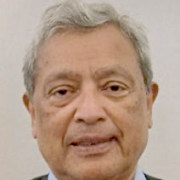
Pradeep Patnaik is a semi-retired businessman and engaged in international development activities. He lives in Brentwood, Tennessee, USA. He can be contacted at pkpatnaik022@gmail.com.