




At its Beating Heart Paweł Pawlikowski’s ‘Fatherland’ is a Poem About Father-Daughter Relationship

- When the lights came up at the Debussy theater in Cannes, the void my father left behind felt heavier, yet somehow deeply acknowledged.

“That which thy fathers have bequeathed to thee, earn it anew if thou wouldst possess it.”
— Goethe
Watching the Polish filmmaker Paweł Pawlikowski’s “Fatherland: at its Cannes premiere in the Debussy theater, I didn’t just feel like an audience member; I felt like a daughter sitting next to a ghost. As I settled into the red velvet seat, the phantom presence of my late father sat right beside me. Our bond was on the same rare, elevated intellectual terrain that shapes this extraordinary film. One shared universe of books, essays, dissertations, and endless debates.
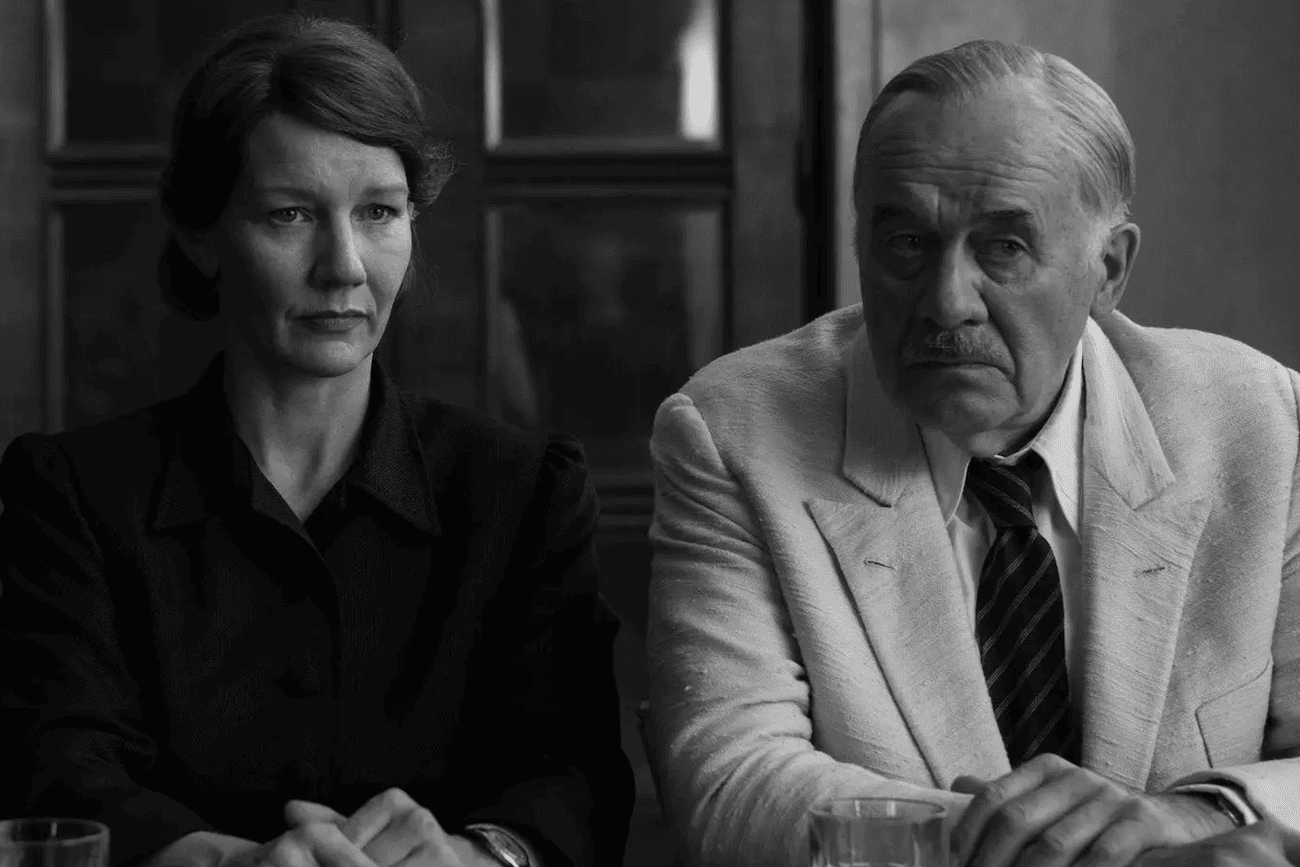
Pawlikowski’s intimate, monochrome masterpiece is a poetic road movie set in 1949. It follows Nobel laureate Thomas Mann (Hanns Zischler) and his daughter Erika (Sandra Hüller) across a ruined Germany. They are traveling to Frankfurt for the Goethe Prize, a journey meant to celebrate high culture but instead forces them to navigate physical devastation, political hypocrisy, and the haunting burden of post-World War II Germany. Beneath the politics lies a deeper, agonizing purpose: they are running from, and driving directly into, the profound grief of losing Klaus Erika’s brother to suicide.
For me, the film was a mirror reflecting the beautiful, complex choreography of my own relationship with my father. Seeing Erika nurture her aging, brilliant father, holding on to his words while fiercely defending her own mind, struck a deeply personal chord. I remembered the many consequential family and business trips my father and I took together. I remembered the tactful balance of fueling his genius while questioning his dominance, arguing with him when he pushed too hard, only to be overwhelmed by a deep void when he was gone. Together, my father and I could be entirely vulnerable, but when he is no more, the loss of my friend, philosopher, and confidante has left an irreversible ache.
Trapped in the claustrophobia of their Buick cruiser, masterfully framed by cinematographer Łukasz Żal, father and daughter are forced to confront the “Mephisto” of their reality.
The film elevates this specific father-daughter dynamic to something devastatingly raw. Hüller and Zischler perfectly capture two people who connect on a lofty intellectual level, using structured ideas as armor against a shattered world. Yet, the armor fails them. A recurring, disembodied specter magnifies their shared sorrow: the voice of Katia, Thomas’s wife and Erika’s mother, over the telephone. Her distant, crackling voice on the wire acts as an amplifier for their grief, a painful reminder of the family unit that Klaus’s death has permanently fractured.
Trapped in the claustrophobia of their Buick cruiser, masterfully framed by cinematographer Łukasz Żal, father and daughter are forced to confront the “Mephisto” of their reality. The tragic compromises of history, the seductive traps of intellectual narcissism, and the personal loss they refuse to speak aloud.

The quiet personal moments broke me completely. Erika gently getting her father ready for his speech brought tears to my eyes. I remembered a poem composed by a friend who gave her father a haircut after he returned from deployment in World War II. But it was the final devastation in an old, ruined church that lingers most. As Bach’s “Jesu, Joy of Man’s Desiring” echoes in the giant church organ, the towering scholar Thomas places his hand in Erika’s. In that single, profoundly human gesture, this brilliant philosopher finally steps out of his academic bubble to acknowledge their acute, shared loss.
When the lights came up at the Debussy theater, the void my father left behind felt heavier, yet somehow deeply acknowledged. “Fatherland: is a cinematic triumph about history and politics. But at its beating heart, it is a poem about a father and a daughter, proving that when a guide who truly saw you is gone, no amount of intellect can fill the silence.
With roots in Georgia and the Bay Area, and her heart still tethered to a childhood mango tree in Mumbai, India, Monita Soni approaches writing as a contemplative practice. A path to honor humanity. She has published hundreds of movie reviews, book critiques, poems, and essays, and contributed to combined literary works. Her two books are “My Light Reflections” and “Flow Through My Heart.” You can hear her commentaries on Sundial Writers Corner, WLRH 89.3 FM.