




‘The Brother I Knew Would Never Take His Own Life’: Family Disputes Suicide Ruling in Death of Nvidia Data Scientist Irfan Al-Hussaini

- For three months, his parents and sister have held rallies in Palo Alto and Sacramento, gathered thousands of petition signatures and accused his widow of abuse.
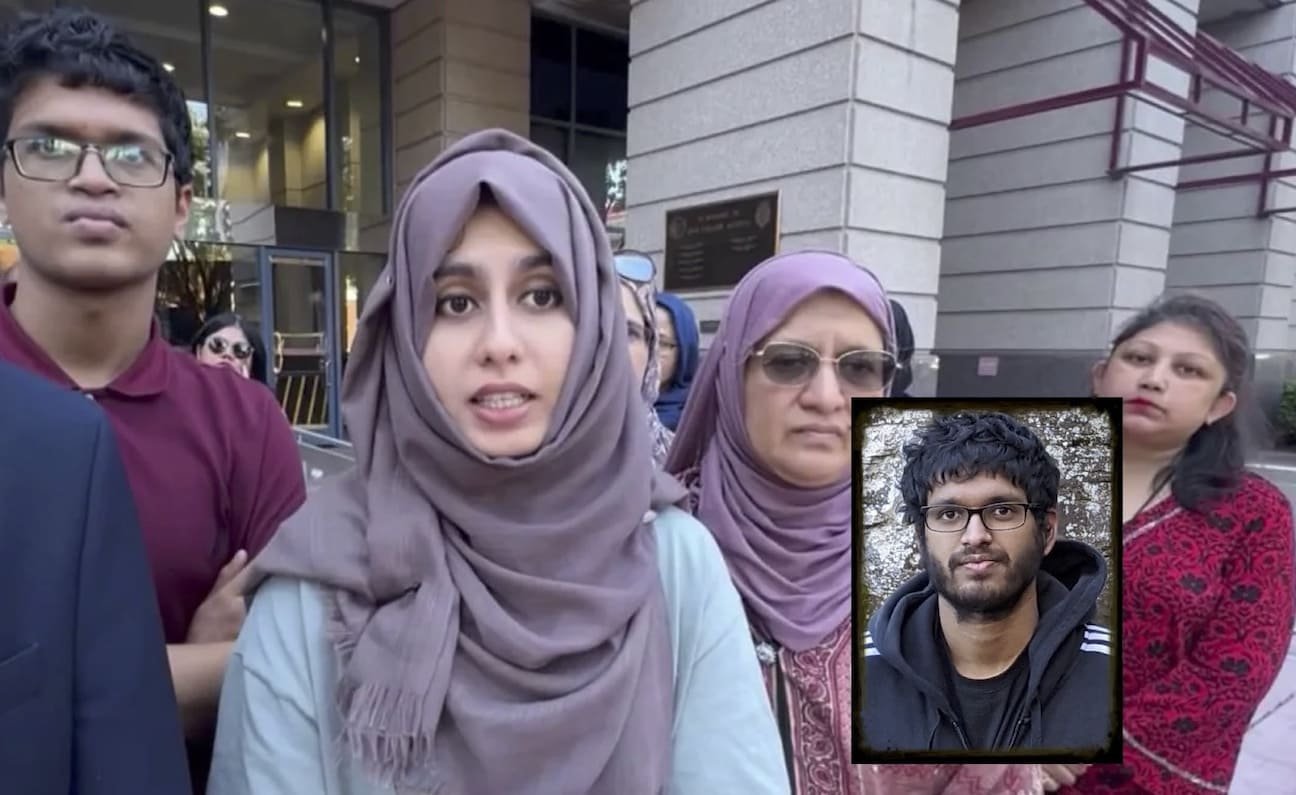

The Santa Clara County Medical Examiner-Coroner’s Office has ruled that Irfan Al-Hussaini, a 32-year-old senior data scientist at Nvidia, died by suicide after a full autopsy. His family in Bangladesh and the United States rejects that finding.
For three months, his parents and sister have held rallies in Palo Alto and Sacramento, gathered thousands of petition signatures and accused his widow of abuse, which she denies. Palo Alto police say they have found no evidence of foul play. The case drew national attention on Oct. 31, when The Wall Street Journal published an account of the dispute.
What Happened
On the morning of July 22, Palo Alto police responded to a report of a possible suicide involving an adult man, who was taken to a hospital, according to a department statement cited by KQED. Al-Hussaini died eight days later, on July 30, at Stanford Hospital, the Palo Alto Daily Post reported.
The hours before that call are at the center of the dispute. His sister says he presented research to about 15 colleagues that morning. A message then went out from his account saying he would take the day off because his wife was ill. About 20 minutes later, his wife, Fabia Farlin Athena, called 911, according to the family’s account in NBC Bay Area.
Athena has said she found her husband after stepping away to shower and pray while both were working from home. She called emergency services and performed CPR as a dispatcher instructed, her lawyer said.
Athena’s attorney, Matthew Davis, has said she asked for a full autopsy, which the medical examiner performed in late August. The office then ruled the death a suicide, and a toxicology screen found no common drugs, Palo Alto Online reported. The autopsy found no reported evidence of a struggle or foul play in the apartment, according to the Journal’s account.
The Family’s Case
His parents, Tahmeed Malik Al-Hussaini and Salma Begum, flew in from Bangladesh when they learned he was hospitalized. They and his sister, Sarah Al-Hussaini, have stayed to press for a fuller investigation. “The brother I knew would never, ever take his own life,” Sarah Al-Hussaini said at a Sept. 17 news conference.
The family’s attorney, former prosecutor Tony Brass, has pointed to several things he calls red flags. There was no suicide note. The day-off request went out shortly before the 911 call. He also cites what he describes as evidence that Al-Hussaini was a victim of domestic violence, KQED reported. The family says doctors told them he had been without oxygen for 30 to 60 minutes. Davis says the medical records he reviewed do not support that claim, according to the Journal’s account.
Athena, an electrical engineering fellow at Stanford, has denied all of the family’s allegations. In a Sept. 17 email to the Palo Alto Daily Post, she said she was devastated by her husband’s death.
The family has also asked police to obtain data from the Oura ring Al-Hussaini was wearing, the Palo Alto Daily Post reported. In an Oct. 2 memo to police, the family alleged that Al-Hussaini had experienced domestic violence and that his wife limited his contact with relatives. Davis has denied those allegations and questioned the authenticity of notes the family cited, according to the Journal report. The Journal also reported that the autopsy report referred to self-reported domestic violence in Al-Hussaini’s 2024 therapy records. Davis said Athena did not know what incident that reference concerned.
In early September, the family delivered a complaint and an emergency petition to California Attorney General Rob Bonta’s office in Sacramento, NBC Bay Area reported. It sought to stop the disposition of his remains before further examination. A Santa Clara County Superior Court judge denied the family’s request to prevent Athena from burying him, according to a court order her attorney provided to NBC Bay Area. The Journal reported that the family lost its court fight for an independent autopsy.
An online petition seeking more investigation had more than 15,000 signatures by mid-September, the Daily Post reported. Vigils have been held at Stanford, USC, Georgia Tech and UT Austin, and students and teachers formed a human chain at the Bangladesh University of Engineering and Technology (BUET), according to the Journal’s account. Bangladesh’s consul general in New York also wrote to Palo Alto police urging a comprehensive investigation.
The Widow and the Police
Athena, an electrical engineering fellow at Stanford, has denied all of the family’s allegations. In a Sept. 17 email to the Palo Alto Daily Post, she said she was devastated by her husband’s death. She said she had since faced “sustained harassment, false and damaging statements” and that tensions with his family began after their marriage, the Daily Post reported.

Her attorney told KQED that Al-Hussaini meant “everything” to her and that she wanted to cooperate fully with the investigation. Davis told NBC Bay Area that she had agreed to keep the body preserved until the autopsy was done. He said she did not object to an independent forensic pathologist reviewing the medical examiner’s records and specimens. He also said claims that she planned to cremate the body were false, and that she planned a burial in keeping with her faith.
Palo Alto police have said neither the department nor the medical examiner has found evidence that the death resulted from foul play. In September, police spokesperson Lt. Nicolas Martinez said the department had received materials from the family and others and that its review was continuing, KQED and the Daily Post reported.
No court or law enforcement agency has found Athena responsible for Al-Hussaini’s death, and the allegations against her remain unproven.
Who He Was
Al-Hussaini grew up on the BUET campus in Dhaka, where his father is an engineering professor. He studied electrical and electronic engineering there, then earned a doctorate at the Georgia Institute of Technology.
At Georgia Tech, he researched how artificial intelligence could address problems in health care. That work included a 2023 award for a framework to detect seizures in epilepsy patients. He met Athena, also a BUET graduate, at Georgia Tech. She went on to Stanford, and he joined Nvidia, where the Journal reported his pay in salary and stock was about $500,000 a year.
In Bangladesh, his rise from BUET to Silicon Valley made him a widely admired figure, which helps explain the strong reaction to his death there. Nvidia has not publicly commented in the coverage reviewed for this story.