




‘If You Can’t Find the Sunshine, Be the Sunshine’: Dr. Rachna Shroff, 47, Dies After a Career Fighting Gastrointestinal Cancers

- The Indian American physician-scientist helped advance clinical trials for difficult-to-treat bile duct, pancreatic and other gastrointestinal cancers. After receiving her own terminal diagnosis, she raised $1.35 million to support the next generation of cancer researchers.
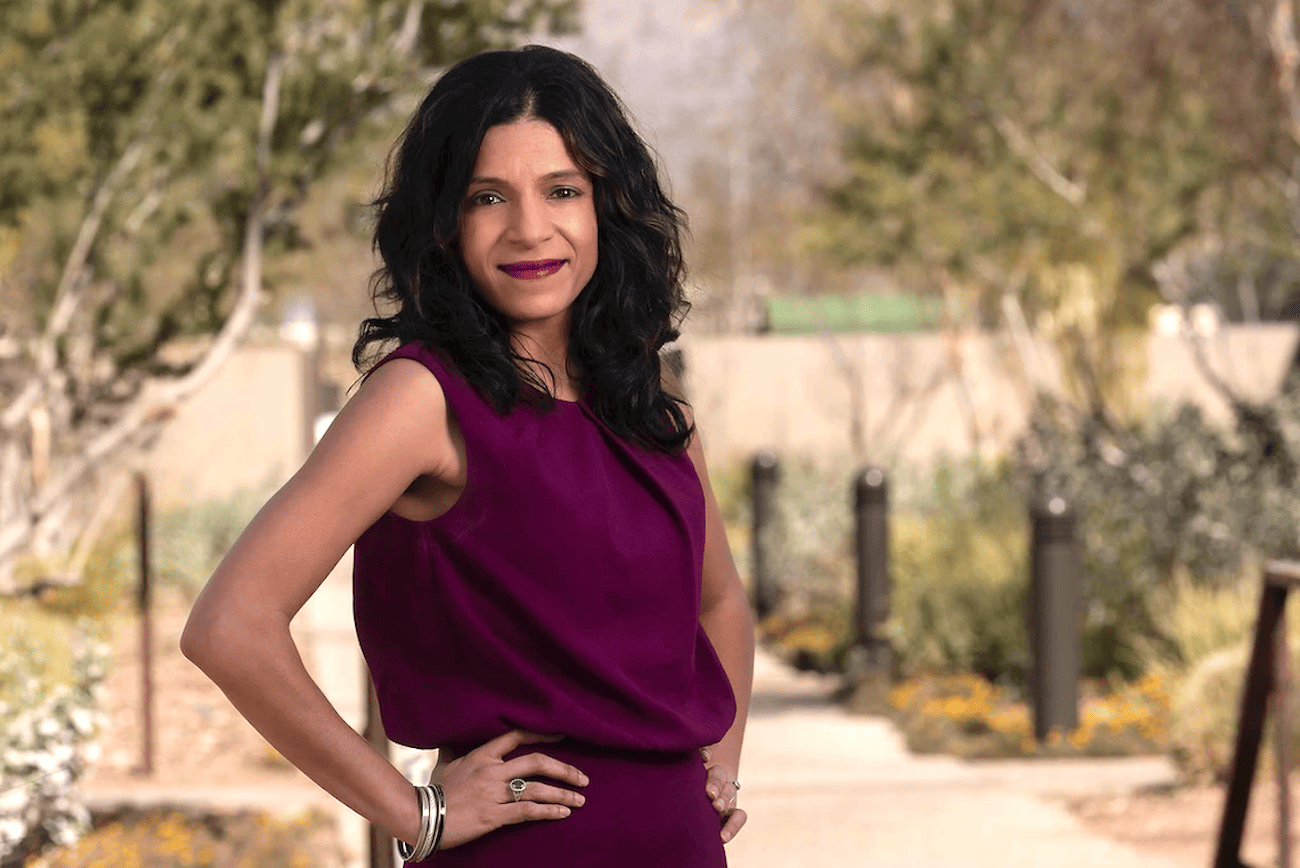

Dr. Rachna T. Shroff, an internationally respected oncologist who spent her career advancing treatments for some of the most difficult-to-treat gastrointestinal cancers, died October 11, 2026. She was 47.
Her death, following an aggressive cancer diagnosis, was announced by the University of Arizona, where she held senior clinical and research leadership positions. The university remembered her as a physician-scientist whose work helped change treatment options for patients with bile duct cancer and other gastrointestinal malignancies.
In an October 13 tribute, the American Society of Clinical Oncology (ASCO), one of the leading professional organizations in cancer medicine, described Shroff as a renowned gastrointestinal cancer specialist and a dedicated volunteer in the oncology community. Her career combined laboratory-informed research, clinical trials and direct patient care, with a particular focus on cancers that historically had few effective treatment options.
Shroff’s death was especially poignant because she had devoted so much of her professional life to studying the very kinds of cancer that would ultimately threaten her own life. Yet even after receiving a terminal diagnosis, she continued to work toward a future in which other patients would have better options.
In September, she launched an effort to establish an endowed award for young investigators studying biliary cancers. Within weeks, she had raised more than $1.35 million, meeting her goal of creating a lasting source of support for research beyond her own lifetime, according to the University of Arizona College of Medicine–Tucson.
That final initiative offered a measure of the priorities that had shaped her career: not simply treating patients in the present, but building the scientific capacity to help patients who would come later.
From Tucson to the Forefront of Cancer Research
Shroff was Indian American and grew up in Tucson, Arizona, in a family with strong scientific and medical connections. Her mother, Dr. Amita Trivedi, was a nephrologist, and her father, Devendar Trivedi, was a biochemist and peptide chemist. Her parents’ professions helped introduce her early to the possibilities of science and medicine, although her own path would lead toward cancer treatment.
A 2018 profile published by the University of Arizona Cancer Center described how Shroff’s interest in oncology began while she was still in high school. In 1993, she received an Osler Fellowship that allowed her to work in the laboratory of Margaret Briehl, a University of Arizona cancer researcher. Shroff later credited that experience with helping direct her toward oncology.
She graduated from St. Gregory College Preparatory School in Tucson in 1996 and earned a bachelor’s degree in biochemistry from Brown University in 2000. She received her medical degree from Thomas Jefferson University in Philadelphia in 2004 and completed her internal medicine residency at Barnes-Jewish Hospital in St. Louis. She subsequently trained in medical oncology at the University of Texas MD Anderson Cancer Center, completing her fellowship in 2010.
Shroff remained at MD Anderson, one of the country’s leading cancer institutions, from 2010 to 2018, rising to associate professor of gastrointestinal medical oncology. Her return to Arizona that year brought her career full circle: she came back to the university where her interest in cancer research had first taken root.
Tackling Cancers with Few Treatment Options
Shroff’s most influential work focused on cancers of the biliary tract and liver, including cholangiocarcinoma, or bile duct cancer, as well as pancreatic cancer and other hepatobiliary malignancies.
Her death at 47 is a profound loss for her family and for the cancer-research community. It also underscores the urgency of the work to which she devoted her career: developing better treatments for diseases that remain difficult to detect and treat, and making scientific advances accessible to the people who need them.
These diseases have historically received less research attention than some more common cancers, and many patients have faced limited treatment options. When Shroff began concentrating on bile duct cancer, the University of Arizona said, there were no FDA-approved therapies specifically available for the disease. She helped lead clinical trials that contributed to significant advances in the field.
Her work was important because clinical trials can do more than test whether a new drug works. They can help identify which patients are most likely to benefit from a treatment, establish new standards of care and give people with difficult-to-treat cancers access to promising therapies.
The University of Arizona credited Shroff with leading landmark clinical trials as a principal investigator and advancing research into immunotherapies and novel drug treatments. She authored more than 80 scientific publications and spoke at more than 130 professional engagements, according to the university’s memorial.
Her leadership extended beyond her own research. She served as co-chair of the Hepatobiliary Subcommittee for the Southwest Oncology Group, a major cooperative cancer research network, and chaired the gastrointestinal cancers meeting organized by ASCO in 2024.
In 2018, when she joined the University of Arizona Cancer Center, Shroff made expanding access to clinical trials a central priority. The goal was to ensure that patients in Southern Arizona would not have to travel elsewhere to explore innovative treatments. During her subsequent years at the institution, she built its gastrointestinal oncology program and expanded opportunities for patients to participate in research.
The American Society of Clinical Oncology also recognized her contributions to professional education, peer review and mentorship. She served on committees, helped shape scientific meeting programs and participated in initiatives supporting early-career oncologists. Her work connected laboratory research with the practical needs of patients and the training of physicians who would carry the field forward.
A Final Effort to Support the Next Generation
Shroff’s response to her own diagnosis reflected the same commitment to research that had defined her career.
In an October 9 article, The Cancer Letter, a publication covering oncology research and policy, reported that Shroff had been diagnosed with cancer of unknown primary—a cancer for which the original site could not be identified. She set out to raise $1.35 million for the Conquer Cancer–Rachna Shroff, MD, MS, FASCO Young Investigator Award in Biliary Cancer, intended to support early-career researchers. Nearly 600 people from the oncology community and beyond helped the effort surpass its goal in about two months.
The initiative had a personal dimension. Shroff herself had received a young-investigator award from Conquer Cancer earlier in her career. She described that support as a launchpad for her academic work, according to The Cancer Letter. By creating a permanent endowment, she sought to provide future researchers with an opportunity similar to the one that had helped her develop as a scientist.
The endowment also reflected a concern that had run through her career: the need to sustain research in biliary cancers, which remain challenging diseases to treat. Its purpose was not limited to honoring her name; it was designed to fund the work of young scientists who could discover new approaches and treatments.
In a 2024 interview published by ASCO Connection, Shroff shared a personal motto: “If you can’t find the sunshine, be the sunshine.” The ASCO Post recalled that phrase in its tribute, noting that she continued to raise money and support colleagues even after learning of her own illness.
A Legacy Beyond Publications and Clinical Trials
Shroff’s professional achievements were matched by her leadership at the University of Arizona. She served as associate director of clinical investigations at the university’s cancer center, chief of the Division of Hematology and Oncology, professor of medicine and associate dean for clinical and translational research. She also served as medical director for the oncology service line at Banner Health.
But the university’s memorial placed her family and personal relationships alongside those accomplishments. She is survived by her husband, Dr. Puneet Shroff, a physician at Banner Health; their children, Simran and Sachin; her parents; and her sister, Neema Sahni.
Her death at 47 is a profound loss for her family and for the cancer-research community. It also underscores the urgency of the work to which she devoted her career: developing better treatments for diseases that remain difficult to detect and treat, and making scientific advances accessible to the people who need them.
The young-investigator award she worked to establish will continue after her death. So will the clinical research programs she helped build, the physicians she mentored and the studies she helped advance.
For a scientist who spent her career seeking better answers for patients with gastrointestinal cancers, that enduring work may be the most fitting measure of her legacy.