




Puja Muted by Grief: Kolkata Stampede Reveals Systemic Failure Behind Crowd Management at Public Events

- The devastating tragedy fundamentally altered the mood, administration, and safety paradigm of Bengal’s biggest festival.
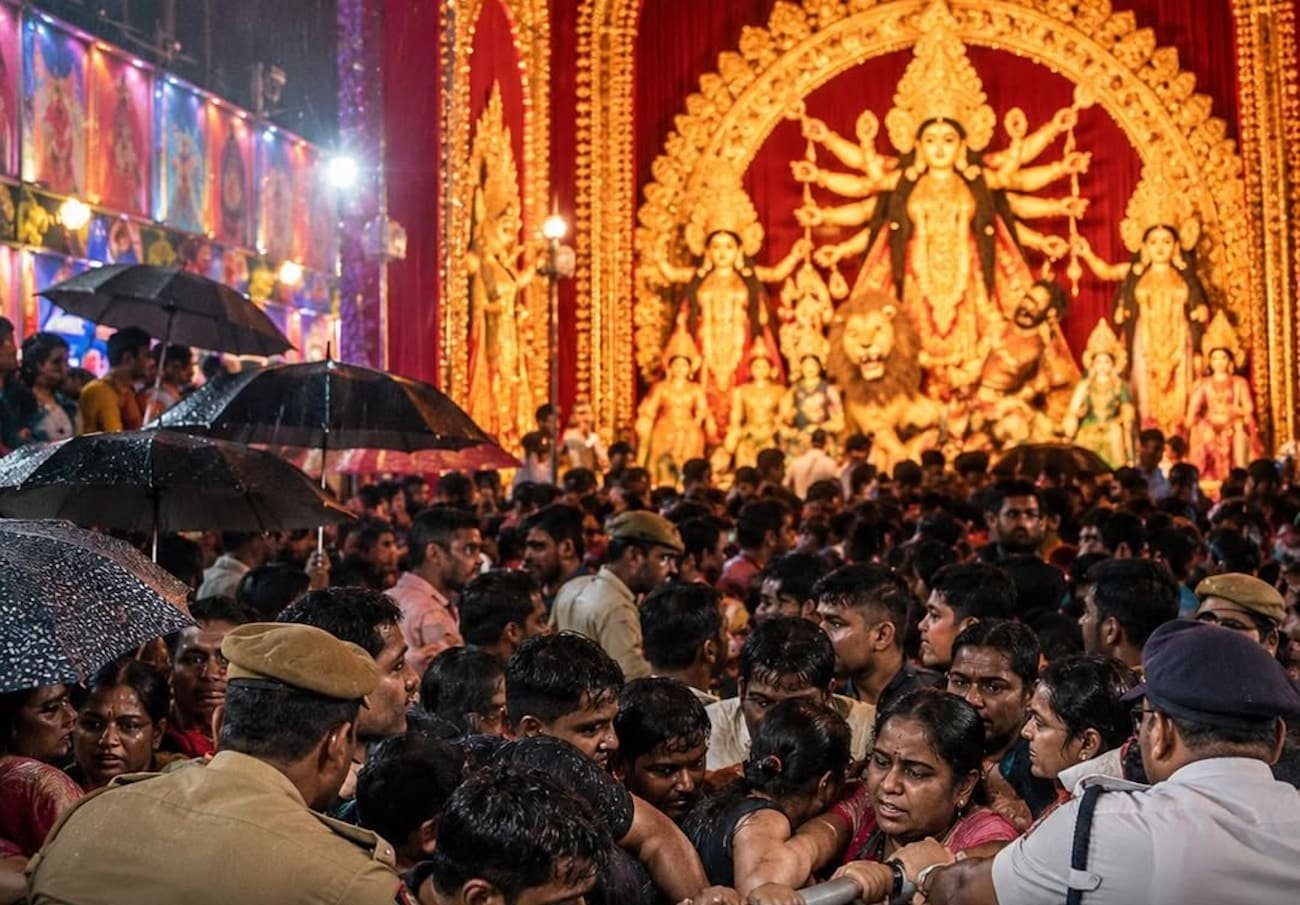

The defining and heartbreaking event of the festival occurred on the evening of Saturday, October 17, 2026 (Saptami, the second day of the main puja) at the Chorbagan Sarbojonin Durga Puja pandal in North Kolkata.
- The Toll: A sudden, heavy downpour caused thousands of pandal-hoppers to surge inward seeking shelter. Combined with misleading loudspeaker warnings claiming a structural collapse, narrow exit configurations, and a panicked surge, a horrific human crush ensued. 19 lives were lost—including women and children—and 25 others were severely injured.
- Systemic Lapses: Investigations highlighted acute systemic failures: a severe lack of trained police deployment, over-reliance on inexperienced volunteers, choked entry-exit routes obstructed by parked VIP vehicles, and a panic-inducing false alarm over the sound system.
- Immediate Fallout: The disaster prompted swift police action and political fallout. Multiple committee members and contractors were arrested under charges of culpable homicide, while the state government formed a six-member Special Investigation Team (SIT) to examine structural approvals and crowd management protocols.
Citywide Clampdown and Shift in Safety Protocols
The disaster cast an immediate pall of grief over Kolkata, turning what is usually an uninhibited citywide celebration into a period of mourning, legal scrutiny, and heightened caution.
- Temporary Pandal Closures: In the wake of the disaster, major crowd-pulling puja committees across Kolkata and Bidhannagar—such as Santosh Mitra Square, Tala Pratyay, and Ballygunge Cultural Association—either temporarily shut their gates or heavily restricted visitor entry to prevent compounding risks.
- State Intervention: The administration scrambled to overhaul safety protocols mid-festival. Eighteen senior IPS officers were deployed to supervise logistics across police commissionerates, while fire safety and municipal inspectors issued strict compliance notices to major venues. Organizers were instructed to rely heavily on exterior LED screens, enforce strict single-directional foot traffic, and eliminate VIP priority lanes.
A Quiet Departure: Celebrations in Somber Mode
As the remaining ritual days unfolded—Maha Ashtami, Navami, and Vijayadashami—the city’s customary festive fervor gave way to a reflective, muted atmosphere.
- Toned-Down Observances: Pandal hopping lost its characteristic late-night revelry. Families gathered at local neighbourhood para pujas rather than venturing into massive commercial theme venues. Loudspeakers were dialed back, and cultural night performances across neighborhood associations were either canceled or replaced with silent tributes for the stampede victims.
- Ritualistic Immersion: When the time arrived for the Visarjan (idol immersion) at the ghats along the Hooghly River, including Babughat and Nimtala, the processions were held under unprecedented police oversight. The traditional Dhaki drumbeats and Sindoor Khela proceeded with restraint and quiet devotion. Rather than the usual raucous street dances, thousands gathered at riverbanks in quiet reverence as Goddess Durga was immersed, offering prayers both for the Mother’s return next year and for healing across a grief-stricken city.
A Somber Retrospective and Investigation Updates


Looking back at the entirety of Durga Puja 2026, the festival experienced a fundamental turning point:
- From Splendor to Safety Audits: While Kolkata’s artisans had once again delivered breathtaking themes and architectural marvels, public discourse shifted overnight from artistic appreciation to hard questions regarding structural safety, emergency exits, and event regulation.
- Ongoing Probe & Administrative Accountability: Investigation teams continue to review CCTV footage and audio recordings to identify who issued the false collapse warning over the Chorbagan sound system. Authorities are using the incident to draft mandatory capacity limits and emergency evacuation blueprints for future public festivals.
- Lasting Legacy: High-profile post-puja gatherings, including the annual carnival and Bijoya Sammilani, have been restructured into administrative review sessions focused on public safety. The tragedy of 2026 serves as a stark reminder that urban infrastructure and crowd governance must keep pace with the massive scale of Kolkata’s Durga Puja.
Amy Ghosh is a Los Angeles-based Attorney at Law, specializing in Immigration Law, Family Law, and Employment Law, among others. She can be reached at: amygesq@gmail.com.