




‘Tenzing’: Apple TV’s Everest Drama Goes Beyond Colonial Hierarchy to Restore a Forgotten Hero to the Summit

- The film’s central achievement is to put a Himalayan mountaineer—not the familiar Western hero—at the heart of the story.
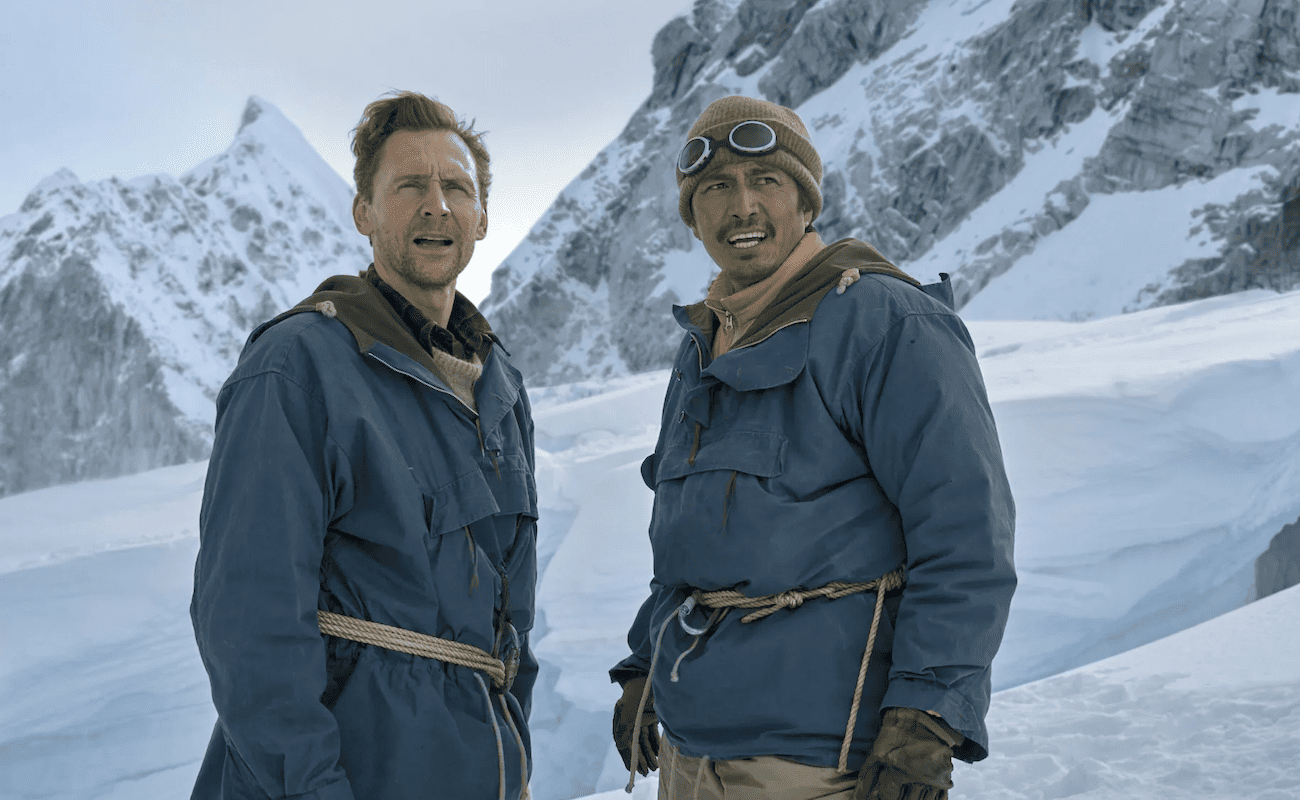

Jennifer Peedom’s film gives Tenzing Norgay the recognition he deserves, examining the colonial attitudes behind the 1953 Everest expedition. Its spectacular climbing sequences are more compelling than some of the biographical passages, but the film’s central achievement is to put a Himalayan mountaineer—not the familiar Western hero—at the heart of the story.
The history of Mount Everest’s first successful ascent has long been told through the name of Edmund Hillary, the New Zealand beekeeper and mountaineer who reached the summit alongside Tenzing Norgay on May 29, 1953. Apple TV’s new film, Tenzing, seeks to correct that imbalance by placing Norgay’s life, ambition and spiritual relationship with the mountain at the centre of the narrative.
Directed by Jennifer Peedom, the Australian filmmaker whose earlier work includes the climbing documentaries Sherpa and Mountain, the drama arrived in select theaters on October 9 and began streaming globally on Apple TV on October 16. Genden Phuntsok plays the adult Tenzing, with Tom Hiddleston as Hillary and Willem Dafoe as Colonel John Hunt, the leader of the British expedition.
The film’s purpose is not simply to recreate an extraordinary feat of endurance. It asks who gets remembered as a hero, who is relegated to a supporting role, and how colonial assumptions shaped the telling of an achievement that depended on the expertise of Himalayan climbers.
That is a worthwhile subject, and Tenzing is at its strongest when the physical danger of the climb and the unequal social relationships surrounding it become inseparable.
The Man Behind the Legend
The film traces Tenzing’s journey from his childhood in the Himalayas to his emergence as an experienced climber determined to be recognized as more than a Sherpa guide serving Western expeditions.
It portrays his fascination with Everest from an early age and his encounter with British mountaineer George Mallory, who helped inspire his ambition. The narrative later moves through his life in Darjeeling and his eventual involvement in the British efforts to reach the summit.
The screenplay, by Luke Davies, uses flashbacks to establish the experiences that shaped Tenzing’s character. These sequences explain his determination, but they do not always have the dramatic force of the expedition itself. As the Financial Times observed in its review, the early-life sections are less compelling than the film’s increasingly gripping final ascent.
The film benefits from casting three actors to portray Tenzing at different stages of life: Samdrup Dorje Lama as the boy, Tenzin Dalha as the younger man and Phuntsok as the mature climber. Phuntsok gives the adult Tenzing a quiet resolve that helps the character command attention without turning him into a conventional, larger-than-life action hero. The Guardian praised his charm and the film’s decision to centre Tenzing rather than Hillary.
Hiddleston’s Hillary is presented as a capable and relatively unpretentious climber, rather than as a villain whose achievements must be diminished for Tenzing’s to be acknowledged. This is one of the film’s more sensible decisions. The historical correction does not require replacing one heroic myth with another.
The two men’s partnership remains central to the ascent. But Peedom’s film insists that partnership should not obscure the disparity between the international recognition afforded to a Western mountaineer and the expertise of the Himalayan climber beside him.
The film reminds viewers that Tenzing Norgay was not simply the man who accompanied Edmund Hillary to the summit. He was a formidable climber whose achievement deserves to be remembered in its own right.
A Mountain, Two Ways of Seeing the World
One of the film’s most interesting themes is the contrast between the Western language of conquest and Tenzing’s reverence for the mountain.
For British expedition leaders, Everest represents a formidable challenge to be overcome, a national achievement and a test of human endurance. For Tenzing, the mountain—known in Tibetan as Chomolungma—is also sacred, associated with a mother goddess. The difference is not merely philosophical: it shapes how the film understands the climber’s relationship with the landscape.
Apple’s official synopsis describes the expedition as a story of competing backgrounds, classes and ambitions, with Tenzing encouraged by his wife, Dawa, and supported by expedition secretary Jill Henderson in his effort to be accepted as a full member of the climbing team rather than merely serve it.
The film’s treatment of colonial hierarchy is pointed, though not especially radical. The British expedition depends on local climbers’ knowledge, strength and experience, yet the authority to decide who belongs on the team remains largely in British hands. The irony is unmistakable: those who understand the mountain most intimately must still persuade outsiders that they deserve a place among the expedition’s principal climbers.
The film could have explored this imbalance with greater complexity. As The Guardian noted, it is more a story of Tenzing’s relationship with the mountain than a sustained indictment of British imperialism. Hillary, too, is portrayed as an outsider to the British establishment in his own way.
That restraint keeps the story from becoming a simple morality play, but it also limits its examination of the colonial structures that shaped mountaineering and its public mythology.
Where the Film Truly Reaches its Summit
The climbing sequences are the film’s greatest achievement. Peedom’s experience making documentaries about mountaineering is evident in the attention to terrain, weather and the physical effort required to move through an unforgiving environment.


The mountain is not just a magnificent backdrop. Snow, wind, unstable surfaces and the threat of crevasses make every advance feel precarious. The climbers appear vulnerable against a landscape that does not care about national prestige or personal ambition.
The Financial Times praised the spectacular final act, while RogerEbert.com highlighted the immersive sound design and the film’s ability to convey the unease of moving across dangerous terrain.
The result is a drama whose physical immediacy sometimes exceeds its emotional depth. The final ascent has a tension and momentum that portions of the biographical narrative struggle to sustain.
This unevenness is not fatal. The film’s early sections provide essential context, and the climb ultimately brings together its themes of ambition, identity, partnership and humility. But the frequent movement between past and present can interrupt the forward momentum, making the film feel more conventional than its subject deserves.
A Correction That Matters
The historical achievement at the heart of Tenzing belongs to both Norgay and Hillary. They were the first two climbers confirmed to have reached Everest’s summit, and their success followed decades of unsuccessful attempts and the labor of many expedition members.
Yet the public memory of the ascent has often given Hillary the more prominent place. Peedom’s film does not erase him; it restores Tenzing to the centre of a story in which his contribution was indispensable.
That distinction matters beyond mountaineering. The film speaks to a broader pattern in which the achievements of Indigenous people and local experts are celebrated less readily than those of better-known outsiders. Its portrayal of Tenzing challenges the assumption that the person whose name becomes famous is necessarily the person whose knowledge made success possible.
The movie is not without flaws. Its early-life passages can feel episodic, and its dramatic treatment of colonial attitudes sometimes lacks the force of its underlying subject. But Phuntsok’s performance, Peedom’s command of the climbing sequences and the film’s central perspective make it a worthwhile watch.
Tenzing is an engaging, visually powerful biographical drama that succeeds most fully on the mountain. It may not be as emotionally stirring throughout as its extraordinary subject warrants, but it makes a valuable correction to the familiar story of Everest’s first ascent. Most importantly, it reminds viewers that Tenzing Norgay was not simply the man who accompanied Edmund Hillary to the summit. He was a formidable climber whose achievement deserves to be remembered in its own right.