




How to Ease Congestion in Los Angeles or Bengaluru: The Traffic AI Our Cities Already Have, But Don’t Use

- A great deal of the research that could help Indian cities is being done by Indian American engineers and much of it is freely available.
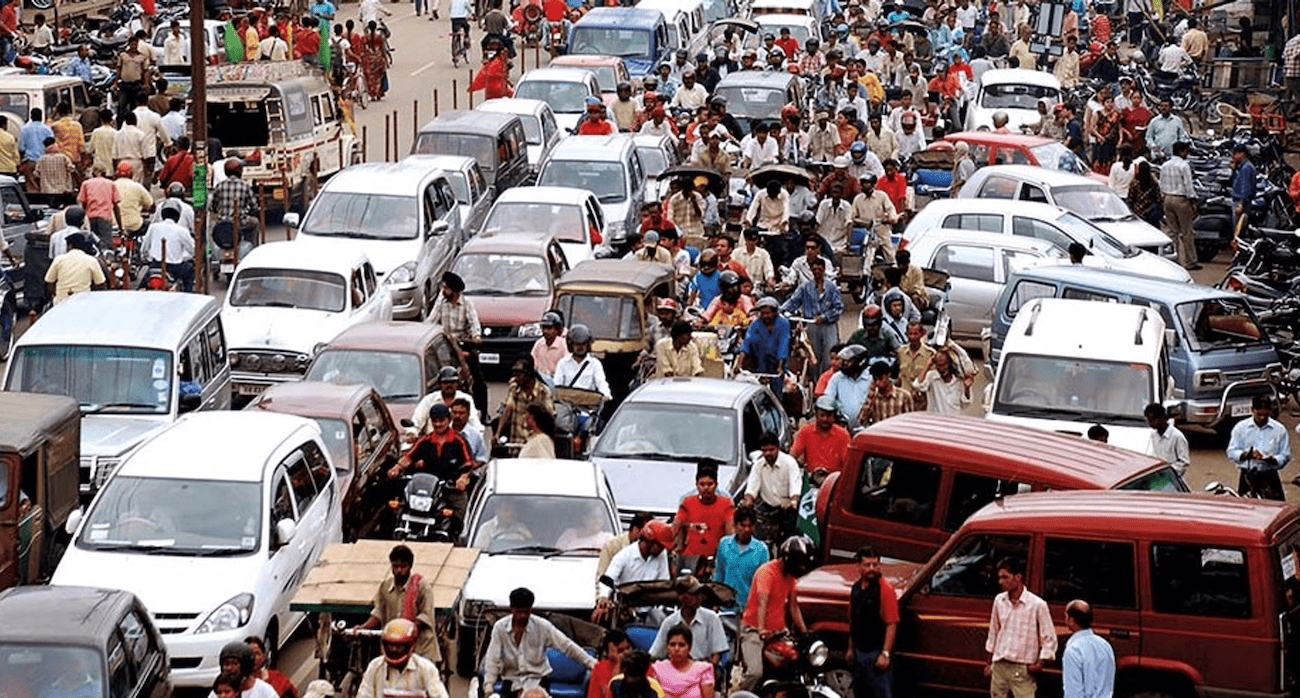
Anyone who has inched through gridlock in Los Angeles, Bengaluru, or Mumbai has had the same thought: surely, in the age of artificial intelligence, we can do better than this. Here is the uncomfortable part of the answer. In many cases we already can — the software to predict congestion earlier and more accurately exists, it is open, and it is free. What is missing is not the algorithm. It is the will and the plumbing to put it to work.
I say this as someone who builds these tools. My own research is an open-source framework that forecasts urban traffic congestion in real time. It combines three machine-learning methods that are usually used separately — one that reads spatial patterns across a road network, one that follows how conditions change over time, and one that weighs the many smaller factors that nudge traffic up or down. Tested on METR-LA, the standard Los Angeles freeway-sensor benchmark, the combined approach cut prediction error by more than 30% compared with any of the three methods alone. The paper and the code are public, so anyone can inspect them, test them, and build on them.
That last sentence is the whole point. This is not a proprietary black box sold on a five-year license. It is the kind of reproducible, license-free research a city can adopt using sensors it very likely already owns. And yet most cities will not touch it — not because it fails, but because the path from a published result to a deployed system runs through procurement rules, vendor contracts, integration headaches, and committees. The bottleneck is institutional, not technical.
For India, this gap is expensive. Urban congestion drains enormous amounts of time, fuel, and productivity from metros every year, and the costs fall hardest on the people who can least afford them — commuters on two-wheelers and buses, small businesses waiting on deliveries, ambulances stuck behind stalled traffic. The Smart Cities Mission was built precisely around the idea of data-driven urban management. Open, low-cost forecasting is the deployment model that mission was made for: no licensing fees, no lock-in, and full transparency into how the predictions are made.
None of this is an argument that AI will fix traffic on its own. Prediction is only useful if a city acts on it, and no model replaces good public transit, sensible street design, or the political courage to prioritize buses over cars.
None of this is an argument that AI will fix traffic on its own. Prediction is only useful if a city acts on it, and no model replaces good public transit, sensible street design, or the political courage to prioritize buses over cars. But better forecasting gives planners and engineers something they rarely have — a clear, early picture of what is coming, cheaply enough to actually use.
So what would it take to close the gap? Three unglamorous things. First, open-data standards, so the sensor feeds a city already collects can be read by more than one vendor’s software. Second, model portability, so a city is not trapped with whatever it bought a decade ago. Third, independent evaluation written into contracts, so claims of accuracy are tested on the city’s own roads before millions are spent. None of these require a breakthrough. They require procurement officers and elected officials to treat open, tested research as a serious option rather than a curiosity.
There is a quieter lesson here for the diaspora, too. A great deal of the research that could help Indian cities is being done by Indian-origin engineers and scientists abroad, and much of it is freely available. The missing link is not talent or tools; it is the connection between the people who publish and the agencies who deploy. Building that bridge — pairing open research with the officials who run our cities — may do more for congestion than any single model.
For me, the goal has always been simple: take the work out of the lab and put it where it can help someone get home a little sooner. The technology is ready. The question is whether our cities are.
Mayank Vadaliya is a doctoral researcher in information technology at the University of the Cumberlands, based in Austin, Texas. His open-source research on real-time urban traffic-congestion prediction is available on SSRN (DOI 10.2139/ssrn.5215361). ORCID: 0009-0008-0320-6131.