




Geeta Swamy, Physician-Scientist and Maternal Health Pioneer, Appointed Boston University Medical School’s Next Dean

- The Indian American obstetrician who spent 22 years at Duke University — surviving a federal funding freeze, championing COVID-19 vaccine research for pregnant women, and authoring more than 200 publications — will take the helm of BU's Chobanian & Avedisian School of Medicine on January 1, 2027.
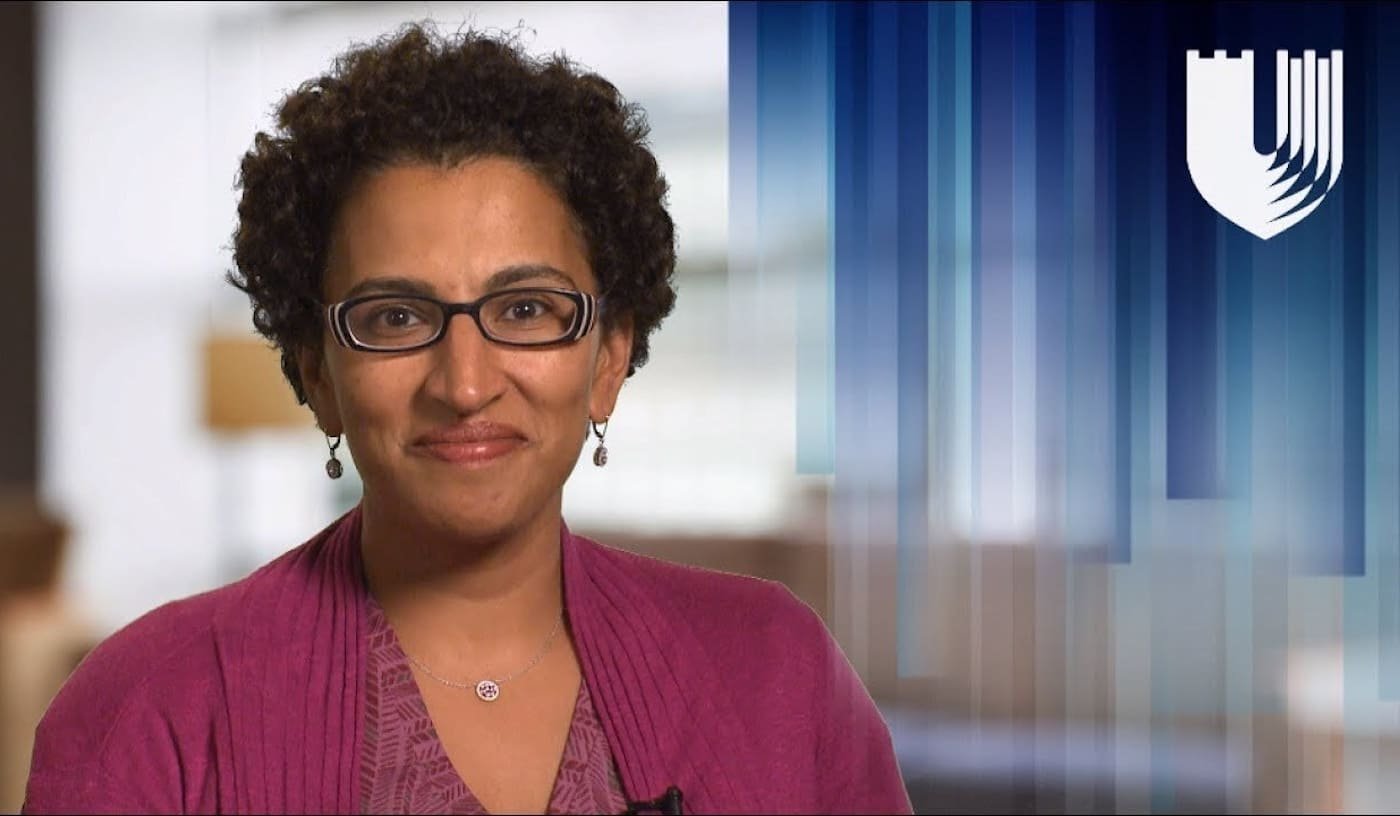

On September 17, 2026, Boston University announced that Geeta Krishna Swamy — the Haywood Brown, MD Distinguished Professor of Women’s Health, associate vice president for research, and executive vice dean for clinical sciences and research administration at Duke University School of Medicine — had been appointed the next dean of BU’s Chobanian & Avedisian School of Medicine, effective January 1, 2027.
Swamy brings more than two decades of experience in healthcare, groundbreaking research, and university leadership. She will be the school’s 19th dean, succeeding Karen Antman, who stepped down in May 2024 after 20 years in the role, with Hee-Young Park serving as interim dean since September 2025.
Boston University President Melissa Gilliam said, “We are pleased to welcome Dr. Swamy during this critical next chapter for Chobanian & Avedisian School of Medicine, and for the University overall.”
Swamy’s own statement was characteristic in its collaborative register. “I am honored and excited to join this remarkable community, and I look forward to listening, learning and working alongside its faculty, staff, students and partners to shape the school’s next chapter together,” she said.
The Educator and the Researcher
Geeta Krishna Swamy was born on January 15, 1971, in Griffin, Georgia. She graduated from Lumberton Senior High School in 1989 — making her a daughter of the American South, raised in Lumberton, North Carolina, a small city in Robeson County.
Swamy earned her undergraduate degree in public health and biostatistics and her medical degree from the University of North Carolina at Chapel Hill. She completed her obstetrics and gynecology residency at the University of Pittsburgh before returning to Duke for a fellowship in maternal-fetal medicine.
The return to Duke after fellowship training was the beginning of a 22-year institutional relationship that would prove among the most productive in the medical school’s recent history. Swamy subsequently held a number of leadership positions at Duke, including associate professor of obstetrics and gynecology, senior associate dean of the School of Medicine, and vice dean and associate vice provost for scientific integrity. She also served as a member of the Duke Human Vaccine Institute’s leadership structure, as the BU announcement documented.
A practicing obstetrician-gynecologist and maternal-fetal medicine specialist, Swamy’s work spans patient care, scientific discovery and university administration. Her research focuses on perinatal infections, maternal immunization and complications of pregnancy, and she has authored more than 200 publications.
Geeta Krishna Swamy was born on January 15, 1971, in Griffin, Georgia. She graduated from Lumberton Senior High School in 1989 — making her a daughter of the American South, raised in Lumberton, North Carolina, a small city in Robeson County.
The breadth of that research portfolio is significant. Her research earned recognition from the National Institutes of Health, including a Young Investigator Award for Perinatal Research in 2008. She was also recognized for research examining the impact of the 2009 H1N1 pandemic on women. During the COVID-19 pandemic, Swamy participated in vaccine research at Duke, including work examining the safety and effectiveness of COVID-19 vaccines for pregnant women. Her broader research has also explored environmental, social and political factors affecting health outcomes among women and children.
The COVID-19 vaccine work for pregnant women — a population systematically excluded from many of the original vaccine trials, leaving clinicians without safety and efficacy data during one of the most critical public health decisions of the pandemic — represents perhaps Swamy’s most publicly consequential research contribution. Pregnant women were among the most vulnerable groups in the early pandemic and among the least studied. Swamy’s work at Duke helped fill that gap at the moment it mattered most.
Surviving a Federal Funding Freeze
Swamy’s transition from Duke to BU comes after a period in which her administrative leadership was tested by challenges that no medical school administrator could have anticipated when she took the executive vice dean role.

Recently, in her role overseeing clinical sciences and research administration, Swamy helped coordinate the School of Medicine’s response to threats to the federal research funding landscape. In July 2025, the federal government froze $108 million in grants to the School. In April, Swamy reported in a webinar that in fiscal year 2026, the SOM had received $19 million less in grants compared to fiscal year 2025 and $78 million less than in fiscal year 2024.
The scale of those numbers — $78 million less in grants in two years — captures the severity of the federal funding disruption that the Trump administration’s approach to research funding has imposed on American medical schools. As Duke Chronicle reporter documented, Swamy’s role in navigating that disruption while simultaneously maintaining the school’s research output and faculty morale was among the most visible tests of her administrative capacity. Most recently, in September, Swamy discussed an effort to better utilize artificial intelligence across the School of Medicine.
Her experience managing a research institution through a federal funding crisis has given her a specific and timely qualification for the BU role. The Chobanian & Avedisian School of Medicine, like all American medical research institutions, is navigating the same federal landscape — and its new dean arrives with direct, recent experience doing exactly that work.
The New Role: A School, a Hospital, and a Community
As dean, Swamy will take on responsibilities that extend well beyond the traditional academic functions of research oversight and medical education.
As dean, Swamy will oversee medical education, biomedical research and faculty affairs and work closely with Boston Medical Center Health System, the school’s primary teaching hospital, as the institutions seek to deepen a partnership spanning three decades.
Swamy’s new role is about bridging the gap between the university, its medical school, Boston Medical Center (BMC), and the larger Boston community. Boston Medical Center is the largest safety-net hospital in New England — the institution that provides the majority of care to Boston’s uninsured, underinsured, and low-income patients. The relationship between the medical school and BMC is not simply academic; it is the mechanism through which BU’s research and clinical training reach the communities most in need of them. Swamy’s stated interest in deepening that partnership speaks directly to the institutional challenge.