




Amavasya in Pune Vs Parsippany: Why Your Relatives in India and Your Temple Here Disagree About the Date and Time

- This story explains where the gap comes from and how to check the date for your own city. It also explains why the question will matter more in 2027 than it does this year.
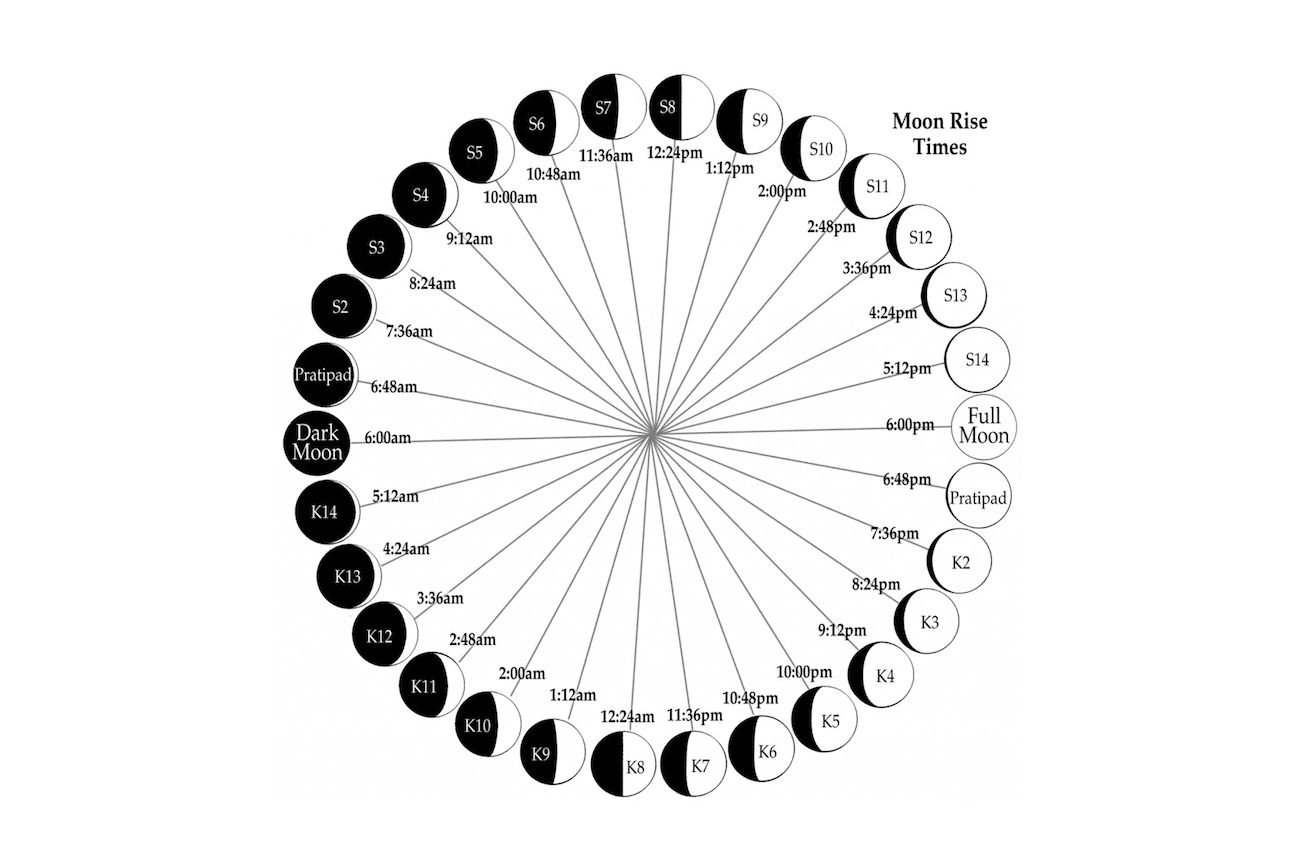

Every autumn, some version of the same phone call happens in Indian American homes. A cousin in Pune says the puja is tomorrow. The temple newsletter in New Jersey says it is today. Someone at the dinner table decides that one of them has made a mistake.
Usually nobody has. Both sides are applying the same almanac rule correctly, each for a different place on the planet.
This piece explains where the gap comes from and how to check the date for your own city. It also explains why the question will matter more in 2027 than it does this year.
The Hindu day starts at sunrise
A Hindu festival is defined by a lunar day called a tithi. A lunar month has 30 of them. Each tithi lasts as long as the Moon takes to pull 12 degrees further ahead of the Sun.
The Moon’s speed varies, so a tithi runs anywhere from just under 20 hours to almost 27. It begins and ends at a clock time, which can fall in the middle of an afternoon or at three in the morning.
The calendar day in this system runs from one sunrise to the next. The tithi in force at sunrise gives the day its name. Each festival then carries its own rule about the moment that counts, which may be sunrise, midday, the first hours after sunset, or midnight.
So the person preparing a panchang asks one question for every festival. On which local day does the required tithi cover the required moment?
Same new moon, two correct days
A tithi begins at the same instant everywhere on Earth. The local clock is what changes, and with it the local sunrise and sunset.
Take Diwali in 2027. Lakshmi Puja is performed in the evening window after sunset, and the new moon tithi, Amavasya, must be running during that window.
In New York, Drik Panchang shows Amavasya beginning at 11:17 AM on Thursday, 28 October 2027. By sunset it is well under way, so the puja falls on Thursday evening. Los Angeles gets the same answer.
In Pune, that same Amavasya begins at 8:47 PM on Thursday, after the evening window has already closed. The Pune panchang therefore moves Lakshmi Puja to Friday, 29 October, when Amavasya is still running at sunset.
One new moon produced two dates. Thursday in America, Friday in India. The family in Pune and the family in Edison are both keeping the rule exactly.
It happens inside America too
Distance from India is only part of the story. Two American cities can disagree with each other.
This year, Drik Panchang puts Lakshmi Puja on Sunday, 8 November 2026, in New York, in Los Angeles and in Pune alike. One date everywhere, and it falls on a weekend.
This October, Drik Panchang lists Sharad Purnima in Houston on Saturday, 24 October 2026. For Atlanta it lists the same festival on Sunday, 25 October. Houston sits about 11 degrees of longitude west of Atlanta, and the sun reaches every point of its day roughly 45 minutes later there.
That shift is enough to move the full moon across the edge of the window that Sharad Purnima uses. Houston even carries two dates for a single full moon. The same calendar lists Sharad Purnima on Saturday and the Purnima fast on Sunday. The night festival and the daytime fast are judged at different moments.
How to read a panchang entry
Most online panchangs print two times beside each tithi, a start and an end. Those two numbers carry most of the answer. Read them first.
Here is New York for Diwali this year. Drik Panchang shows Amavasya beginning at 12:57 AM on Sunday, 8 November 2026, and ending at 2:01 AM on Monday, 9 November. The tithi covers the whole of Sunday evening, so Lakshmi Puja falls on Sunday.
Now compare the same entry for Pune. There Amavasya begins at 11:27 AM on Sunday and ends at 12:31 PM on Monday. Sunday evening is covered again, so India and New York agree this year.
The habit worth building is simple. Find the moment the festival cares about, then check whether the tithi is running at that moment in your own city. Everything else in the almanac follows from that one test.
Why two temples in one city can differ
Two temples in the same city can also disagree. That gap has a second cause.
Almanacs are computed in slightly different ways. The main variable is the ayanamsa, the correction that anchors the zodiac to the fixed stars. The values in common use differ by small amounts, and several traditions add their own rules for when a festival should be kept.


Some temples also choose to follow the date printed in India. That keeps a congregation in step with family back home, and many temples make the choice on purpose. The priest is usually happy to explain which reckoning the temple follows.
Easy in 2026, harder in 2027
This year most families will never notice any of this at Diwali. Drik Panchang puts Lakshmi Puja on Sunday, 8 November 2026, in New York, in Los Angeles and in Pune alike. One date everywhere, and it falls on a weekend.
Next year Diwali lands on a weekday, and the American and Indian dates split. That reaches well past the family group chat.
California made Diwali a state holiday in October 2025 through AB 268. The law allows public schools and community colleges to close for the day. It names the festival and leaves the date to whoever prints the calendar.
A district that copies its 2027 date from an Indian source will close on Friday, 29 October. Most local families will have lit their lamps the evening before.
How to check the date for your own city
You do not need to learn the arithmetic. You need the right almanac for the right place.
- Use a panchang that asks for your location, and set it to your own city. Drik Panchang does this, and so does the Hindu calendar on Vedicmarga, which carries several U.S. cities.
- Check which moment the festival follows. Evening observances such as Lakshmi Puja are judged at sunset, and most fasts are judged at sunrise.
- Ask your temple which almanac it uses, and whether it follows local dates or dates from India.
- When a relative abroad names a different day, look up their city before deciding that anyone is wrong.
The sky over each home
A calendar tied to the Moon has to be local. The same new moon reaches Pune after dinner and New York before lunch.
Two households keeping two dates are keeping one rule faithfully, each under its own sky. That is worth remembering the next time the phone rings with a different answer.
Sources for the dates: Drik Panchang, checked 21 September 2026 for New York, Los Angeles, Houston, Atlanta and Pune. California AB 268 as summarised by the Hindu American Foundation.
Nirajan Bom Malla is a Vedic astrologer and spiritual coach based in Kathmandu, Nepal, with more than 16 years of practice. He combines spiritual knowledge and Vedic astrology to help people gain self-awareness and clarity, and consults in English and Hindi. He writes about the Hindu calendar and Vedic astrology at vedicmarga.com.