




Gloria Steinem: I Admired Her Willingness to Leave the Familiar in Order to Discover What Else Existed

- Her life was a road less traveled. A travel tale filled with questions, conversations, mistakes, laughter, and the courage to keep changing.
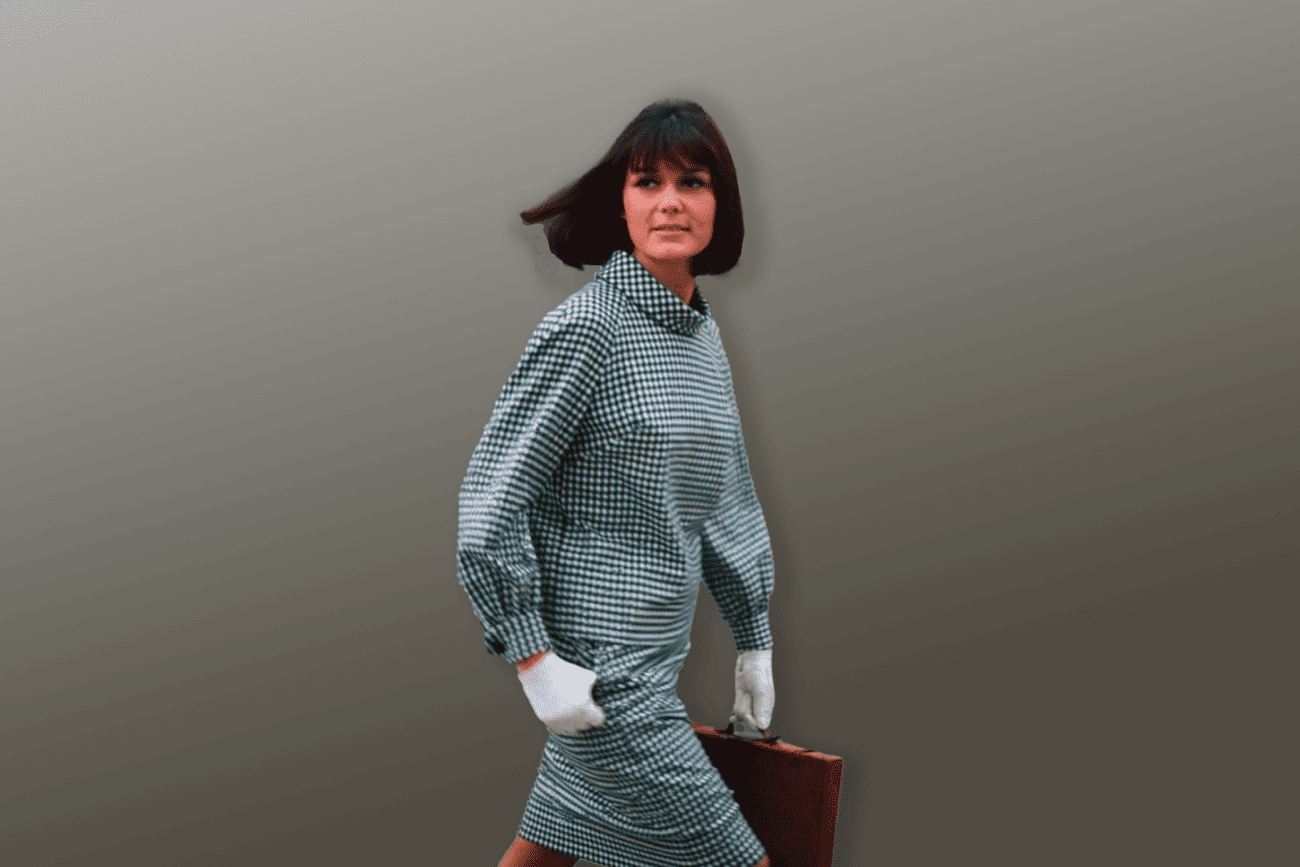

Gloria Steinem became one of the most influential voices of modern feminism, but what moves me most about her life is her belief that women should be free to become fully human. Her message was simple but profound: talk to people, know yourself, make your own choices, remain curious, travel beyond what is familiar, listen to differences, fall in love without losing your identity, and above all, laugh.
Born in Toledo, Ohio, in 1934, Steinem did not grow up in one home. Her father moved frequently, and Gloria also carried the responsibility of caring for her mother. Perhaps those early experiences helped shape her determination to seek a freedom that could not be dictated by circumstances. She learned early that home could be a place you carried within yourself.
After graduating magna cum laude from Smith College in 1956, Steinem spent two extraordinary years in India on a Chester Bowles Asian Fellowship. Those years expanded her intellect. She traveled, observed, wrote, listened, and learned about grassroots non-violent organizing from followers of Gandhi. She also began writing about India, developing the journalist’s habit that would define her life: go somewhere, listen carefully, ask questions, and tell the story in a peaceable but resounding voice.
I often wish I could have been alive then to listen to those conversations. Perhaps my own itinerant aunt might even have crossed paths with Gloria. I like imagining that possibility because it captures something I admire about Steinem: her willingness to leave the familiar in order to discover what else existed.
In India, she experienced a kind of independence that was difficult for many American women of her generation. She stayed in girls’ hostels, drank coffee in cafés with strangers, rode trains in women’s compartments, and encountered people whose lives were very different from her own. India was not simply an education in another country. It was an education in independence.
I also think of her connection to Dorothy Parker, the American poet and wit. Parker once joked that “men seldom made passes at girls with glasses”. Steinem wore oversized men’s glasses simply because she liked them. They suited her, as did her unpretentious clothes and her constant readiness to travel. She seemed uninterested in dressing according to someone else’s definition of how a woman should look.
In India, she experienced a kind of independence that was difficult for many American women of her generation. She stayed in girls’ hostels, drank coffee in cafés with strangers, rode trains in women’s compartments, and encountered people whose lives were very different from her own.
When Steinem returned to the United States and settled in New York, she worked as a freelance journalist. She wrote, observed, questioned, and made her way. Her breakthrough came with her 1963 undercover investigation of the Playboy Club, A Bunny’s Tale. Journalism became her doorway into self-discovery. But Steinem’s feminism was never simply about women being allowed to imitate men. It was about women becoming equal human beings and vice versa.
Steinem believed that marriage could be a choice. Motherhood could be a choice. Work could be a choice. Love could be a choice. Solitude could be a choice. Travel could be a choice. Even changing your mind could be a choice. She encouraged everyone to think for themselves.
Falling in love was not anti-feminist. Freedom could exist within love, too. Steinem herself married later in life to David Bale, demonstrating that feminism did not require rejecting partnership. What mattered was that a relationship was chosen rather than imposed.
Laughter was central to Steinem’s philosophy. In My Life on the Road, she wrote, “Laughter is the only free emotion. The only one that can’t be compelled.” I love that idea because laughter can accomplish something arguments sometimes cannot: it can liberate the mind.
Laughter arrives when something changes unexpectedly, when two opposites collide and suddenly a new reality becomes visible.Steinem spent decades creating those moments.
She became a central figure in the women’s liberation movement, co-founded Ms. magazine, helped establish the National Women’s Political Caucus, and fought for reproductive freedom, equal pay, and an end to violence against women.
She encouraged women to know themselves rather than define themselves through someone else. Talk to people unlike themselves, and recognize that differences are precious. She hosted women of all generations at her Upper East Side apartment in Manhattan. To think I could have visited her back in the nineties when I was at Memorial Sloan Kettering! But back then, I was too busy carving out my own path.
Conversation, for Steinem, meant both speaking and listening. That willingness to change is not weakness. It is understanding. It is evidence of life. Perhaps that is why Steinem remained so interested in growing. We do not have to remain the person we were at twenty, thirty, fifty, or seventy. We are allowed to become someone new.

When I think about Steinem’s life, I am struck by how often freedom appears in ordinary forms: a pair of glasses, a train ticket, a conversation with a stranger, a book, a question, a decision to leave, a decision to take a different route, a decision to call a friend on a whim, a decision to stay another day.
Perhaps freedom is practiced quietly, in the small decisions through which we tell ourselves: This is my life, and I am allowed to participate in choosing it.
That may be Steinem’s greatest legacy:
To know yourself.
To travel.
To work.
To love.
To change your mind.
To listen.
To speak.
To disagree.
To grow.
To age without apology.
And to laugh.
Because laughter, as Steinem understood, is more than amusement. It is a wisdom. A freedom—the instant when the world rearranges itself and we see that another reality is possible.
Gloria Steinem, passed away at 92 on September 3, 2026.
With roots in Georgia and the Bay Area, and her heart still tethered to a childhood mango tree in Mumbai, India, Monita Soni approaches writing as a contemplative practice. A path to honor humanity. She has published hundreds of movie reviews, book critiques, poems, and essays, and contributed to combined literary works. Her two books are “My Light Reflections” and “Flow Through My Heart.” You can hear her commentaries on Sundial Writers Corner, WLRH 89.3 FM.