




The Quiet Indian American: Dr. Sarah Jukaku — the Woman Behind Michigan’s Democratic Senate Nominee

- The physician who married Abdul El-Sayed at 19 has spent two decades building her own distinguished medical career — entirely on her own terms, and almost entirely out of the spotlight.
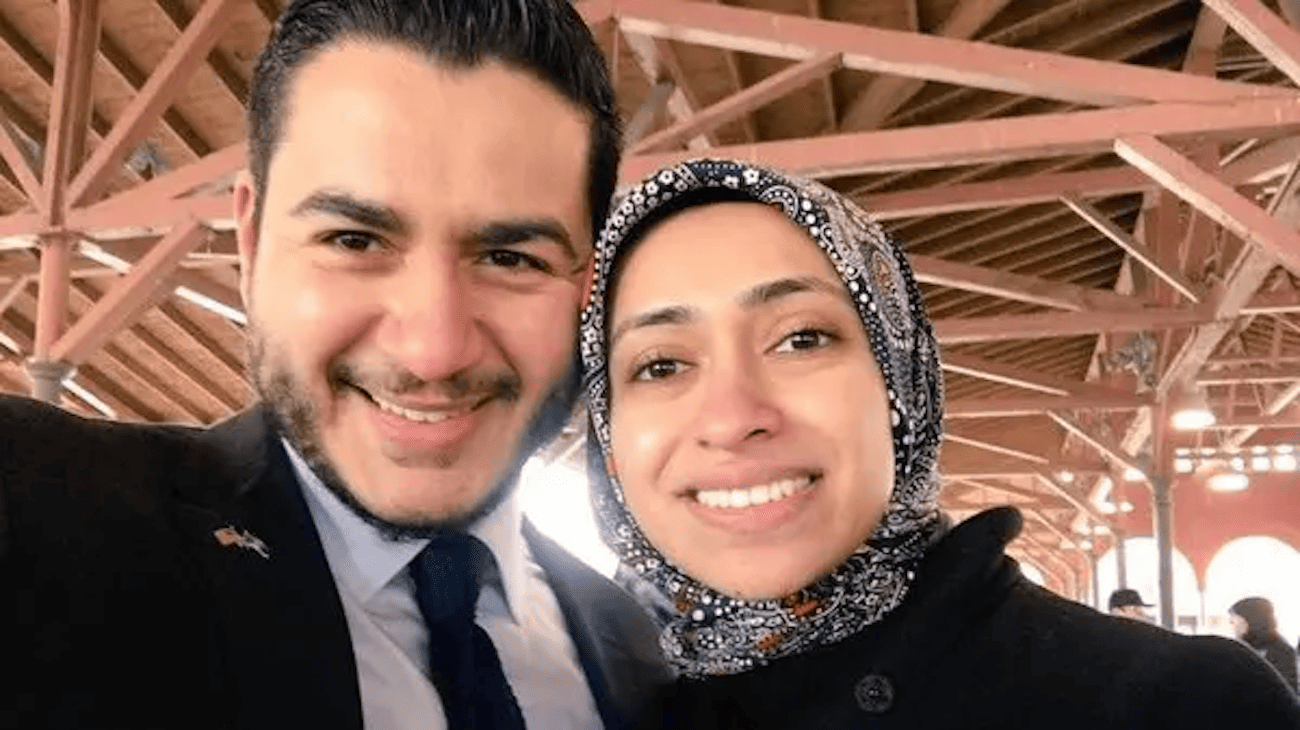

On the morning of Wednesday, August 5, 2026, the name “Sarah Jukaku” began appearing in search engines across the United States at a pace that neither she nor anyone who knows her had anticipated. Her husband, Dr. Abdul El-Sayed — the 41-year-old Egyptian American physician, former Detroit health director, and two-time progressive political candidate — had just won Michigan’s Democratic primary for United States Senate, defeating establishment-backed incumbent Representative Haley Stevens by less than one percentage point in one of the most closely watched primary races of the 2026 election cycle.
When someone suddenly becomes a national name in American politics, as BioHighLight observed in its careful account of what is actually known about Jukaku, the people standing next to them get pulled into the spotlight too. Sarah Jukaku, who has spent the twenty years of her marriage to El-Sayed maintaining a deliberately quiet public profile and building her own accomplished medical career entirely separate from his political ambitions, found herself the subject of intense public curiosity.
The curiosity is understandable. The profile it has produced, however, is the kind that reflects credit on someone who never sought it — a woman whose Indian heritage, exceptional medical credentials, and personal resilience tell a story worth knowing, independent of whose wife she happens to be.
A Family That Trained in India and Michigan
Sarah Jukaku is a practicing psychiatrist. Her parents emigrated from India, and medicine runs in her family. Her father, Dr. Jukaku S. Tayeb (also known as Tayeb Jukaku), is a Michigan nephrologist who trained in both India and the United States. A physician father and a daughter who went on to earn degrees from the University of Michigan, Columbia University, and Oxford — the Jukaku family’s trajectory is a precise embodiment of the South Asian immigrant medical tradition in America: skilled professionals who arrived with advanced training, became part of the country’s medical fabric, and raised children who continued and extended that tradition.
The Lacrosse Jock, and a Proposal Early in Freshman Year
The couple’s story begins on the University of Michigan campus in Ann Arbor. Both students at the time, they crossed paths on the Diag, the open central square that has long served as a gathering place for Wolverines.
El-Sayed has described recognizing immediately that she was “the smartest person I’ve ever met” while also being the most grounded and humble. Sarah later recalled her first impression of him as a “complete jock” who seemed to live in lacrosse gear, only to discover he was also sharply intelligent.
They wed in May 2006 after connecting through campus life, including the Muslim Students’ Association. Sarah was still a freshman when they became engaged — a fact she recalled herself, of El-Sayed’s proposal and her sense that they could “grow together.” She was 19. He was 21. Both were still at the beginning of the academic journeys that would eventually take them to Columbia University medical school and, in her case, to Oxford as well.
El-Sayed reflected on his wife’s character in his memoir “Healing Politics,” as Hollywood Life documented, writing that she “danced with her emotions” while he wrestled with his own — a description that captures, in a phrase, the difference in public temperament between the two. He has described her as a “mama bear” who fiercely prioritizes their family, as CelebsInDepth noted.
A Career Built on Its Own Merits
The medical career Sarah Jukaku has built across two decades is genuinely distinguished and deserves to be understood on its own terms rather than merely as an adjunct to her husband’s public biography.
She holds a medical degree from Columbia University’s Vagelos College of Physicians and Surgeons and a master’s degree from the University of Oxford. Before starting her own practice, she served as co-chief of psychiatry at University of Michigan Health.
Her professional focus areas include anxiety disorders, psychosis, and what her practice describes as culturally informed care. The phrase “culturally informed care” is significant and consistent with her heritage: a psychiatrist of South Asian background who treats a diverse patient population in the Ann Arbor area, and who brings to that practice an awareness of how culture shapes the experience and expression of mental illness, is doing work that the field has long recognized as both clinically necessary and chronically underrepresented.
She previously worked at the University of Michigan Health system before opening her own private practice, Mind Work Psychiatry, in Ann Arbor. The progression from academic medical center — as co-chief of psychiatry at one of the country’s most respected university hospital systems — to private practice reflects both clinical confidence and entrepreneurial initiative.
The medical career Sarah Jukaku has built across two decades is genuinely distinguished and deserves to be understood on its own terms rather than merely as an adjunct to her husband’s public biography.
She is also affiliated with the University of Michigan University Hospital, as Aus Publishers documented, maintaining a connection to academic medicine alongside her private practice work.
The Residency Complications and the Union That Helped
One of the few windows into Sarah Jukaku’s personal experience that she has herself offered publicly came during her husband’s 2026 Senate campaign — and it is a story that illuminates both her resilience and the policy stakes of healthcare debates that her husband has centered his political career on.
During her residency years, she experienced serious medical complications after the birth of their first child. In a video shared by El-Sayed’s campaign, she described how her union helped secure the medical leave she needed during recovery.
The account — a physician in residency, acutely ill after childbirth, relying on union-negotiated protections to take the leave she needed without losing her position — is both personal testimony and policy argument. It makes concrete and immediate what El-Sayed’s abstract advocacy for Medicare for All and physician union protections means to the people who actually live inside the healthcare system. And it was told in her own voice, in a campaign video she chose to appear in, making it one of the most deliberately public statements she has made in two decades of otherwise carefully maintained privacy.

Her experience, as Aus Publishers documented, “strengthened her belief in physician unionization and workplace protections for medical professionals” — a position she has used to highlight the importance of support systems for healthcare workers facing personal health challenges.
Two Daughters, Ann Arbor, and a Life Kept Intentionally Private
El-Sayed is a self-described ‘girl dad,’ and he is not shy about it. He and Jukaku are parents to two daughters, Emmalee and Serene, and the family calls Ann Arbor home.
El-Sayed has described making a greater effort during his 2026 Senate campaign to preserve time with his wife and daughters — a conscious adjustment from 2018, when his first gubernatorial campaign placed, by his own account, considerable pressure on his family, as PopTVCulture documented.
Jukaku keeps no active public social media presence. Most of what is verified about her comes from news coverage and her husband’s own public statements. She has appeared in some campaign videos — including the one about her residency complications — but has not sought interviews, made independent public statements, or cultivated any public profile separate from those campaign appearances.
That choice — to build a distinguished medical career, raise two daughters, and support a partner whose public profile grows year by year, all while maintaining her own privacy with genuine discipline — is itself a kind of statement. It reflects a woman who knows who she is and what she values, and who has made the specific, deliberate decision that those things do not require a social media following to be real.
An Interreligious Marriage at the Heart of American Political Life
The marriage of Sarah Jukaku and Abdul El-Sayed is itself a notable biographical fact about American pluralism. He is Muslim, the son of Egyptian immigrants. She is of South Asian Indian origin. As Aus Publishers noted, “Faith and shared values have played an important role” in their relationship — a formulation that acknowledges both the commonality and the difference, and that is consistent with the way El-Sayed has spoken about their partnership across his public career.
El-Sayed is now, as of August 5, 2026, the Democratic nominee for United States Senate in Michigan — a race that will determine whether the Senate majority shifts, and that will be watched nationally as a bellwether of progressive politics’ reach into the Midwest. The general election will be among the most scrutinized Senate contests in the country.
Through all of it, Dr. Sarah Jukaku will almost certainly remain what she has always been: the quieter half of a remarkable partnership, a physician who sees patients in Ann Arbor, a mother who her husband calls a “mama bear,” and the daughter of an Indian nephrologist who trained on two continents and instilled in her the belief that medicine is among the most meaningful things a human being can do with a life.