




Nightingale’s Sister Asha Bhosle, 1933–2026: The Voice That Sang Everything India Felt

- The singer who gave Bollywood its boldest, most versatile sound for eight decades died Sunday in Mumbai at 92.
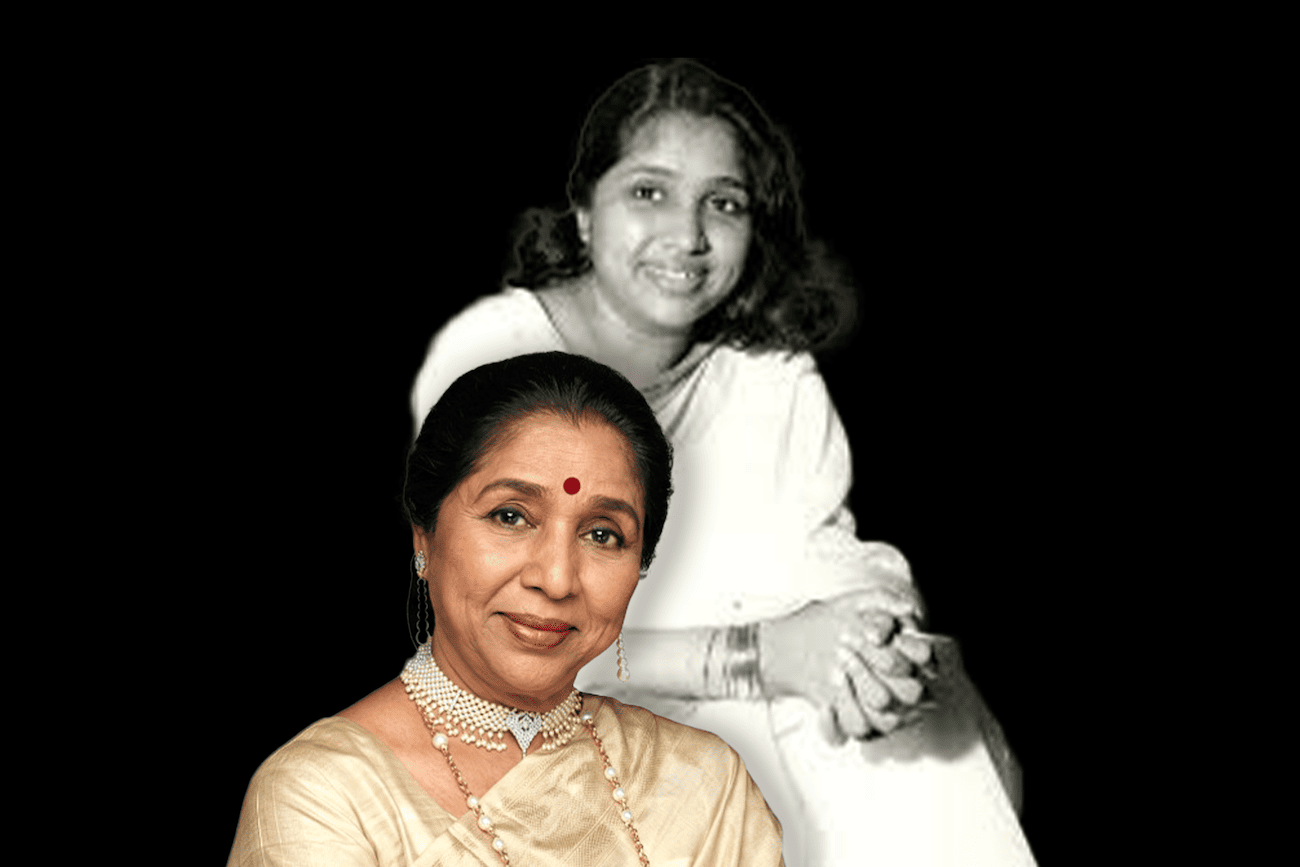

Asha Bhosle, the playback singer who lent her voice to more than 12,000 songs across eight decades and became the most recorded artist in music history, died on Sunday, April 12, 2026, at Mumbai’s Breach Candy Hospital. She was 92.
Her son, Anand Bhosle, confirmed the news to reporters outside the hospital. According to The Hindu, she had been admitted the previous evening with exhaustion and a chest infection, and was placed in intensive care overnight. Dr. Pratit Samdani of Breach Candy Hospital said that the cause of death was multi-organ failure. Her funeral was scheduled for Monday afternoon at Shivaji Park in Mumbai, where she would be cremated with full state honors, according to Al Jazeera.
By Sunday evening, tributes were flooding in from across India and around the world — from heads of government and heads of state, from film stars and musicians, and from hundreds of millions of ordinary listeners for whom her voice had been the soundtrack to their lives.
A Child of Music, Born to Survive
Asha Bhosle was born Ashalata Dinanath Mangeshkar on September 8, 1933, in the small hamlet of Goar in Sangli, in what is now Maharashtra. Her father, Pandit Deenanath Mangeshkar, was a revered classical singer and theater actor. When he died young, leaving behind five children and little else, the family relocated to Mumbai. It fell to the eldest daughters, Lata and Asha, to earn a living through song.
Asha began performing professionally at around the age of 10, starting in Marathi. She was not yet a teenager when music became both her refuge and her livelihood.
At 16, against her family’s wishes, she eloped with Ganpatrao Bhosle, her personal secretary, who was 31. The marriage was troubled from the start. Her in-laws reportedly mistreated her, and the couple separated in 1960 after three children together, according to Hindustan Times.
The personal rupture coincided with a professional struggle. For years, the Hindi film industry was dominated by her elder sister, Lata Mangeshkar, whose purity of tone and classical restraint had made her the unchallenged queen of playback singing. Asha was often steered toward the songs no one else wanted — the cabaret numbers, the mischievous ones, the sultry ones, the ones that Lata would not or could not sing. She took them, and made them her own.
The Voice That Went Where Others Would Not
The distinction between the two sisters was not merely professional — it was tonal and philosophical. Where Lata embodied devotion and classical virtue, Asha was earthier, more daring, and more dangerous, as Indiablooms observed. She inhabited the nightclubs and rain-soaked streets of Bollywood’s imagination, and when the footstamping, hip-swinging songs of the 1960s and 1970s needed a voice that could carry both heartache and abandon, filmmakers called on her.
Songs like “Piya Tu Ab Toh Aa Ja” — a brazen Bollywood cabaret number — and the haunting “In Ankhon Ki Masti” represent the breadth of what she could do, as Reuters noted: from sensual playfulness to deep, soulful longing. She sang ghazals, bhajans, folk songs, qawwalis, classical compositions, and Rabindra Sangeet. She performed in more than 20 Indian and foreign languages, including Hindi, Marathi, Bengali, Tamil, Gujarati, Punjabi, and Urdu.
In 1980, she married the celebrated composer Rahul Dev Burman — known to audiences as R.D. Burman or “Pancham” — despite resistance from his family, particularly his mother. Their professional partnership had already produced dozens of beloved songs; their personal union deepened a collaboration that would define an era of Hindi film music. Burman died in 1994, leaving Bhosle a widow for the second time.
A Record No One May Ever Break
The sheer scale of Bhosle’s output is staggering. In 2011, the Guinness World Records recognized her as the most recorded artist in music history, with more than 11,000 solo, duet, and chorus-backed recordings across more than 20 languages since 1947, according to Reuters and Wikipedia. She herself stated in 2006 that the total exceeded 12,000 songs, a figure that was widely repeated by Indian media over the years.
Her awards were commensurate with her output. She won seven Filmfare Awards for Best Female Playback Singer — a record — along with a Filmfare Lifetime Achievement Award, two National Film Awards, and 18 Maharashtra State Film Awards. In 2000, she received the Dadasaheb Phalke Award, India’s highest honor in cinema. In 2008, the Government of India awarded her the Padma Vibhushan, the nation’s second-highest civilian distinction. She received two Grammy nominations over the course of her career.
Asha Bhosle outlasted the era that made her, and then outlasted the one that came after it. She sang for the golden age of Hindi cinema, for its disco phase, for its mournful 1990s introspection, and for its brash 21st-century reinvention.
From Bollywood to the World Stage
Bhosle’s reach extended well beyond India. In 1991, she collaborated with Boy George on the track “Bow Down Mister,” as Reuters reported — a pairing that surprised many at the time and signaled her willingness to cross cultural boundaries. She later worked with the Kronos Quartet, who recorded R.D. Burman compositions with her for a 2005 album. She collaborated with Michael Stipe on a song used in the Hollywood film Bulletproof Monk, according to Wikipedia.
Her global footprint was confirmed most improbably by British alternative rock band Cornershop, whose 1997 song “Brimful of Asha” — a tribute to her — became an international phenomenon, reaching the top of the UK Singles Chart in 1998 after a remix by Norman Cook, known as Fatboy Slim.
As recently as 2026, just weeks before her death, she appeared on a track by the British virtual band Gorillaz on their ninth studio album, according to Indiablooms — a collaboration that, at age 92, underscored a restlessness and creative appetite that never diminished.
A Life Beyond the Microphone

In her later years, Bhosle channeled her energy into ventures beyond music. She launched a chain of restaurants called “Asha’s” in Dubai and the United Kingdom, as Al Jazeera reported, pursuing a passion for cooking she had long kept alongside her performing career.
She made her acting debut in 2013 in the film “Mai,” earning critical praise for her performance. She remained a visible public figure well into her nineties. On her 90th birthday in 2023, she performed a full Broadway-style show at Dubai’s Coca-Cola Arena, where she sang and danced before a packed crowd, according to Wikipedia. At a press conference announcing the show, she declared — in Hindi — “I am the last Mughal of the film industry,” a reference to her longevity and her creative ties to generations of musicians and filmmakers.
A Nation Grieves
The tributes that poured in on Sunday reflected the depth of Bhosle’s hold on Indian cultural life.
Indian Prime Minister Narendra Modi wrote on X that he was deeply saddened by her passing, and described her musical journey as one that had enriched the country’s cultural heritage and touched hearts across the world. He said her voice carried what he called timeless brilliance across both soulful melodies and vibrant compositions.
From the film world, actor Shah Rukh Khan wrote on X, that her voice had been one of the pillars of Indian cinema and would continue to resonate around the world for centuries. Actor Hema Malini, whose films Bhosle had sung for across decades, wrote on X that the singer had lent vivacity and character to her songs in a way that left audiences grieving at her absence.
The Last Mughal
Asha Bhosle outlasted the era that made her, and then outlasted the one that came after it. She sang for the golden age of Hindi cinema, for its disco phase, for its mournful 1990s introspection, and for its brash 21st-century reinvention. She crossed into Western pop, collaborated with classical ensembles, and ended her career on a Gorillaz album at 92.
In the world of Indian music, her rivalry and coexistence with her sister Lata — who died in 2022 — defined half a century of playback singing. With Lata gone, Asha had become the last living link to a musical dynasty that began before Indian independence. Now that link, too, is broken.
She is survived by her son Anand Bhosle, her granddaughter Zanai Bhosle, and by more than 12,000 recordings — a catalogue so vast it is difficult to comprehend, and one that will long outlast the grief of this week.