




Was Suchir Balaji Killed? An Indian Mother Continues Her Lonely Fight Against OpenAI

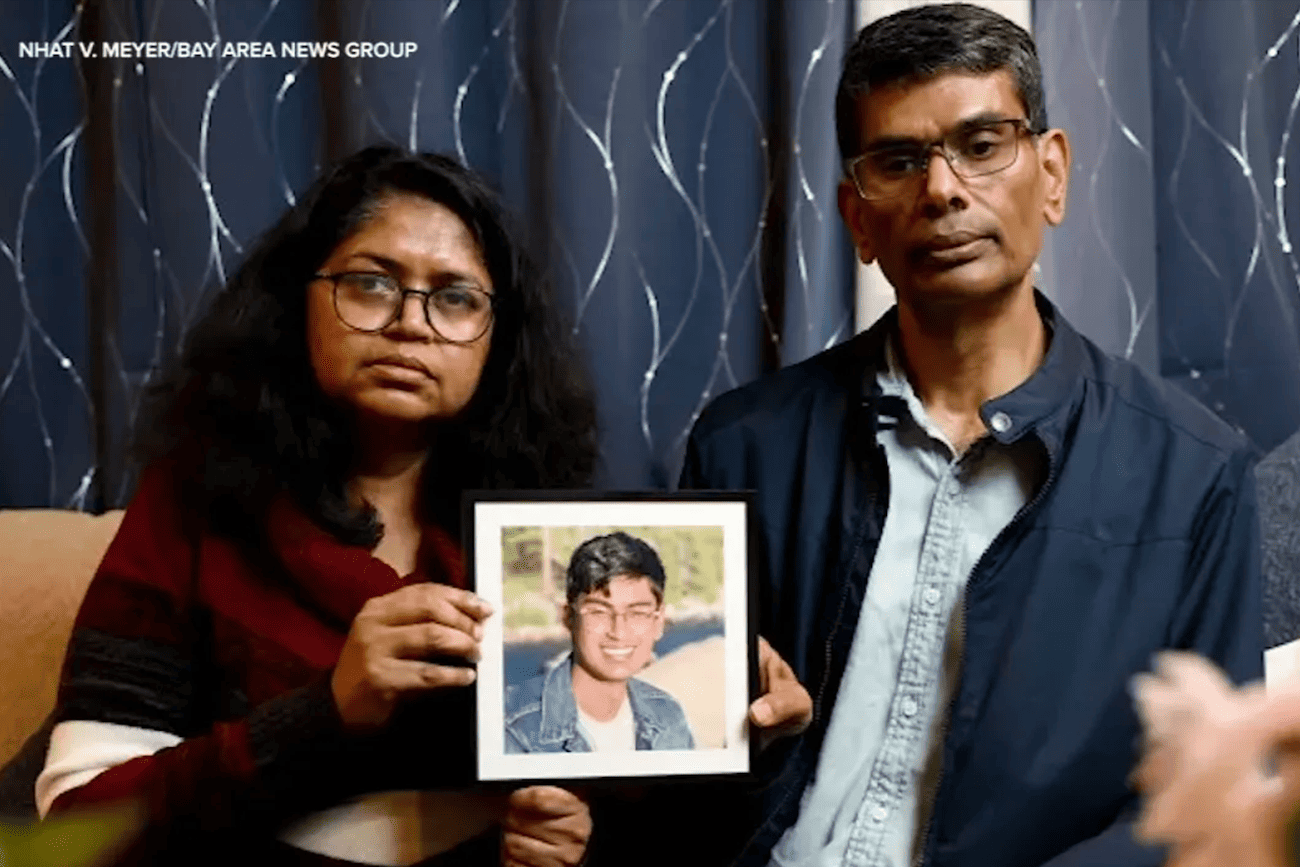
- “My son had documents against OpenAI. They attacked him and killed him,” Poornima Ramarao told Tucker Carlson. She is fighting a corporation worth hundreds of billions of dollars. Fighting a city that has closed its files and moved on.

Before you read on.
This is an old story. Or at least, it may feel like one by now. The headlines came in December 2024, and for a few weeks, many of us were shaken. We shared the articles. We asked the questions. We said: someone should look into this. Then the news cycle turned — as it always does. New outrages arrived. New crises demanded our outrage. And slowly, quietly, without anyone making a decision to forget, Suchir Balaji’s name drifted from our feeds and from our minds.
But one mother and one father cannot forget. They don’t get to move on. There is no next story for them. No new outrage to distract from this one. For them, this is not a news cycle — it is the rest of their lives. It is every morning they wake up and remember. Every birthday that passes. Every year their son does not call.
The mother — fierce, relentless, heartbroken — is still fighting. Fighting a corporation worth hundreds of billions of dollars. Fighting a city that has closed its files and moved on. Fighting the silence that powerful people are counting on.
This post is a reminder — for those of us who were shocked in December 2024, and have since forgotten. You are allowed to forget. You have that luxury. A grieving mother does not.
———-
He celebrated his 26th birthday on November 21, 2024. His father gave him a gift that day. Five days later, Suchir Balaji was dead.
Poornima Ramarao, his mother, has held onto that birthday as evidence — evidence that her son was not a man preparing to take his own life. “My son celebrated his birthday a day before he died,” she told the San Francisco Office of the Chief Medical Examiner. “What more do we need to give on account that he was in a happy mood?”
The official story — delivered swiftly, closed quickly — is that Suchir Balaji died by suicide. A single gunshot wound to the head. The apartment dead-bolted from the inside. No signs of forced entry. Case closed. Move on.
Poornima Ramarao has not moved on. She will not. And for those of us watching from a distance, we should ask ourselves: why has the rest of the world?
Who Was Suchir Balaji?
This is not a story about a conspiracy theory. It is a story about power, about accountability, and about a grieving Indian-American mother who has been fighting the most powerful AI company in the world — with almost nothing but her conviction and the truth as she knows it.
Suchir Balaji was no ordinary 26-year-old. He began coding at 11. By 13, he had built his own computer. He was a finalist in the USA Computing Olympiad. He attended UC Berkeley and was recruited directly out of college by OpenAI co-founder John Schulman, who would later write that Balaji’s contributions to the GPT-4 project were “essential” — that it “wouldn’t have succeeded without him.”
For four years, Suchir Balaji helped build the engine that powers ChatGPT. He worked on WebGPT. He gathered and organized the vast internet data that trained OpenAI’s most valuable product. He was, by every measure, a prodigy. And he earned accordingly — reportedly $350,000 a year.
Then, in August 2024, he quit.
“If you believe what I believe, you have to just leave the company.”
What did he believe? That OpenAI was breaking the law. That it was hoovering up copyrighted material — the work of journalists, authors, artists — to train its AI systems, without permission, without compensation, under the hollow shield of “fair use.” He went public in October 2024 with a detailed essay outlining his legal arguments, and sat for an interview with The New York Times.
He was also identified in a New York Times court filing as a potential witness in the newspaper’s landmark copyright lawsuit against OpenAI. He had said he was willing to testify.
One month later, he was dead.
The Questions That Won’t Go Away
Let us be precise about what we know and what we don’t. The San Francisco Police Department, after releasing a 13-page autopsy report in February 2025, officially closed the investigation, stating there was “insufficient evidence” of homicide. The medical examiner ruled the death a self-inflicted gunshot wound. The SFPD noted that the apartment was dead-bolted from inside and that Balaji had recently searched for “brain anatomy” on his computer.
But Poornima Ramarao has commissioned at least six independent forensic reports — a second autopsy, a blood splatter analysis, a toxicology review by an Alabama specialist — and hired private investigators on two continents. She has not been able to share some of these findings publicly, but she describes what they suggest: an “atypical” gunshot trajectory inconsistent with self-infliction. Signs of a struggle. A ransacked apartment. A tuft of unidentified hair near bloodstains.
The toxicology report found GHB — commonly known as a date rape drug — in Balaji’s system. The medical examiner says that low levels of GHB can accumulate naturally during decomposition. The family’s toxicologist says he “more likely than not” ingested it before death. Both things can be simultaneously true. Neither resolves the question.
Packages addressed to Balaji disappeared from the building after his death. His family alleges that the property management company at his apartment — the Alchemy complex at 188 Buchanan Street in San Francisco’s Hayes Valley — fired the apartment manager shortly after he provided the family with CCTV footage, then claimed the cameras weren’t working. The family sued the property company in September 2025, alleging obstruction, evidence tampering, and concealment — including that only two days of surveillance footage were provided when the family had requested seven.
What did he believe? That OpenAI was breaking the law. That it was hoovering up copyrighted material — the work of journalists, authors, artists — to train its AI systems, without permission, without compensation, under the hollow shield of “fair use.” He went public in October 2024 with a detailed essay outlining his legal arguments, and sat for an interview with The New York Times.
“Defendants engaged in a pattern of concealment and obstruction that interfered with both the police investigation and Plaintiffs’ private forensic review.”
— Court filing, Balaji v. Alta Laguna LLC
None of this proves murder. But taken together, these are questions that deserve thorough answers — and a family that deserves them.
A Mother Who Wouldn’t Be Silent
Here is what Poornima Ramarao has done in the sixteen months since her son’s death:
She has hired and fired investigators and attorneys across the United States and India. She has raised funds through cryptocurrency donations — within two hours of posting a Solana wallet address in January 2025, over $126,000 poured in from strangers. She has protested outside OpenAI’s San Francisco headquarters. She appeared on the Tucker Carlson show. She has sued the SFPD for access to the full investigative records. She has sued her son’s apartment complex for allegedly destroying evidence. She filed a California ballot initiative in December 2025 — through a coalition called the Campaign for AI Nonprofit Integrity — seeking oversight of OpenAI’s conversion to a for-profit company.
She has not stopped.
“The only thing that keeps us going is we have to get justice for him,” she told the San Francisco Examiner. “We want people to know the facts about Balaji’s case, and we want an investigation to open.”
She told Tucker Carlson: “My son had documents against OpenAI. They attacked him and killed him.” Elon Musk, who has a long and bitter feud with OpenAI CEO Sam Altman, shared the interview with the caption: “Extremely concerning.” He had earlier replied to one of her posts with: “This doesn’t seem like a suicide.”
Representative Ro Khanna of Silicon Valley called for “a full and transparent investigation.” San Francisco Supervisor Jackie Fielder echoed the call. These are not fringe voices.
Balaji had written in his journal, his mother says, that he felt he was “a credible threat because of New York Times.” She believes he sensed the danger long before the world did. Suchir also wrote, she says: “I have to somehow stop it” — referring to the trajectory of AI and the harm he believed it was causing.
He tried. He left. He spoke. He died.
The Silence That Serves the Powerful
Let me be honest about what this piece is and what it isn’t.
There is no smoking gun. There is no evidence — publicly available — that directly implicates OpenAI, Sam Altman, or any individual in the death of Suchir Balaji. The official investigation concluded suicide. Altman has categorically denied any wrongdoing and expressed condolences to the family.
But there are patterns that deserve scrutiny. A whistleblower who had agreed to testify against one of the most powerful companies in the world is dead one month after going public. The investigation was closed in months. The family’s requests for records were denied, prompting a lawsuit. An apartment manager who helped them was allegedly fired. Packages potentially containing evidence vanished. Surveillance footage was incomplete.
And then — slowly — the media moved on.
That is how power works. It does not always require conspiracy. Sometimes it requires only patience, and the reasonable certainty that the news cycle will turn. TSA funding debates. An escalating war with Iran. The Epstein files. A thousand other outrages competing for our attention. Suchir Balaji gets pushed down the feed. His mother’s cries get quieter, not because she stopped crying, but because we stopped listening.

That is good news for OpenAI. That is good news for Sam Altman. A trillion-dollar industry that Suchir Balaji believed was built, in part, on theft — and possibly built, in part, on the silence of those who dared to say so.
“If we don’t stop them… the rich will control the world.”
— Poornima Ramarao
She is not wrong about the stakes. Even setting aside the circumstances of her son’s death — even if we accept the official verdict entirely — the broader story is one of an industry that has operated in a legal gray zone, using the work of creators without their consent, reshaping the information ecosystem, and facing accountability from almost no one.
Suchir Balaji was one of the few people with the knowledge, the credentials, and the courage to say so from the inside. And now he is gone.
Why This Matters to Indian Americans
Suchir Balaji was an Indian American. His parents — Poornima Ramarao and Ramamurthy Balaji — are immigrants who worked in the technology sector in Cupertino, California. They raised a son who became exceptional, who rose to the highest levels of the most consequential technology company of our time, and who had the moral integrity to walk away from a job with a very high salary when his conscience demanded it.
That story — of sacrifice, of principle, of a young man from an immigrant family trying to do the right thing — should resonate deeply in the Indian American community. It is the story of so many of our children. It is the story of what we hope they will become.
And now his mother stands alone, fighting a corporation valued in the hundreds of billions of dollars, fighting a city government that has closed its files, fighting the indifference of a media landscape that has largely moved on. She is doing it while grieving. She is doing it across a language barrier. She is doing it from Union City, California, with a Solana wallet address and an unwavering belief that her son did not choose to die.
Whether or not she is right about how he died, she is owed something. The community that claims to champion immigrant stories, that valorizes the tech sector as a space of merit and opportunity — we are owed an honest reckoning with what happens when that system turns against one of its own.
The Fight That Remains
As of early 2026, Poornima Ramarao has not succeeded. The case remains officially closed. No federal investigation has been opened. The ballot initiative she filed faces an uphill battle, requiring over 500,000 signatures and an estimated $15 to $100 million to mount a successful campaign.
She and her husband continue to pay rent on their dead son’s apartment in San Francisco — hoping, perhaps irrationally, that one day investigators will return and find what she believes they missed.
She has written that her son foresaw what was coming, that he wrote in his journal about the harm AI was doing to humanity. That he felt he was a credible threat. That he felt he had to stop it.
Maybe he was wrong about the threat to himself. Or maybe he was exactly right.
We don’t know. That’s precisely the problem.
What we do know is this: a 26-year-old who stood up against one of the most powerful companies in the world is dead. His mother has been fighting for justice, largely alone, for over a year. The official investigation is closed. The media has moved on. And the company he blew the whistle on is now completing its conversion to a for-profit entity, valued at hundreds of billions of dollars, more influential than ever.
Suchir Balaji believed that OpenAI was harming the internet, harming creators, harming society. Whether he was right about that is a debate worth having. But the story of his death — and his mother’s fight to be heard — is one that deserves not to be forgotten.
Poornima Ramarao is still talking. The question is whether anyone is still listening.
This piece is an opinion and analysis article. It reflects the reporting of authenticated media sources and the author’s observations. No factual claims about the cause of Suchir Balaji’s death beyond the official record are asserted. Readers are encouraged to review their primary sources and draw their own conclusions.
Ganpy Nataraj is an entrepreneur, author of “TEXIT – A Star Alone” (thriller) and short stories. He is a moody writer writing “stuff” — Politics, Movies, Music, Sports, Satire, Food, etc.