


We Will Strike. We Will Deter. We Will Win: America’s Comforting Simplicity

- Beneath these visible achievements lies a quieter truth. Iran is not a system that collapses when hit. It is a system that absorbs pressure and disperses it.
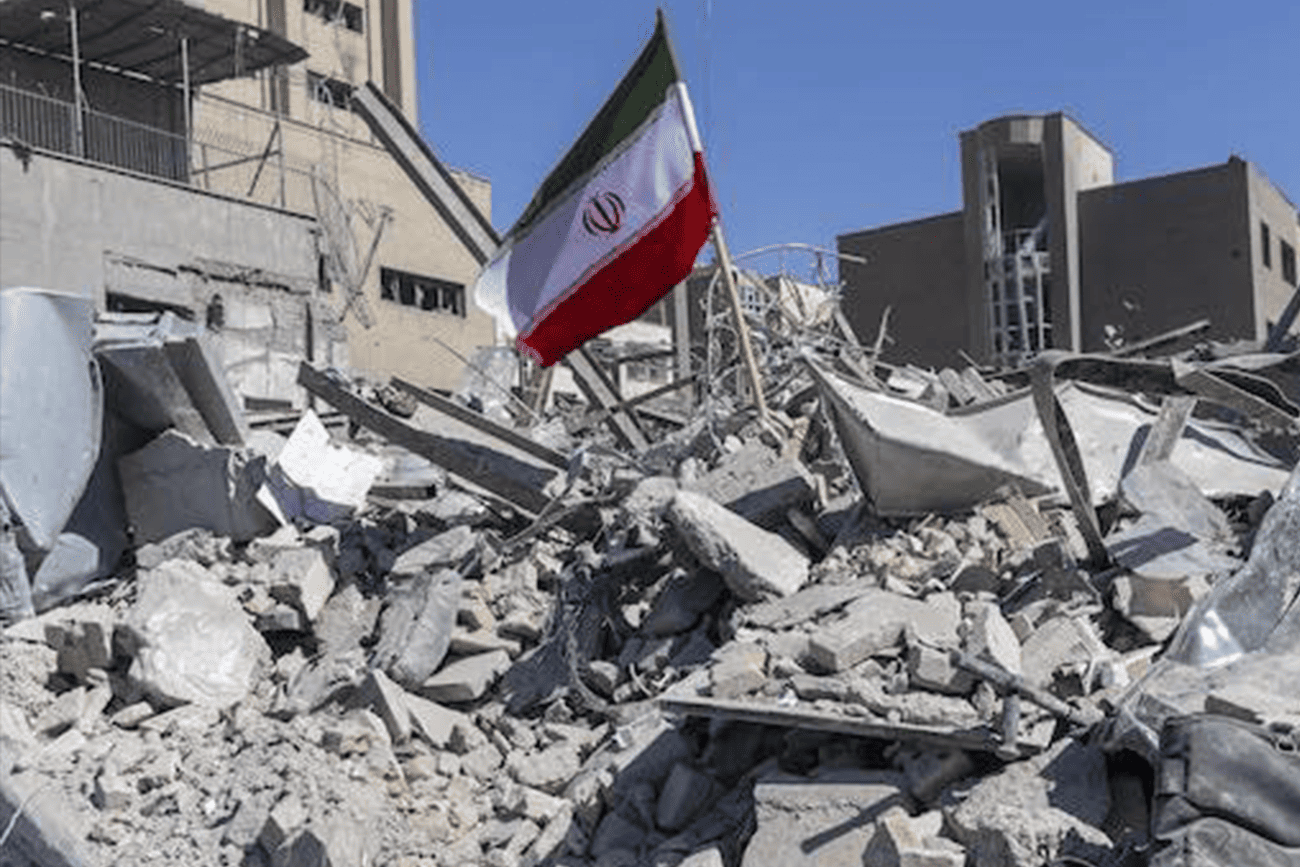

Her name does not appear in any briefing. She is eleven years old, and she lives — lived — in a neighborhood that had nothing to do with missile stockpiles or proxy networks or the forward posture of the Fifth Fleet. The strike that took her roof and her mother happened at 2 a.m. local time, six minutes after a Pentagon spokesperson announced, from a podium in a different hemisphere, that the operation had been “precise, proportionate, and successful.”
Wars often begin with crisp, confident declarations. We will strike. We will deter. We will restore stability. The simplicity is comforting. It suggests that force, once applied, will produce results as clear as the words that announced it.
But some conflicts refuse to stay within the boundaries of a sentence. They stretch into paragraphs, then chapters — until they resemble arguments that resist conclusion not because anyone is losing, but because no one has defined what winning looks like for the people who aren’t in the room.
The confrontation now unfolding between the United States and Iran is one of those conflicts. Not because America lacks power — it demonstrably does not — but because the two sides are built for different kinds of war, fighting across different clocks, and because the war is being waged as though the people living beyond U.S. and Israeli borders are scenery rather than stakes.
Familiar Grammar of Intervention
At first glance, the picture seems straightforward. American strikes have been precise. Iranian assets — military, logistical, symbolic — have taken real damage. If the goal was to demonstrate capability and impose cost, the goal has been met. This is the familiar grammar of modern intervention: act quickly, show impact, avoid entanglement.
Yet beneath these visible achievements lies a quieter truth. Degrading Iran’s tools is not the same as resolving the problem. Iran is not a system that collapses when hit. It is a system that absorbs pressure and disperses it — across proxies, across regions, across time. It is a state that has spent forty years learning, at great cost, how to survive exactly this kind of campaign.
And beneath that truth lies another, even more uncomfortable one: the war is being conducted in a way that treats the laws meant to protect civilians as aspirational rather than binding. International law, domestic law, and the basic principle that military force must serve human beings — not the other way around — have all been strained to the point of translucency. The people most affected by the conflict have the least voice in shaping it.
This is where clarity begins to blur. The United States now faces a strategic dilemma in which every option is defensible on its own, and counterproductive in sequence. Continue the campaign — and Iran escalates indirectly, through shipping lanes, militias, cyberattacks, and the slow bleed of global energy prices. Declare success and step back — and Iran retains its core leverage: the ability to threaten global energy flows and rebuild what it lost, with a narrative of survival that recruits for the next decade.
Negotiate — and the distance between demands is too wide to bridge without political cost that neither side’s domestic audience will absorb. Escalate further — and the conflict risks expanding beyond every boundary its architects drew for it.
This is not indecision. It is structure — a narrowing corridor that becomes tighter the farther one walks into it. In such a corridor, advantage shifts to the actor that needs less from the outcome.
Most Expensive Tools in the History of Warfare
Iran does not need to win. It needs only to endure. The United States, by contrast, must sustain pressure with precision munitions, carrier groups, and global logistics — the most expensive tools in the history of warfare. Iran responds with drones that cost four figures, mines that cost three, and proxies that cost nothing more than grievance, of which there is no shortage. History knows this arithmetic well. The stronger power pays for time. The weaker power profits from it.
The greatest danger now is not failure. It is the illusion of success. The temptation to declare an end before the underlying dynamics have shifted.
But the deeper complication is not economic. It is psychological — specifically, the mismatch between two entirely different relationships with time. American interventions increasingly favor quick, visible success: operations that begin cleanly, show results early, and conclude before complexity sets in. It is a style shaped by a political culture that rewards immediacy, mistrusts ambiguity, and measures foreign policy in news cycles rather than generations. The officials who design these campaigns will face voters — or donors, or cable news panels — long before the campaigns reach their consequences.
Iran operates on the opposite rhythm. Its strategy is built on patience, diffusion, and the ability to stretch conflicts beyond the attention span of its adversaries. It has been doing this since 1979. It is very good at it.
When these two logics collide, the result is rarely resolution. It is oscillation — periods of intensity followed by attempts at disengagement, followed by renewed friction when the underlying issues remain untouched. And throughout this oscillation, the human cost accumulates in places that don’t make briefings. Children. Families. Entire communities caught in the space between strategic objectives and press releases.
There is, of course, a familiar counter-argument: that decisive force, applied early and clearly, restores order. That overwhelming capability compels adversaries to step back. That escalation can create space for de-escalation.
The argument is not wrong in the abstract. It simply does not apply here. Iran’s doctrine fuses survival with resistance in a way that makes pressure self-validating. Escalation does not narrow the gap — it can widen it, by confirming the narrative that Iran has spent decades constructing for its own people and its regional allies: that America cannot be satisfied, only endured.
Meanwhile, the conflict’s objectives have already expanded — from immediate deterrence to maritime security to regional signaling. Its consequences have spread from military exchanges to economic ripples felt far from any battlefield. Energy markets tighten. Inflation nudges upward. Allies seek reassurance. Adversaries test boundaries.


Ending Comes By Exhaustion
Wars that grow faster than their goals become difficult to end. They develop momentum. They persist not because they are chosen, but because stopping them carries costs that feel larger than continuing — until suddenly they don’t, and the ending comes not by design but by exhaustion.
The greatest danger now is not failure. It is the illusion of success. The temptation to declare an end before the underlying dynamics have shifted. To mistake a pause for a conclusion. To treat a lull as a solution rather than an intermission.
Conflicts like this do not disappear. They return — often at moments less convenient, in forms less predictable, with stakes that have quietly grown. Iran does not trap the United States through force. It traps it through the structure of choices — each one defensible, each one incomplete, each one carrying forward the conditions that make the next decision harder.
There is a photograph that has not yet been taken. It will show a street somewhere — Aden, or Basra, or a city whose name Americans will struggle to pronounce — and in the foreground there will be the ordinary wreckage of a life: a shoe, a school bag, a pot that once held something warm.
The caption will note the date and the coordinates. It will not note the name of the eleven-year-old who left the shoe there, because by the time the photograph is published, no one in a position to change anything will remember why the strike was called.
The war will be described, by then, as a success. The problem it was meant to solve will be described, by then, as a different problem entirely — newer, more urgent, requiring its own precise and proportionate response.
And somewhere, a new briefing will be prepared. And the words will be crisp. And the confidence will be absolute. We will strike. We will deter. We will restore stability.
The shoe will remain in the street.
Satish Jha co-founded India’s national Hindi daily Jansatta for the Indian Express Group and was Editor of the national newsweekly Dinamaan of The Times of India Group. He has held CXO roles in Fortune 100 companies in Switzerland and the United States and has been an early-stage investor in around 50 U.S. startups. He led One Laptop per Child (OLPC) in India and currently serves on the board of the Vidyabharati Foundation of America, which supports over 14,000 schools educating 3.5 million students across India. He also chairs Ashraya, which supports about 27,000 students through its One Tablet per Child initiative.