




‘Tanvi The Great’ Starts Off as a Conversation About Autism But Lapses Into Formulaic Themes of Bravery, National Pride

- Instead of exploring the nuanced revelations of neurodiversity, the well-meaning film turns into a misplaced tribute to the Indian Army.
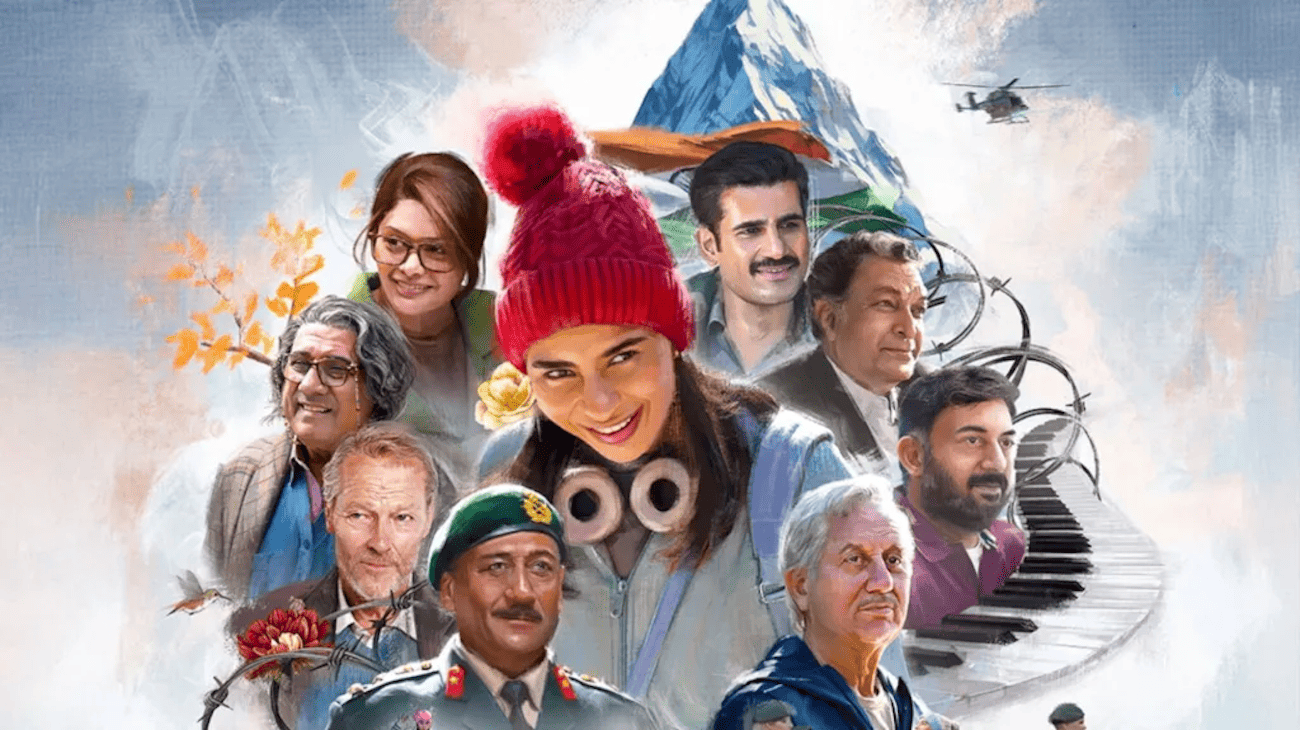
I recently watched “Tanvi the Great,” because it was heavily promoted as veteran filmmaker Anupam Kher’s passion project released in late 2025. As the film began, my mind drifted back to the haunting houndstooth fabric of “Taare Zameen Par” (2007). That film was a cultural watershed, sparking vital national conversations about neurodiversity through the struggle of a young boy with dyslexia and his triumph thanks to an empathetic teacher played by the extraordinary Aamir Khan.
Streaming “Tanvi the Great,” the names of several historical greats flashed through my consciousness: Alexander the Great, Peter the Great, Ashoka the Great, and so forth. I knew the title was trying to make me realize that several highly skilled people like Albert Einstein, Emily Dickinson, and Isaac Newton possessed neurodivergence that fostered unconventional thinking, hyper-focus, deep visual mapping, and specialization. I hoped “Tanvi the Great” would take me on a similar revelation in a wholehearted way.
The film centers on Tanvi Raina, played convincingly by debutante actress Shubhangi Dutt. As a 21-year-old woman on the autism spectrum, she is determined to join the army and fulfill the dream of her deceased father, Capt. Samar Raina (Karan Tacker), of saluting the flag at the Siachen Glacier. Shubhangi Dutt delivers a remarkably strong, sincere performance. Her lanky posture, unfocused gait, gaze, dress sense, hesitation, hand gestures, forced speech, and affinity for plants, music, and numbers flesh out her character.
Shubangi glows in her interactions with her mother, Vidya Raina (Pallavi Joshi) who understands her autism. On the other hand, her paternal grandfather, Col. Pratap “Patty” Raina (portrayed by Anupam Kher) who is afraid of Tanvi being so “different” offers a personal and intimate look at dealing with autism on a day-to-day basis.
Mixed Messaging
However, the film falters under the weight of mixed messaging. What begins as a character study about a hero and her unique worldview quickly gets lost in formulaic themes of bravery, national pride, and the army code. Within an hour, “Tanvi the Great,” reduces its central theme to a secondary plot point. The protagonist is no longer Tanvi; it’s patriotism. Don’t get me wrong, I come from a family with many members who have served the Armed Forces, but if i wanted to watch films dedicated to the great Indian Armed Forces, I would stream “Border” (1997), “URI: The Surgical Strike” (2019), and “Shershaah” (2021).
If i wanted to watch films dedicated to the great Indian Armed Forces, I would stream “Border” (1997), “URI: The Surgical Strike” (2019), and “Shershaah” (2021).
Instead of exploring the nuanced revelations of neurodiversity, “Tanvi the Great,” becomes a misplaced tribute to the Indian Army. At one point, Tanvi interrupts a memorial speech to ask what bravery is, only to be told it is “anyone who wears a uniform.” Another frame shows her dancing in a long silk dress at a nationalistic army ball. Themes like sorrow, desperation, the inability to overcome the loss of loved ones, and the hesitation to deal with an unruly young person while wallowing in one’s own grief are portrayed well by Col. Raina’s character.
But ultimately, after Tanvi saves the life of her buddy, Raja Sahab (Boman Irani), the film loses its character arc. Love for one’s country is presented as a blanket cure for everything, and the narrative suffers for it. The film’s flow is interrupted by interspersed musical sequences, causing the second half to slow down. Jackie Shroff’s appearance as the handsome Brig. “Tiger” comes as a pleasant surprise, but leaves one wanting for more dialogue, artistry.
Neurodivergent Cinema


Watching the film, I couldn’t help but compare it to other landmarks in neurodivergent cinema. It lacks the heartwarming authenticity of Priyanka Chopra’s Jhilmil in “Barfi!” (2012)…especially the deeply moving moment where Jhilmil softly says “Haso mat…”, capturing the silent pain of being misunderstood in a world that often laughs without empathy. It is a performance that lingers in the recesses of the mind. Nor does the film balance profound emotion with the social challenges of autism as effectively as “Rain Man” (1988), where Tom Cruise demonstrated the transition from a narcissistic, money-hungry person to someone genuinely having empathy and care for a brother he didn’t even want at first. It also falls short of SRK’s interactions with Kajol in “My Name is Khan” (2010).
“Tanvi the Great” is a well-meaning film, set beautifully against the backdrop of the charming Indian Army garrison town of Lansdowne in Uttarakhand. But narratively, it is a meandering river rather than a sharp waterfall. I may remember Tanvi for some time when I meet a highly functioning neurodivergent child having difficulty stepping over the threshold after disassembling and reconfiguring a computer.
But unlike the eye-opening story of a dyslexic boy in “Taare Zameen Par” or the gut-wrenching human cost of prejudice narrated through the eyes of an autistic man in “My Name is Khan,” this film lacks the emotional resonance that makes me want to curl up on the sofa, and rewatch it with my family.
“Tanvi the Great” is streaming on Prime Video.
With one foot in Huntsville, Alabama, the other in her birth home, India, and a heart steeped in humanity, Monita Soni writes as a contemplative practice. She has published hundreds of poems, movie reviews, book critiques, and essays, and contributed to combined literary works. Her two books are “My Light Reflections” and “Flow Through My Heart.” You can hear her commentaries on Sundial Writers Corner, WLRH 89.3 FM.