




The Subservience of Silence: India’s Complicity in U.S.-Israel’s Unjust War Against Iran

- The Hindutva government of Narendra Modi remained silent as the U.S. torpedoed Iranian warship that just days ago participated in naval exercise alongside Indian Navy in the Bay of Bengal.
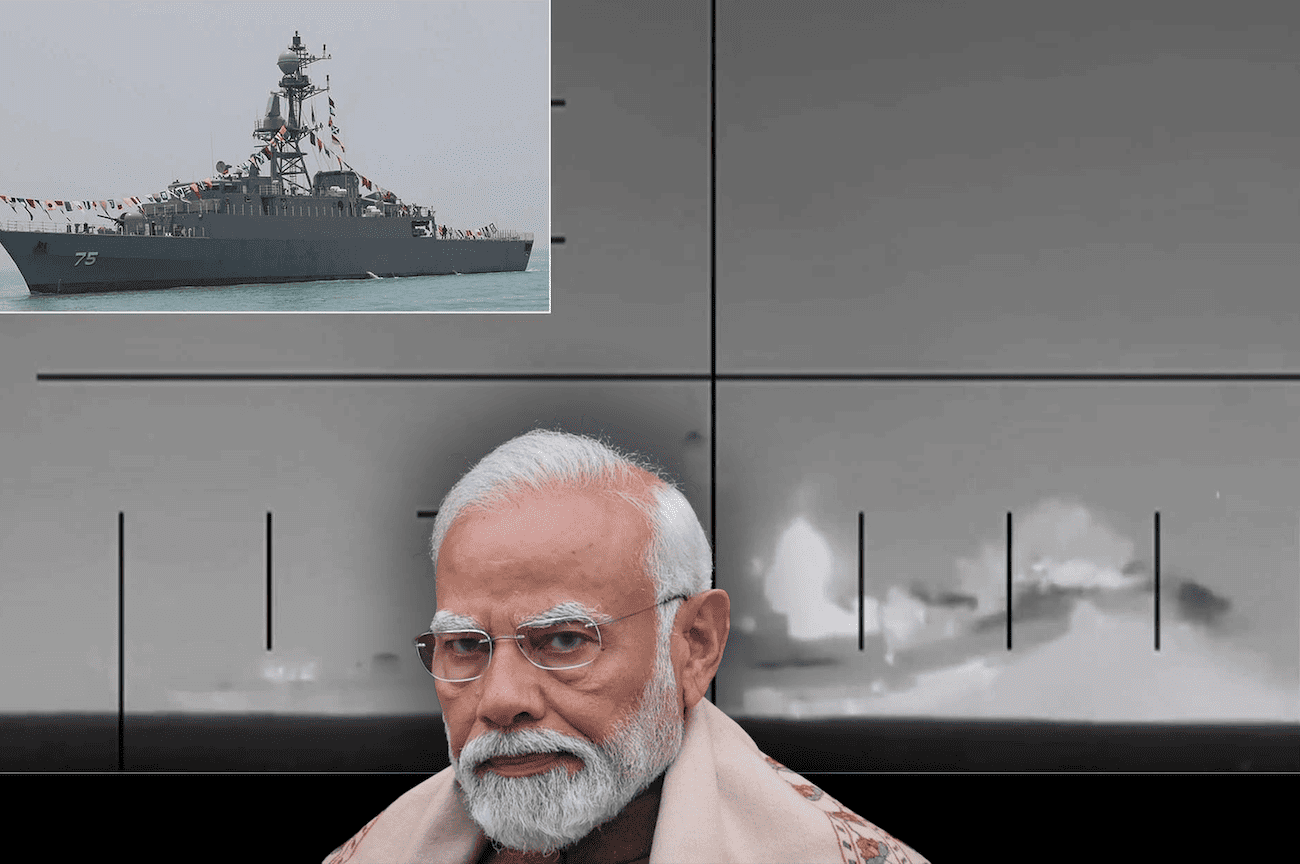

Today, March 4, 2026, a U.S. Navy submarine torpedoed the IRIS Dena in the Indian Ocean, approximately 40 nautical miles south of Galle, Sri Lanka. 38 Iranian sailors in critical condition have been rescued. At least 87 Iranian sailors are confirmed dead. Over a hundred remain missing. (Note: These numbers may be different when you read this).
It is the first enemy warship sunk by torpedo since the Second World War.
The Dena is the same frigate that was exercising alongside the Indian Navy in the Bay of Bengal just eight days ago.
The U.S. government did not mark the occasion with solemnity. Within hours, the official White House account on X posted periscope footage of the torpedo strike — a Mk 48 warhead lifting the stern of the Dena off the water — with the caption: “This Iranian warship thought it was safe in international waters. It wasn’t. The @DeptofWar is fighting to win.”
Read that again. The White House. The official account of the President of the United States. Posting attack footage of a warship killing over 80 sailors as though it were a movie trailer. Note also: @DeptofWar — because the Trump administration has renamed the Department of Defense the Department of War. That is not a typo. That is a policy statement.
Secretary of State Marco Rubio posted the same attack video, captioning it with the objectives of what he called #EpicFury — the name of the operation: “Destroy their missile launchers. Destroy their missile factories. Destroy their Navy. So they can never hide behind these things to develop a nuclear weapon.” The White House reposted Rubio’s post in turn.
This is the language and behavior of governments that have dispensed with the pretense of international norms. A vessel in international waters, returning from a naval exercise, sunk by a torpedo — and celebrated publicly by the most powerful government on earth with the energy of a sports highlight reel. Whether or not this constitutes a war crime under the laws of naval warfare will be debated by lawyers. What is not debatable is the spirit in which it was done.
The sinking of the IRIS Dena is not a distant event in a faraway conflict. It happened in what India has long called its strategic backyard — the Indian Ocean, to a ship that was India’s guest.
And the ship they are celebrating sinking was, eight days ago, a guest of the Indian Navy.
India’s own newspapers understood the significance immediately. The Print’s headline read: “War reaches India’s backyard as Iranian warship sunk by US submarine off Sri Lanka coast.” India’s backyard. Not the Persian Gulf. Not the Strait of Hormuz. The Indian Ocean, 40 nautical miles from Galle.
Sri Lanka’s Foreign Minister Vijitha Herath addressed parliament, confirming that his country had scrambled naval vessels and air force aircraft to rescue survivors. Namal Rajapaksa, leader of the opposition Sri Lanka Podujana Peramuna, issued a statement that put the question plainly: “What’s happened off the coast near Galle is extremely serious. If military activity of this scale is happening so close to Sri Lanka, the government cannot treat it as ‘someone else’s problem.’ Were we aware of submarine movements? Were our surveillance systems functioning? Or were we completely in the dark? Incidents like this remind us that Sri Lanka sits at the heart of the Indian Ocean and must remain vigilant in safeguarding maritime security, humanitarian response, and the stability of our region.”
Sri Lanka — a small island nation still recovering from an economic crisis that brought its government to its knees within recent memory — found both the moral clarity and the institutional will to respond and to ask the hard questions.
India has said nothing.

The Prime Minister who stood in the Knesset and declared India’s firm, unconditional solidarity with Israel has not found the words to acknowledge that a navy India partnered with last week was attacked in India’s ocean by India’s new partner’s closest ally. The same Prime Minister who sent 32,000 Indian workers to build homes in a country at war cannot find the language to note that the ship those workers’ countrymen just drilled alongside is now on the seabed, its crew drowning in waters India calls its own strategic sphere.
This is not just silence. It is complicity by absence. India was drawn into this war before the first shot was fired — through Modi’s Knesset address, through the 48-hour window, through Adani’s contracts. The sinking of the IRIS Dena is not a distant event in a faraway conflict. It happened in what India has long called its strategic backyard — the Indian Ocean, to a ship that was India’s guest. Sri Lanka asked the hard questions. India said nothing. And that contrast — tiny Sri Lanka versus the world’s most populous democracy — tells you everything you need to know about the quality of leadership India has right now.
This is what the embrace costs. Not in the abstract. Not in future diplomatic analyses.
Today. In the Indian Ocean. In the silence from New Delhi.
The hierarchy is clear.
Ganpy Nataraj is an entrepreneur, author of “TEXIT – A Star Alone” (thriller) and short stories. He is a moody writer writing “stuff” — Politics, Movies, Music, Sports, Satire, Food, etc.
‘It is the first enemy warship sunk by torpedo since the Second World War.’ This is incorrect; In 1982 during the Falklands War, the Royal Navy sank the Argentinian ship ARA General Belgrano. The torpedoes that sank the cruiser were fired from a British submarine