


Modi and Israel: A Partnership of Necessity and a Delicate Balancing Act in a Volatile Region

- By deepening ties with Israel while reaffirming support for a two-state solution, New Delhi continues to try and pursue its strategic interests as well as practice principled diplomacy.
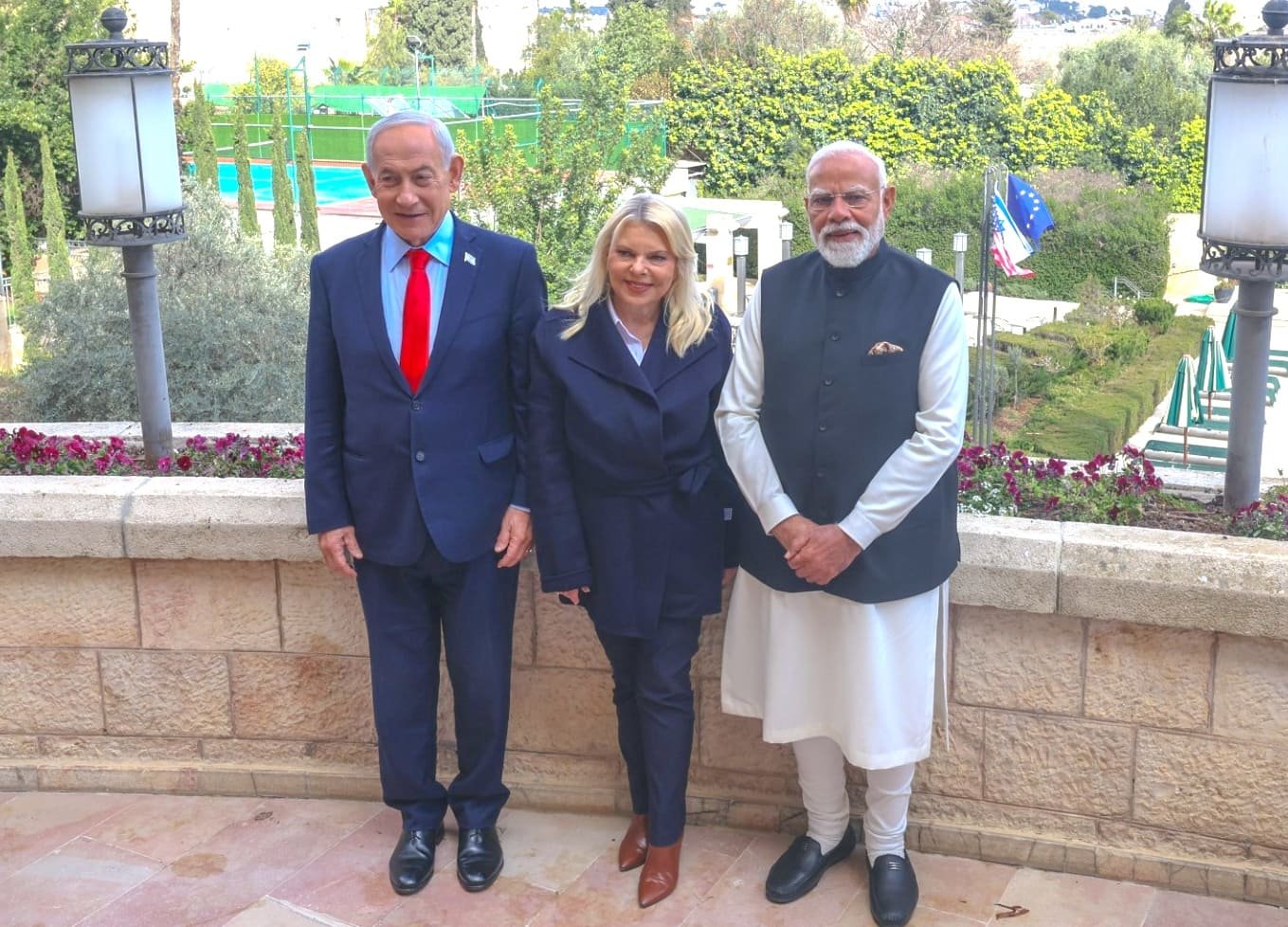
“In diplomacy, timing is substance,” James A. Baker III, former U.S. Secretary of State, famously noted in his writings. This observation rings particularly true when analyzing Prime Minister Narendra Modi’s visit to Israel on February 25–26, 2026. It is easy now to lose sight of this visit against the latest developments in the Middle East; just two days after his departure, the United States and Israel launched strikes against Iran. This sequence has sparked domestic debate about the prudence of traveling to this region while war clouds were gathered there.
The Path to the Summit
The road to this meeting was marked by several false starts. Prime Minister Benjamin Netanyahu was originally to visit India in December 2025, but the trip was cancelled at the last-minute—reportedly due to security incidents in both nations. This marked the third such cancellation in a single year, making a high-level face-to-face meeting a diplomatic necessity.
The sensitivity of the 2026 visit to Israel was evident in its coordination. While Netanyahu announced the impending visit in mid-February, India’s Ministry of External Affairs only confirmed the dates on February 24, a mere one day before departure. This delay suggests New Delhi held back until there was certainty about the security environment.
Navigating Regional Volatility
The Modi visit was his first since the October 7, 2023, Hamas attacks, marking a significant milestone in India’s Middle East policy. Throughout the ensuing crisis, India has performed a delicate balancing act: unequivocally condemning the initial terror assault while expressing grave concern over civilian casualties in Gaza. By deepening ties with Israel while reaffirming support for a two-state solution, New Delhi continues to try and pursue its strategic interests as well as practice principled diplomacy.
Domestically, both leaders face unique pressures:
• Benjamin Netanyahu: Currently embroiled in corruption cases and a confrontation with the judiciary, Netanyahu has faced allegations that he has a personal interest in prolonged conflict to sustain his political career.
• Narendra Modi: Despite a reputation for being a political strongman and repeated electoral successes, recent military clashes with Pakistan under Operation Sindoor—following a terrorist attack in Pahalgam—have led critics to question the nation’s security.
The “Hexagon Alliance” and “Special Strategic Partnership”
In terms of the itinerary, Prime Minister Modi received a warm welcome from Netanyahu and his wife upon landing in Tel Aviv. The historic highlight of the trip was his address to the Knesset, Israel’s Parliament—the first ever by an Indian Prime Minister. While the Israeli opposition had initially threatened a boycott and walked out during the opening remarks by the Knesset Speaker and Netanyahu, only to return to hear Modi’s speech underlining that there was political consensus in Israel on its ties with India.
The visit to the Yad Vashem Holocaust Memorial and his meeting with the Indian diaspora completed the program. While the Indian community in Israel is estimated at 115,000, it is worth noting that the broader Indian diaspora across the Gulf and Middle East numbers is about ten million. Instability and conflict in this region could have grave consequences for India.
The summit also reflects India’s broader struggle to navigate the transactional and disruptionist foreign policy of President Donald Trump’s second term.
Talking of the content, the centerpiece of the visit was the elevation of the bilateral relationship to a “Special Strategic Partnership for Peace, Innovation & Prosperity.” In diplomatic parlance, “Special Strategic” denotes a transition toward a long-term partnership with virtually no limits.
On the eve of the visit, Netanyahu proposed a “Hexagon Alliance”. This proposed security architecture looks to bring together Israel, India, Greece, and Cyprus with select Arab, African, and Asian partners.
Modi, in a way responded to this Israeli proposal through his Knesset address where he explicitly referenced India–Middle East–Europe Economic Corridor (IMEC), presenting it as a key framework for India–Israel strategic and economic cooperation. IMEC is a U.S.-backed proposal multimodal transport and connectivity initiative linking India to Europe via the UAE, Saudi Arabia, Jordan and Israel, using an integrated network of rail, ports and road infrastructure to facilitate trade and logistics.
He also mentioned the I2U2 framework which brings together India, Israel, UAE, and the U.S. towards broadly economic cooperation goals.
Furthermore, the two nations signed several agreements which could be broadly seen in four categories:


- Technology: AI, cybersecurity, and the Critical and Emerging Technologies initiative.
- Economy: UPI-Israel fast payment linkage and FTA negotiations.
- Defense: A shift from simple procurement to a structural alliance focused on joint development and technology transfer.
- Agriculture: Enhanced cooperation is envisaged in agriculture, centered on water conservation, wastewater treatment and reuse, desalination, utility reforms, and river-cleaning using advanced Israeli technologies. It also provides for scaling up agriculture related capacity-building.
While no specific defense contracts seem to have been signed during this window, this may have been intentional. Immediate defense contracts can sometimes reduce a historic meeting to a transactional agenda. However, defense cooperation is in mutual interest. Netanyahu has publicly said that Israeli-supplied military equipment had ‘worked very well on the field’ during Operation Sindoor. Israel is the second-largest defense supplier to India, and several contracts may have received an impetus because of the Modi visit. Defense deals with Israel would be expected to feed into the ‘Make in India’ policy.
In the Joint Statement, both nations strongly condemned the October 7, 2023, attack on Israel, the April 22, 2025, murder of tourists in Pahalgam, and the November 10, 2025, terror incident near Delhi’s Red Fort. These tragedies underscore a vital, shared interest in continued counter-terrorism cooperation.
The Broader Geopolitical Calculus
The summit also reflects India’s broader struggle to navigate the transactional and disruptionist foreign policy of President Donald Trump’s second term. While India has avoided direct confrontation with the Trump administration, it has simultaneously shown new activism in forging free trade arrangements with the EU, UK, EFTA, and others possible to strengthen its global bargaining position and with Trump.
And Russia internationally appears as an unreliable partner by not adequately protecting its friends or its own political and commercial interests.
There is merit therefore in middle-rung powers coming closer where possible in a polarized international environment. Modi’s tour of Israel was preceded by French President, Macron’s visit to India (February 17-19) and followed by Canadian PM Mark Carney’s visit (February 27 to March 2).
On India’s traditional Indian support for the Palestinian cause, Prime Minister Modi used his address to the Knesset to back the Gaza Peace Initiative. Rooted in President Trump’s 20-point plan and endorsed by UNSC Resolution 2803, the initiative sets up a “Board of Peace” to oversee Gaza’s transition. While neighbors like Saudi Arabia and Egypt have joined as full members, India maintains its status as an observer, signaling that the responsibility for achieving a “just and durable peace” now rests with the Board. Under the circumstances, this may be a useful tactic to deflect criticism.
The February 2026 visit underscores a partnership between India and Israel aimed at further consolidation through long-term and multifaceted engagement particularly important in a turbulent world.
Gitesh Sarma is a retired Indian Foreign Service Officer, who served in several world capitals, including Moscow and Kyiv.