


A Civilization Under Fire: The Unjust War Will Become a Part of Iran’s Long Memory

- The UN has already warned that these strikes undermine international peace and security. But warnings feel small against the scale of what is unfolding.

What makes America’s newest war unbearable is not only its scale but its target: a civilization that predates most modern states. Iran is not an abstraction. It is one of humanity’s oldest continuous cultures — a 5,000‑year arc stretching from the Elamites to the Achaemenids, from Persepolis to the Sassanian Empire, from Zoroastrianism to Hafez and Rumi. It is a place where poetry is a public language, where history is not a museum but a living inheritance. A place that gave civilization Rumi!
And yet, in the span of a morning, missiles tore through cities that have survived empires, invasions, and centuries of political upheaval. The Minab school strike is not just a tragedy; it is a civilizational wound. It is the kind of violence that does not fade with time; it calcifies. It becomes part of a nation’s memory, a scar passed down through generations.
When a state bombs a school, it is not only killing children. It is declaring that the future of a people is expendable. Like Gaza is, was. The rubbles still scream silently at us.
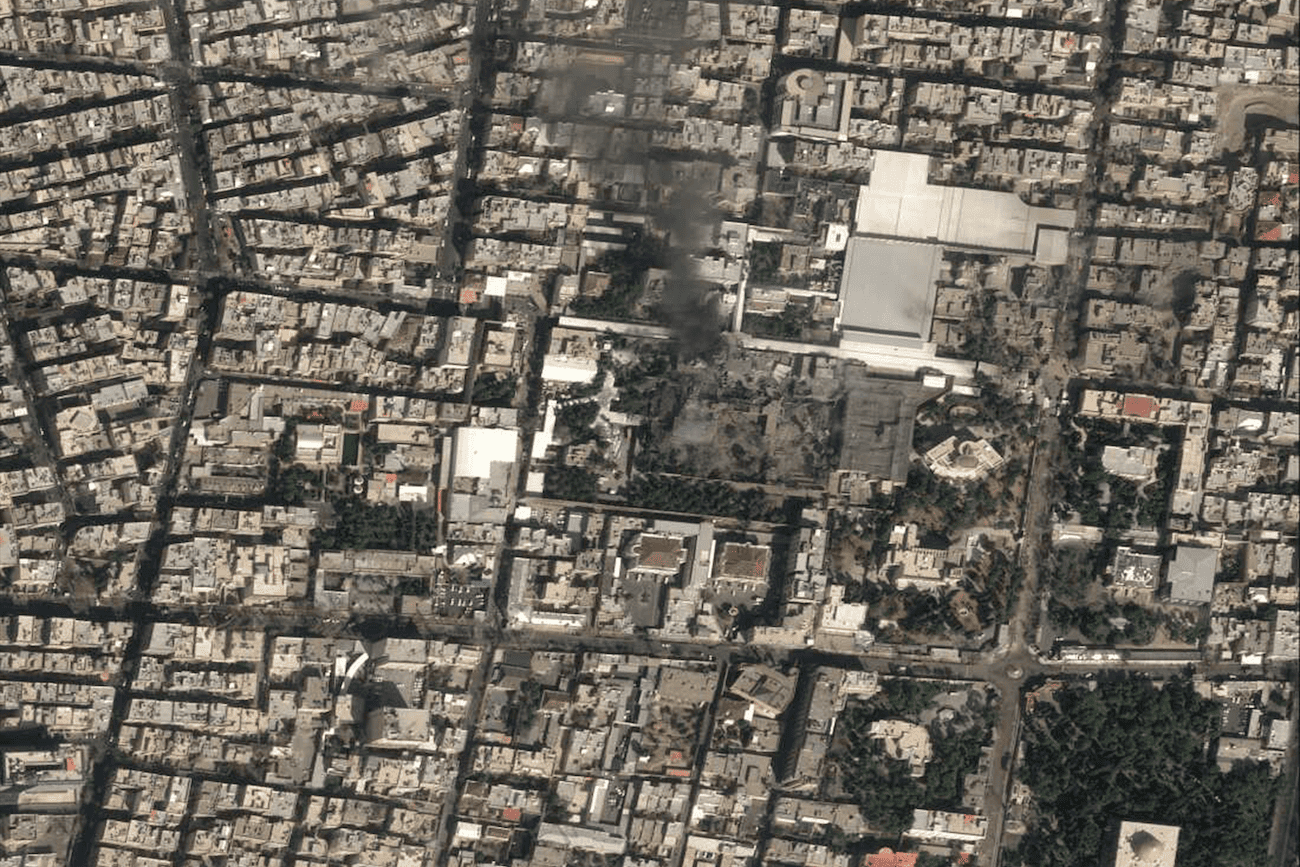
Some mornings announce themselves as turning points. February 28, 2026 was one of them. At 06:35am the United States and Israel began coordinated strikes on Iran, a joint operation delivered by CENTCOM with the sterile calm of a weather bulletin. Minutes later, at 06:45, Israel launched what it openly called “decapitation strikes,” killing Supreme Leader Ali Khamenei and several senior officials. Satellite images confirmed the destruction of his residence.
By 07:15, a missile had torn through the Shajareh Tayyebeh girls’ elementary school in Minab. Iranian officials reported more than 100 dead, many of them children; independent verification is ongoing, but the footage of the collapsed building is unmistakable. The strike occurred on the very morning U.S. and Israeli forces began bombing Iranian cities. No one has claimed responsibility. Iran blames the U.S. and Israel; neither has responded. What is clear is that a school full of girls was reduced to rubble in the opening hours of a war that diplomacy had failed to prevent just two days earlier in Geneva.
There are facts that should not require interpretation. A school is not a battlefield. Children are not collateral. And yet, here we are.
The Region Unravels
The hours that followed were not a military exchange but a regional unspooling. By 09:05, Iran had fired ballistic missiles at Israel and several Gulf states. The next day, President Trump boasted on television that “48 leaders are gone in one shot,” a claim that blurred the difference between fact and bravado. By March 2, the Iranian Red Crescent reported 555 deaths, a number certain to rise as rubble is cleared. Later that morning, three U.S. F‑15s were shot down in Kuwait in a friendly‑fire incident; all crew survived.


Airspace shut down across Israel, Turkey, the Gulf, and parts of Iraq. Explosions were reported in Qatar and the UAE. Gulf states scrambled defenses. Hezbollah fired from Lebanon. Oil markets convulsed as the Strait of Hormuz — the narrow artery through which a fifth of the world’s oil flows — became a geopolitical fault line. The Institute for the Study of War estimated nearly 900 U.S.–Israeli strikes on Iranian targets in the first 12 hours alone.
This is what “major combat operations” look like when announced by a superpower: a region pushed into cascading crisis, civilians buried under concrete, and a global economy bracing for shockwaves. This war is not containable. It strengthens hardliners in every capital involved. It collapses what remained of nuclear diplomacy. It fractures already‑fragile alliances across the Middle East. It risks a global economic shock if the Strait of Hormuz becomes a battlefield. It normalizes a world where leadership assassination becomes a tool of statecraft, where international law is invoked only when convenient, where civilian life is weighed against the ambitions of men who will never stand in the ruins of a classroom.
The UN has already warned that these strikes undermine international peace and security. But warnings feel small against the scale of what is unfolding.
Kuhu Singh is a writer with interest in social justice, cultural and political matters, in the U.S., India, and beyond.