


JFK Jr. in India: When an Astrologer Told the Young Kennedy ‘You Have to Be the Son of a King’

- As CNN’s much anticipated documentary “American Prince: JFK JR,” rekindles popular interest in John John’s life, it is worth remembering that he inherited his father’s admiration for the beacon of democracy in post-colonial world.
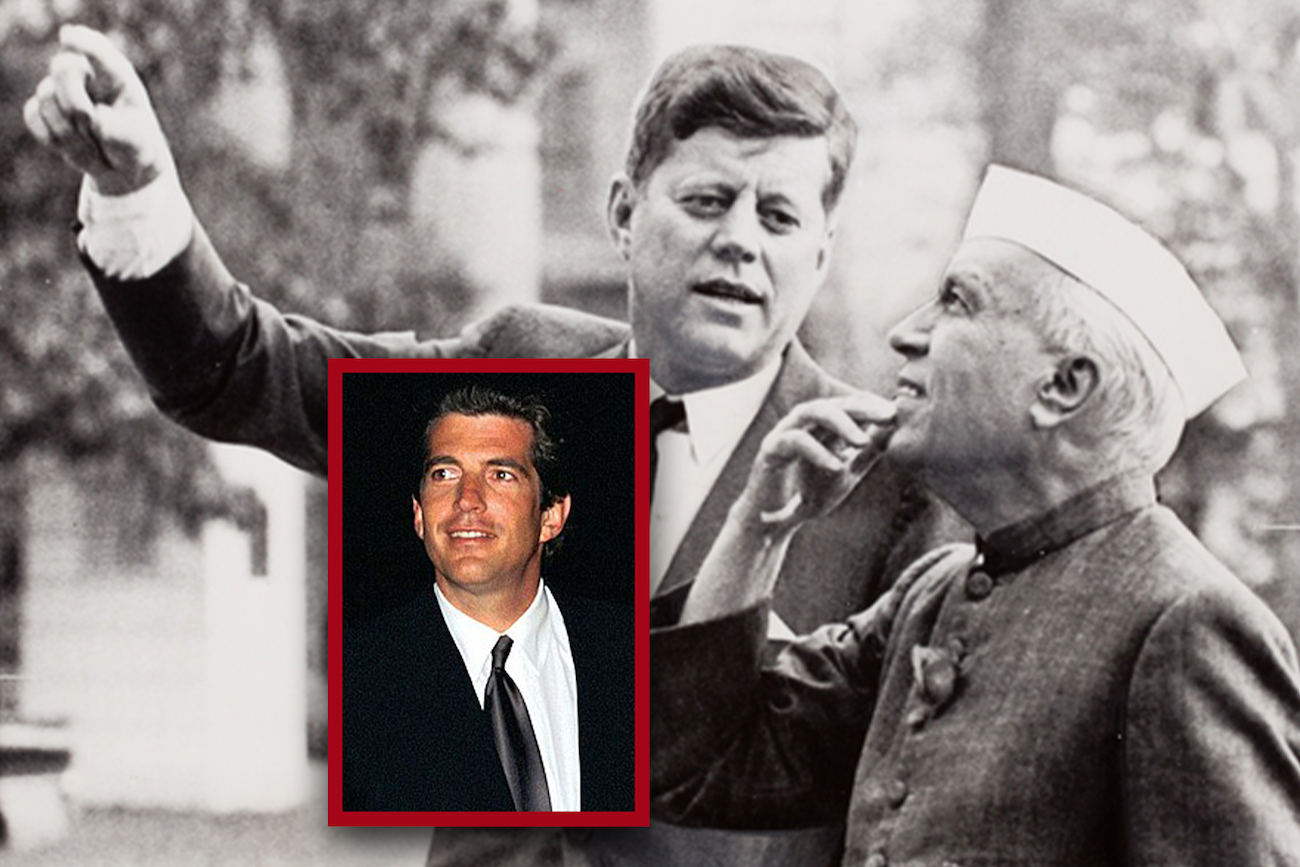

In the autumn of 1983, a young John F. Kennedy Jr. embarked on what would prove to be one of the most formative experiences of his early adult life. Fresh from graduating Brown University that spring, the 23-year-old son of America’s beloved 35th president chose to spend his gap year not in the corridors of power that seemed his birthright, but in the bustling streets and ancient universities of India.
Kennedy had visited India once before with his then-girlfriend Sally Munro, whom he had met at Brown University and dated for six years. However, this solo journey represented something entirely different—a deliberate choice to step away from the expectations of American political dynasty and immerse himself in a culture that had fascinated the Kennedy family since his father’s presidency.
The connection between the Kennedy family and India ran deep, rooted in President John F. Kennedy’s profound admiration for Indian leadership and philosophy. The elder Kennedy had established a remarkably warm relationship with India’s first Prime Minister, Jawaharlal Nehru, whom he deeply respected both as a statesman and as a moral leader on the world stage.
In November 1961, President Kennedy had welcomed Indian Prime Minister Nehru and his daughter, Indira Gandhi, to the United States for an official state visit, hosting them with unprecedented warmth. Kennedy’s personal admiration for Nehru was evident in his decision to host the Indian leader at Hammersmith Farm, Mrs. Kennedy’s parental home, for a family affair—an honor reserved for the most respected of international leaders.
President Kennedy’s relationship with India went beyond diplomatic courtesy. His understanding attitude toward India was displayed in his readiness not only to press on with economic assistance for India, but even to discuss the possibility of providing military assistance—something that had not been seriously considered earlier. This represented a significant shift in U.S.-India relations, driven by the President’s recognition of India’s strategic importance and his personal respect for its leadership.
The President’s wife, Jackie Kennedy, had continued this tradition of engagement with her memorable diplomatic visit to India in March 1962, creating lasting impressions and relationships that would influence the family’s perspective on the subcontinent for years to come. Now, twenty-one years later, her son was following in those footsteps, but with his own purpose—carrying forward a family legacy of genuine respect and admiration for Indian civilization and its leaders.
At Delhi University: A Scholar’s Pursuit
Kennedy, who graduated from Brown University that year, was on a three-month visit to India, studying at Delhi University. Unlike the typical gap-year travels of wealthy American students, Kennedy’s time in India was structured around serious academic pursuit. He researched topics of his personal interests including food production, health and education.
The choice of Delhi University was significant. Rather than selecting a more Western-oriented institution, Kennedy chose to embed himself in one of India’s premier centers of learning, where he could engage directly with Indian intellectual traditions and contemporary social issues. The young Kennedy was drawn to understanding India not as a tourist destination, but as a complex civilization grappling with modernization while maintaining its ancient cultural roots.
Living Like a Local: The Real India Experience
What made Kennedy’s Indian sojourn truly extraordinary was his deliberate rejection of the privileged accommodation typically afforded to someone of his stature. Having the fortunes, or misfortunes, of being attached to that famous American family name, Kennedy’s India trip was well designed to protect his identity through a collaborative effort by both Indian and American governments.
Rather than staying at the American Embassy, Kennedy chose to live authentically—from the dingy hotels of Pahar Ganj in the center of Delhi to sleeping on the floor in a sleeping bag at various allied embassies.
The choice of Delhi University was significant. Rather than selecting a more Western-oriented institution, Kennedy chose to embed himself in one of India’s premier centers of learning, where he could engage directly with Indian intellectual traditions and contemporary social issues.
It was at an Irish Embassy gathering during Delhi’s winter season that Kennedy’s path crossed with journalist Narendra Taneja, who would become his unlikely host and guide to authentic Indian life. Taneja, a regular attendee of Delhi’s expat “wine-and-cheese” scene, encountered a young man sleeping on the embassy floor and offered him a room in the professor’s house he was occupying at the Indian Institute of Technology (I.I.T.).
“As we talked sitting in the living room and having instant noodles for dinner later that night,” Taneja wrote in the New York Times years later, “he brought out his diary and started to flip pages, showing his written musings about travels, family and so on. As he flipped through the pages, there were photos of him and his family… I started to realize that most of his pictures were with John F. Kennedy and his wife, Jackie Kennedy.”
When Taneja inquired about the photographs, the young man simply replied, “Well, they are my parents”—and Taneja realized he had John F. Kennedy Jr. living in his house.
Beyond Delhi: The Journey to India’s Heart
Kennedy’s commitment to authentic experience extended far beyond Delhi. When Taneja prepared to travel to Tundla, a small town near Agra, Kennedy expressed his wish to join him. Upon being told that the travel included crowded trains in third-class compartments, he insisted that travel conditions did not bother him.
“He not once complained throughout his stay about anything,” Taneja recalled. “In fact, he even took up some typical Indian traits, such as haggling with the tuk-tuk driver over the price of the journey.”
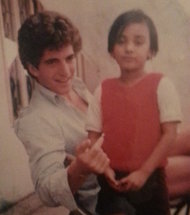
In Tundla, a railway junction town in Uttar Pradesh where life revolved around the Indian Railways, Kennedy was introduced to an Indian jyotishee, or palm reader. What happened next would prove to be one of the most mystical moments of his entire journey. After examining Kennedy’s palm for a few minutes, the reader looked up and announced, “This man is the son of a king.”
The sudden statement took Kennedy by surprise. As his identity was meant to remain secret, no one revealed anything, but the palmist persisted, asking, “You have to be the son of a king. Who are you?”
Struck by the palmist’s uncanny accuracy, Kennedy insisted on returning to see him again—this time alone. He spent two hours with the jyotishee, and what was discussed between the two remains a mystery to this day.
From Tundla, Kennedy continued his journey to Varanasi and then to Kolkata (then called Calcutta), traveling in third-class, non-air-conditioned trains without confirmed reservations, sharing the everyday experience of common Indians. In Kolkata, he was hosted by journalist M.J. Akbar and his family at their residence in the Chitralekha building.
“He stayed with us for a week,” Akbar remembered. “It was great fun having him. I remember that women used to line up around the staircase of the building as he ran up and down, bare bodied, for eight floors whenever there was no electricity and the lift would not work.”
Akbar recalled engaging Kennedy in substantive discussions: “He was well informed about U.S. politics, and we had some good debates on topics such as the era of imperialism in America and India.”
While in Kolkata, Kennedy visited Mother Teresa’s Missionaries of Charity headquarters as part of his studies, along with other institutions in the city, deepening his understanding of service and social justice that would later influence his approach to public engagement.
A Historic Meeting With Indira Gandhi
The most documented moment of Kennedy’s Indian sojourn came in November 1983, when Kennedy Jr., called on Prime Minister Indira Gandhi in New Delhi. This meeting, while brief, represented a powerful intersection of two of the 20th century’s most influential political dynasties.


No details of the meeting were made public. The discretion surrounding this encounter was typical of both families’ approaches to private diplomacy. However, the timing of the meeting was significant. Gandhi was at the height of her political power, having recently hosted major international summits and asserting India’s role as a leader of the Non-Aligned Movement.
For Kennedy, meeting Gandhi—a figure who had not only known his father personally but had been present during the historic state visit when President Kennedy had welcomed her and her father Nehru to the United States in 1961—represented a profound connection to his family’s diplomatic legacy. The meeting likely provided insights not only into governance and international relations, but also into the continuation of the respectful relationship his father had established with Indian leadership.
The Uncomfortable Moment: Confronting Tragedy
Kennedy’s determination to live authentically in India also meant confronting difficult moments that his celebrity status inevitably created. During his stay with Taneja, a professor at I.I.T. discovered Kennedy’s identity and invited him for tea. Despite Taneja’s request for discretion, the professor invited 20 other people, attempting to show off his connection to the Kennedy son.
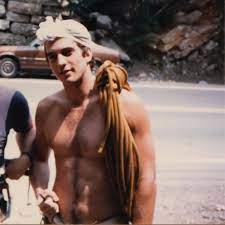
,What followed was a moment that revealed both Kennedy’s vulnerability and his grace. The professor, perhaps emboldened by the audience, asked Kennedy directly: “So do you remember when your father was assassinated?”
“John, aghast, looked at me, and I stared at the professor in disbelief that this question was actually tabled to him,” Taneja recalled. They left within minutes, and when Taneja apologized, Kennedy simply said, “It’s O.K., it’s just that no one ever asks me that.”
This incident illuminated the unique burden Kennedy carried—how his father’s tragic death was not just a personal loss but a public event that strangers felt entitled to question him about. His composed response demonstrated a maturity that would serve him well in his later public life.
The Broader Context of 1983 India
Kennedy’s visit occurred during a pivotal moment in Indian history. The country was under the strong leadership of Indira Gandhi, who was navigating complex domestic challenges while asserting India’s independence in foreign policy. The year 1983 saw India hosting significant international events and taking strong stances on issues like apartheid in South Africa, demonstrating the kind of moral leadership in global affairs that would have resonated with someone raised on Kennedy idealism.
The India that Kennedy encountered was a nation in transition—maintaining its commitment to non-alignment while dealing with regional tensions, economic challenges, and the ongoing project of post-colonial nation-building. For a young American from a political family that had championed civil rights and international cooperation, India’s struggles and achievements would have provided a different perspective on leadership and social change.
Kennedy Jr.’s three-month sojourn in India stands as a testament to his commitment to understanding the world beyond American shores before taking on the responsibilities of public life. In choosing scholarly research over political networking, in seeking out intellectual challenges rather than photo opportunities, the young Kennedy demonstrated the kind of serious-minded approach to leadership development that characterized the best of his family’s tradition.
The relationships he forged during this journey endured long after his return to America. “Even after he left, we stayed in touch,” Taneja recalled. “He sent me copies of his magazine, George, which he started in 1995″—a gesture that spoke to Kennedy’s genuine appreciation for the people who had welcomed him not as a celebrity, but as a fellow human being seeking understanding.
When Kennedy tragically died in a plane crash on July 16, 1999, along with his wife Carolyn Bessette-Kennedy and sister-in-law Lauren Bessette, the impact of his Indian journey was remembered in a touching way. Prayers were offered in Kolkata by Mother Teresa’s order of nuns, remembering him not as a Kennedy, but as “that down-to-earth, idealistic student” who had walked among them with humility and genuine curiosity.
Though Kennedy would tragically die young, cutting short any full flowering of the insights gained during his Indian journey, the experience stands as an example of how meaningful cross-cultural engagement can shape a young leader’s worldview. In an era of increasingly globalized challenges, Kennedy’s approach to learning from other democratic traditions—not from the comfort of five-star hotels or diplomatic receptions, but from the sleeping bags and third-class train compartments where real life unfolds—remains a model for how future leaders might prepare themselves for the complexities of international leadership.