


For a Few Dollars More: Pakistan Signs Stablecoin Deal With Trump-Linked Crypto Firm Amid Warming U.S. Ties

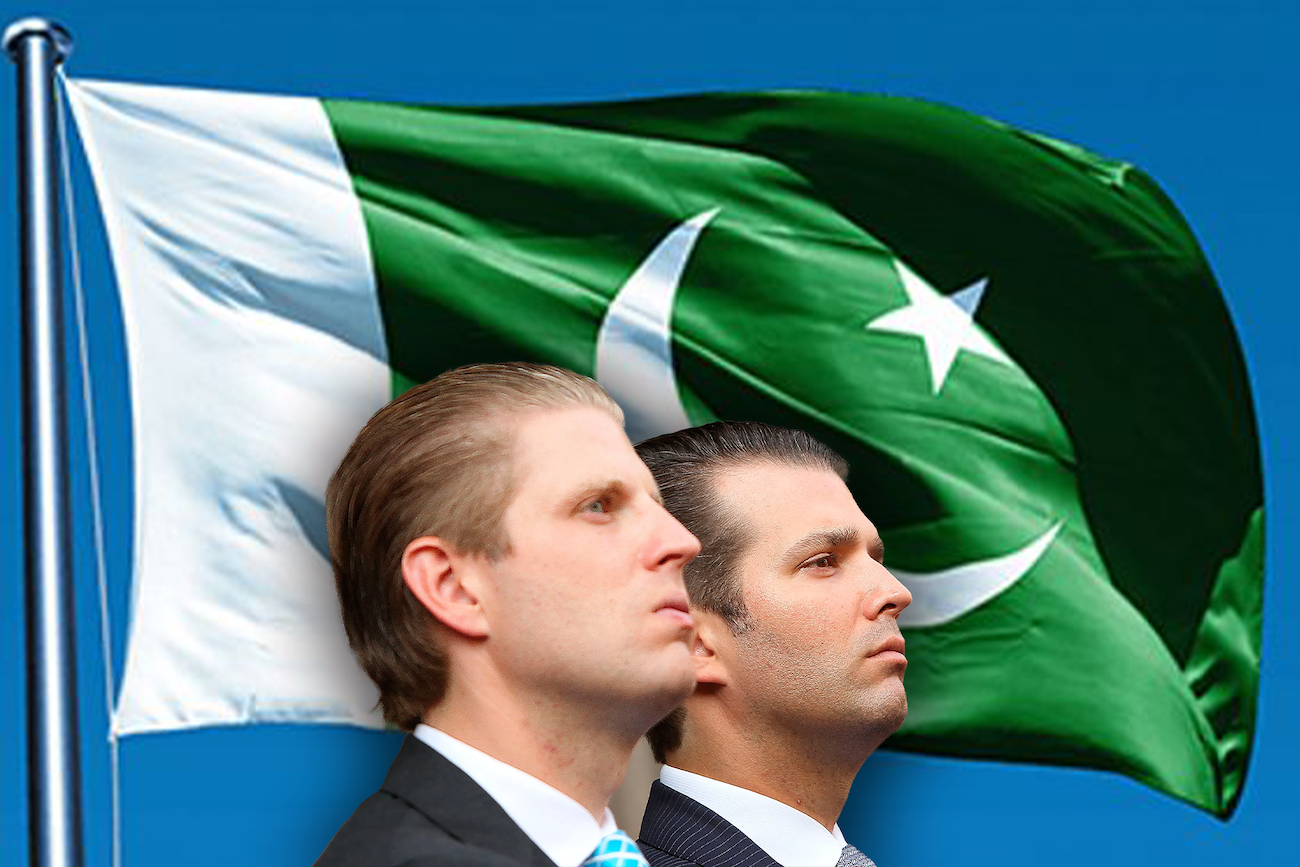

Pakistan signed a memorandum of understanding on Wednesday with an affiliate of World Liberty Financial, the cryptocurrency venture tied to President Donald Trump’s family, marking one of the first publicly announced partnerships between the Trump-linked platform and a sovereign government. The deal comes as diplomatic relations between Washington and Islamabad show significant warming after years of friction.
According to a Reuters report citing a source involved in the deal, Pakistan’s Virtual Assets Regulatory Authority signed the agreement with SC Financial Technologies, a Delaware-registered entity described as an affiliated firm of World Liberty Financial. Under the arrangement, SC Financial will work with Pakistan’s central bank to explore integrating World Liberty’s USD1 stablecoin into a regulated digital payments framework, allowing the token to operate alongside Pakistan’s own forthcoming digital currency systems.
The Trump Family’s Crypto Empire
World Liberty Financial was launched in September 2024 by President Trump’s three sons—Donald Trump Jr., Eric Trump, and Barron Trump—alongside Zach Witkoff and Alex Witkoff, sons of Steve Witkoff, who now serves as U.S. Special Envoy to the Middle East. According to Wikipedia, a Trump business entity owns 60 percent of World Liberty Financial and is entitled to 75 percent of all revenue from coin sales.
The World Liberty Financial website lists President Trump as a “co-founder emeritus,” a designation that according to Decrypt indicates he was removed from an active role upon taking office in January 2025. Steve Witkoff holds the same emeritus title. However, the Trump family maintains substantial financial interests in the venture. According to multiple reports, including from Yahoo Finance, the Trump family collectively owns 22.5 billion WLFI governance tokens, which were valued at approximately $3.8 billion as of January 2026.
World Liberty Financial launched its USD1 stablecoin in March 2025. According to PYMNTS, the company filed an application with the Office of the Comptroller of the Currency to establish World Liberty Trust Company, National Association, which would position it to issue and custody the dollar-backed stablecoin under federal oversight.
The stablecoin has already been deployed in significant international transactions. According to multiple sources including Wikipedia and Reuters, MGX, a state-backed Abu Dhabi investment company, used $2 billion worth of USD1 stablecoin in May 2025 to acquire an equity stake in Binance, the world’s largest cryptocurrency exchange.
Pakistan’s Crypto Push and Key Players
The Pakistan deal was announced during a visit to Islamabad by Zach Witkoff, World Liberty Financial’s co-founder and CEO, who also serves as CEO of SC Financial Technologies. According to Pakistan’s Virtual Assets Regulatory Authority, Witkoff met with Prime Minister Muhammad Shehbaz Sharif and signed the memorandum with Finance Minister Muhammad Aurangzeb.
“Our focus is to stay ahead of the curve by engaging with credible global players, understanding new financial models, and ensuring that innovation, where explored, is aligned with regulation, stability, and national interest,” Aurangzeb said, according to Dawn, Pakistan’s leading English-language newspaper.
The deal represents a convergence of interests between Pakistan’s digital finance ambitions and World Liberty Financial’s global expansion. A central figure bridging this connection is Bilal Bin Saqib, chairman of Pakistan’s Virtual Assets Regulatory Authority and CEO of the Pakistan Crypto Council. According to Decrypt, Bin Saqib became an adviser to World Liberty Financial in April 2025, shortly after Witkoff visited Pakistan. That same month, Witkoff signed a letter of intent with Pakistan’s finance ministry that opened the door for USD1 to be used for trade and remittances.
In May 2025, according to Decrypt and other sources, Bin Saqib was appointed Special Assistant to the Prime Minister on Blockchain and Crypto with minister of state rank. He also serves as chief adviser to the finance minister and has been driving Pakistan’s effort to position itself as a crypto hub, including allocating electricity for mining operations and courting industry figures.
According to his personal website, Bin Saqib is a London School of Economics graduate who was featured in Forbes’ 30 Under 30 list and received a Member of the Order of the British Empire (MBE) award from King Charles III for his work during the COVID-19 pandemic, when he co-founded the One Million Meals initiative to support NHS workers.
Pakistan recognized the transactional nature of the Trump administration and sought to align with the president’s personal and political interests through cooperation on counterterrorism, critical minerals and oil exploration, and investments linked to the Trump family’s crypto ventures.
Pakistan has a track record of partnering with companies linked to its crypto advisers. According to Decrypt, former Binance CEO Changpeng Zhao, who served a four-month U.S. prison sentence for violating anti-money laundering laws, joined the Pakistan Crypto Council as an adviser in April 2025.
Strategic Context: Pakistan’s Diplomatic Reset
The crypto deal unfolds against the backdrop of a dramatic improvement in U.S.-Pakistan relations in 2025, representing what Foreign Policy magazine described as a shift from pariah to partner in just one year. This transformation began in March 2025 when Pakistani intelligence helped the United States capture a key Islamic State-Khorasan operative responsible for the 2021 Abbey Gate bombing at Kabul airport that killed 13 U.S. service members. According to multiple sources including Wikipedia and The Washington Times, President Trump publicly praised Pakistan’s counterterrorism efforts, marking the beginning of a diplomatic reset.
The warming relationship accelerated through 2025. According to Wikipedia, Pakistan hired multiple Washington lobbying firms with close ties to the Trump administration, including Javelin Advisors, whose team includes Keith Schiller, Trump’s former bodyguard, and George Sorial, The Trump Organization’s former compliance chief. By November 2025, Reuters reported that Pakistan had signed contracts with six lobbying firms collectively valued at approximately $5 million per year.
High-level diplomatic engagement followed. According to The Washington Times, President Trump hosted Pakistan’s Army Chief Field Marshal Asim Munir for lunch—the first time a U.S. president has welcomed Pakistan’s top general, the country’s de facto power broker. Munir made three visits to Washington in as many months. In September 2025, according to the Standard Speaker, Trump hosted Prime Minister Sharif for talks at the White House.
Pakistan gained favor with Trump by publicly endorsing him for a Nobel Peace Prize for the Trump administration’s role in brokering a ceasefire between Pakistan and India in May 2025, ending what Wikipedia describes as the most serious military confrontation between the nuclear-armed rivals in decades. According to The Washington Times, the United States and Pakistan also reached a trade agreement to develop Pakistan’s oil reserves and lower tariffs.
According to a South Asian Voices analysis, Pakistan recognized the transactional nature of the Trump administration and sought to align with the president’s personal and political interests through cooperation on counterterrorism, critical minerals and oil exploration, and investments linked to the Trump family’s crypto ventures. This resulted in Pakistan receiving the lowest trade tariffs in South Asia and broader economic and strategic deals.
Economic Rationale and Technical Details
For Pakistan, stablecoins represent a potential solution to expensive and inefficient remittance systems. According to Decrypt, Pakistan receives more than $36 billion annually from overseas workers, and officials see blockchain technology as a way to make transfers cheaper and faster. The country positions itself as having a large crypto market with an estimated 40 million users, according to Pakistan VARA’s statements to Reuters.
Pakistan’s central bank has been preparing to launch a pilot digital currency program and is finalizing legislation to regulate virtual assets, according to Dawn. The USD1 stablecoin integration would operate alongside these domestic initiatives as part of Pakistan’s broader Digital Pakistan vision to boost financial inclusion and modernize payments.
According to CoinPedia, the stablecoin aims to enable faster cross-border transactions while reducing costs associated with traditional banking networks. The partnership could transform Pakistan’s remittance system by leveraging blockchain technology for near-instant settlement.

Regulatory Environment and U.S. Policy Shifts
The Pakistan deal occurs as U.S. cryptocurrency regulations have become more supportive under the Trump administration. According to CryptoPotato and other sources, the United States passed the GENIUS Act in 2025, creating the country’s first federal regulatory framework for crypto. The law designated stablecoins as “commodities” rather than “securities,” allowing them to face looser oversight—a classification that critics noted directly benefits Trump’s financial interests.
Representative Maxine Waters warned that the bill “legitimizes Trump actively building the most corrupt self-dealing crypto environment this country has ever seen,” according to Common Dreams.
Pakistan’s Broader Crypto Strategy
Beyond the World Liberty partnership, Pakistan has undertaken several initiatives to position itself as a crypto-friendly jurisdiction. According to Invezz and Decrypt, Pakistan unveiled its first state-backed Strategic Bitcoin Reserve at a crypto conference in the United States in May 2025 and announced plans to allocate 2,000 megawatts of surplus electricity for bitcoin mining and AI data centers.
The Pakistan Crypto Council, established in late 2024, has formed partnerships with multiple crypto entities. According to Ventureburn, World Liberty Financial signed an agreement with the Pakistan Crypto Council in April 2025 to advance blockchain and decentralized finance in Pakistan, focusing on regulatory sandboxes for blockchain financial products, asset tokenization, and strategic advisory on blockchain infrastructure.
Geopolitical Implications
The Pakistan-World Liberty Financial partnership carries significant geopolitical dimensions. According to Modern Diplomacy, from a neorealist perspective, dollar-pegged stablecoins integrated into sovereign payment systems effectively extend the reach of the U.S. financial ecosystem, even when operated by private entities. While Pakistan gains short-term utility, it may also deepen structural dependence on dollar-based systems, reinforcing existing asymmetries in global finance.
The timing is particularly notable given competition between the United States and China for influence in Pakistan. Pakistan maintains unusually deep ties with Saudi Arabia, the United Arab Emirates, and Qatar, having signed a mutual defense pact with Saudi Arabia in September 2025. For Washington, maintaining stronger lines to Islamabad could streamline conversations on deterring Iran, managing risks in Yemen, and coordinating through potential oil market shocks.
However, the U.S.-Pakistan rapprochement has alarmed India, America’s traditional strategic partner in South Asia. According to The Washington Quarterly, India’s policy elite now questions Washington’s reliability after years of bipartisan cooperation. India’s flagship 10-year Major Defense Partnership framework with the United States remains unsigned and uncertain, and several arms sales have stalled amid diplomatic tensions created by Trump’s outreach to Pakistan.
According to East Asia Forum, Pakistan’s renewed relations with the United States may represent a short-term tactical maneuver rather than a lasting strategic partnership, given Trump’s transactional diplomacy and Pakistan’s domestic challenges including governance issues, insurgent threats, and adversarial relations with neighbors Afghanistan, India, and Iran.
This story was aggregated by AI from several news reports and edited by American Kahani’s News Desk.