



Everything You Always Wanted to Know About Valentine’s Day, But Didn’t Bother to Find Out

- The improbable history of Valentine’s Day spans Chaucer’s arbitrary choice of the day in February when birds indulge in matchmaking and the heart symbol that can be traced back to ancient Greece and Rome.
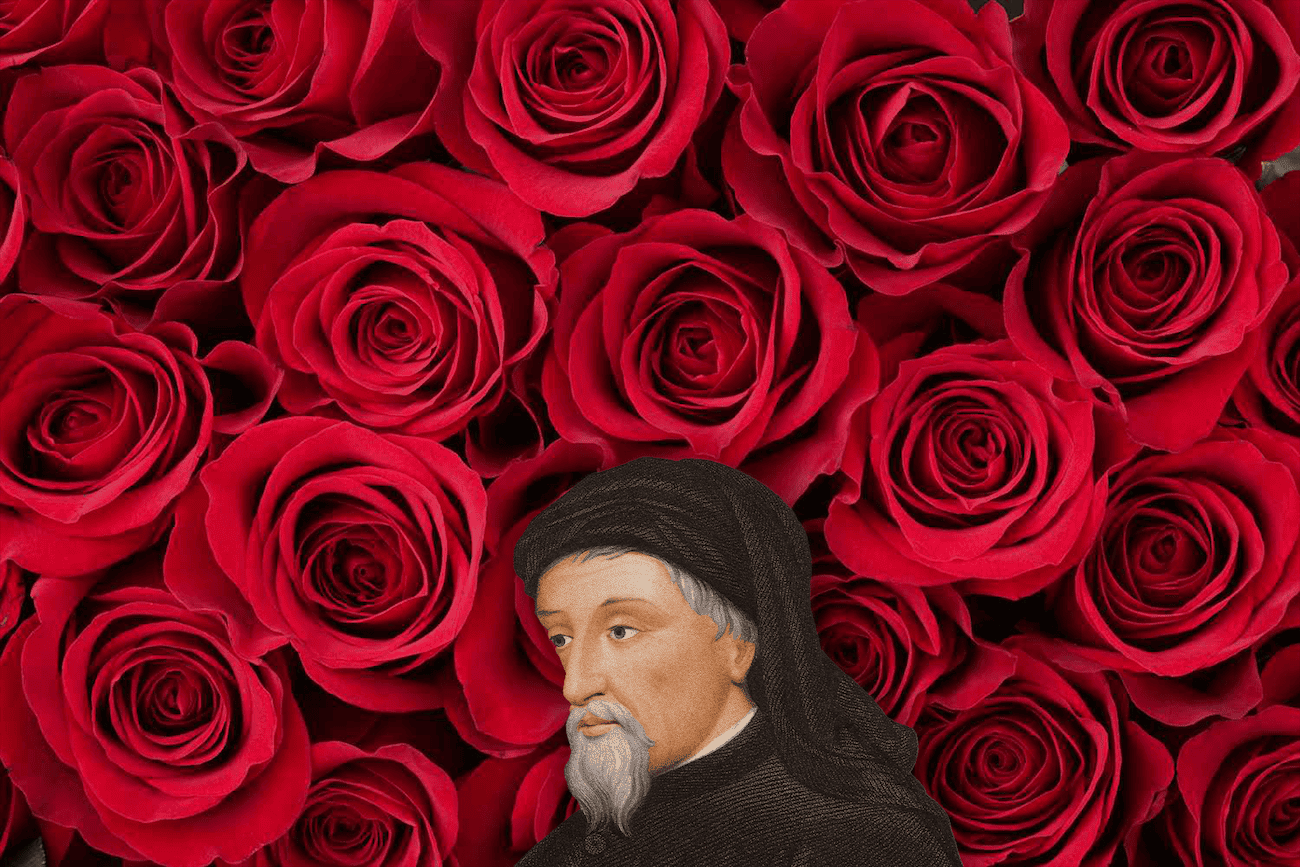

Every February, shops erupt in a riot of red. Chocolates multiply like rabbits. Roses develop an air of urgency, as if they’ve been given a deadline. And people — otherwise rational, sensible people — begin acting as though a specific date on the calendar has been quietly judging their romantic progress all year. It’s Valentine’s Day.
A holiday so confident in its existence that no one seems to question its origins. Which is odd, because its origins are, to put it mildly, a mess.
Too Many Valentines: A 3rd-Century Identity Crisis
The story goes that Valentine’s Day is named after a saint — or possibly several saints, all named Valentine, because apparently it was the 3rd-century equivalent of “John.”
The Catholic Church recognizes at least three martyrs by that name, and over thirty Valentines (plus a few Valentinas) ultimately achieved sainthood, which suggests the name was less a personal choice and more a contagious condition.
One version involves a Valentine who secretly married couples in defiance of Emperor Claudius II, who had decided that single men made better soldiers — a policy with real “I don’t understand people, but I do understand swords”energy. Valentine was executed for his trouble, which seems like an overreaction to what was essentially an unlicensed wedding planning business.
Another tells of a Valentine who, while awaiting execution, wrote a note signed “from your Valentine,” which is a level of optimism that deserves its own Netflix special. The man was about to be beheaded and his concern was branding.
And then there’s the awkward overlap with Lupercalia, an ancient Roman fertility festival that involved matchmaking lotteries, animal sacrifice, and a general enthusiasm for things that would make today’s HR departments file for early retirement. The early Church, in its infinite practicality, appears to have placed St. Valentine’s feast day in mid-February to give this pagan bacchanalia a more respectable makeover — a strategy roughly equivalent to putting a doily on a chainsaw and calling it a centerpiece.
In short, Valentine’s Day is a patchwork of martyrdom, mythology, and marketing, held together by sheer determination and a lot of chocolate. But if you’re looking for someone to blame for turning this chaotic history into a celebration of love, look no further than Geoffrey Chaucer.
Chaucer: Accidental Influencer, Absolute Menace
In the 14th century, Geoffrey Chaucer — poet, bureaucrat, and the kind of man who could ruin your century with a single couplet — decided to spice things up with a little bird matchmaking. In his poem “The Parliament of Fowls,” he declared February 14th to be the day “whan every foul cometh ther to chese his make.” Translation: “it’s the day when birds choose their mates.”
The origin of romantic Valentine’s Day: a man watched some pigeons and wrote a poem about it. Everything else — the roses, the dinner reservations — all of it flows from Chaucer’s ornithological fanfiction.
That’s it. That’s the origin of romantic Valentine’s Day. A man watched some pigeons and wrote a poem about it. Everything else — the roses, the dinner reservations, the passive-aggressive “just so you know, I’m fine with not celebrating” conversations — all of it flows from Chaucer’s ornithological fanfiction.
Now, why Chaucer thought birds were pairing up in mid-February is anyone’s guess. In his defense, medieval calendars were an absolute shambles — the beginning of spring was variously marked at February 7th, 22nd, or both, depending on who you asked and how much mead they’d had. And Chaucer’s February 14th would have landed closer to our February 23rd anyway, which at least gets us within spitting distance of March. So, either he was ahead of his time on the whole global warming thing, or he simply needed a deadline, and February 14th was available.
Writers will understand. Chaucer was, by the standards of his day, essentially a Kardashian — famous, well-connected, and capable of making things fashionable simply by talking about them. His poet friends jumped in first, because poets have never once in recorded history resisted the urge to make someone else’s idea about love. Oton de Granson III wrote Valentine’s verse. John Gower followed suit. By the time the earliest surviving Valentine letter appeared — Margery Brews writing to her fiancé John Paston in 1477, calling him her “right well-beloved valentine” — the tradition had been rolling for a full century and showed no signs of stopping, like a snowball made of sonnets. Shakespeare, never one to miss a cultural bandwagon or let another writer have a nice thing, cemented the connection further.
By the 19th century, the holiday had evolved into a full-blown celebration of romance, complete with cards, Cupid, and enough hearts to make a cardiologist nervous. So, the next time you’re panic-buying roses or trying to decipher a cryptic Valentine’s Day text, you can thank Chaucer for getting the ball rolling. Or, more accurately, the birds.
The Heart: A Shape That Has Gotten Away With Identity Fraud for 800 Years
It’s everywhere this time of year — on cards, on candy, on text messages sent with varying degrees of regret. It’s universally understood to mean love, affection, sincerity, and occasionally, “I’m sorry I forgot our anniversary and this emoji is doing a lot of heavy lifting right now.”
Which is curious, because the heart symbol looks absolutely nothing like an actual human heart. The real thing resembles a lumpy root vegetable that’s been through a tough week and lost an argument with gravity. No one has ever looked at a medical diagram and thought, “Ah yes, romance.”If Hallmark sold anatomically correct heart cards, the divorce rate would triple. So how did this improbable shape become the universal shorthand for love? As with Valentine’s Day itself, the answer is a mix of history, speculation, and a dash of absurdity.
The Extinct Contraceptive Herb That Accidentally Invented the Love Emoji
One popular theory traces the heart symbol back to ancient Greece and Rome, and to a now-extinct plant called Silphium. Silphium was a botanical multitasker — used as medicine, seasoning, and, most intriguingly, as a form of birth control. It was the Swiss Army knife of the ancient Mediterranean, except instead of a tiny scissors, it had reproductive implications. Its association with physical intimacy made it a natural candidate for the love department.
But here’s the kicker: Silphium’s seed pods were shaped uncannily like the modern heart symbol. The Romans were so enamored with this plant that they stamped its image on coins, which, in ancient times, was the equivalent of saying, “This is a big deal.” They literally put a contraceptive on their currency. Imagine the Bank of England doing that today.

Over time, the shape outlived the plant itself, detaching from its botanical roots and attaching itself to matters of the heart — a career pivot that no one saw coming and no one has successfully challenged since. In other words, the heart emoji you just sent might owe its existence to a contraceptive herb with excellent branding.
From Pine Cones to Playing Cards: A Glow-Up 700 Years in the Making
The heart’s first clear appearance as a symbol of romantic love came in the 13th-century French poem Roman de la Poire. In it, a young man offers his heart to his beloved — not literally, because medieval poetry had its limits, but symbolically. The heart in question looked less like today’s icon and more like a pine cone, which suggests that romance, at the time, was still in its beta version.
It took another two centuries of artistic experimentation — hearts drawn upside down, sideways, and occasionally in ways that suggested the artist had never seen a heart, a pine cone, or indeed any object — before the shape settled into the form we recognize today. By the 15th century, it had secured a permanent gig as a suit in playing cards. And once something appears on playing cards, it achieves a kind of immortality that most religions can only dream of.
Love, Simplified (Finally, Something That Is)
By the 19th century, the heart symbol was everywhere — on jewelry, stationery, chocolates, and eventually, screens. It became the simplest possible container for the most complicated of emotions. The heart asks very little of us. It’s easy to draw, universally understood, and conveniently free of the awkwardness that often accompanies actual declarations of love. It is, in many ways, the perfect symbol: just vague enough to mean anything, just familiar enough to mean everything. Which may explain its enduring success. That, and the fact that we’ve spent 800 years using it, and at this point, it’s too late to switch to something more anatomically honest.
And Here We Are (Send Help, or Chocolate)
So here we are, in the middle of February, celebrating a holiday with murky origins, honoring a saint who may or may not have existed (and who definitely had too many namesakes), using a symbol that may have started as a plant, survived medieval poetry, been confused with a pine cone, and been immortalized by Chaucer watching birds do their thing on a cold Tuesday.
None of this should work.
And yet, somehow, it does.
So, in the spirit of the season — and since Chaucer started all this, it seems only fair to let him have the last word (loosely speaking):
On Seynt Valentynes Day,
the birds do sing,
To chese their loves,
and greet the spring.
But hearts, like Silphium,
fade away — So eat the chocolate.
’Tis here to stay. ❤️
Ganpy Nataraj is an entrepreneur, author of “TEXIT – A Star Alone” (thriller) and short stories. He is a moody writer writing “stuff” — Politics, Movies, Music, Sports, Satire, Food, etc.