



Aziz Ansari’s ‘Good Fortune’ Asks a Funny Question Befitting Christmas: Does Money Really Solve Life’s Problems?

- It’s movie about the human condition, where awareness replaces miracles, connection outshines wealth, and simply showing up for one another becomes the season’s true magic.
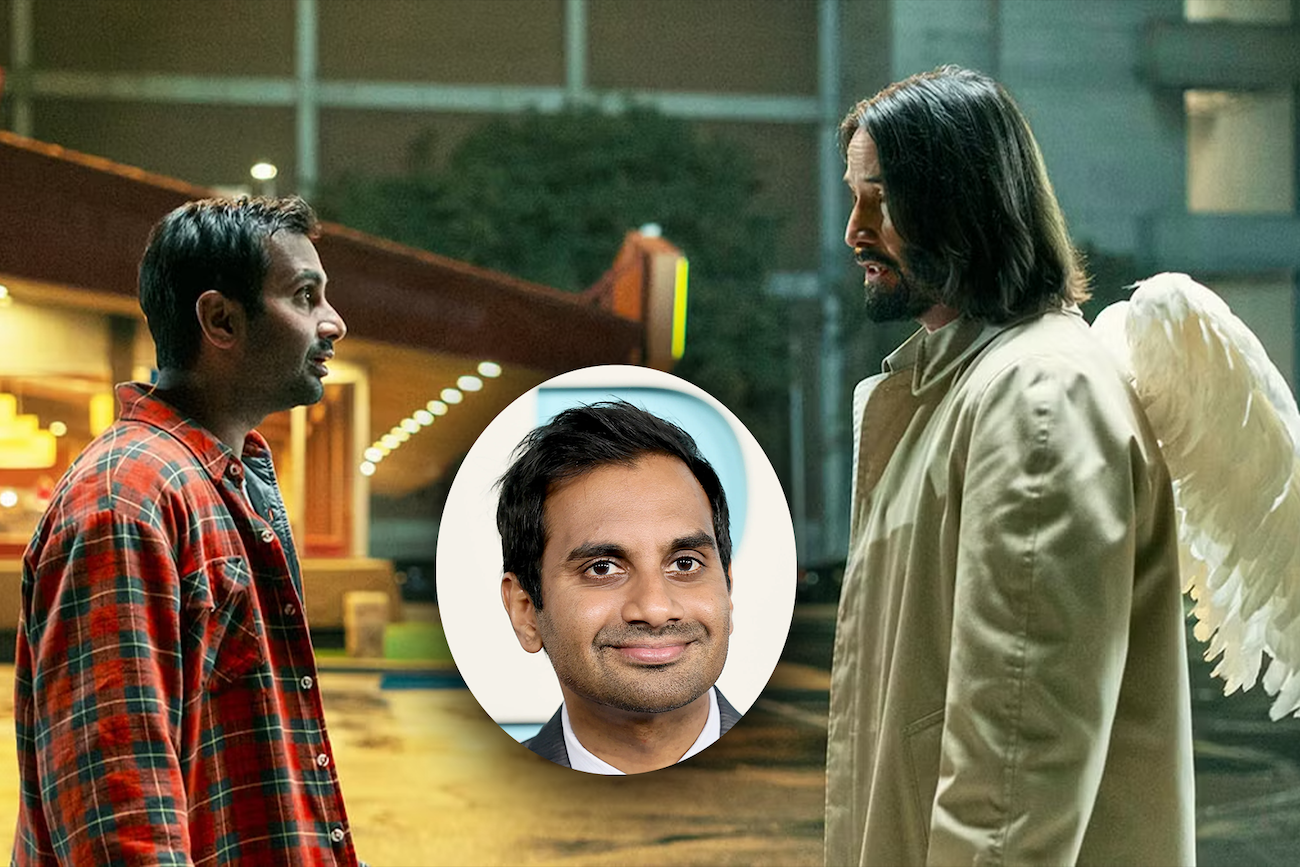

“Good Fortune” written and directed by Aziz Ansari is a whimsical romantic comedy that blends humor, heart, and fantasy. Posing a deceptively simple question: Does money really solve life’s problems or does hope come from something far more human?
At its center is Gabriel (Keanu Reeves), a low-ranking guardian angel whose official assignment is modest but vital: preventing people from dying while texting and driving. With his diminutive wings and a gentle touch. Often just a single hand placed on a distracted driver’s shoulder. Gabriel saves lives at their most fragile moments.
What seems like a minor role reveals its deeper purpose over time: preserving life long enough for people to change themselves. Gabriel’s flaw, however, is that he interferes too much. He wants to fix lives directly, without understanding how humans actually live.
That misunderstanding drives the film’s central conflict. When Gabriel attempts to prove to Arj (Aziz Ansari)—a struggling gig worker, and part-time hardware-store employee—that money won’t fix his problems, he swaps Arj’s life with that of his wealthy tech millionaire employer, Jeff (Seth Rogen). The plan backfires spectacularly, setting off a chain of consequences that cannot be undone unless Gabriel earns back his wings and the authority to restore everyone’s lives.
Arj’s life before the swap is shown as a grim reality: sleeping in his car, juggling odd jobs, donating plasma, avoiding parking tickets, and absorbing the daily humiliations of economic precarity. When he suddenly finds himself rich—living in a sprawling mansion, floating in an infinity pool, eating guacamole and chips without worry—he doesn’t feel empty. He feels relieved. Comfort is seductive, and for the first time, life isn’t exhausting.
“Good Fortune” argues that hope doesn’t come from money, miracles, or angels rearranging our lives. It comes from surviving long enough to overcome our fears, and to laugh together.
Gabriel’s punishment for meddling is swift. His wings are taken away, leaving him unable to reverse the swap. Forced to live as a human, he has no understanding of how people eat, get paid, or survive. His bafflement over paychecks—especially how so much money disappears into deductions—becomes a quietly sharp commentary on modern labor.
Gabriel falls in love with fast food (especially chicken nuggets), gets addicted to nicotine, discovers the internet with childlike wonder, dreams about working with baby elephants, and slowly realizes that being human is far harder than he ever imagined. He comes to understand that survival doesn’t come from miracles—it often requires working two, sometimes three jobs just to stay afloat.
Meanwhile, Jeff’s ludicrous fall from privilege of doing cold plunges, saunas, fancy watches, and corporate meetings which can be written off provides much of the film’s sharp humor and bite. His obliviousness is crystallized in one of the film’s most absurd lines: “I respect patient confidentiality. Do you have any Indian dudes who are in a coma?” Yet Jeff’s arc deepens as he experiences life without wealth, eventually developing empathy and a sense of responsibility toward the workers affected by his investments.
Arj’s emotional conflict intensifies after a texting-and-driving accident leaves him in a coma—ironically the very danger Gabriel once existed to prevent. When Arj wakes up, he pretends to have memory loss to avoid switching lives back. He knows that unless Gabriel regains his wings, the swap cannot be undone—and even when it can, Arj resists. His reluctance is not malicious; it is rooted in fear. He doesn’t want to return to uncertainty, struggle, and instability after finally tasting ease. The film treats this hesitation with compassion, never shaming him for wanting comfort.
Elena (Keke Palmer), Arj’s coworker and romantic interest, serves as the film’s moral compass. Deeply committed to unionizing and improving working conditions, she never confuses wealth with worth. Her clarity and conviction challenge Arj.

Overseeing everything is Martha (Sandra Oh), Gabriel’s supervisor, whose dry authority gradually gives way to wisdom. She reframes the film’s philosophy: Angels cannot manufacture hope, nor should they carry that burden alone. People inspire hope in one another through connection, solidarity, and shared struggle.
Only after Gabriel fully understands what it means to live as a human—after humility, labor, and genuine connection does he earn back his wings. With that restoration comes the ability to set things right. In the end, Arj chooses to switch back. Not out of guilt, but out of hope. Jeff is flabbergasted. “Not only does he want to go back but he has to be psyched to go back? ”Jeff, restored to his life, uses his power to push for better labor practices. Gabriel returns to his role with clarity, restraint, and compassion.
“Good Fortune” argues that hope doesn’t come from money, miracles, or angels rearranging our lives. It comes from surviving long enough to overcome our fears, and to laugh together, to dance, to connect with others, choosing courage over comfort, and finding meaning in shared effort.
“Good Fortune” teaches us “not to give up.” Sometimes a lost soul doesn’t need an angel, just needs another person. But Gabriel’s smallest act placing a hand on a shoulder and preventing a single death proves to be the greatest intervention of all. I hope he is in every car this weekend as people are dashing on the streets to buy the last gift to bring someone a moment of joy.
With one foot in Huntsville, Alabama, the other in her birth home, India, and a heart steeped in humanity, Monita Soni writes as a contemplative practice. She has published hundreds of poems, movie reviews, book critiques, and essays, and contributed to combined literary works. Her two books are “My Light Reflections” and “Flow Through My Heart.” You can hear her commentaries on Sundial Writers Corner, WLRH 89.3 FM.