


Born in the U.S.A.: Aliya Rahman Identified as Software Engineer and Social Justice Activist Dragged From Car by ICE

- The Bangladeshi American’s life was shaped by displacement, revolution, and a commitment to social justice that predates her activism in Minneapolis by decades.
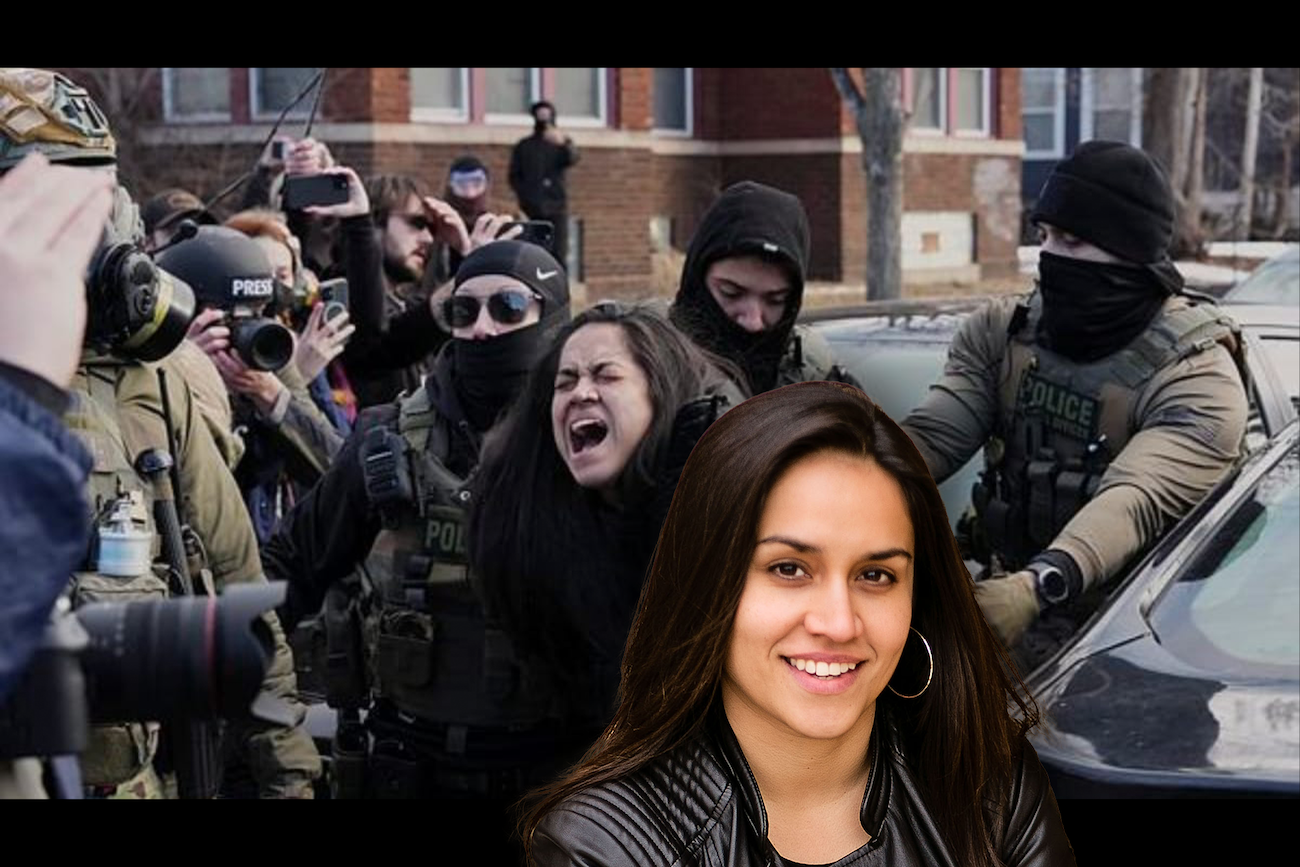

Six days after ICE agent Jonathan Ross fatally shot Renee Nicole Good in Minneapolis, another confrontation between federal immigration enforcement and Minneapolis residents was captured on video and shared millions of times across social media. This time, the person at the center was Aliya Rahman, a 43-year-old U.S. citizen, software engineer, and longtime social justice activist who found herself violently removed from her vehicle on Tuesday, January 14, 2026.
The incident occurred as Minneapolis remained in turmoil following Good’s killing on January 7—the first recorded homicide in the city in 2026. What started as one woman’s attempt to reach a medical appointment became another flashpoint in the intensifying clash between federal immigration enforcement and local communities resisting what Minneapolis Mayor Jacob Frey called a “federal invasion.”
The Incident
Rahman told Newsweek that she repeatedly asked for a doctor while she was in ICE custody, only being taken to the hospital once she lost consciousness. In her statement released Thursday through the MacArthur Justice Center, which is representing her, Rahman described the encounter in stark terms.
“These last few days have been traumatizing and overwhelming,” Rahman told Newsweek. “First and foremost, I feel lucky to be alive. What I thought would be a routine trip to my appointment at the Traumatic Brain Injury Center turned into an assault by federal agents.”
Video of the incident shows masked federal agents surrounding Rahman’s black car at an intersection in South Minneapolis. According to CBC News, one masked agent smashed Rahman’s passenger side window while others cut her seatbelt and dragged her out of the car through the driver’s side door. Numerous guards then carried her by her arms and legs towards an ICE vehicle.
In the footage, Rahman can be heard shouting repeatedly that she is disabled. “I’m disabled trying to go to the doctor up there, that’s why I didn’t move,” Rahman said, gesturing down the street as officers pulled her arms behind her back.
Rahman said in her statement that after her detainment, she felt lucky to be alive. “Masked agents dragged me from my car and bound me like an animal, even after I told them that I was disabled.” While in custody, Rahman said she repeatedly asked for a doctor, but was instead taken to the detention center. “It was not until I lost consciousness in my cell that I was finally taken to a hospital.”
Rahman was treated for injuries consistent with assault, according to her counsel, and has been released from the hospital. She thanked the emergency department staff for their care. “They gave me hope when I thought I was going to die,” according to CBC News.
Government’s Account
The Department of Homeland Security provided a sharply different narrative. A spokesperson for the Department of Homeland Security disputed that account in an emailed statement on Thursday, saying that Rahman was an agitator who “ignored multiple commands by an officer to move her vehicle away from the scene.”
According to DHS, agents were executing an arrest warrant for Jonathan Chachipanta Pualacin, a 20-year-old man from Ecuador with a final order of removal. The department claimed that as agents carried out the operation, a group gathered and began impeding law enforcement.
CBP Commander at Large Gregory Bovino stated on X: “The lady who was arrested was impeding Federal officers refusing to comply after several requests. Officers had no other choice but to remove and arrest her. This was her choice entirely.”
A Life Shaped by Revolution and Immigration
Rahman’s biography reveals a life shaped by displacement, revolution, and a commitment to social justice that predates her activism in Minneapolis by decades.
According to Tech for Social Justice and the #MoreThanCode project, Rahman was born in the U.S. to a mother from a rural, farming community in Wisconsin, and a Bengali father who had fled the 1971 genocide in his home country. “I grew up as the first generation after independence in Bangladesh,” she told Tech for Social Justice. “You saw what happens after you get free, where you have to govern, and people need water, food. I got to see a country being put together. I grew up seeing garment workers, who were almost all women, protesting on the street…That was really my background. That’s how I understood the role of science and tech.”
On her X (formerly Twitter) profile, Rahman describes herself as “your friendly neighborhood deniable asset,” a phrase that has been noted by both supporters and critics in the aftermath of her arrest.
Rahman studied at Purdue University in Indiana, where according to her New America biography, she studied aerospace engineering and education as both an undergraduate and master’s student. At Purdue, she taught undergraduate courses in computer programming for engineers, chemistry, and the social foundations of education.
Her path took a dramatic turn during her junior year. According to Tech for Social Justice, two of her cousins, who were Muslims, died in the towers during the September 11 attacks. “All kinds of stuff happened that literally just threw my identity and my background as an activist and engineer into this fucking shit pile. For me, that was a really important moment in starting to dig deeply into U.S. social movements and understanding what race means here that it doesn’t in Bangladesh.”
The aerospace industry also changed after 9/11. “Everyone who was formerly a Star Trek nerd was having to work on missiles, and I didn’t want to do that shit,” Rahman recalled. “I switched out of an engineering program and finished with a teaching degree in Chemistry,” according to Tech for Social Justice.
Bridging Tech and Activism
Rahman spent several years teaching at public high schools on reservations in Arizona before becoming a field organizer at the Center for Community Change in Ohio, working with people returning from prison and immigrant organizers. She also worked with Equality Ohio, an LGBT advocacy group.
It was at Equality Ohio that she began merging her technical and organizing skills. According to Tech for Social Justice, “I was like, ‘Oh my God, we have stuff on zip disks, guys,'” she recalled of the Equality Ohio office. “There was like spreadsheets here, and paper there. So I ended up having to write a bunch of software to help us do our work, right? I called it the Gaytabase, and it was this Django app that helped our ED to know what district she was in, when her flight arrived, or where we’re at with a certain bill in a district, and all that kind of stuff, right?”
That was 2012. “Basically, since then it has been a combination of organizing, teaching, and software or hardware,” Rahman, who considers herself a “para-political organizer,” said, according to Tech for Social Justice.
In 2014, Rahman won DC Web Women’s first-ever Tech Woman of the Year award, according to Technical.ly. At the time, she was 32 years old and working as program director for Code for Progress.

According to her New America biography, Rahman worked as a fellow with the New America’s Open Technology Institute on body-worn camera policy and workforce development surrounding community fiber expansion. Her work was informed by a background in legislative, electoral, and community organizing for racial and criminal justice campaigns, 15 years of software development for the social justice movement, and a former life as an educator and researcher working in public education and workforce development, according to New America.
According to her LinkedIn profile reported by multiple outlets, Rahman describes herself as a community-focused security practitioner, full-stack developer, and engineering manager with over 15 years of experience. Most recently, she worked as a Software Engineering Manager at Anywhere Real Estate Inc.
On her X (formerly Twitter) profile, Rahman describes herself as “your friendly neighborhood deniable asset,” a phrase that has been noted by both supporters and critics in the aftermath of her arrest.
Broader Implications
Rahman’s case raises significant questions about the scope and conduct of federal immigration enforcement operations, particularly regarding U.S. citizens who attempt to observe or document these operations.
While DHS maintains Rahman was obstructing a lawful arrest, her attorneys and supporters argue that observing law enforcement activity is protected by the First Amendment, and that federal agents’ response was disproportionate and violated her civil rights.
The incident also highlights tensions over disability rights. Rahman’s repeated statements that she was disabled and attempting to reach a medical appointment, combined with her claims of being denied medical care in custody until she lost consciousness, have raised concerns about how federal agents treat individuals with disabilities during enforcement actions.
As of Thursday evening, it remained unclear whether Rahman would face federal charges for obstruction or whether her attorneys would pursue civil rights claims against the agents involved in her detention.
What is clear is that six days after Renee Good’s death, Minneapolis remains a city deeply divided over the Trump administration’s immigration enforcement surge—and Aliya Rahman, a software engineer who has spent two decades trying to use technology to advance social justice, has become the latest face of that conflict.
Rahman concluded her statement with a request for privacy and a note of gratitude. “I may have more to say in the coming days but for now, I am relieved to be safe and ask for privacy as I heal from my injuries and navigate how to move forward from this traumatic experience,” she told Newsweek.
For a woman who grew up watching garment workers protest in the streets of newly independent Bangladesh, whose father fled genocide, and who lost family members in the towers on September 11, 2001, her encounter with federal agents in Minneapolis this week represents yet another chapter in a life marked by displacement, resistance, and the complicated intersection of identity, technology, and politics in America.
This story was aggregated by AI from several news reports and edited by American Kahani’s News Desk.