




Will the Sweeping Victory of Democrats Lead to Congress Reclaiming the Powers That It Had Surrendered to the Executive?

- A midterm election may transform incentives, change committee chairs, reorganize legislative priorities, and intensify oversight. It does not automatically redistribute authority.
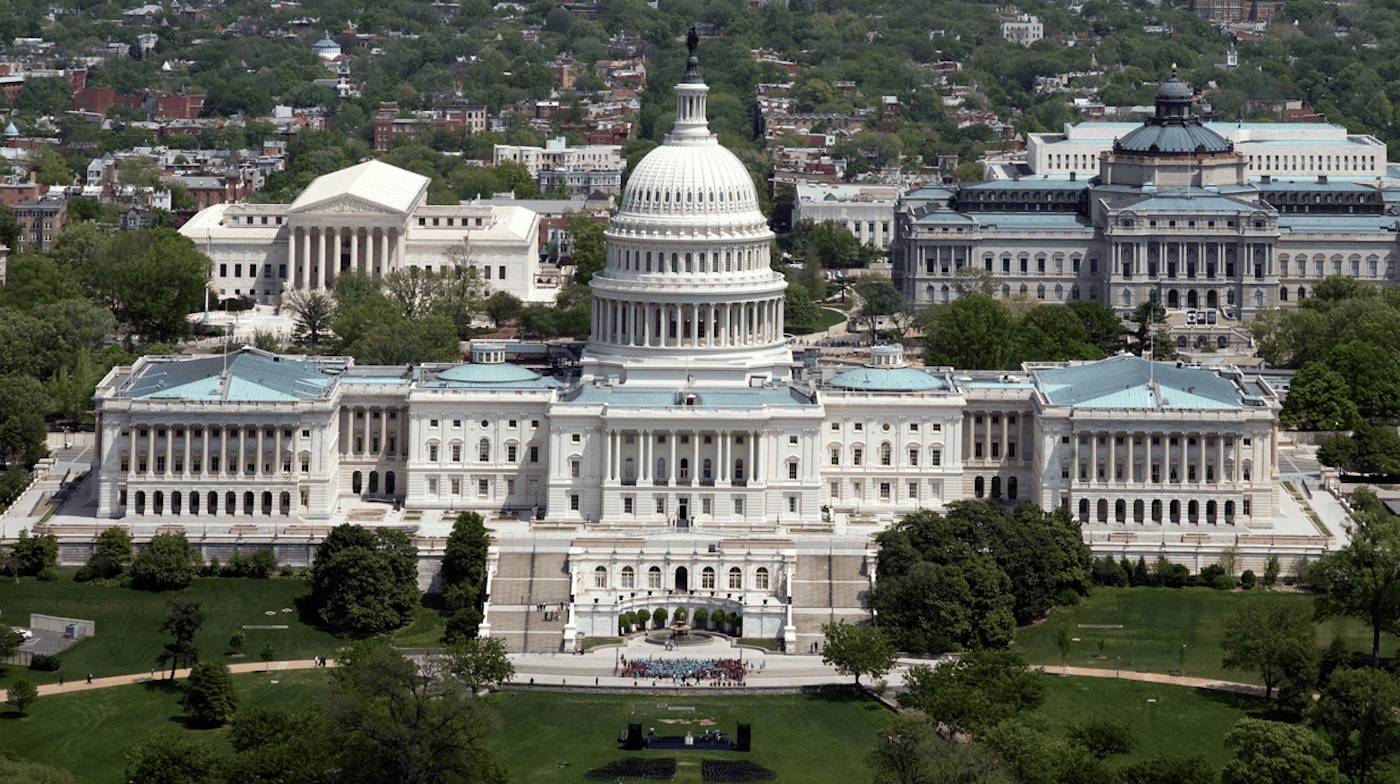

When the dust settled on the 2026 midterms, wiping out unified control of Washington and handing both chambers of Capitol Hill to an aggrieved opposition, the chattering class reached for its favorite secular liturgy.
The American electorate, we were told, had applied the emergency brake. The system had self-corrected; the Madisonian pendulum had swung back; the sacred machinery of checks and balances was once again humming in smooth, restorative rhythm.
It is a comforting fable, but a fable nonetheless.
What the midterm wave actually exposed was not the triumph of constitutional mechanics, but their quiet, historical erosion. The public celebration surrounding a legislative flip resembles a town cheering the election of a new constable while overlooking a more fundamental reality: the office no longer possesses the sidearm or authority it once did. The election changes the occupant. It does not restore the power.
The architectural ambition of 1787 was a stroke of Enlightenment Newtonian optimism. James Madison, Alexander Hamilton, and John Jay did not construct a system that depended on civic virtue. They designed a clockwork mechanism that assumed its scarcity. Article I was intended to keep Article II on a short leash, locking executive power in perpetual friction with the legislature. Ambition must be made to counteract ambition, Madison argued in Federalist No. 51.
Two centuries later, that machine no longer operates as its architects imagined. What began as a limited executive stewardship has evolved into an administrative presidency capable of acting across wide areas of economic, fiscal, and regulatory life without direct legislative initiation. Congress, meanwhile, has spent nearly a century relinquishing practical authority while preserving the appearance of constitutional primacy.
The early republic belonged overwhelmingly to Capitol Hill. Through most of the nineteenth century, Congress remained the principal engine of national policy. It imposed tariffs, managed public finance, admitted territories, and guarded the purse with extraordinary jealousy. The executive branch existed primarily to execute laws rather than to generate them.
The most consequential shift occurred not through executive seizure but through legislative delegation. In 1934, chastened by the experience of Smoot-Hawley and frustrated by the politics of tariff-making, Congress enacted the Reciprocal Trade Agreements Act. For the first time, the legislature transferred a substantial portion of its trade authority to the President. What appeared to be a practical adjustment became a constitutional precedent. Congress had discovered a mechanism for escaping responsibility.
Political scientist I. M. Destler later described the resulting system as one that provided “protection for Congress.” Legislators could support national trade agreements while distancing themselves from unpopular consequences. The arrangement was politically brilliant. It was also institutionally transformative.
What began as a targeted delegation in trade policy evolved into a broader governing philosophy. Through emergency statutes, national-security exceptions, broad regulatory mandates, and expansive administrative authority, Congress repeatedly found that transferring difficult decisions to the executive was easier than making them itself.
Delegation accumulated incrementally, rarely attracting public attention precisely because it appeared administrative rather than constitutional.
By the early twenty-first century, the presidency had become the principal operational center of government, capable of imposing tariffs, redirecting economic incentives, regulating industries, and exercising vast discretionary authority under statutes enacted years or even decades earlier.
The first consequence is that delegation functions less like a temporary loan and more like a statutory ratchet. Scholars frequently describe delegated power as though it remains comfortably under congressional control. In theory, Congress can reclaim any authority it chooses to surrender.
In practice, recovering delegated authority requires passing new legislation, overcoming entrenched interests, surviving partisan polarization, and confronting a presidential veto. Authority can flow into the executive branch by simple legislative majority. Reclaiming it demands a two-thirds supermajority—a political condition that almost never exists in a sorted electorate. Delegation is not legally irreversible. Under modern political circumstances, however, it acts as a one-way street.
The second consequence is that Destler’s original logic has been inverted into an accountability shield. His insight was that delegation insulated national policy from local pressures and narrow protectionist interests. Today, delegation often serves the opposite function. It acts as an accountability shield for executive radicalism.
Members of Congress voluntarily permit presidents to pursue far-reaching actions through emergency declarations, administrative interpretations, national-security authorities, and discretionary waivers because doing so allows extreme outcomes to occur without requiring individual lawmakers to put their names on a recorded legislative vote. Authority becomes concentrated precisely because responsibility becomes dispersed.
The third consequence is that executive actions frequently acquire a durability that conventional commentary understates. Public discussion continues to portray executive orders as fragile instruments, vulnerable to immediate reversal by a successor. Reality is more complicated.
Once presidential directives are translated into agency rules, compliance structures, contractual agreements, commercial expectations, and bureaucratic procedures, unwinding them becomes slow and legally arduous. Formal repeal may remain possible, but practical permanence often emerges long before legal permanence does. Markets adjust. Institutions adapt. Citizens reorganize their expectations. Executive directives are not statutes. Yet many begin to shape public life with a durability that increasingly resembles legislation.
The fourth consequence is the structural surrender of the power of the purse—the quietest and most consequential form of the same ratchet. The Congressional Budget and Impoundment Control Act of 1974 was meant to reassert legislative control over spending. In practice, as entitlement spending expanded and executive agencies developed extensive administrative waivers, reprogramming authorities, and emergency designations, functional control over money flows migrated to the executive branch.
Congress continues to pass massive omnibus packages under crisis deadlines, but the granular authority over execution has shifted. The constitutional heart of Article I—the power to withhold the purse—has been exchanged for automated fiscal baseline transfers.
Defenders of the contemporary arrangement raise an important objection. Congress, they note, is hardly powerless. It appropriates funds, confirms officials, creates agencies, rewrites laws, conducts investigations, and ultimately determines the statutory foundations upon which executive authority rests. The administrative state remains a creature of legislation. Presidents cannot govern in a legal vacuum.
These arguments deserve serious consideration. Article I has not been repealed. Congress retains immense constitutional authority. The deeper problem lies elsewhere: the question is not whether Congress possesses power, but whether it consistently possesses the political capacity to use it. Modern legislators frequently inherit powers they can describe but struggle to exercise. The constitutional arsenal remains intact. The institutional willingness to deploy it has become increasingly uncertain.
The problem becomes still more pronounced when viewed through the lens of party politics. The Constitution assumes that members of Congress will defend congressional prerogatives and presidents will defend presidential prerogatives. Contemporary politics operates according to a different logic.
Through most of the nineteenth century, Congress remained the principal engine of national policy. It imposed tariffs, managed public finance, admitted territories, and guarded the purse with extraordinary jealousy. The executive branch existed primarily to execute laws rather than to generate them.
As Daryl Levinson and Richard Pildes observed, modern governance often reflects a separation of parties rather than a separation of powers. Members of Congress frequently identify more strongly with partisan objectives than with institutional interests. When the same party controls both elected branches, oversight weakens and executive discretion expands. Institutional rivalry gives way to partisan coordination.
The Founders anticipated conflict between branches of government. They did not anticipate national parties so powerful that loyalty to party would routinely eclipse loyalty to institution.
The consequences become most visible during periods of divided government. Whenever opposition parties capture one or both chambers, commentators celebrate the restoration of checks and balances. Yet divided government often produces something far more limited: oversight asymmetry.
Congress gains the power to investigate, subpoena, expose, criticize, and occasionally delay. The executive retains much of the authority necessary to govern. An opposition Congress may hold hearings into policies already underway. It may challenge decisions after implementation. It may slow certain initiatives through appropriations or oversight. What it generally cannot do with ease is dismantle authorities already delegated to the executive branch.


The result is a system in which one branch increasingly directs public attention while the other continues directing administrative machinery. This is not constitutional equilibrium. It is institutional stalemate.
Into this system has entered a third force: the judiciary. The Supreme Court’s retreat from Chevron deference in Loper Bright and the expansion of the Major Questions Doctrine represent an attempt to constrain administrative expansion. Courts have become increasingly skeptical of broad agency interpretations and increasingly willing to demand explicit congressional authorization for significant exercises of economic and political power.
Yet judicial intervention creates its own paradox. Courts can invalidate administrative actions; they cannot compel legislators to legislate. They can narrow executive discretion; they cannot rebuild legislative capacity. What emerges is not a restoration of the original constitutional balance but a system in which executive authority and judicial review increasingly dominate a legislature that remains formally supreme while appearing institutionally hesitant.
If Congress seeks to reclaim its Article I responsibilities, it must confront the statutory foundations of executive unilateralism through structural reform. One essential path is the approval-first emergency model. Current emergency delegations rely on a disapproval structure: the President declares an emergency, and it stands unless Congress passes a Joint Resolution of Disapproval over a presidential veto.
Statutory reform must invert this default: any executive declaration of an economic or national security emergency must automatically expire after sixty days unless Congress affirmatively passes a Joint Resolution of Approval. By making non-action tantamount to a veto, the burden shifts back to the White House to build a legislative majority.
Congress must also execute a surgical repeal of broad statutory carve-outs. Narrowing Section 232 national-security definitions strictly to military procurement, and eliminating obsolete authorities that have become pretexts for unilateral action, closes the primary avenues of escape. Finally, expedited judicial standing mechanisms should grant fast-track Supreme Court review whenever a bipartisan majority of Congress challenges executive actions that exceed statutory bounds.
The persistent illusion of modern American politics is that elections automatically repair institutions. A midterm election may transform incentives, change committee chairs, reorganize legislative priorities, and intensify oversight. It does not automatically redistribute authority. The transfers of power that matter most often occurred years earlier through statutes that continue to operate regardless of electoral outcomes.
This is why debates about presidential excess frequently miss the more profound constitutional question. The issue is not simply whether presidents have accumulated too much authority. Every generation since Franklin Roosevelt has made some version of that observation. The deeper question is whether representative institutions can spend nearly a century delegating responsibility and still retain the habits necessary to reclaim it.
Constitutional systems rarely become unbalanced because one institution seeks power. They become unbalanced because other institutions gradually discover reasons not to exercise their own.
The American dilemma is therefore less a story of executive ambition than of legislative retreat. Congress remains, in theory, the first branch of government. It can narrow delegations, sunset emergency powers, reclaim tariff authority, and reassert control over spending. What it increasingly lacks is not constitutional permission but sustained institutional will.
Until that changes, elections will continue to be mistaken for structural reform. Presidents will inherit authorities accumulated by previous administrations. Courts will intervene episodically at the margins. Congress will investigate consequences generated by powers it once delegated. And the public will celebrate episodes of divided government as restorations of constitutional balance while the underlying architecture of governance remains substantially unchanged.
The central constitutional challenge of the twenty-first century may therefore prove to be neither the rise of an imperial presidency nor the activism of an assertive judiciary. It may be something quieter and ultimately more consequential: a legislature that still possesses its constitutional inheritance, yet has gradually forgotten how to spend it.
Satish Jha, a former editor with the Indian Express Group and the Times of India Group was a Ford Fellow in U.S. Policymaking and studied with IM Destler.