




The Modi Factor: Anti-Immigrant Sentiment in the U.S. Unlikely to Trigger Reverse Indian Migration

- More than sixty percent of Indian Americans who thought about leaving the U.S. didn’t mention India as their destination. It was some other country.
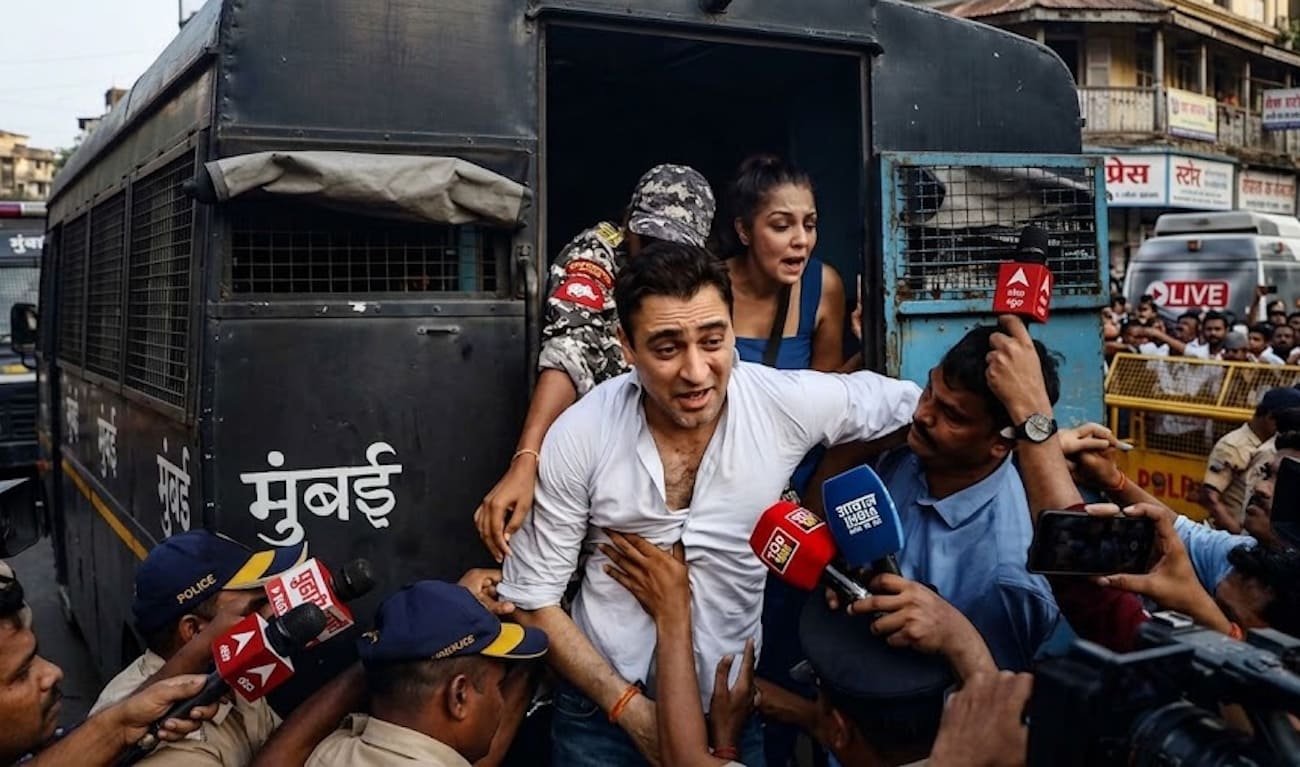

The actor Imran Khan, a U.S. citizen and an OCI (Overseas Citizen of India), became a cause célèbre when he was asked to leave India because of his participation in a protest. The authorities in Mumbai said permission hadn’t been granted for this demonstration, which called for the resignation of Chief Election Commissioner Gyanesh Kumar over alleged irregularities in his oversight of the controversial SIR (Special Intensive Revision of electoral rolls). But since it was a peaceful protest, the retribution seemed unduly harsh. Khan is fighting the “Leave India Notice” in court. Bollywood, barring a few honorable exceptions, has been conspicuously silent.
“I am here as a citizen, as a person who lives in this city,” Khan pointed out. “I’m here to see why freedom of movement is being restricted. Why are people’s voices being suppressed?”
OCIs: No Better than Foreigners?
Dissent is the bedrock of any democracy. In this case, what makes it worse is that Khan — far from being an outsider with no local ties — has lived most of his life in India, where he built his film career and remained “Indian” in just about every way. Apparently, the word “citizen” in OCI has little value, making a mockery of the label. It’s a misnomer. The government should have dubbed it FRI (Foreign Resident of India), which is clearer and an inversion of NRI (Non-Resident of India), the tag normally used for Indian citizens living abroad.
Of course, since the OCI scheme was officially launched two decades ago, we can’t hold the current administration responsible for the misleading label. But even if we accept that an OCI Card doesn’t make you a “citizen of India” and is actually more like the U.S. Permanent Resident Card (or Green Card), which allows you to work but not vote, it’s shocking that taking part in a democratic, nonviolent protest could lead to an OCI’s expulsion from India.
Modi 3.0 seems to be no better than Trump 2.0. Foreign citizens living in the U.S. today know they have to be careful about what they say publicly — and even naturalized U.S. citizens may be nervous about speaking their mind freely, especially if they are immigrants of color.
Nevertheless, while denaturalization in the U.S. is an involved process, the bar for OCIs is lower. The Indian government can invoke Section 29 and Section 7 of the Immigration and Foreigners Act, 2025, as it did with Imran Khan, to expel them. Khan gets his day in court, but regardless of the outcome, the government has sent a chilling message to OCIs who visit or live in India.
Kirit Somaiya, a BJP leader in Mumbai, was blunt about how he viewed OCIs. “There are thousands of Imran Khans in India,” he told reporters. “They want to live here and defame the country. Action should be taken against all such people, and they should be deported.”
And it’s not just foreign citizens in India who are worried these days. Indian citizens, alarmed by rising authoritarianism and the actions of their Chief Election Commissioner, have realized that disenfranchisement is a real threat in India. Democracy is under assault.
Apparently, the word “citizen” in OCI has little value, making a mockery of the label. It’s a misnomer. The government should have dubbed it FRI (Foreign Resident of India), which is clearer and an inversion of NRI.
At the same time, outside the subcontinent, rising anti-immigrant sentiment, not to mention anti-Indian bigotry in places like the U.S., has put a strain on the diaspora. Does that mean OCIs are clamoring to return to India — or remain in India? Hardly. Yes, a minority (such as Imran Khan) do want to stay in India for professional and/or family reasons, but the vast majority of OCIs, it’s safe to say, will remain in the countries they moved to from India. Indians who are planning to return to India have exhausted their options for staying overseas. They are not citizens, or even legal permanent residents, of other nations.
What Indian Americans Think
A recent Carnegie survey (“Indian Americans in a Time of Turbulence”) provides insights on an influential subset of the Indian diaspora.
Despite the “rise in anti-Indian sentiment,” only 14% thought frequently about leaving the U.S. Interestingly, the survey didn’t exclude non-U.S. citizens or new arrivals with limited ties to the U.S. Conversely, 37% of Indian Americans never thought about leaving and moving to another country. In the middle were those who thought about it occasionally (26%) or rarely (22%).


Moreover, 62% of Indian Americans who thought about leaving the U.S. didn’t mention India as their destination. It was some other country. Only 25% were sure about moving back to India, and 13% remained unsure about where they wanted to make their home.
This raises a fascinating question. In the same survey, frustration with U.S. politics was given as the top reason (58%) for Indian Americans wanting to leave the U.S. So, for those who don’t see India as their preferred destination, what role does frustration with Indian politics play?
The survey has no answer, but that doesn’t mean it plays no role. Granted, as always, economic reasons prompt a lot of people to leave the world’s most populated country to seek opportunities abroad. In fact, no diaspora is larger than the Great Indian Diaspora. Spread across the world and numbering about 37 million, it is as populous as Mozambique or Poland.
Are there other reasons for leaving India? Certainly. A big reason could be the entrenched Modi Raj. It’s testing the patience of many Indians, making emigration a desirable — if increasingly elusive — solution for their dissatisfaction. There’s widespread frustration, particularly among young people, over the shambolic educational system, lack of good jobs and opportunities, autocratic rule, pollution and inadequate infrastructure, and persistent corruption.
About a million Indians, as it was reported at the end of 2025, gave up their citizenship over a five-year period. That amounted to almost 220,000 citizenship renunciations every year.
NoViolet Bulawayo’s acclaimed debut novel, We Need New Names, is set in her native Zimbabwe and the U.S., where she now lives. But Bulawayo could have been writing about Indians just as accurately in this passage: “Moving, running, emigrating, going, deserting, walking, quitting, flying, fleeing — to all over, to countries near and far, to countries unheard of, to countries whose names they cannot pronounce. They are leaving in droves.”
Murali Kamma is the managing editor of Khabar, an Indian-American magazine based in Atlanta, and a contributor to The Quint. His debut book, “Not Native: Short Stories of Immigrant Life in an In-Between World,” won an Independent Publisher Book Award.