




Netflix’s Net Loss: The Rise and Exit of Bela Bajaria, the Gujarati American Who Ran the World’s Largest Content Operation

- The daughter of Indian immigrants who grew up in Torrance, California, her departure on October 15, 2026, ends one of the most consequential Indian American careers in entertainment history.
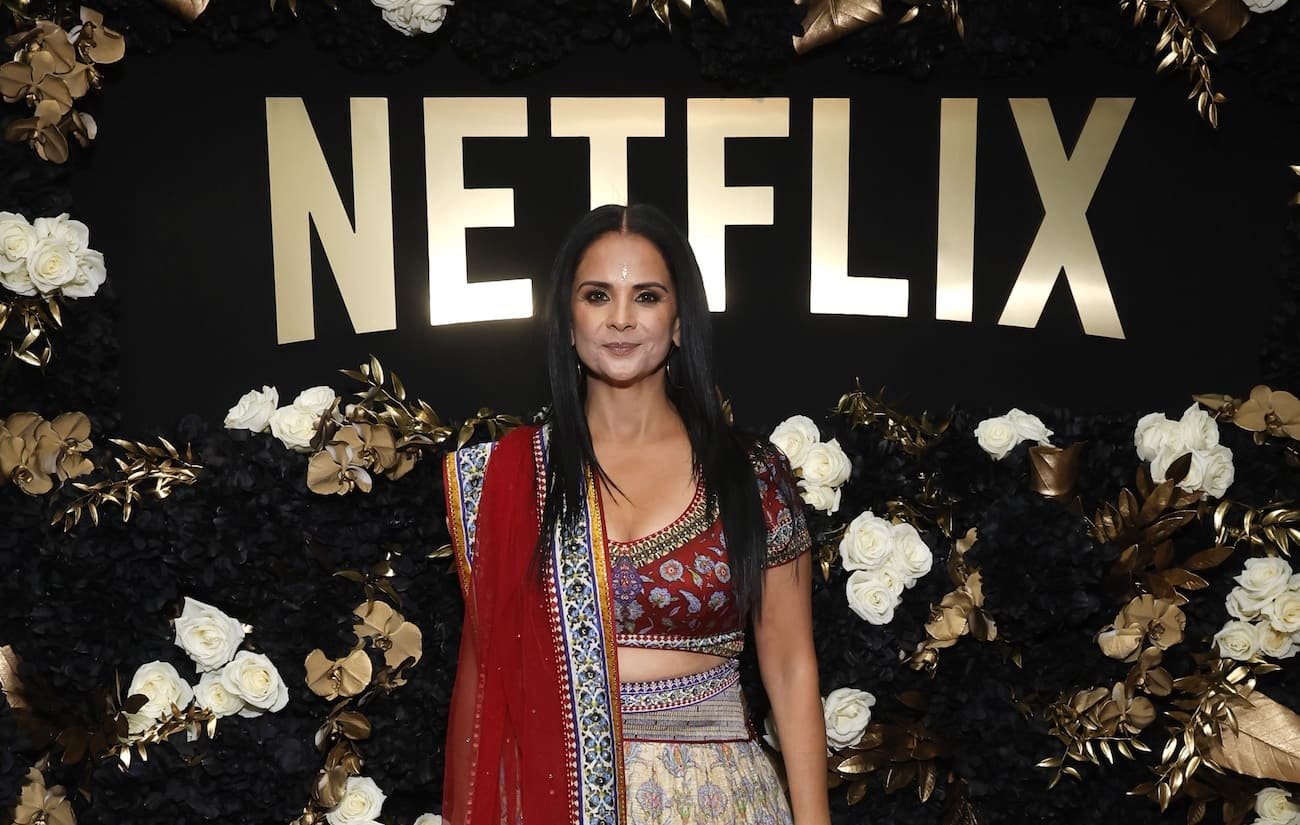

On Thursday, October 15, 2026, Netflix co-CEO Ted Sarandos sent an internal memo to staff. It began: “Hi everyone, I have an important update to share about our Content leadership. After a phenomenal decade at Netflix, Bela is leaving the company.”
By the time the memo had been shared with the press — by Deadline, which obtained and published it — the entertainment industry had absorbed what it described as a “major executive shake-up.” Bela Bajaria, the company’s Chief Content Officer and one of the most powerful people in global entertainment, was out. Peter Rice, the former Fox and Disney executive, would take her place effective October 26.
“I want to thank Bela for a decade of dedication, innovation, creativity and leadership,” Sarandos said in the memo. “She led enormous changes at Netflix. I’m incredibly grateful for everything she’s done to help Netflix entertain the world.”
The departure was announced one day after Netflix eliminated approximately 1,000 jobs — roughly 6 percent of its global workforce — as the platform grappled with what multiple outlets described as slowing growth and falling customer engagement in 2026. Bajaria’s exit was officially framed as a departure rather than a layoff, but the timing and context were impossible to separate, as media outlets hinted in their coverage.
From Torrance to Palos Verdes: An Indian American Formation
Bela Bajaria’s biography is, in its early chapters, a precise embodiment of the first-generation Indian immigrant professional family in Southern California — the ambition, the work ethic, the strategic social navigation, and the gradual material ascent that defined the experience of a particular generation of Gujarati families who arrived in the United States in the 1960s and 1970s.
Her parents immigrated to the United States from India — Gujarati heritage that she has acknowledged in interviews as foundational to her identity — and settled in the working-class Los Angeles suburb. Her father’s hard work eventually allowed the family to move to the more upscale Palos Verdes area by the time Bajaria was in high school, as Variety’s 2024 profile by Danielle Nussbaum reported.
She competed as Miss India USA — a beauty pageant aimed at celebrating Indian American women. For young Indian American women of her generation, the pageant was one of the few highly visible platforms in American public life that specifically celebrated South Asian identity and achievement, and participation reflected a family culture that valued both Indian heritage and American ambition simultaneously.
She went on to build a career in American television — entering the industry from the production and content side rather than the technology or finance sides that absorbed so many Indian American professionals of her generation — at a moment when the structures of the television industry were still relatively traditional and the pathways for women of color into senior leadership were narrow.
She held senior roles at CBS Entertainment and NBCUniversal. At NBCUniversal, she served as president of Universal Television — and as head of Universal Media Studios. It was during her NBCUniversal tenure that she oversaw the production of “Unbreakable Kimmy Schmidt” — a show that became a hit on Netflix, establishing a professional connection to the streaming platform before she formally joined it.
In 2016, NBCUniversal let her go — a corporate decision that, in retrospect, looks like one of the most consequential miscalculations in the history of the entertainment business. Netflix hired her immediately.
The Netflix Decade: Building the World’s Most Ambitious Content Operation
Bajaria joined Netflix in 2016 as head of unscripted and scripted content. She was promoted in 2019 to lead international non-English TV originals — the role that would prove most consequential in her Netflix career, as it positioned her to champion the global content strategy that became the company’s defining competitive advantage. In 2020, she was elevated to Global Head of Television. In January 2023, she was named Chief Content Officer — the most senior content role at the most powerful streaming platform in the world.
As Chief Content Officer, Bajaria oversaw a roughly $20 billion budget for shows and movies for the global streaming platform, a figure larger, as Variety’s 2024 profile observed, than the gross domestic product of Greenland, Barbados, and several U.S. states. No individual in the history of the entertainment business had ever overseen a content commissioning operation of comparable scale.
The shows and films that emerged from her tenure constitute a remarkable catalogue. As Chief Content Officer and Global Head of Television, Bajaria oversaw “Squid Game,” “Stranger Things,” “Wednesday,” “Bridgerton,” “La Casa de Papel,” “Cobra Kai,” “Lupin,” “Heeramandi,” “Leave the World Behind,” and “Beverly Hills Cop: Axel F,” among many others, as the NBA Tech Summit biography confirmed. The South Korean series “Squid Game” — which became the most-watched Netflix show in the platform’s history when it debuted in 2021 — was precisely the kind of non-English-language global success that Bajaria’s international content strategy was designed to produce. That she championed it before its cultural explosion was documented in multiple industry accounts of its rise.
She also spearheaded Netflix’s expansion into live programming — including the company’s landmark deal with World Wrestling Entertainment, forging a groundbreaking, long-term partnership ensuring that WWE’s flagship weekly program “Raw” is available to Netflix members worldwide.
In December 2025, Forbes published a profile titled “How Netflix’s Bela Bajaria Became One of The World’s Most Powerful Women” — a recognition that encapsulated her institutional standing at the peak of her tenure.
In October 2024, she was elected to the Board of Directors of The Coca-Cola Company — a signal of her status as a recognized corporate leader well beyond the entertainment industry, as the Business Wire announcement confirmed. The Coca-Cola board described her as having been “instrumental in programming award-winning films and series” and having “spearheaded Netflix’s expansion into live programming.”
The Biography Behind the Resume: Using Television as Anthropology
Variety’s 2024 profile of Bajaria — the most extensive single published account of her professional identity — offered a revealing glimpse of the intellectual framework through which she understood her own career.
As Chief Content Officer, Bajaria oversaw a roughly $20 billion budget for shows and movies for the global streaming platform, a figure larger than the gross domestic product of Greenland, Barbados, and several U.S. states.
“Bajaria used TV as an anthropologist would to decipher her new world,” the Variety profile noted in its description of her early American television immersion. It was a formulation she herself appeared to endorse: the daughter of Indian immigrants, she had grown up using American television to understand the culture she was entering and navigating. That specific experience — of the first-generation immigrant child who reads popular culture with unusual intentionality because it is simultaneously entertainment and instruction manual — gave her a sensitivity to what television does culturally that purely insider-track executives often lack.
“What’s been fun is that Netflix culture moves really quickly,” she told Variety in the 2024 profile.
The Variety profile captured her at a Netflix after-party in Hollywood — moving through the crowd in a brightly colored flowing skirt and an off-the-shoulder sheer black blouse, dancing with programming executives and communications staff — as someone who was simultaneously fully at home in the industry and visibly herself within it. Not performing Americanness. Not performing Indianness. Simply present, as the person she had spent her entire career becoming.


The Reasons for the Exit: Engagement, Zeitgeist, and a Succession Decision
The official framing of Bajaria’s departure — a mutual decision after a decade of accomplishment — was largely accepted at face value by most outlets, though several documented the institutional context that surrounded it.
Bajaria’s exit comes as Netflix has laid off approximately 1,000 employees, or 6% of its workforce, amidst lagging user engagement in 2026, as TheWrap reported. The platform’s subscriber growth, which had returned to strength after a difficult 2022, had slowed again in 2026 as competition from Amazon, Disney+, Apple TV+, and Max intensified.
Deadline’s report was the most specific about the creative dimension of the departure’s timing: issues with subscriber engagement, and the fact that Netflix has not launched a big zeitgeisty title in over a year, can’t have helped Bajaria’s cause, as the outlet noted. The absence of a cultural phenomenon comparable to “Squid Game’s” global explosion or “Wednesday’s” record-breaking debut was, in a streaming environment where content is the primary competitive differentiator, a vulnerability that was attributed, at least partially, to the content leadership.
The hire of Peter Rice as her replacement was welcomed across the industry. Rice — who served as chairman of 21st Century Fox and then chairman of Walt Disney Television before being ousted from Disney in 2022 — has been described by Netflix in its announcement as “one of the entertainment industry’s most respected creative executives,” as CNBC confirmed. During his Disney tenure, Rice oversaw productions including “Modern Family,” “The Bear,” “The Simpsons,” and “Only Murders in the Building,” as AOL confirmed from the Disney executive history. He had been working as a producer on films including “Saturday Night” and “28 Years Later” since his Disney departure.
Rice’s statement on joining Netflix captured the institutional scale of what he was inheriting. “Netflix has fundamentally changed the way stories are made, shared and experienced around the world,” he said.
What She Built, and Why It Matters
The departure of Bela Bajaria from Netflix is an event in American entertainment history. But it is also an event in the history of Indian American professional achievement — and the distinction is worth making precisely.
The entertainment industry has been, through most of its history, the most resistant of America’s major industries to Indian American leadership. The pathways that brought Gujarati, Tamil, Punjabi, and Bengali professionals to the senior levels of medicine, finance, technology, academia, and government opened far more slowly — and remain far less traveled — in Hollywood. Bajaria’s ascent from the daughter of Gujarati immigrants in Torrance to the Chief Content Officer of the world’s largest streaming platform, overseeing a $20 billion annual content budget and commissioning programming in dozens of languages for hundreds of millions of subscribers, was genuinely without precedent in the industry’s history.
She did not get there by minimizing her identity. Her Indian American identity was visible and acknowledged throughout her career, not managed away as a liability. Her championship of non-English-language content — including “Heeramandi,” Sanjay Leela Bhansali’s Netflix series set in pre-partition India, which she shepherded — reflected a genuine investment in stories that her specific cultural formation had prepared her to value.
She leaves behind a Netflix content operation that is truly global — not in the way the word is used loosely to mean international distribution, but in the specific sense that the most-watched shows on the platform are routinely made in languages other than English, by creators working outside the Hollywood system, for audiences who were, until recently, entirely outside the scope of American entertainment industry imagination.
That is, in the most concrete possible sense, her legacy. What comes next — under Peter Rice, in a platform facing genuine competitive pressure for the first time in its mature history — will be built on the infrastructure she constructed.