




When One Painting in San Francisco Opens an Entire World: The Enduring Legacy of ‘Woman with a Hat’

- My journey with Henri Matisse’s ‘Femme au chapeau’ began in May, in Nice.
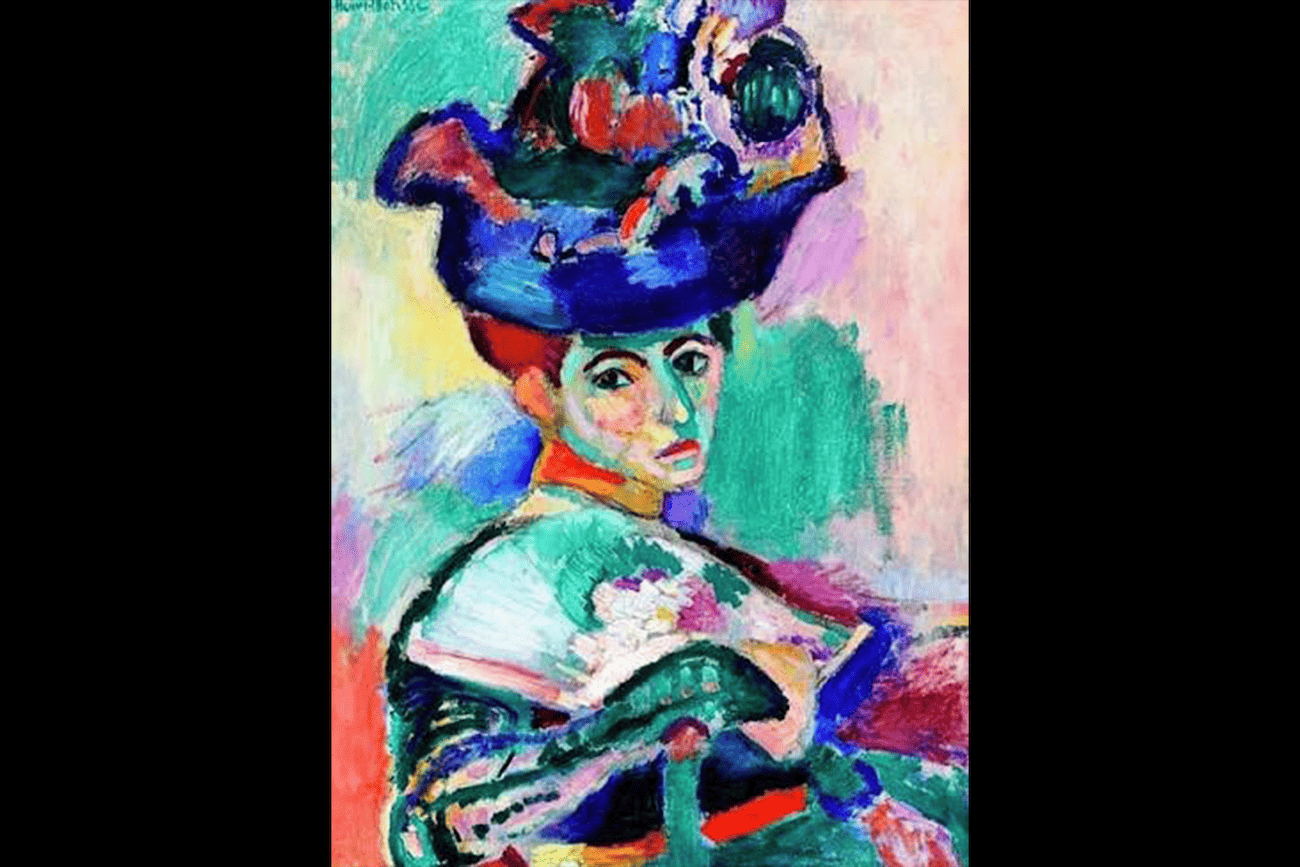

I had gone to the Musée Matisse with a very specific painting in mind. I had first encountered Matisse as a child in kindergarten, when I was introduced to him as a great colorist. Even then, there was something about his colors that stayed with me. So when I saw the enormous Fleurs et Fruits exhibition in Nice, I was mesmerized.
But I was also looking for someone.
I climbed the steps of the museum expecting to finally stand in front of Matisse’s famous “Woman with a Hat” the portrait that had helped ignite one of the great artistic revolutions of the twentieth century.
And she wasn’t there.
At first, I was disappointed.
Then I discovered the reason.
All this time, she had been in my hometown of San Francisco.
From May 16 to September 13, 2026, the San Francisco Museum of Modern Art presented “Matisse’s Femme au chapeau: A Modern Scandal,” an extraordinary exhibition centered around the very painting I had gone to Nice hoping to see.
Suddenly, my missed encounter in Nice became something much more interesting.
I had returned home to San Francisco, and there she was.
The exhibition recreated the atmosphere of the 1905 Salon d’Automne in Paris, where Femme au chapeau was first exhibited. Walking into that recreated gallery felt almost like stepping through a doorway in time. There were paintings, letters, ephemera, and a recreation of Gertrude Stein’s studio. Instead of simply learning about a moment in art history, I felt as though I had been invited into it.
And I loved that.
Because the more I looked, the more I realized that this was not simply the story of one painting.
It was a story about people.
About friendships. About artists finding one another. About collectors recognizing something before the rest of the world understood it. About paintings traveling across oceans. And, unexpectedly, about the remarkable connection between Paris and San Francisco.
The woman who changed the rules
In 1905, Matisse exhibited Femme au chapeau at the Salon d’Automne in Paris.
It must have been startling.
The woman in the portrait was his wife, Amélie Matisse, but Matisse did not paint her as viewers expected a respectable portrait to look. Her face is made up of unexpected colors, greens, blues, pinks, oranges, and the brushwork is loose, almost startlingly free.
This wasn’t simply a woman wearing a remarkable hat.
It was a challenge.
The colors did not obediently imitate nature. They expressed something else, emotion, energy, sensation.
The reaction was bewilderment, laughter, criticism and outrage. The artists exhibiting these radical works were soon given a name: les Fauves, the “wild beasts.”
I find that story wonderfully human.
We often look backward at revolutionary art and think, Of course. Of course this was important. Of course Matisse was going to change modern art.
But imagine being there in 1905. Imagine walking into that room without knowing what would happen next. Imagine seeing a face painted in colors that a face had never been painted before.
That must have felt almost shocking.
And perhaps that is one reason Matisse still feels so alive to me. His paintings have a kind of freedom in them. They remind me of the way children see color before they are taught what is “correct.”
A tree doesn’t necessarily have to be green.
A face doesn’t have to be flesh-colored.
It took me from my childhood introduction to Matisse, to Nice, to Paris in 1905, to Gertrude Stein’s circle, to the Stein family, to Harriet Lane Levy, and finally back to San Francisco.
Blue can be sadness. Red can be energy. Green can be a feeling.
Matisse gave color permission to become its own language.
From Paris to San Francisco
What made the SFMOMA exhibition particularly meaningful to me was discovering how intimately this particular painting was connected to San Francisco.
Femme au chapeau was purchased by Leo and Gertrude Stein at the end of the 1905 Salon d’Automne. It later passed to Leo’s brother Michael and his wife, Sarah Stein, who became important figures in the early appreciation of modern art.
Eventually, the painting crossed the Atlantic and came to the Bay Area.
It was shown in San Francisco in 1936.
And ultimately, Femme au chapeau entered SFMOMA’s collection through the bequest of Elise S. Haas, who had purchased it from Sarah Stein in 1948.
I found myself unexpectedly moved by that journey.

A painting that had once caused scandal in Paris had traveled across the ocean and eventually found its home in my own city.
What I loved most
The exhibition made Fauvism feel much less like a chapter in an art-history book and much more like a moment of youthful rebellion.
These artists were refusing to behave.
Their colors were too loud. Their brushstrokes were too visible. Their forms were too simple. Their paintings didn’t follow the rules people had been taught to respect.
There was something almost childlike about it, not childish, but wonderfully free.
And I kept thinking about how much courage it takes to see something differently before everyone else can see it too.
That may be what makes museums so magical for me.
You walk in thinking you are going to see a painting.
And then the painting opens a door.
Behind it are artists and friendships, cities and journeys, arguments and discoveries. A single canvas can contain an entire world.
For me, Femme au chapeau became exactly that kind of door.
It took me from my childhood introduction to Matisse, to Nice, to Paris in 1905, to Gertrude Stein’s circle, to the Stein family, to Harriet Lane Levy, and finally back to San Francisco.
The journey somehow came full circle.
I went to Nice looking for Woman with a Hat.
I came home to San Francisco and discovered that the woman with the hat had, in a sense, been here all along.
What began for me as a search for one famous painting became a journey through color, friendship, migration, collecting, rebellion and the extraordinary connections between Paris and San Francisco.
The exhibition is still on view at SFMOMA through September 13, 2026 and well worth seeing if you have the chance!
Dr. Abha Soni is a physician new to the Bay Area, who specializes in diagnosing skin diseases. Outside of work, she finds joy in sharing stories about her experiences and attending social and cultural events. She is also passionate about food, beauty/skincare, and travel blogging. Her artistic sensibilities find expression through visual art, music, and singing, which enrich her multifaceted life beyond medicine.