




Second Guessing Women’s Choices: Why is Swara Bhaskar Eager to ‘Reduce Women to Their Vaginas and Nothing More’

- Popular culture fixates on Jauhar and women, but the medieval Rajput communities practiced it as a paired tradition — Saka for the men and Jauhar for the women.

Sometime in early 1807, on a ship near the coast of modern-day Ghana, some 70-80 captured African men, abducted from their homes and being shipped across the ocean into slavery, made a last stand. In an affidavit recorded months later, the ship’s captain stated that they jumped overboard from the ship into the dark waters, willing to face death, versus a life of captivity. That dry legal document hints at the human spirit rebelling and choosing death against the grim reality of slavery. Of a human being’s refusal to engage in lifetime of forced labor for hostile strangers and to see the fruits of their labor be used against them. An iconic dialogue from the movie “Black Panther,” also hints at this traumatic history, as its villain Erik Killmonger declares, “Bury me in the ocean with my ancestors who jumped from the ships, because they knew death was better than bondage.”
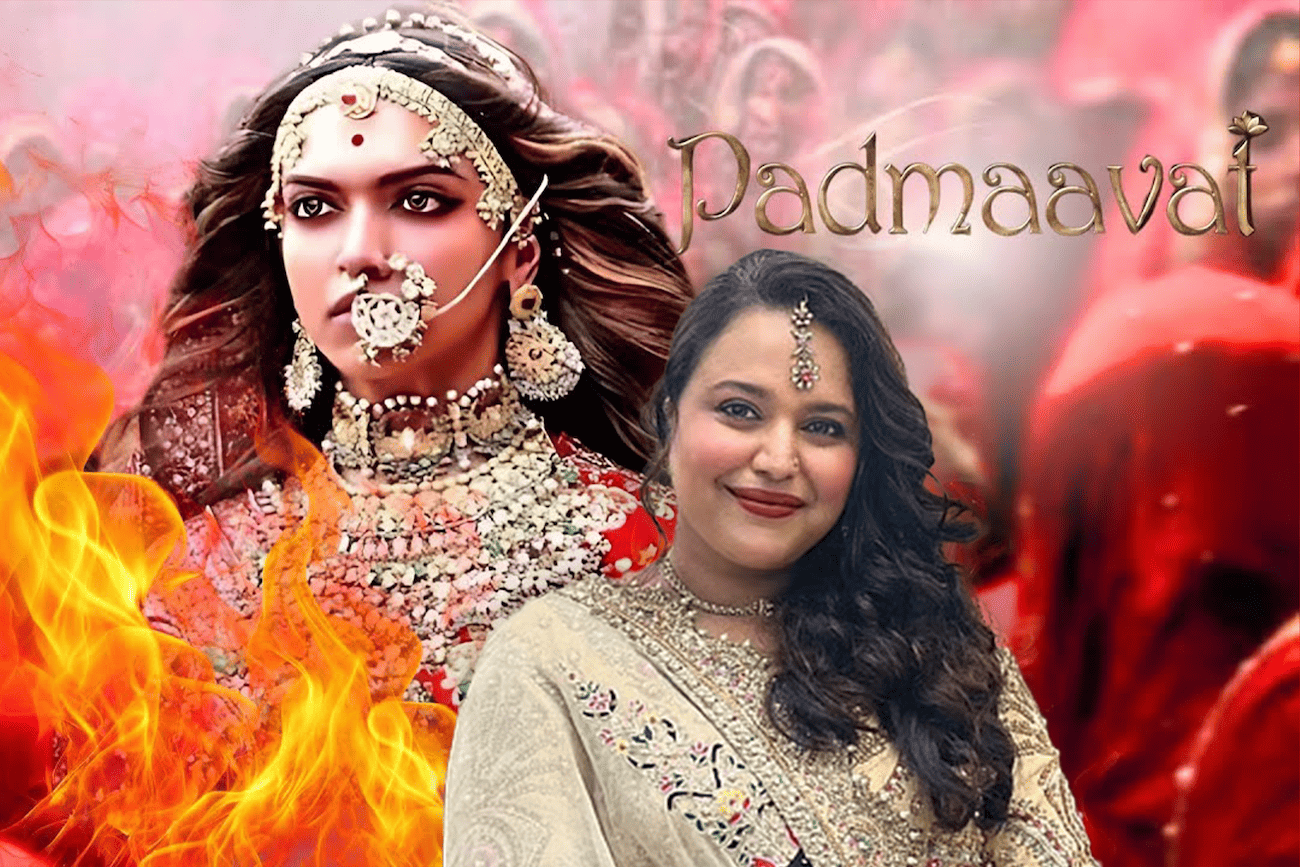
Modern day society does not judge those African men as cowards, for refusing to go along with the plans of their captors. They are even celebrated for such actions – deemed the resistance of those with few options. So why do we see a turnabout when Hindu women facing enslavement for life, make similar choices? I am talking of course about the brutally insensitive statement of Hinduphobes like Swara Bhaskar, the Indian actress, who feel free to judge and opine on the choice made by the women of Chittor, several centuries ago and her comments on the Jauhar scene in the iconic movie “Padmaavat.”
Swara tried to subvert reality itself, by stating the movie glorified death as the only choice for a rape survivor. But the women who chose Jauhar, were by definition not rape survivors. A stormy public debate followed. What stands out is even in this “progressive” era, folks feel free to attack the choices of women. And not just of living women but also those long dead and gone. A stark contrast with men who make similar choices.
History is rife with cruel desperate battles, where the losing army battled to death. Every culture and era has told the stirring tales of warriors, who asked to choose between death or a life of defeat, chose the former. What made Chittor and some similar battles stand out in history, is of course the decision of its women to embrace Jauhar – Shaka.
Popular culture fixates on Jauhar and women, but the medieval Rajput communities practiced it as a paired tradition — Saka for the men and Jauhar for the women. These decisions generally came after long drawn-out periods of hostility and desperate battles, where the Hindu community was sure all options were exhausted. As the final choices narrowed between death and enslavement, some Rajput communities chose death — the women dressed in bridal finery embracing a fiery pyre, while the men dressed in saffron — the color of renunciation — fought in battle till dead.
The women who chose Jauhar were not foolish or ignorant. They were making informed choices, based on centuries of evidence before them. Their enemies themselves had extensively documented and publicized the barbarity with which they treated captured kafirs.
But as always, when women are involved the public gaze and memory focusses only on sex! For a self-proclaimed feminist, Swara also seems to be remarkably eager to reduce women to their “vaginas”, and nothing more. But the women choosing Jauhar, did not just prevent rape – which Swara seems to suggest is a problematic goal. They also avoided a life of torture, enslavement and back breaking labor that would enrich their captors. Sitting surrounded by modern conveniences, where even breaking a sweat involves a trip to the gym, it’s easy to forget that in a pre-industrial era, more slaves meant more working capital for the captor. Enslaved humans quite literally enriched their masters with their blood and sweat. So why judge them for refusing to meekly accept such a life?
In his book, “Hindus beyond the Hindu Kush: Indians in the Central Asian Slave Trade,” Scott C. Levi, writes that, “Demand was especially high for skilled slaves, and India’s comparatively larger and more advanced textile industry and agricultural production, and its magnificent imperial architecture, demonstrated to its neighbors that skilled labor was abundant in the subcontinent. This accounted for the common practice of rival political powers enslaving and relocating large numbers of artisans following successful invasions.”
The women who chose Jauhar were not foolish or ignorant. They were making informed choices, based on centuries of evidence before them. Their enemies themselves had extensively documented and publicized the barbarity with which they treated captured kafirs.
Nor are such choices a relic of the past. Just read the reports of mass suicide among Yazidi women enslaved by ISIS! Women have had to make similar horrific choices in the 21st century as they sought to deal with the daily brutalization their lives had become. Speaking to the press in June 2017, Nobel Prize winner and former ISIS slave, Nadia Murad recounted how Yazidi women had “hoped our fate would be to be killed like the men instead of being sold and raped by Syrians, Iraqis … Tunisians and Europeans”.
Does Swara judge the Yazidi women who chose death, as harshly as she judges Rani Padmini?


The women celebrated in “Padmaavat” for choosing Saka-Jauhar were neither rape survivors or slaves. They were women who ensured they exercised agency before they lost it — making a choice just like the countless African men and women who jumped off slave ships to die in the ocean. In choosing death they prevented rape and they also denied their potential captors, the chance to profit from their forced labor.
Yazidi women freed from slavery under the Islamic state have documented the harsh labor and repeated assaults that made up their life in captivity. When a woman evaluated Jauhar, she knew that staying alive would strengthen the very army and despots she was warring against.
Denying a slaver his spoils is not cowardice. It is another way of resistance — starving the enemy of the human capital they crave. The current push to reframe this courageous resistance, not only falsifies history, but has a more insidious aim — to sanitize the barbarism at play. Focusing public conversation voyeuristically on a rape that never happened, diverts attention away from the unforgiving cold reality that awaited survivors. The communities that embraced Saka-Jauhar were not refusing rape counseling and PTSD treatment, they were saying no to options like deathly forced marches over the Hindu Kush (Hindu Killer) mountains to the slave markets of Central Asia.
Saka-Jauhar embodies the indomitable human spirit of resistance.
Pushpita Prasad is a storyteller and communications professional with a background in working with media, technology, and history. She is passionate about topics related to India, Human Rights, Hinduism, and Culture. Pushpita is involved with organizations focused on advocating for minorities, finding their stories, and helping to elevate their voices through multiple media and channels.