




From Foster Care to U.S. Congress: I Witnessed How Aisha Wahab’s Lived Experiences Influenced Her Political Journey

- The newly minted legislator representing California’s 14th Congressional District not only has deep ties to India but also understands the challenges that ethnic minorities face.
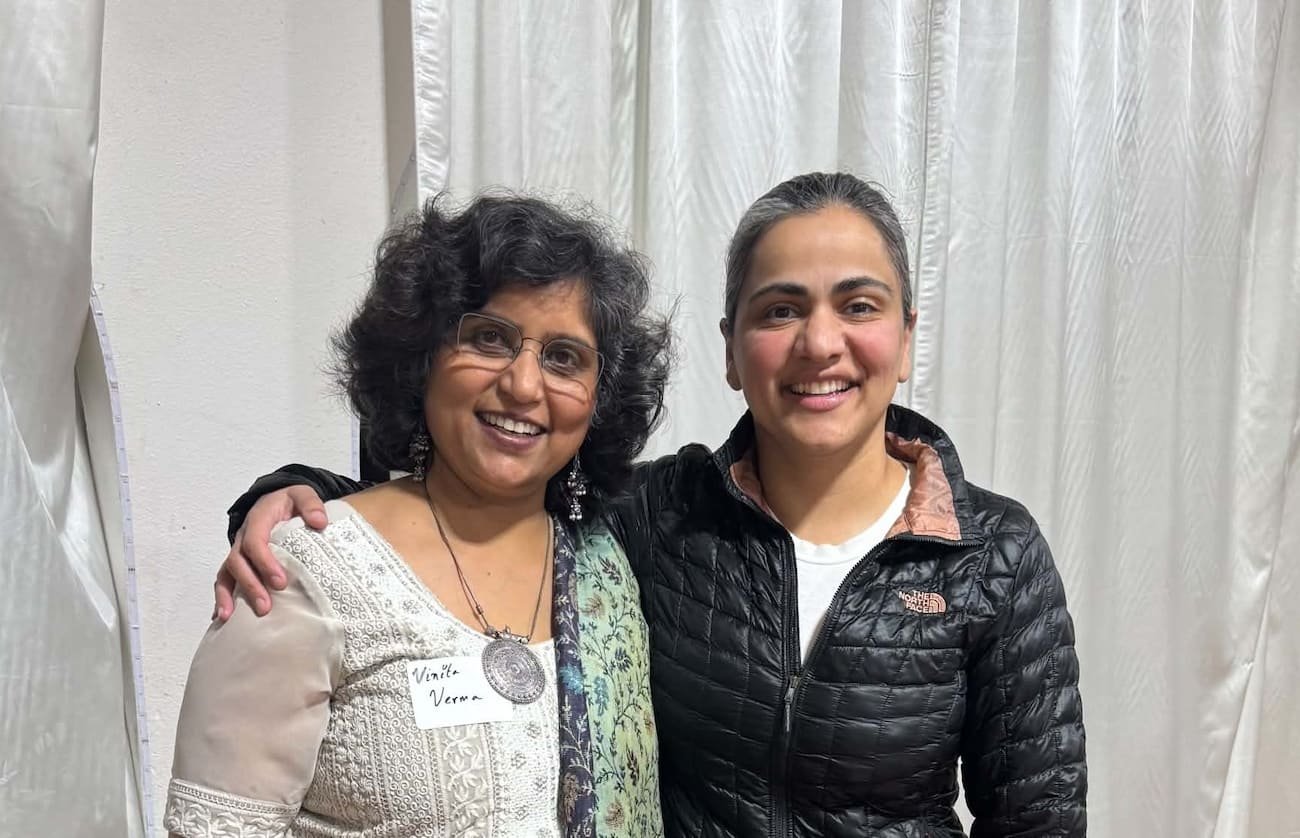

In late 2025, then-Congressman Eric Swalwell announced his decision to run for Governor of California, leaving the congressional seat open for the 2026 election. In April 2026, he resigned amid sexual misconduct allegations, creating an unexpected vacancy in an important congressional district. Gov. Gavin Newsom subsequently called for a special election to fill the seat. As a result, voters in the district faced two additional elections between June and August 2026 before the November general election. At the center of this extraordinary political chapter is Aisha Wahab, an Afghan American whose personal journey is as remarkable as her political career.
From Afghanistan to Fremont
Aisha was born in New York. At a very young age, she lost both of her parents, and she and her sister entered the foster care system. They were eventually adopted by their foster parents in Fremont.
Aisha attended John F. Kennedy High School in Fremont and later studied at Ohlone College before enrolling at San Jose State University to complete her degree. Her family experienced many of the economic challenges that have also affected families throughout the Bay Area. After the Great Recession led to the foreclosure of their Fremont home, Aisha and her foster family became renters in Hayward.
Aisha also has deep ties to India. Her family first moved there in the 1980s as refugees after leaving Afghanistan. Her parents lived in India for some time before eventually moving to the United States. Her aunt continues to live in northern India. Her journey—from her roots in Afghanistan to India, to the United States, and ultimately to public service in California—is an important part of understanding who she is and the communities that shaped her.
A Personal Connection
I have been fortunate to work with Aisha on several occasions and to speak with her closely about her experiences, philosophies, and ideas. Her family values and her concern for children and their well-being have stayed with me over the years.
One of the most memorable experiences happened in 2019, when I was asked to speak before the Hayward City Council about a proposed vaping ban ordinance and an expansion of the school safe zone to prevent smoke shops from operating too close to schools.
Aisha, a then Hayward city council member, instructed city staff to go beyond the original staff recommendation in order to strengthen protections for children.
At the time, few of us advocates were traveling from one city council meeting to another and from one county board of supervisors meeting to another, advocating for stronger local ordinances around vaping and youth access to tobacco and nicotine products.
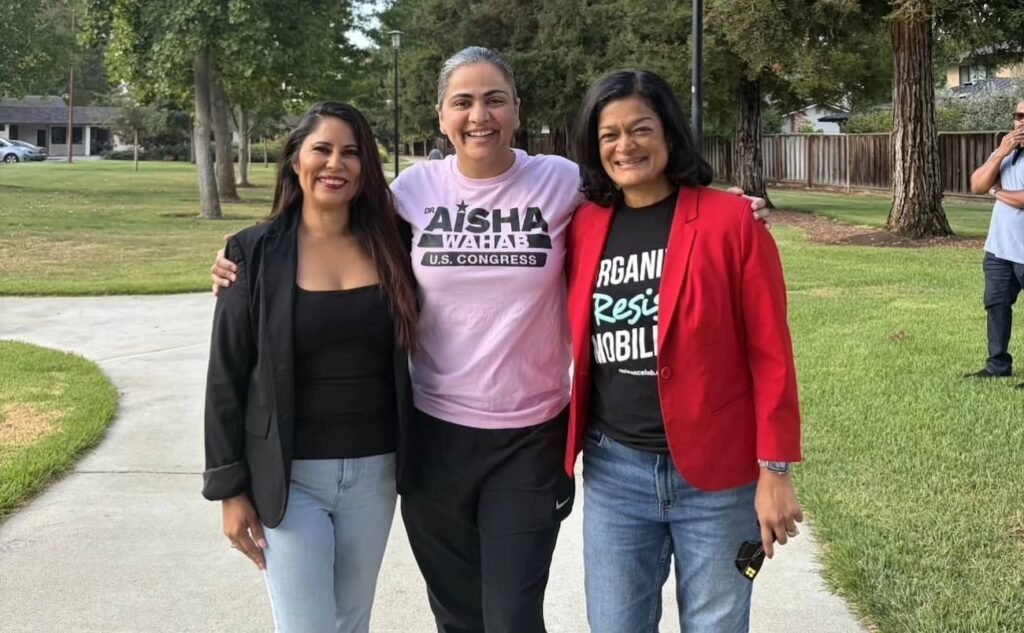
We often left those meetings disappointed or feeling that we had reached an acceptable compromise. The Hayward meeting was different.
We left feeling excited and encouraged. For once, we felt that elected leaders had chosen to put children’s safety ahead of business interests without requiring advocates to fight every step of the way. For me, it remains one of the most memorable examples of a local government body doing what I believed was the right thing for children.
Aisha, however, has always been much more modest about the episode. She tells me that there was nothing extraordinary about her decision—it was simply the obvious choice.
That humble response has stayed with me.
In 2023, when she was facing threats related to her anti-discrimination legislation (Senate Bill 403). She was concerned that I might oppose her bill as well. Instead, I told her that I had read the legislation carefully and did not see it as discriminatory toward India or any particular Indian community.
Standing Up for Afghan Refugee Children
Another experience brought us together around the issue of Afghan refugee children. When the Fremont Unified School District was considering a resolution to welcome Afghan refugee children into our community, some school board trustees opposed the resolution.
A special school board meeting was subsequently held to discuss it further. I spoke several times, along with others, addressing statements made at the previous meeting and emphasizing what I believe should be a fundamental principle of public education: a public school district serves all children, regardless of their immigration status.
Whatever political circumstances brought these children to the United States, they were still children entering a new community. Many had already experienced extraordinary hardship and upheaval at very young ages. I believed it would be devastating for them to discover that the community they were joining did not welcome them.
Aisha stayed on the phone throughout the meeting and shared her own comments. She fondly remembers my advocacy from that evening. I, however, felt that speaking up for these children was simply something all of us should have done. No child should have to wonder whether they are welcome in the community in a new country or not.
The Experience of Being a Minority
In my interactions with Aisha, I have always found her to be just, humble, honest, and direct. We have also talked about something that many members of minority communities understand all too well: the anxiety that can follow a crime or a shooting when there is uncertainty about who was involved.
Our first thought has sometimes been: I hope it wasn’t someone from our community, or someone connected to our ancestral country, who was the victim or the perpetrator.
That feeling is difficult to explain unless you have experienced it yourself. As members of minority communities, we know how quickly an individual incident can be used to paint an entire community with a broad brush. That is why these moments can feel particularly personal and frightening.
A Conversation About Discrimination
In 2023, while serving as a health advocate for the California State PTA, I met with many legislators, including Aisha. At the time, she was facing threats related to her anti-discrimination legislation (Senate Bill 403). She was concerned that I might oppose her bill as well. Instead, I told her that I had read the legislation carefully and did not see it as discriminatory toward India or any particular Indian community.
We discussed what she was experiencing and the concerns surrounding the legislation. She told me that the threats had become serious enough that her colleagues had obtained a bulletproof vest for her protection.
I never interpreted the legislation as an accusation against an entire community. My understanding was that its purpose was to address discrimination, not to single out a particular nationality or culture. For me, the broader principle was simple: if a law is intended to prevent discrimination, those who do not discriminate should not feel threatened by its existence.
Housing and the Bay Area Dream

In our other conversations, Aisha has also spoken about something that affects countless people who grew up in the Bay Area: housing affordability. She is a renter and has told me that she feels she may never be able to afford to purchase a home in the Bay Area where she grew up. Even while serving as a state senator, she found the cost of housing challenging.
Her experience reflects a much larger problem. I worry that many of our children will struggle to buy homes in the region where they were raised unless they reach exceptionally high income levels. The Bay Area has become so expensive that homeownership can feel out of reach even for people with successful careers.
Making housing more affordable is one of Aisha’s stated goals, and I believe her own experience as a renter gives her a personal connection to this issue.
A Difficult Congressional Campaign
The 2026 congressional race has also been unusually intense. Many voters have been exposed to an enormous volume of negative campaigning, advertisements, and competing claims. Aisha’s opponent, Melissa Hernandez, and her campaign have been involved in a highly contentious race, with Melissa’s supporters threatening and disruptive toward Aisha, her campaign, and events.
Outside interest groups have also spent upwards of $5 million in the contest, making it one of the most expensive congressional races in the country. From my perspective, I have rarely seen such an intense campaign in our area, particularly in the volume of negative advertising across different forms of media.
Despite the intensity of the campaign, Aisha won her race to the U.S. House of Representatives, receiving nearly six percentage points more of the vote than Melissa Hernandez in the August election. District 14 voters have shown that they did their homework and examined the records, issues, and candidates before voting. The two candidates will face each other again in November.
Our Responsibility as Voters
Whatever one’s political beliefs, elections are ultimately about voters’ responsibility to choose the people who will represent them. Voting is both a right and a privilege. It is also a civic responsibility.
Campaigns can be loud. Political advertising can be relentless. Negative messages can sometimes be easier to remember than facts and policy positions That makes it even more important for voters to pause, look beyond campaign advertisements, examine the candidates’ records and positions, and make informed decisions.
Aisha Wahab’s journey—from losing her parents as a young child, entering foster care, experiencing the foreclosure of her family’s home, and growing up as an Afghan American in the Bay Area to serving in California politics and now reaching the national stage—is remarkable in its own right.
Her story is also a reminder of why representation matters. For children who grow up facing uncertainty, for families struggling with housing costs, for immigrants and refugees building new lives, and for communities that sometimes feel overlooked, seeing someone with a similar background in public office can be deeply meaningful.
As Aisha prepares to face Melissa Hernandez again in November, voters will once again have the opportunity to decide who they want representing California’s 14th Congressional District. My hope is that every voter takes that responsibility seriously, looks beyond the noise of the campaign, learns about the candidates, and casts a thoughtful and informed vote.
Vinita Verma, a long-time Bay Area resident, has been actively involved in the community as an advocate for children, housing, and social justice.