




Rules for Thee, But Not for Me: Exposing the Double Standards of Savera’s Report Concerning Hindu Swayamsevak Sangh USA

- The timing and context of the report reveal its underlying motivation — specifically to undermine the Universal Oneness Day celebration in New York.
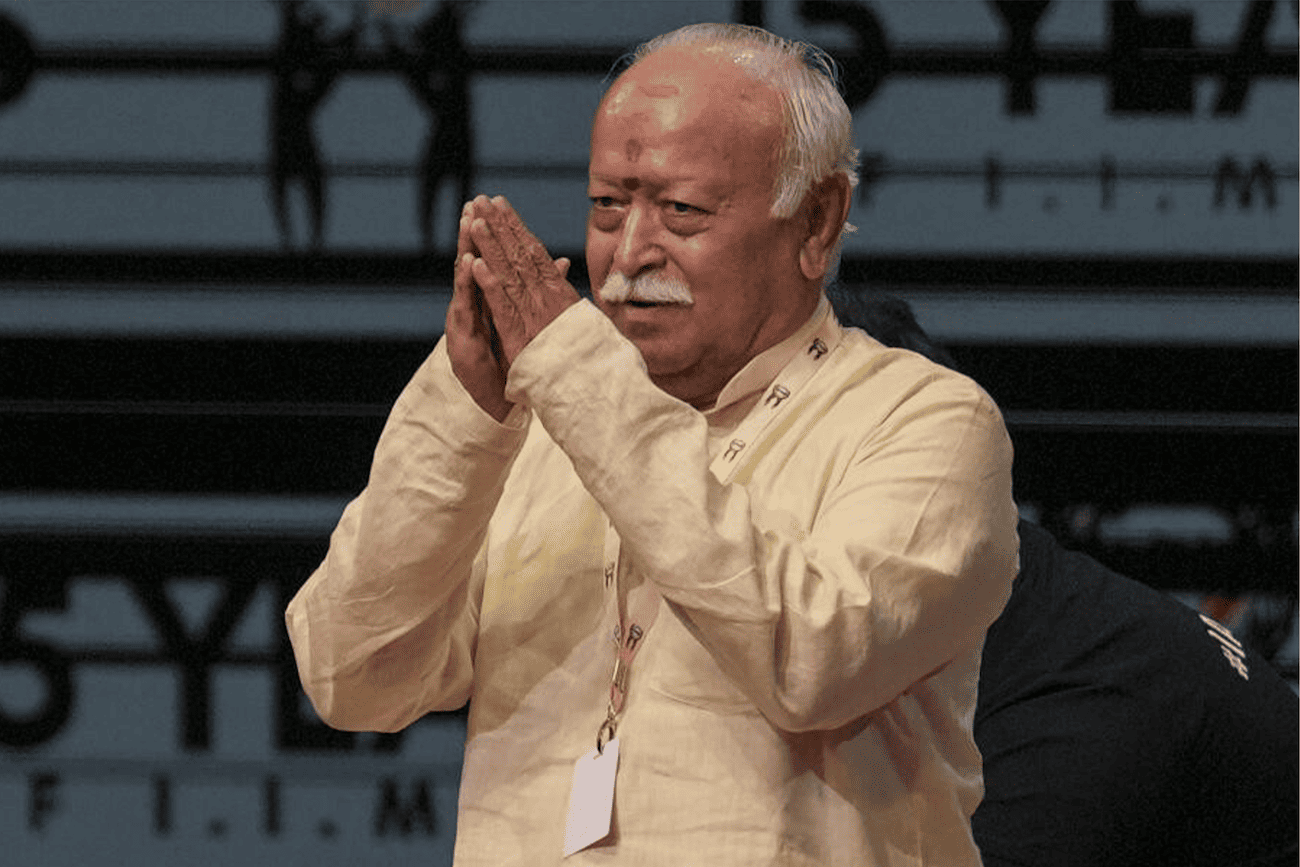
The Savera report, Fibs, Fronts, and Fixers, claims that the Rashtriya Swayamsevak Sangh (RSS) runs secret overseas operations through the Hindu Swayamsevak Sangh USA (HSS) and that the new AHEAD Forum is just a front for them. It treats shared ideas, similar methods, and overlapping people as proof of hidden foreign control. That logic fails on basic facts and fair standards.
Operational Parallels Do Not Equal Foreign Control
First, the report attacks HSS independence because it uses methods like the shakha that resemble those of the RSS. Similarity in methods is not the same as control. HSS groups are registered under the laws of their host countries. In the United States, Hindu Swayamsevak Sangh USA is a separate 501(c)(3) nonprofit that files its own tax returns, raises its own money from local donors, and runs its own programs. It has no legal or financial ties that let the RSS in India give orders or control its bank accounts. The RSS itself states that it operates in India and simply connects interested individuals to independent, like-minded groups abroad.
This pattern is common around the world:
- Federated Civil Rights Advocacy: The Council on American-Islamic Relations (CAIR) operates using a federated structure where local entities, such as CAIR Florida, are separately incorporated non-profits with independent boards, local fundraising, and separate tax filings. While they share a brand, mission, and advocacy strategy with CAIR National, local chapters operate under their own independent corporate governance.
- Federated Networks: Oxfam International is a confederation of independent national organizations—such as Oxfam America—that share the same mission and methods but remain separate legal entities with their own boards, funding, and decision-making.
- Human Rights Organizations: Amnesty International works the same way: its national sections operate as independent groups under their own countries’ laws, raise local money, and adapt campaigns while following shared human-rights principles.
- Faith-Based Charities: Catholic Charities USA agencies in the United States are independent nonprofits. The national body has no control over their governance or bank accounts, even though they share the same faith and service methods.
Shared values and ways of organizing do not turn independent local groups into branches of a foreign organization. Treating cultural inspiration as proof of secret command is a weak argument.
While presenting itself as a neutral human rights watchdog, Savera’s member organizations operate with a strikingly narrow definition of advocacy.
Shared Personnel and New Coalitions Are Standard Advocacy Practice
Second, the report calls AHEAD Forum a front because it is newly formed, some of its directors have past ties to HSS or related networks, and it is hosting an event with Mohan Bhagwat at Madison Square Garden. AHEAD is a U.S.-registered nonprofit whose stated purpose is dialogue and civic engagement among American Hindus. In any community, people who care about the same issues often work together across groups. Past connections and shared cultural language do not prove that one organization is secretly controlled by another. Labeling every new platform with experienced organizers from related networks as a “front” would make almost every advocacy group look suspicious.
The Mirror Test: Applying Savera’s Logic to Savera
The hypocrisy is clear when the same standard is applied to Savera itself. According to statements published by Hindus for Human Rights, Savera is a coalition platform whose core member organizations include Hindus for Human Rights, Ambedkar King Study Circle, Dalit Solidarity Forum, India Civil Watch International, and the Indian American Muslim Council. The same people move between these groups, produce joint reports, and run coordinated campaigns.
By Savera’s own standard—overlapping people, shared goals, and coordinated action equal a “front”—Savera itself would qualify as a tightly linked advocacy network:
- Sravya Tadepalli has served as Deputy Executive Director at Hindus for Human Rights and has contributed across multiple non-profit advocacy outlets.
- Sunita Viswanath is co-founder and Executive Director of Hindus for Human Rights while also serving on the board of the Dalit Solidarity Forum.
- Roja Singh is president of the Dalit Solidarity Forum and a regular voice in joint statements.
- Rasheed Ahmed is Executive Director of the Indian American Muslim Council and frequently quoted in joint materials.
For example, consider Margaret, a senior leader at World Vision International. According to executive biographies, she first worked at World Vision, later worked with several other major humanitarian organizations—including the International Rescue Committee, CARE, and Save the Children—and eventually returned to World Vision in senior leadership. This kind of movement between large international charities is routine. People often go from World Vision to Save the Children, CARE, Oxfam, or similar organizations because the skills, networks, and mission overlap. It does not mean one organization secretly controls the others.
By Savera’s standard, their own cross-organizational movement is celebrated as solidarity, while the opposing network’s cross-organizational movement is framed as a covert conspiracy.
4. Administrative Titles vs. Organizational Authority
The report highlights that Saumitra Gokhale appears on ProPublica Nonprofit Explorer tax form extractions with a $36,000-a-year “yoga instructor” designation while also being described as HSS Global Coordinator and linked to the RSS Vishwa Vibhag. This does not prove secret control.


The “yoga instructor” title is simply the formal payroll designation reported on IRS tax forms. Public bios and HSS materials openly call him the Global Coordinator of the Hindu Swayamsevak Sangh. One is an administrative payroll title; the other is his public role. Extensive travel and coordination of HSS activities show he is a dedicated full-time worker supporting a diaspora network. That is not the same as legal authority to control the finances, boards, or decisions of independently registered HSS groups in different countries. Without evidence that he issues binding orders or overrides local boards, the claim of a secret RSS Overseas Department remains an interpretation, not a proven fact.
Conclusion
The timing and context of Savera’s report reveal its underlying motivation. Released specifically to undermine the Universal Oneness Day celebration in New York— a civic gathering organized by Indian-American groups and addressed by RSS chief Mohan Bhagwat—the report attempts to cast a gathering centered on cultural unity and civic engagement as a sinister operation.
This effort unmasks the duplicity at the heart of Savera’s campaign. While presenting itself as a neutral human rights watchdog, Savera’s member organizations operate with a strikingly narrow definition of advocacy. They concentrate almost exclusively on attacking the Indian government and majority community, while remaining entirely silent on the documented persecution, forced conversions, and systemic violence faced by Hindu minorities in neighboring countries like Pakistan and Bangladesh.
When a coalition applies strict scrutiny to its opponents while ignoring its own overlapping leadership, and seeks to disrupt a gathering promoting universal harmony through selective suspicion, it exhibits clear duplicity—operating not as an objective investigator, but as a politically motivated adversary.
The views, thoughts, and opinions expressed in this column belong solely to the author, and do not necessarily reflect those of American Kahani.
Madhu Hebbar, an engineer, is an IIT graduate, living in the greater Los Angeles area. He is a practicing Hindu, and an avid reader, who is interested in Eastern philosophies and their general application to Western challenges. He is engaged in coaching youngsters interested in Hindu civilizational history, universal values and its modern-day relevance.