




Beyond Lip Service to the International Day of the Indigenous Peoples: Whose Celebration Is It, Anyway?

- On August 9, let us take pride in Indigenous women's storytelling, their efforts to restore their land and livelihood, and their identity through protecting their mountains and forests from outsiders.
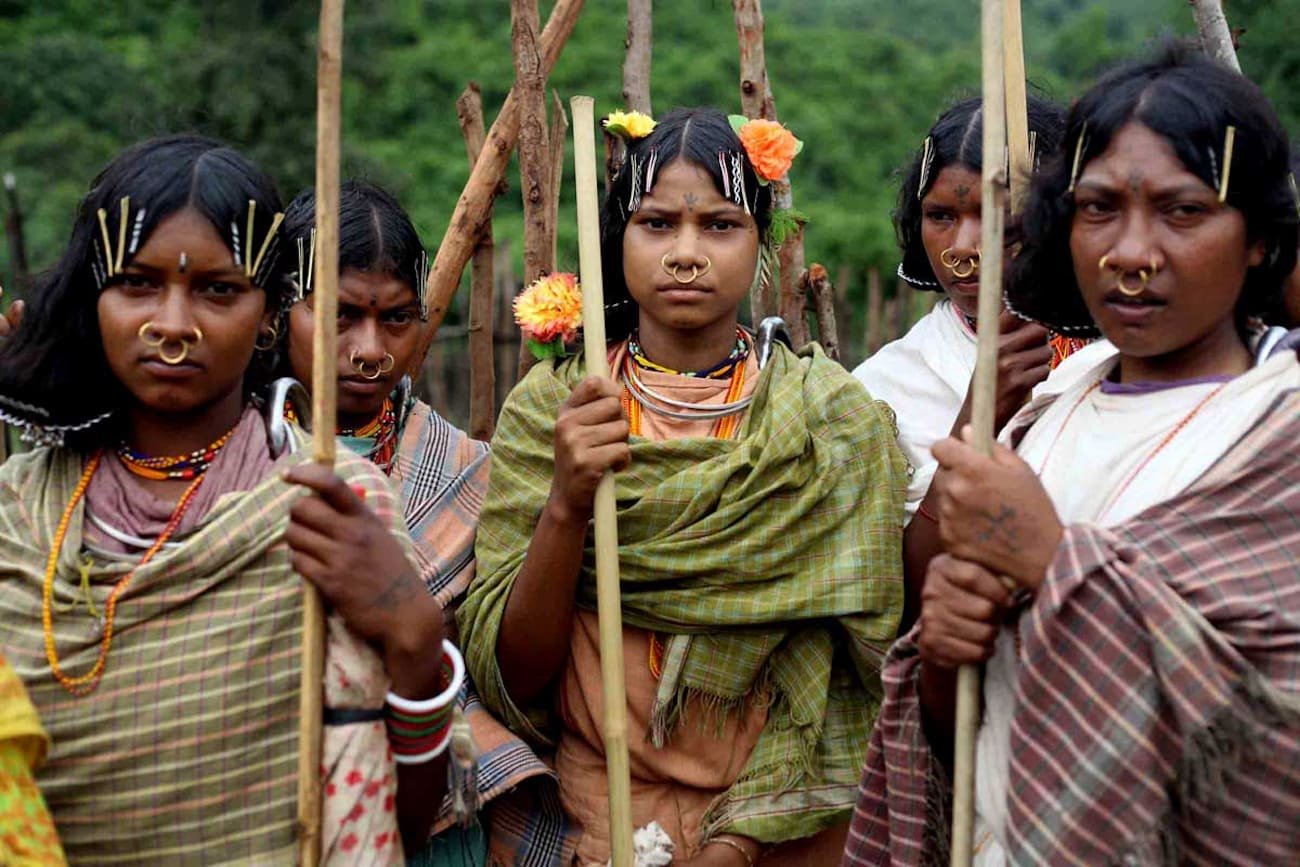

August 9 is celebrated as the “International Day of the World’s Indigenous Peoples”. Various social media portals share messages congratulating Indigenous people for their cultural heritage, vital ecosystems, and unique worldviews. But I feel numb, dazed, and stupefied. Celebration from whose point of view? For whom? Who, exactly, is celebrating whom?
This is the pattern I keep returning to: institutions praise Indigenous people as guardians and stewards of vital ecosystems, but that recognition rarely translates into what actually protects them—land returned, consent honored, a house left standing. What follows is what I have watched over several decades of fieldwork in Odisha: the gap between that word and the ground reality.
The day has an uninterrupted institutional history. It began with the UN Working Group on Indigenous Populations, formed in 1982, and became a formal observance in December 1994, first marked on August 9, 1995. The numbers attached to it are meant to convey scale and urgency: some 476 million Indigenous people worldwide, 6.2 percent of the global population, spread across more than 90 countries. In India, they are known as Scheduled Tribes, carrying the legacy of the British who named them, with a population of roughly 104 million, about 8.6 percent of the total population. In my own state of Odisha, every fourth person claims tribal identity, and many others are still fighting for that recognition.
My firsthand knowledge of the tribals in Odisha, gathered over several decades of working with them as a researcher, reveals a pattern in their unique contributions to identity, livelihood, and connection with nature worldwide. Their identity is tied to nature, not as separate from culture; they consider themselves part of nature, as is their way of life. For them, there is no separation between nature and culture. Fred Kabboti, the famous Hopi artist in the award-winning film The Fourth World (2011), put it: “We are rooted in our fields. So long as we are growing corn we will remain Hopis.” Dangaria Kondhs in Odisha proudly call their mountain Niyamagiri their father, their mother, the maker of laws. The androgynous identity of nature, as claimed by the tribals, adds a unique Indian perspective on defining nature as non-gendered. So, Indigenous people value nature as the source of their identity — the mountains, rivers, and forests are their ancestors, and without them their existence is in jeopardy. As a result, they risk their own lives to protect nature. In the modern industrial economy, when nature is sacrificed for mineral extraction, when multiple mining ventures pollute streams and rivers, dry up waterfalls, and turn forests barren, the tribals become the lone soldiers fighting for nature’s well-being.
This year’s theme is “Honoring Indigenous Midwives: Safeguarding Life and Well-being,” and it is wonderful to finally honor the Indigenous women who have practiced sustainable agriculture by storing traditional seeds and passing them down year after year. Sadly, genetically modified grains and seeds are ruining the fields in tribal regions, promoting commercial crops like corn, cotton, cashews, and fast-growing eucalyptus monoculture for use in paper mills. This commercial cropping is making women’s traditional seed restoration obsolete, severely degrading the environment and eroding the sovereignty of the Indigenous populations.
Despite pressure from agricultural commercialization and illegal logging, some women have protected the forest as guards in Nayagarh district and collected seeds to revive sustainable agriculture in pockets of Rayagada and Koraput districts. In Nayagarh district, tribal women work alongside women from other castes in 212 villages, using a thenga (stick) and relying on the forest as a protector against loggers and other poachers. They are known as thengapalli women, the fierce climate guards of the forest. These women see nature—the forest, animals, streams—as their guardians, but fear the humans who steal forest resources and make it barren. In January 2026, during my visit to the tribal villages in Rayagada, I observed that when men migrated to cities in search of work, women took on multi-crop farming themselves, establishing cooperatives to sell locally made brooms, turmeric, mustard, and Indigenous grains: ragi, barley, lentils. Midwifery is tied to fertility, not just of the human, but intrinsically tied to nature. They realize that their sustenance is tied to the sustenance of nature, so nature must be cared for the healing of body and soul. Faced with mining in the surrounding areas, the women realize they must maintain their traditional skills to preserve their independent identity.
In the tribal villages of Odisha, like many other parts of India and the world and even in North America, mining operations are spreading fast — bauxite, iron ore, and more — pulled from the ancient hills.
In the tribal villages of Odisha, like many other parts of India and the world and even in North America, mining operations are spreading fast — bauxite, iron ore, and more — pulled from the ancient hills that hold the cosmological and agricultural knowledge the UN wants us to admire in theory. In Rayagada, Koraput, and Kalahandi, the mining companies are very active. The most talked-about protest in the current situation is in the Sijimali hills in Rayagada, where Kondh, Paraja, and Dama communities — especially women — are fighting mining consent that was, by their own account, fabricated: a Gram Sabha approval manufactured on paper, not granted in fact. The women are holding night vigils on the Sijimali hills, guarding the hills known as their ancestors—the source of their livelihood and a partner in their existence. Many of them get arrested, their houses are destroyed, and they are indicted by the state police as criminals or Maoists. But their protest continues.
Recently, young people in a few tribal villages of Odisha began collecting their communities’ histories from elders — a project that started, I imagine, as an act of preservation by an NGO group called Samadhwani. What they found instead was a map of loss. Village after village is emptying of its young: not through some abstract “modernization,” but through contractual labor. Brick kilns. Thread factories. Cotton and textile mills in cities far from home. So while the extractive economy tightens its hold on the land, an extractive labor economy pulls the people off it, and the institutions meant to educate their children fail even the basic task of keeping them alive and safe.
Scores of children from tribal areas are transported to nearby ashram schools and residential schools, and even to the city of Bhubaneswar. They are compelled to give up their language, custom, and religion as traditional and unproductive, and are acculturated into mainstream Odia culture. The exploitation of tribal students in residential schools has been documented widely. On my visits to Rayagada, Kalahandi, and Koraput, I met several young women, returnees from residential schools in the cities, who are now working as daily laborers in their villages. A few do benefit from their education and go on to work in schools and industries. But they remain a minority. Education becomes a misnomer for several tribal young women who are exploited in ashram schools, while other residential schools are neglected and treat their students as work hands. It is the greatest irony that this event happened on the night of August 9, the day of the celebration of Indigenous peoples: three tribal girls, sleeping on the bare floor of their hostel for want of cots, died of snakebite in an ashram school in Gadchiroli, Maharashtra, and several others were hospitalized. The sad state of education needs to be reorganized and restructured at the village level to promote the talent and skill of these Indigenous children.
Women are doing this same work: sorting seed, building cooperatives, patrolling forests with a thenga, and, elsewhere in Rayagada, holding vigil on Sijimali’s slopes at night.


The United Nations calls the tribal women as guardians of vital ecosystems. But on the ground, their voices are ignored, and they are charged with false consent for mining, namely in Kalahandi, Koraput, and Rayagada, the areas I visited. What these national and international bodies claim, and how it is not materialized on the ground. That is the gap I keep returning to not a gap in language, but one I have watched, on the ground, between the word “guardian” and what happens to a guardian’s house.
On this day of celebration, let us take pride in Indigenous women’s storytelling, their efforts to restore their land and livelihood, and their identity through protecting their mountains and forests from outsiders. In the face of industrial capitalism, when the world is ridden with individual isolation, modernization, and disconnectedness, let us celebrate the complementarity between nature and humans, as the tribal women are teaching us.
Labeling these celebrations is part of today’s fast-emerging global branding culture, commercializing the human element. It ignores the atrocities, degradation, dehumanization, and commercialization of the indigenous people, their art, artifacts, and culture.
It is wonderful to celebrate August 9 as a special day for Indigenous people. I sincerely hope that the celebration brings in some preventive measures to stop destroying tribal land, natural resources, and their dignity and identity. Recognition should not be just lip service.
Annapurna Devi Pandey taught Cultural Anthropology at the University of California, Santa Cruz.