




Pentimento: Thirty-Nine Days. One Hundred and Four Matches. Three Hundred and Eight Goals. One Layer, Finished and Signed

- Football never paints on a clean canvas. It layers — generation over generation, tournament over tournament, sacrifice over sacrifice — and on the biggest nights, the old paint bleeds through everything.
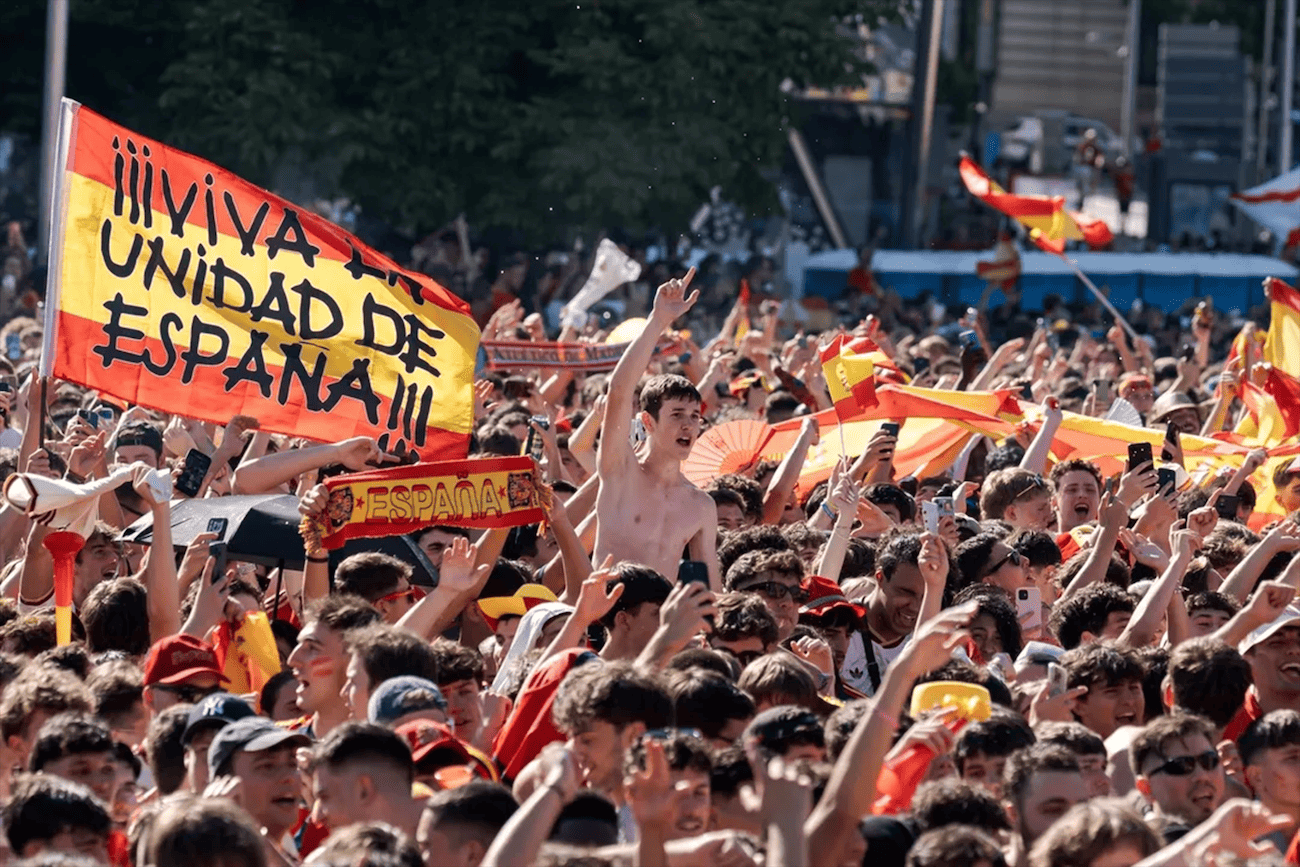

Restorers have a word for it. Pentimento. When a painting ages and the earlier images begin showing through — the horse the artist painted out, the first position of the hand, the older picture refusing to stay buried under the newer one.
I spent thirty-nine days this summer watching a football tournament, and I cannot think of a better word for what I saw.
Consider where it began. On June 11, the ball rolled at Estadio Azteca in Mexico City — the first stadium in history to host matches at three World Cups. Whatever fresh paint FIFA applied for 2026, everyone in that bowl knew what lay underneath: Pelé lifting the Jules Rimet in 1970, Maradona rising above England in 1986, the Hand of God and the Goal of the Century layered into the same canvas. The tournament did not open in a stadium. It opened in a palimpsest.
And for the next five and a half weeks, everywhere I looked, the older pictures kept showing through the new one.
The Largest Canvas Ever Stretched
The numbers first, because the numbers were the point. Forty-eight teams — sixteen more than ever before. One hundred and four matches across thirty-nine days, sixteen cities, three countries, 1,248 players. Gianni Infantino promised “the biggest event in the history of mankind” and likened it to 104 Super Bowls in one month, which tells you everything about both the ambition and the vocabulary of the man doing the promising.
The skeptics said stretching the canvas would thin the paint — that a 48-team World Cup meant lopsided scorelines and a group stage without jeopardy. The tournament answered with a flood — 308 goals in all, nearly doubling the previous all-time record. Qatar 2022’s mark of 172 fell in match 59 of 104, before the group stage had even finished. Along the way, the men’s World Cup played its 1,000th match and scored its 3,000th goal, and more than 6.5 million people came through the gates — surpassing the attendance record USA ’94 had held for thirty-two years. Old American paint, showing through the new American painting.
The New Painters
But the best argument for the bigger canvas was not volume. It was who got to hold a brush.
Curaçao — population roughly 150,000 — became the smallest nation ever to play at a World Cup, and the smallest ever to score at one. Congo advanced from its group and made England sweat. A record nine African teams reached the Round of 32.
And then there was Cape Verde. An Atlantic archipelago, a World Cup debutant, drawn into a group with Spain — and in their very first match, they held the eventual champions 0–0, their 40-year-old goalkeeper Vozinha making seven saves in the performance of the tournament’s opening week. Afterward, he wept on the pitch. Not for the point. For the grandparents who raised him and did not live to see it — and for his mother, who could not be in Atlanta because the family could not manage the cost of a U.S. visa in time. It took the House Minority Leader and the Secretary of State getting involved before her fees were waived; she was in the stands in Miami for the next match. Cape Verde became the first debutant to reach the knockout stage since 2010, and went out only by taking the defending champions, Argentina, to extra time in a 3–2 classic.
A goalkeeper crying for his grandparents on the biggest stage in sport. Three generations in one man’s tears. The tournament kept insisting on this theme, and I stopped resisting it around the second week.
The Underpainting
Because once you saw the generations, you could not unsee them. Seven sets of brothers played at this World Cup — and not all for the same country. Nico Williams ran Spain’s wing while his older brother Iñaki wore Ghana’s colors, honoring a grandfather who wanted to see the Black Stars shirt on him before he died; their mother attended matches wearing both her sons’ jerseys, one country on one match day, the other on the next.
Spain’s super-sub Mikel Merino decided two knockout matches and celebrated each the same way: circling the corner flag with a clenched fist. It is not a celebration. It is a restoration. His father ran that exact circle after scoring for Osasuna in Stuttgart in 1991 — and at the Euros two summers ago, Mikel scored a 119th-minute winner in that same Stuttgart stadium and completed the lap for him, thirty-three years later, the way apprentices in the old workshops finished the master’s panels.
Fathers showing through sons. Grandparents showing through tears. A mother wearing two countries. Football never paints on a clean canvas.
The Rougher Layers
Not everything that bled through was beautiful. Every restoration reveals damage, and this tournament had plenty under the varnish.
The visa troubles did not stop with Vozinha’s mother. The United States refused visas to several members of Iran’s delegation, and the Iranians complained of travel restrictions requiring them to leave the country immediately after each match — less a welcome than a supervised visit. When Iran was eliminated in the group stage, the Homeland Security Secretary offered this valediction: “I’m just glad they’re done and they’re not coming back.” A sentence that will age exactly as well as it deserves to.
Ticket prices kept ordinary fans at arm’s length. The mandatory three-minute hydration breaks — imposed regardless of conditions — conveniently doubled as commercial inventory, monetizing the one thing football had always refused to sell: its continuity. VAR generated its customary weekly outrage.
And then there was the American president, who treated the tournament less like a guest of honor treats a wedding and more like a patron treats a commissioned portrait — which is to say, he kept walking into the frame.
And then there was the American president, who treated the tournament less like a guest of honor treats a wedding and more like a patron treats a commissioned portrait — which is to say, he kept walking into the frame. He intervened, extraordinarily, to get Folarin Balogun’s red card overturned. The trophy visited his stadium suite. And at the final whistle of the final match, he walked onto the pitch to a chorus of boos, presented the trophy alongside Infantino, and then simply remained — standing in Spain’s team photograph as the players lifted the cup, until Infantino himself suggested he step aside.
The champions had to share their canvas with a signature they never requested.
Which brings up the quiet casualty of the tournament’s second half: the other two hosts. Mexico opened the World Cup and became the first nation to host three of them. Canada filled stadiums in Toronto and Vancouver. Three flags, three anthems, one tournament — until the map contracted, and from the quarterfinals onward every match was played on American soil. By the final fortnight, the first three-nation World Cup had quietly become a one-nation World Cup with two co-signatories whose ink had faded. The final even came with the World Cup’s first-ever halftime show — Madonna, Shakira, BTS, Justin Bieber and Burna Boy, curated by Chris Martin —a Super Bowl halftime show grafted onto football’s most sacred match for eleven minutes. Whether that layer holds or flakes is a question for 2030.
The Day Before
The tournament’s two best arguments about itself arrived on its final weekend, one day apart — and they argued opposite sides.
Saturday in Miami: England 6, France 4. The third-place match — the game nobody wanted, the still life nobody commissions — produced the most purely entertaining ninety minutes of the summer. Ten goals. Jude Bellingham’s seventh of the tournament, more than any midfielder has ever scored at a single World Cup — struck moments after he handed a penalty that was rightfully his to Bukayo Saka with four words: “Go get your hattrick.” And Saka — five years after Wembley, after the racist abuse that followed one missed penalty — completed it from the penalty spot, standing exactly where they told him he didn’t belong. The boy of 2021 showing through the man of 2026. Pentimento, in real time.
Afterward, players from both teams knelt together in prayer at the center circle. Didier Deschamps walked away after fourteen years, only the third man to win the World Cup as both player and coach. And the England fans sang Wonderwall one last time — inside the stadium, and then out onto the streets of Miami.
It was gorgeous, and here is the uncomfortable truth about why: nothing was at stake. Both teams had already lost everything worth losing, so they played the way children draw — freely, without fear of ruining the paper.
The weekend’s other argument wore golden boots. In the last twelve World Cups, the tournament’s top scorer has lifted the trophy exactly twice — Paolo Rossi in 1982, Ronaldo in 2002. The award has a structural cruelty built in: knockout football punishes teams whose threat runs through one man, and the format hands semifinal losers a bonus match against a deflated opponent while finalists must score against the best defense left standing. The boot tilts, by design, toward players whose dream just died. Kylian Mbappé became its most extreme case yet — ten goals, France’s all-time record, and, with two goals in the bronze match, the all-time World Cup scoring record itself, taken from Messi in the one game that decided nothing. He flew home with the most golden consolation prize in the history of sport.


The Final: Old Paint, New Star
And then Sunday, and the fear came back — because finals are not festivals. They are dramas, coiled and cruel, where one brushstroke is remembered for a hundred years.
Spain 1, Argentina 0, after extra time. The final turned on a single moment — Ferran Torres, 106th minute, deep in extra time, only the second substitute ever to score the winning goal in a World Cup final. One goal to decide a World Cup. A single brushstroke.
And if that brushstroke reads familiar, it should. In 2010, Spain won its first World Cup 1–0 in extra time, Andrés Iniesta striking in the 116th minute. Sixteen years later: 1–0, extra time, the 106th. The same picture, painted again, one layer up. Iniesta showing through Torres the way Diego always showed through Messi.
Spain won it having conceded exactly one goal in seven matches, setting the record for most consecutive World Cup matches without conceding along the way. Rodri lifted the trophy. Nineteen-year-old Lamine Yamal — whose grandmother once snuck onto a bus out of Morocco and worked three shifts so her son could join her in Spain, whose teenage parents raised him in an apartment where kitchen and bedroom shared a room — became a world champion before his twentieth birthday, while his three-year-old brother Keyne did the siu in the stands, enjoying the childhood three generations traded away to purchase.
Messi left in tears, a runners-up medal around his neck, after scoring eight goals at 39 and dragging the champions back to the final of his sixth World Cup — more than any man has ever played. Look at his ledger and the pentimento is almost unbearable: most World Cup goals until Saturday, most assists, most matches, the longest scoring streak the tournament has ever seen — and, tucked into the same records page, the most missed penalties in World Cup history. The masterpieces and the painted-out horses, hanging in the same frame. That is the whole man. That was always the whole man.
In Kerala — where his face rises thirty feet out of rivers — the state government had declared Monday a school holiday so children could stay up past midnight and watch him. The Education Minister announced it with three words: “Happy now, children?” He lost, and it will not matter. Maradona’s defeats never dimmed him in Naples either. Some paint does not fade.
The Canvas Never Dries
Here is the thing about pentimento that restorers will tell you: it is not a flaw. It is proof of process — proof that the artist changed their mind, worked the surface, lived with the painting. A canvas with nothing underneath it is not purer. It is just newer.
This World Cup was the layered kind. USA ’94 under the attendance figures. Azteca ’70 and ’86 under the opening whistle. Iniesta under Torres, Diego under Messi, a father’s corner-flag circle under a son’s, the captain of ’98 under the coach who walked away, a missed penalty at Wembley under a hat-trick in Miami. Even the ugliness was layered — the visa denials of 2026 painted over the “welcome the world” promises of the bid documents, a president’s signature scrawled across a champion’s photograph.
And the next layer is already primed. The 2030 World Cup will be hosted by Spain, Portugal — and Morocco. Read that again. The champions will defend their title partly at home, and some of the matches will be played in the country Lamine Yamal’s grandmother once left on a bus, with no way of knowing what she was starting. The tournament is returning to the underpainting.
Football never paints on a clean canvas. It layers — generation over generation, tournament over tournament, sacrifice over sacrifice — and on the biggest nights, the old paint bleeds through everything.
Thirty-nine days. One hundred and four matches. Three hundred and eight goals. One layer, finished and signed.
The next one is already showing through.
Ganpy Nataraj is an entrepreneur, author of “TEXIT – A Star Alone” (thriller) and short stories. He is a moody writer writing “stuff” — Politics, Movies, Music, Sports, Satire, Food, etc.