




Movie Magic: Reporting From the Red Carpet and Front-Row Seat at the Cannes Film Festival

- While it was a rare experience to watch the stars ascend the red carpet in their tuxedos and couture gowns on the evening of May 12th, it felt lovely to sit in the comfort of the press area without worrying about my own hair and makeup.
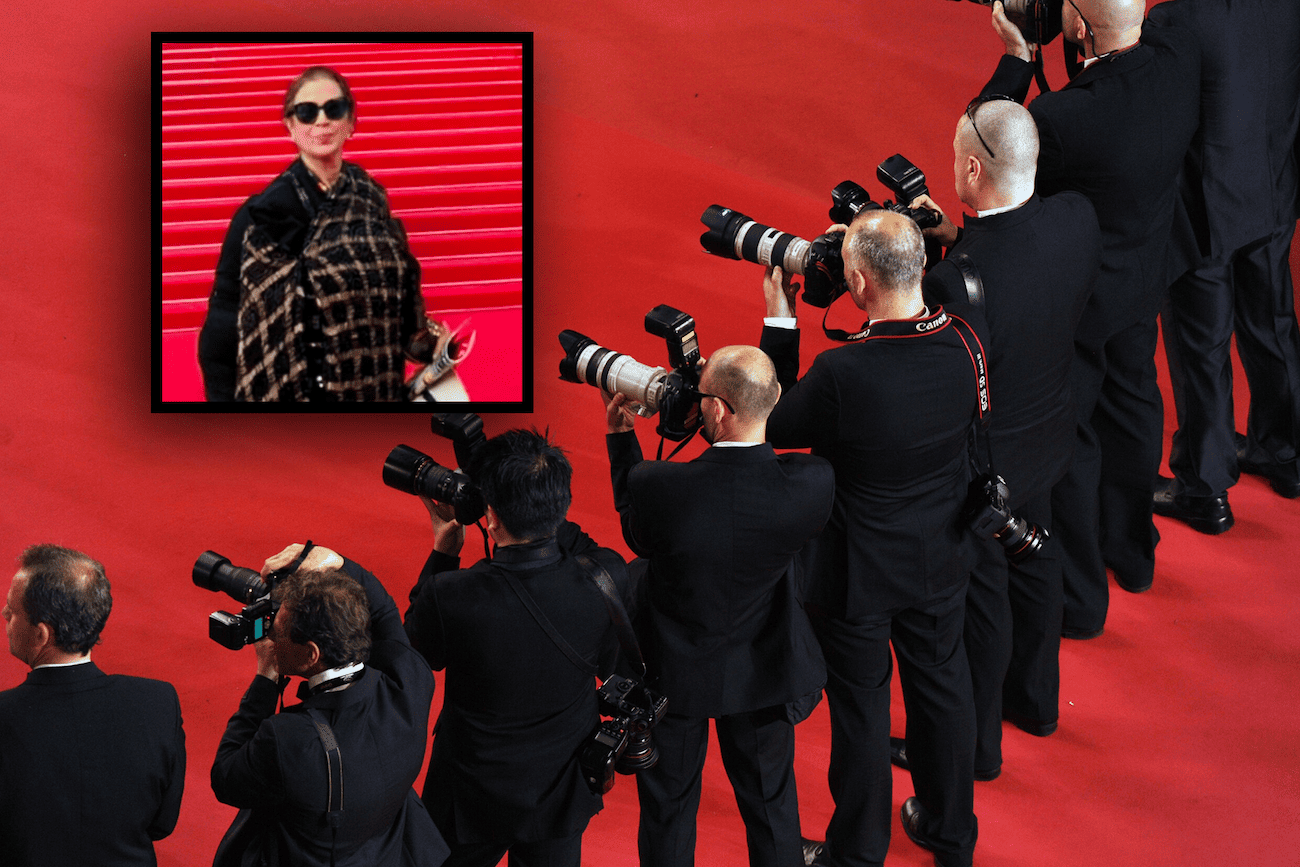
The Cannes Film Festival remains the world’s most prestigious cinema event because it serves as a heady blend of high art and high fashion. It features the film industry’s highest-stakes economy, the most exclusive red-carpet glitz, and a one-of-a-kind global launchpad for a film’s career. Being present on the French Riviera at the Palais des Festivals et des Congrès for the opening ceremonies of the 79th Cannes Film Festival was an unforgettable whirlwind of glamorous cinematic history.
While it was a rare experience to watch the stars ascend the red carpet in their tuxedos and couture gowns on the evening of May 12th, it felt lovely to sit in the comfort of the press area without worrying about my own hair and makeup. It was, of course, highly prestigious to view the ceremonies as they happened; a stone’s throw away, a big screen provided by the festival allowed me to watch the action unfold, along with several members of the press who were reporting in real time. This vantage point beats standing with hundreds of photographers outside or among the massive crowds thronging the Croisette just to catch a fleeting glimpse of the celebrities.
From this privileged position, I felt a thrilling rush each time a familiar face came into view. Notable attendees included James Franco, Philippine Leroy-Beaulieu, and the visionary New Zealand filmmaker Sir Peter Jackson, alongside his “The Lord of the Rings” franchise star, Elijah Wood.
The fashion did not disappoint. I saw Indian actress Alia Bhatt looking beautiful in a fitted peach gown by Tamara Ralph. Demi Moore looked like a flower in a structured Jacquemus, Jane Fonda looked wonderful in her black tailored Gucci, Ruth Negga wore classic Dior, Joan Collins appeared in a dramatic Stéphane Rolland silhouette, and Heidi Klum in a sweeping Elie Saab creation.
The opening ceremony inside the famous Grand Théâtre Lumière, the festival’s main venue known for its iconic red steps, was electric. The event was co-hosted by Gong Li, the internationally renowned Chinese actress and star of masterpieces like “Raise the Red Lantern” and “Farewell My Concubine,” alongside Jane Fonda, the legendary, two-time Academy Award-winning actress, producer, and political activist.
The ultimate thrill was that I got to ascend those very same red carpet steps myself. Walking into the theater, I sat in the exact seats the celebrities had occupied just hours before to watch the opening film.
Mistress of Ceremonies Eye Haïdara and Fonda kicked off the night celebrating cinema as an “act of resistance.” The 79th Cannes Film Festival was officially declared open.
The evening also served as a celebration of cinematic legacy.
Elijah Wood made a surprise appearance on stage to present the honorary Palme d’Or to his director, Peter Jackson. Shortly after, Jury President Park Chan-wook introduced his fellow 2026 jurors, including Chloé Zhao, Ruth Negga, Stellan Skarsgård, and Demi Moore before they began the arduous task of reviewing the 22 films in competition. From my seat in the press room, I could imagine the celebrities settling into their velvet seats for the world premiere of the opening night film, Pierre Salvadori’s “The Electric Kiss” (La Vénus électrique).
The ultimate thrill, however, came the following morning. Armed with a press pass, I got to ascend those very same red carpet steps myself. Walking into the theater, I sat in the exact seats the celebrities had occupied just hours before to watch the opening film.
“The Electric Kiss” proved to be a fitting choice to launch the festival, perfectly embodying the “boldness, freedom, and auteur-driven” style praised by the Cannes selection committee. Directed by Pierre Salvadori, celebrated for balancing light romance with dark human tendencies, the story effortlessly weaves together 1920s Parisian bohemian culture, magical realism, survival, and surrealism.

The plot centers on a delightful yet high-stakes deception. Pio Marmaï plays “Antoine” Balestro, a tortured, grief-stricken painter who has lost his muse and spiraled into alcoholism following the death of his wife, Irène (Vimala Pons). In his desperation, he encounters Suzanne (Anaïs Demoustier), a penniless sideshow performer known at the carnival as “The Electrified Venus.” Her actual act involves absorbing painful electric shocks while giving kisses to spectators, but she accidentally stumbles into staging fraudulent séances for Antoine, because he offers her crumpled Francs rather than the few coins she earns every night.
Complicating the ruse is Antoine’s opportunistic art dealer, Armand (Gilles Lellouche), who acts as the mastermind feeding Suzanne private details about Irène just to exploit his friend for profit. As Suzanne helps inspire the artist to paint again, she genuinely falls in love with him, after discovering Irene’s journals. But when she thinks her love is one sided she decides to take her own life. But Antoine comes to see her and kisses her. This triggers a murderous rage in Titus (Gustave Kervern), the cruel carnival owner who cannot stand that she is escaping his captivity. In a beautifully surreal climax, Titus attempts to kill the couple during a final embrace, but the literal electricity of their kiss saves their lives.
It was thoroughly enjoyable, in all its artistic elements, conversations, whims, and cinematography. Distinctly French piece of cinema. Utterly beguiling and satisfying for the soul, like a freshly baked baguette smothered in artisanal French butter: Le Beurre Bordier.
Top image: Courtesy of Cannes Film Festival.
With one foot in Huntsville, Alabama, the other in her birth home, India, and a heart steeped in humanity, Monita Soni writes as a contemplative practice. She has published hundreds of poems, movie reviews, book critiques, and essays, and contributed to combined literary works. Her two books are “My Light Reflections” and “Flow Through My Heart.” You can hear her commentaries on Sundial Writers Corner, WLRH 89.3 FM.