




‘Surprisingly Mellow’ Indian American: YouTube’s Neal Mohan Named TIME’s 2025 CEO of the Year

- The honor is "a milestone for Indian-origin executives in Silicon Valley and India's central role in the future of the creator economy."
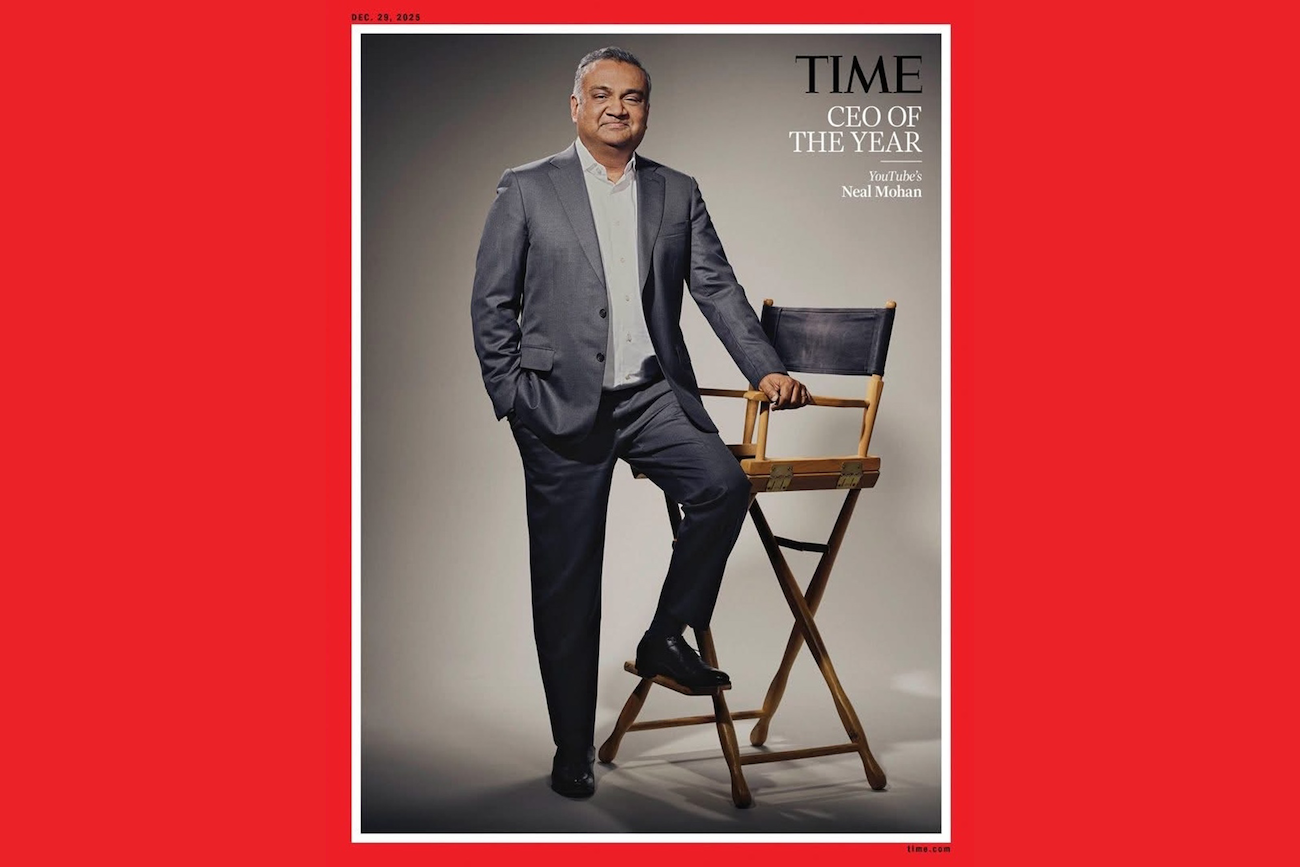

YouTube CEO Neal Mohan has been named TIME Magazine’s 2025 CEO of the Year, with the publication hailing the Indian-American executive as the architect of what billions of people watch, create, and consume across the globe.
“In many ways YouTube is creating the cultural diet that the globe is beginning to subsist on,” TIME wrote in its profile published December 9. “Mohan is the farmer; what he cultivates will be what we eat.”
The recognition marks a milestone for the 52-year-old executive who has quietly steered the world’s most influential video platform through a transformative period since taking the helm in February 2023, succeeding the late Susan Wojcicki.
The Meteoric Growth Under Mohan
Since Mohan became CEO, YouTube has cemented its dominance across multiple fronts. According to TIME and company executives, in 2024 YouTube generated more than $36 billion in advertising revenue and an additional $14 billion from subscriptions. The platform saw a 15% increase in advertising revenue during the first three quarters of 2025, while subscriptions to YouTube Music and YouTube Premium jumped 25% year-over-year by March.
More than 2 billion people—a quarter of the world’s population—visit YouTube every day, according to TIME, where they are greeted by 500-plus hours of new footage uploaded every minute. Content ranges from a Scottish vet treating infected cow hooves to NBC news stories to releases from Bollywood megastar Aamir Khan, who turned down a multimillion-dollar streaming deal to put his film on YouTube as pay-per-view.
Business Chief North America reported that under Mohan’s leadership, YouTube has evolved from a small-screen mobile application into a dominant force on television screens, becoming a cable-TV replacement for many households while remaining free to use. The introduction of YouTube Shorts has made the platform more competitive against Instagram and TikTok.
A Surprisingly Mellow Leader
TIME described the leader of what it called “the world’s most powerful distraction machine” as “surprisingly mellow.”
“He’s quiet-spoken, deliberative, hard to ruffle,” the magazine noted. “He likes watching sports, going to his daughters’ dance recitals, and open white shirts, just normal stuff.”
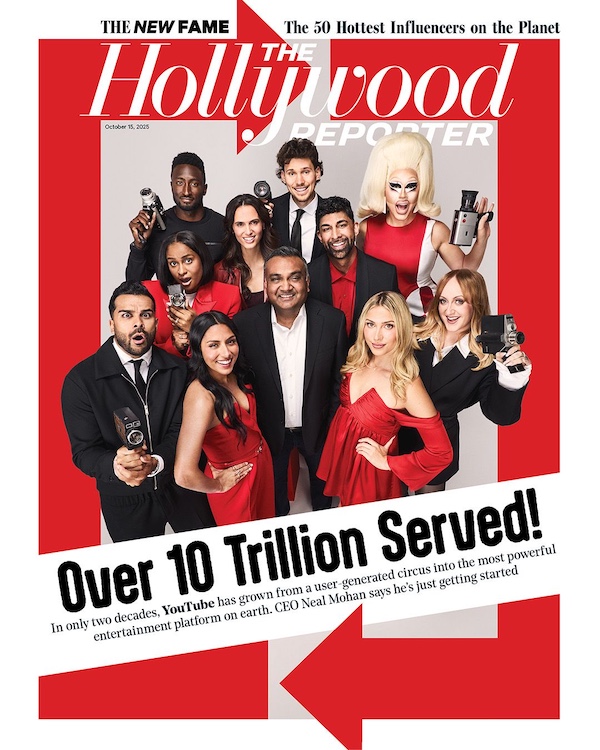
The Tribune of India reported that Mohan likes to describe what he and his colleagues do as building the world’s best stage for people to perform on. Business Chief characterized his leadership style as creating an “uncle level” approach—calm, composed, and superior at maintaining equilibrium.
“YouTube today is like a metropolis with lots of interconnected dependencies, and what you do on one street impacts what happens on another street,” Mohan told TIME in an interview at YouTube’s San Bruno, California headquarters. “In the early days, it was much more like a village, where lots of the creators knew each other. And I think that if you’re the leader of one vs. the other, you’re forced to think about decisions in maybe a different way.”
From Lucknow to Silicon Valley
Born in 1973 in Lafayette, Indiana, to parents from Lucknow, Mohan spent part of his childhood in the United States before moving to India in 1985 when he was 12 years old, according to The Tribune. He studied at St. Francis’ College in Lucknow, where he learned Hindi and Sanskrit—an experience that would shape his analytical thinking.
Mohan studied at St. Francis’ College in Lucknow, where he learned Hindi and Sanskrit—an experience that would shape his analytical thinking.
“It’s incredibly phonetic and rules-oriented,” Mohan told TIME about learning Sanskrit. “It was like learning computer programming, basically.”
Business Standard reported that this early education in India gave Mohan a unique perspective that has informed his global leadership. He later returned to the United States for higher education, earning a Bachelor of Science degree in electrical engineering from Stanford University, followed by an MBA from Stanford Graduate School of Business, where he was recognized as an Arjay Miller Scholar for academic excellence, according to News Mobile.
The Path to YouTube
According to Business Chief, Mohan began his professional career in 1996 as a Senior Analyst at Accenture (then Andersen Consulting), shortly after graduating from Stanford. In 1997, he joined the internet advertising startup NetGravity, which was acquired later that year by DoubleClick, bringing Mohan into the digital advertising world.
He rose through several roles at DoubleClick, including Director of Global Client Services and eventually Vice President of Business Operations. When Google acquired DoubleClick in 2008, Mohan joined Google.
“The DoubleClick deal also introduced Mohan to Wojcicki, who was running Google’s ad business,” TIME reported. “She was the person at Google who pounded the table for that acquisition. I’ve had this very long history with her and consider her one of my closest friends and mentors.”
When Wojcicki became CEO of YouTube in 2014, she brought Mohan with her. He became one of the few people she told about the cancer that led to her death in August 2024, according to TIME. Mohan stepped in to do her job as she received treatment, and took over officially when she left her role to focus on her health and family.
AI and the Creator Economy
A significant part of Mohan’s strategy involves artificial intelligence. Business Standard reported that in September, YouTube introduced more than 30 AI tools—three times the number it launched the previous year. Mohan said that AI will bring back some of YouTube’s early energy, giving new creators more opportunities to build audiences from scratch while also playing a critical safety role.
YouTube is both benefiting from and helping create what TIME called a “massive marketing shift to the so-called creator economy.” A recent trade-group report predicted that advertisers will spend $37 billion with creators in 2025, 25% more than in 2024, according to TIME.
“I’m a technologist by passion and training,” Mohan told TIME. “I also happen to be somebody who loves media in the broadcast sense of that term. And so building products, whether in the advertising world or at YouTube, is sort of my passion.”
The Garden Metaphor
TIME used an evocative metaphor to describe YouTube’s cultural influence under Mohan’s leadership: “YouTube provides the soil, and everyone comes and plants whatever nourishing or noxious plants they care to. As the garden takes over more of the planet, even threatening some old-growth forests, whatever grows there becomes what everyone consumes, because it’s what’s available, and often what’s free.”
The magazine noted that Mohan’s key value is “helping people get heard.” According to The Tribune, Mohan has articulated his philosophy on content moderation: “The fundamental North Star of how I think about content policies and moderation in general on YouTube is to give everyone a voice.”
High-Profile Endorsements
NFL Commissioner Roger Goodell praised Mohan’s preparedness and strategic vision. “I would say Neal is very well prepared,” Goodell told TIME. “He understands what he’s trying to build. He’s got a deep understanding of the media landscape and where YouTube fits and where content can help him advance his strategies.”


Other major moves this year confirmed YouTube’s power as a starmaker, according to TIME. MrBeast’s game show on Amazon Prime will return for a second season in January; major Netflix deals were signed with Ms. Rachel and Mark Rober; and 20-year-old creator Kane Parsons collaborated with film studio A24. Mohan even deployed his quiet charm in meetings with Emmy voters to persuade them to pay more attention to YouTube’s stars.
The Living Room Takeover
TIME noted that YouTube has “metastasized to the biggest screen in the house and almost every genre of entertainment.” In 2025, it cemented its place as part of the living room through YouTube TV, which has emerged as people’s favorite way to replace traditional cable subscriptions.
Bollywood star Aamir Khan’s decision to release his film on YouTube as pay-per-view rather than accept a multimillion-dollar streaming deal exemplified the platform’s growing influence in traditional entertainment sectors, according to TIME.
In an era when tech titans are competing in Brazilian jiujitsu, dismantling government agencies, or taking tourists into space, TIME observed that “Neal Mohan is focused on one thing. He just runs YouTube.”
For Mohan, that focus is deliberate and necessary. “The entire dynamics of the entire media industry are changing before our eyes,” he told TIME. “It’s incredibly disruptive, and if you don’t adapt, you can be left by the wayside.”
Net Worth and Recognition
News Mobile reported that while exact figures vary, Mohan’s net worth is estimated at around $50 million, primarily from his long career at Google/Alphabet and YouTube, where he managed key products like YouTube Music, Premium, and Shorts before becoming CEO.
The CEO of the Year recognition adds to growing acknowledgment of Indian-origin executives’ influence in global technology. News Mobile described the honor as “a milestone for Indian-origin executives in Silicon Valley and India’s central role in the future of the creator economy.”
The Stakes of Cultural Curation
TIME’s profile emphasized the enormous responsibility that comes with Mohan’s position. As mayor of what the magazine called a “global megalopolis,” Mohan’s decisions shape what billions watch every single day.
“One of his chief duties is to communicate a genial unflappability rather than a slick charm,” TIME observed, noting that this approach suits a platform where maintaining trust and stability is crucial amid constant disruption.
The magazine’s garden metaphor ultimately captures both the promise and peril of Mohan’s role: he cultivates the soil, but cannot control what grows there—only whether the conditions favor nourishing crops or noxious weeds. In that delicate balance lies the challenge of leading one of the world’s most influential platforms.
For now, TIME’s recognition suggests that Mohan has navigated that challenge with skill, growing YouTube’s influence while maintaining the calm, deliberate approach that defines his leadership style—proving that in the attention economy, sometimes the quietest voice in the room wields the most power.
This story was aggregated by AI from news reports and edited by American Kahani’s News Desk.