




‘The Indian Community Loves Trump’: Comedian Zarna Garg Sparks Debate With Political Commentary on Immigration

- Whether her opinion accurately represents her community or simply her own political evolution remains a matter of debate—one that underscores the complexity of speaking for any demographic group.
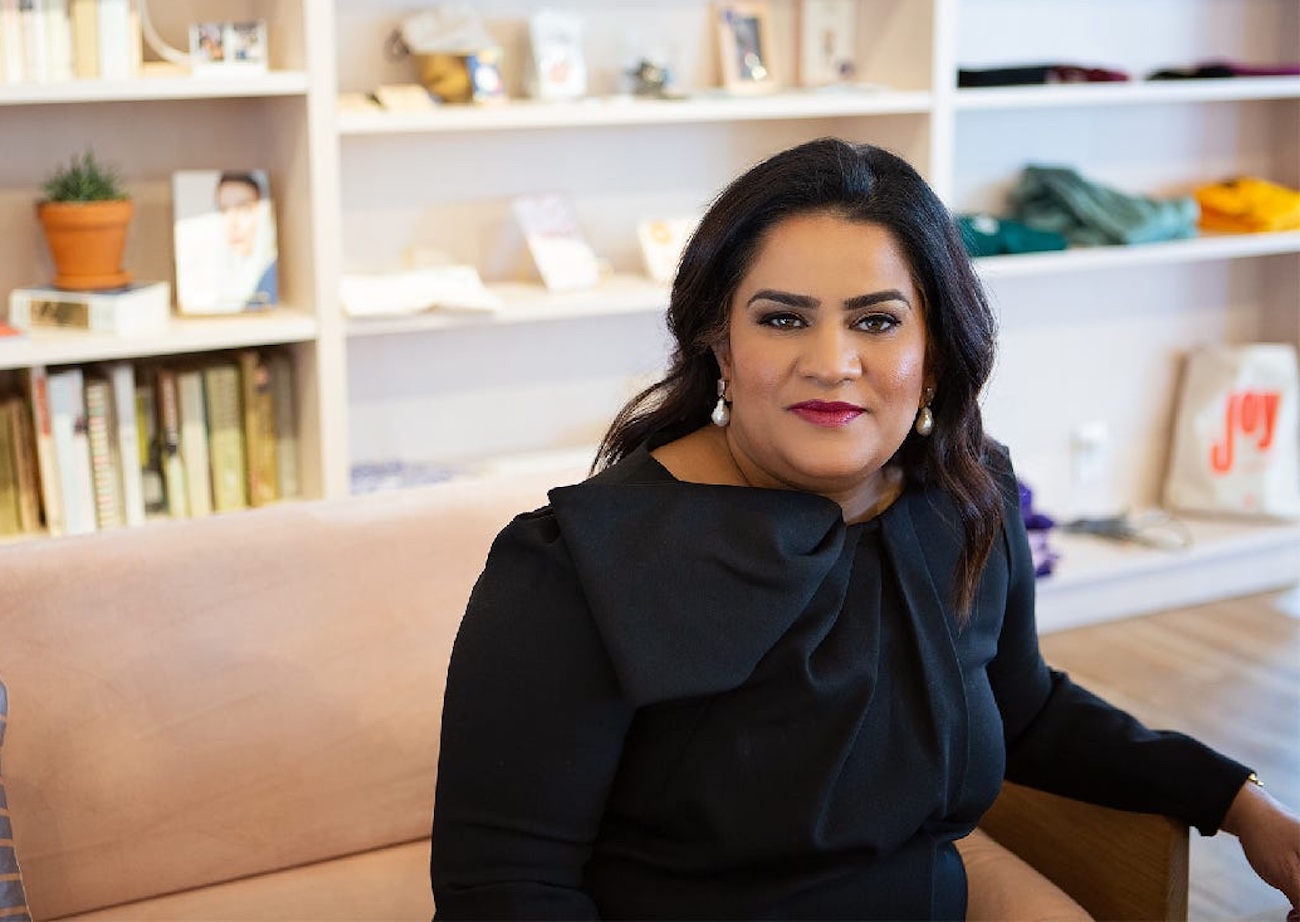

When comedian Zarna Garg appeared on The Daily Beast Podcast on Sunday, she delivered what she called a “hot take”: “The Indian community loves Trump. It is what it is. The Indian community loves Trump. We don’t have the problems with him that a lot of people in America have.”
The comments from Garg—whose meteoric rise from stay-at-home mom to headlining comedy clubs worldwide has made her one of the most visible Indian American entertainers—immediately drew attention across media outlets and social media, highlighting a broader political shift within the Indian American community that polling data suggests is real, if more nuanced than Garg’s characterization.
Speaking with host Joanna Coles, Garg explained that Indian people are largely legal immigrants in America, which involves years of waiting and applying paperwork, hundreds and thousands of verifications, leading many in the community to not understand what was happening during the Biden administration.
Garg said the community could not understand why Democratic officials were not taking illegal immigration seriously, noting that any Indian person has relatives who have been waiting 15 years in line because that’s the right thing to do, and yet it felt like anybody who was breaking the law was getting rewarded.
Her daughter Zoya Garg, who appeared on the podcast with her mom, explained that Trump appealed to many in the community as a business person, because that is something that Indian people can understand and aspire to in their own families constantly.
However, Garg disagreed with Trump’s approach to immigration policy, saying she has a problem with his execution, but that many of the problems he has highlighted are real problems and just saying that the problem doesn’t exist is not going to make them go away.
Perhaps her most striking comment addressed how Indian Americans view political scandal differently. Garg explained that Indian politicians are crooked back home, so that just seems to be a job requirement, with the community thinking that of course Trump is a criminal because they all are. She added that Trump has cheated on his wife but that the community doesn’t even consider any of those issues.
The Reality Behind the Headlines
While Garg’s comments generated significant media attention, polling data suggests a more complex picture of Indian American political attitudes. The Carnegie Endowment for International Peace, a think tank in Washington, D.C., released a survey in October 2024 that found Indian Americans largely support the Democratic Party.
After her comments circulated online, social media users questioned whether Garg reflected the broader community, noting Indian Americans traditionally lean Democratic, with some also challenging her assertion about lawful immigration, with one commenter noting that roughly 250,000 Indians attempted to illegally cross the borders during Biden’s presidency.
From Homeless Teen to Comedy Headliner
Garg’s journey to becoming one of America’s most prominent South Asian comedians is itself remarkable. Born in India, Zarna lived in Mumbai as a teenager until her mother died of jaundice when Zarna was 14, and her father demanded that she get married the day after her mother died. Rather than have an arranged marriage, she moved out of the house and stayed with friends and family, eventually emigrating to the United States to live with her sister in Akron, Ohio.
Just one percent of stand-up comedians in the United States are South Asian and 38 percent women, according to 2025 data collected by CareerExplorer Gold Derby, making Garg’s success particularly noteworthy.
She earned a bachelor’s degree in finance from the University of Akron, and a Juris Doctor degree from the Case Western Reserve University School of Law in Cleveland, Ohio. Garg studied law as a young adult and became a personal injury attorney after becoming an American citizen.
After 16 years as a stay-at-home mom, at age 44, Garg launched an impressive stand-up comedy career when her daughter Zoya, who is graduating from Stanford soon, first encouraged her to do comedy. Son Brij, who just finished his first year at Cornell, made the first viral TikTok video for his mom.
The Digital-First Comedy Empire
Garg started comedy in 2019 on a whim when her daughter Zoya forced her into her first open mic in New York City. She cut her teeth in New York’s comedy circuit, at first performing for two or three people at a club, and then her son uploaded a clip from one of her sets on TikTok and her career exploded, soon earning 2.9 million TikTok fans and began hitting standup comedy stages across New York.
In 2023, she opened for comedy legends Tina Fey and Amy Poehler on their Restless Leg Tour, saw her special One in a Billion premiere on Prime Video, and performed at the Riyadh Comedy Festival in Saudi Arabia as one of just three women on the lineup. Her follow-up special Practical People Win came from Hulu in July 2025.
She won Kevin Hart’s Lyft Comics competition and the 2021 Ladies of Laughter Award, and her debut feature screenplay Rearranged earned the Top Comedy Feature award at the 2019 Austin Film Festival and reached the semi-finals of the 2019 Nicholl Fellowships.
Just one percent of stand-up comedians in the United States are South Asian and 38 percent women, according to 2025 data collected by CareerExplorer Gold Derby, making Garg’s success particularly noteworthy. The comedian and author of New York Times bestseller “This American Woman: A One-in-a-Billion Memoir” told Coles a career in comedy was a preposterous idea back when she started out in 2019.
Grades with Gargs: The Family Business Model
When the pandemic hit, Garg’s family faced financial instability after her husband lost his job, tuition bills loomed, and the Manhattan real estate market collapsed just as they considered selling their apartment. That crisis became a catalyst for transforming her comedy into what she calls a family business.
Zoya Garg, who graduated from Stanford with degrees in computer science and classics, has led that digital transformation, using AI tools to design the book campaign that landed Garg on The New York Times bestseller list and built systems that automatically direct fans to discounts or livestreams.
Their word game Grades with Gargs, which rewards players with a joke based on their score, hit 12 million page views in its first month. Garg told an interviewer she would rather have one million followers who are tight and locked into their network than five million casual followers, with her fans being educated, family oriented and craving humor that feels smart, not cheap.
A multi-camera comedy titled “Zarna” will trace Garg’s journey from immigrating to the United States through working as a stay-at-home mom before pursuing comedy, produced by Darlene Hunt, Mindy Kaling’s Kaling International, Kevin Hart’s Hartbeat and Warner Bros. Television.

Comedy, Representation, and Controversy
Garg noted that she bears extra responsibility as both a leader in her field and as an Indian immigrant, saying that in that part of the world, women have not seen anybody that looks like them do what they do.
Garg spoke to Fox News Digital in July about her career and said this is a country that looks at a person like her and says we want to hear what you have to say, and that she did not think her career would be possible in India, telling Fox News Digital that’s what makes America, America.
However, her comedy has drawn criticism. India’s Outlook India published a critical piece titled “The Unbearable Unfunniness of Zarna Garg,” suggesting she is stuck in a time-warp of India in the nineties and needs to find new material to stay relevan. The piece noted that mainland Indians discovered her after the “fart all you want” video went viral and she cashed in that popularity by claiming to represent Indian women of her generation all over the world.
The critic argued there has to be more to the Indian American experience than stereotypes like “If you are Indian, you will become a doctor/engineer” or “You will marry a rich Indian guy/girl,” suggesting that if Garg actually visits India now and then, she might find new material.
Garg’s comments arrive at a moment when Indian Americans are receiving unprecedented political attention. More than 5 million strong, Indian Americans defy easy categorization, being predominantly Hindus with smaller numbers of Muslims, Sikhs, Christians and others among them, with concerns that mirror those of other Americans: inflation, abortion, jobs, and immigration, while U.S.-India relations barely register.
Sumitra Badrinathan, a professor at American University and one of three co-authors of the Carnegie report, said during the presentation that Indian Americans vote like Americans because they are.
Representing a Community or Herself?
Ultimately, Garg’s comments highlight the tension between individual perspective and community representation. While her observations about immigration frustrations within segments of the Indian American community appear to reflect genuine sentiments supported by polling data showing modest Republican gains, her sweeping assertion that “the Indian community loves Trump” oversimplifies a diverse population that, according to Carnegie Endowment data, still leans Democratic by a significant margin.
In her remarks at the Daily Beast Power 100 luncheon, Garg said American women taught her that she has a right to use her voice, and they taught her that she has a right to her opinions. Whether those opinions accurately represent her community or simply her own political evolution remains a matter of debate—one that underscores the complexity of speaking for any demographic group, particularly one as diverse and rapidly evolving as Indian Americans.
Garg is clear about where her career is headed, saying they are going to build a multi-billion dollar brand that’s digitally focused, believing in people being together and using digital tools to foster togetherness. Whether that brand can accommodate the political diversity within her audience, or whether her Trump comments will alienate portions of her fanbase, remains to be seen.
Top image, courtesy of Zarna Garg. This story was aggregated by AI from several news reports and edited by American Kahani’s News Desk.