


The Many Merry Christmas Traditions: The Multicultural Influences of Kerala Christian Celebrations

- Every Kerala Christian family celebrated Christmas differently. It is even more different now in many ways.

There is an ancient understanding of Christmas in my community, yet there is no set way of celebrating it. Christianity came to our ancestors and quietly fit in with the rest of their lives. Traditionally, they read scripture, sang, prayed, and remembered Jesus who was born as a poor child in very harsh circumstances. Every Kerala Christian family celebrated Christmas differently. It is even more different now in many ways, but the same in others.
My husband, Koshy, was raised on a farmstead and agrarian work was part of daily life. His grandfather joined the Pentecostal Christian tradition at some point, which is even more austere than the Orthodox Christian tradition that I was born into. My late father-in-law was a Pentecostal pastor and believed that Jesus needed to be born in your heart every day and not only December 25. But they had neighbors of other Christian traditions who followed the Western tradition per the Gregorian calendar – so my husband joined public Christmas celebrations. He’d fashion a Star of Bethlehem with bamboo wood from the farm, using paper, glue, and string to hold it together. He and his friends would hold it up and go as a procession at night – through the fields and to Christian homes, singing songs, and having handmade snacks and sometimes cake. In church, when the adults were fully immersed in the Vicar’s sermon, he and his friends would sneak away to catch a late show in the cinema. My mother-in-law’s signature beef curry would be the only special item on the menu, but it was a must. In her 101st year now, she is still celebrated for the formidable cook that she was until recently.
My family tradition was not very different. My great grandparents lived in the town side and their farms were quite a walk away from home. On Christmas day, they’d work on their farms, get back home to a simple meal with a special meat dish, most likely fish. Special decorations, clothing, or accessories would be absent. It was just a simple, quiet, homely day.
The break in the Kerala Christian tradition, as for my family, came shortly after India’s independence from Imperial Britain. People started traveling to other parts of India or other countries – mainly for work, but also for education. My parents moved up north to Gujarat first, and then New Delhi.
When my parents moved up north, they turned to the outward expression of Christianity as it was part of their identity in a land that felt different. Wanting to honor Christmas as being a special day, they looked at how North Indian Hindus celebrated Diwali and made it their own. There was a lot of special food prepared and shared with our neighbors, my mother’s siblings and their families nearby, and our church community. There were also decorations outside our home. We had the Star of Bethlehem – star-shaped cardboard covering an electric light bulb.
Christmas Cake
It was around then that Christmas food became associated with cake for us. Keralites are not originally a cake-eating people. We had rice instead of wheat, wheat flour, or maida. But my grandmother, who was a Christian evangelist, had friends in the Zenana Mission of the Church of South India and ladies from other Christian backgrounds. She learned about cake and made it at home – only not for Christmas. She did not have an oven so used a pan with salt layered at the bottom, a stand, and a pan with the dough. Her recipe was never written down but very likely had flour, sugar, eggs, butter, and dry fruits. I am pretty sure she didn’t have them soaked in rum beforehand, but I know it was delicious because of how my mother and my uncles and aunts describe it. My mother is in her late 80s and her younger siblings in their 70s. They have very happy memories of that new food item and now each of them has their own favorite cake recipe, and even Christmas cake.
We adopted the custom of our North Indian Hindu neighbors to share their Diwali sweets and savories. On Christmas Day, we’d take Mummy’s specials and share them with our neighbors.
My mother had Christian friends from other parts of India and also Kerala who could cook up a wide variety of dishes. So she developed a Christmas cake recipe. Ever since I remember, we have had cake for Christmas. Mummy’s cake has maida, white butter, eggs, sugar, caramel, and also, dry fruits soaked in rum for weeks, maybe even months. She used the local dairy-cum-bakery, which was not very far from where our flat was in Delhi. Mummy and ladies from our church would bring their add-ons, bought the flour, eggs, sugar, and white butter at the bakery. The ladies used their own individual recipe and supervised the mixing, baking, and packaging together as much as their individual schedules permitted. I’m not being biased, but my mother’s cake really stood out, not just for us but for our cousins from our father’s side, our friends, and our neighbors.
All kinds of dry fruits went into it: cashew nuts, sometimes almonds or walnuts, cherries, raisins, and candied ginger and fruit peels. Sometimes she had tutti-fruitti, dried pineapples, and caramelized plantain bananas. Often, she’d start prep in October. My cousin’s husband got rum from the army canteen and she’d soak the nuts and fruits in it leaving it undisturbed until mid-December. She’d prepare her caramel which rivals the best blackstrap molasses, get the group-appointment at the bakery, and let the magic happen.
Even in underprepared years when she used a fraction of the medley of ingredients due to shortage of time in previous months, the cake turned out delicious and the same somehow. Back in the 70s and 80s, we would also prepare murkku, Kerala mixture, achappam, neiyappam, and unniyappam.
Influence of Diwali Traditions
We adopted the custom of our North Indian Hindu neighbors to share their Diwali sweets and savories. On Christmas Day, we’d take Mummy’s specials and share them with our neighbors. Just as we missed it if ever any neighbor didn’t share their Diwali sweets with us, our Hindu neighbors missed our Christmas sweets. They felt included when we shared it with them. It was a sweet contradiction because actually it was us who were the outsiders in their midst.
As children, we went to church on Christmas evening. There were Christmas carols and lengthy sermons by the Vicars. Sometime in the mid-1980s came Santa Claus, by whom I was horrified the first time I saw him. I remember running terrified all the way from the front of the church back to my mother.
There would also be Christmas skits that we rehearsed for weeks. I was always among the carolers while my elder sister played Jesus one year. I still cannot sing We Three Kings of Orient, O, Come All Ye Faithful, and The First Noel without seeing the costumes, choreography, and crib that we had then. It felt new then and was in keeping with the mood of our community – all young Kerala Christian families shaping a new tradition in a new place. To our innate love for our own tradition, we added confidence toward other cultures. I marvel at what our Sunday School teachers fashioned so many years ago sans the cheap goods that our markets are flooded with now.
I read English for my undergraduate study at the University of Delhi. A passage from George Eliot’s The Mill on the Floss that I read then reflects on Christmas. That it is a season that brings warmth, but only to those who have in their heart something to celebrate and someone to celebrate it with. Her observation still influences my perspective on the holiday today.
As a teen, I would clean and decorate our apartment for Christmas when our cleaning person went AWOL. The creative but laborious task was a lesson about domestic work being worth it as it brings beauty and joy and pride to one’s family and friends. As part of the youth group from church, we visited each other’s homes to sing carols and eat homemade delicacies. I’ve had special furnishings since then that are bookmarked for Christmas use only.
I am probably not as qualified to talk about traditions as many other people. My husband and I both missed timely marriage. My husband wanted to travel the world before he settled. And I was too intellectually absorbed with the conflicting question – where is home? In different ways, we followed a path common among Kerala Christians: seeking a sense of home beyond our origins. After my sisters got married and moved away and our uncles, aunties and cousins were in the U.S. My father was aging rapidly and had only my mother to care for him. Without making that decision consciously, I remained behind to support my parents.
One Christmas, while my parents were in Kerala and I was alone in Delhi, I carried on our family tradition of sharing sweets with our neighbors. I prepared payasam and bought cake and snacks from the market. It felt awkward as a spinster in my early 30s but my neighbors accepted me and were always kind and gentle with me. What stayed with me is that despite differences, acceptance and kindness are very much possible if you foster them.
Another Christmas tradition was us returning from church and placing in each other’s hands the pieces of consecrated cake we were given as part of the congregation in church. And afterwards, we ate Mummy’s cake. I remember Papa, who was asthmatic, taking the consecrated cake from his coat pocket and putting it in my hand without saying a word.
Office Party
While working for a Christian publisher in Delhi, I enjoyed joining colleagues from across India in decorating the office, singing Hindi carols, especially Oho Maseeh Aaaya Zameen Pe, and sharing festive foods at each other’s homes. The experience highlighted the meaning of Christmas for me, especially compared to only caroling with Keralite-only church members in the past. After two evenings of caroling, we wrapped up with an office party where everyone got gifts.
When Papa’s health began declining, we stopped making Christmas cake, buying it instead from the bakery or from our church, since it was too much effort for just the three of us. A few years before my father passed, I sensed our Christmas traditions shifting again. I asked Mummy to bake her famous cake again. This year, she wanted to try adding red raisins instead of the usual ones. In Delhi, I searched shop after shop for lal kishmish, but no one had them. Ultimately, we got everything else, soaked the mix in September, and Mummy’s Christmas cake was as delicious as always. She had cakes baked at the same bakery as before, delivered by rickshaw, always giving the rickshaw wallah a half loaf, and me storing the boxes with cakes in our flat. As always, they lasted from mid-December to early February though we shared cakes with neighbors, friends, and family. The sweet aroma lingered through winter. I can’t quite describe the notes of that gentle scent now, but I can say it can be traced in my identity as a Mallu Christian abroad.
Mummy didn’t make Christmas cake again until after my father passed away and we moved to America. My mother doesn’t recall that last cake she made in Delhi, but I later realized the red raisins she mentioned were actually cranberries. She had seen them during a previous U.S. visit but, being new to her, she didn’t know that was what they called, and I’d misunderstood her. Had I known, we could have bought and added cranberries to her cake, and it surely would have been just as wonderful.


American Christmas
In America, my husband was here before me, and before even we met. He was in Detroit with his siblings and their families. They attend a small, close-knit church of mostly Kerala Christians, many related to each other. He would join relatives for Christmas caroling in Detroit, cake distribution, and a dinner featuring both traditional dishes from my mother-in-law’s traditional menu as well as new dishes.
When I moved from India to Dallas, my family revived our Christmas traditions in a new setting. Though unfamiliar with the neighborhood, we recreated our festivities: my mother baked her Christmas cake with a medley of fruit, made al-bouri (known as kul kul in North India and diamond by my grandmother), and prepared classics like vada, achappam, Kerala mixture, and unniyappam (baked in muffin trays.) Despite being far from home, everything tasted just as we all remembered.
We have family in Houston and sometimes spend Christmas there. One year, we had lunch at my uncle’s. The table bore Kerala Christian dishes and new items treats like tuna cutlets and biscotti. My mother and her siblings reminisced about their mother’s (my grandmother’s) cooking and chuckled over how traditions keep evolving.
Before meeting my husband, while walking home from work during Christmas 2021, I wondered if I could have my own family, someone to share my life with. My husband entered my life in a traditional Indian way and we were married in March 2022.
Our first Christmas together was memorable. We shared a meal with our church community, enjoying idli, dosa, North Indian dishes, and fresh poories fried on-site. There was also biryani from Detroit’s Arab restaurants, all against the backdrop of my first snowy “White Christmas.” The gathering was intimate and warm, marking the early days of truly getting to know each other.
Carols: From Kerala Through Gujarat, Delhi and America
In Fall 2023, we moved back to Dallas for my teaching job. My husband had to return to Detroit to get more of our stuff back. He was held up for days due to snowy roads, so I spent Christmas alone. With no work or nearby friends, I realized Christmas is truly about Jesus. Though apart from loved ones, I felt Jesus’ presence and sang to celebrate. I sang all the carols we had picked up along the way from Kerala, through Gujarat, to Delhi, to America, and then Christmas songs seen on YouTube. That new tradition that I formed for myself – just singing to myself. Nannialladhe Onnumilla, Oho Maseeh Aaaya Zameen Pe, Falak Shaadman, and O, Holy Night. I saw that it is very much possible to do without everything that is outwardly associated with Christmas. The joy of Christmas exploded in my heart probably in the same gentle, restrained, pious way as my ancestors and other Indian Christians I’d seen throughout my life. Three days after Christmas, my husband was there with me. Three days after Christmas, my husband was there with me.
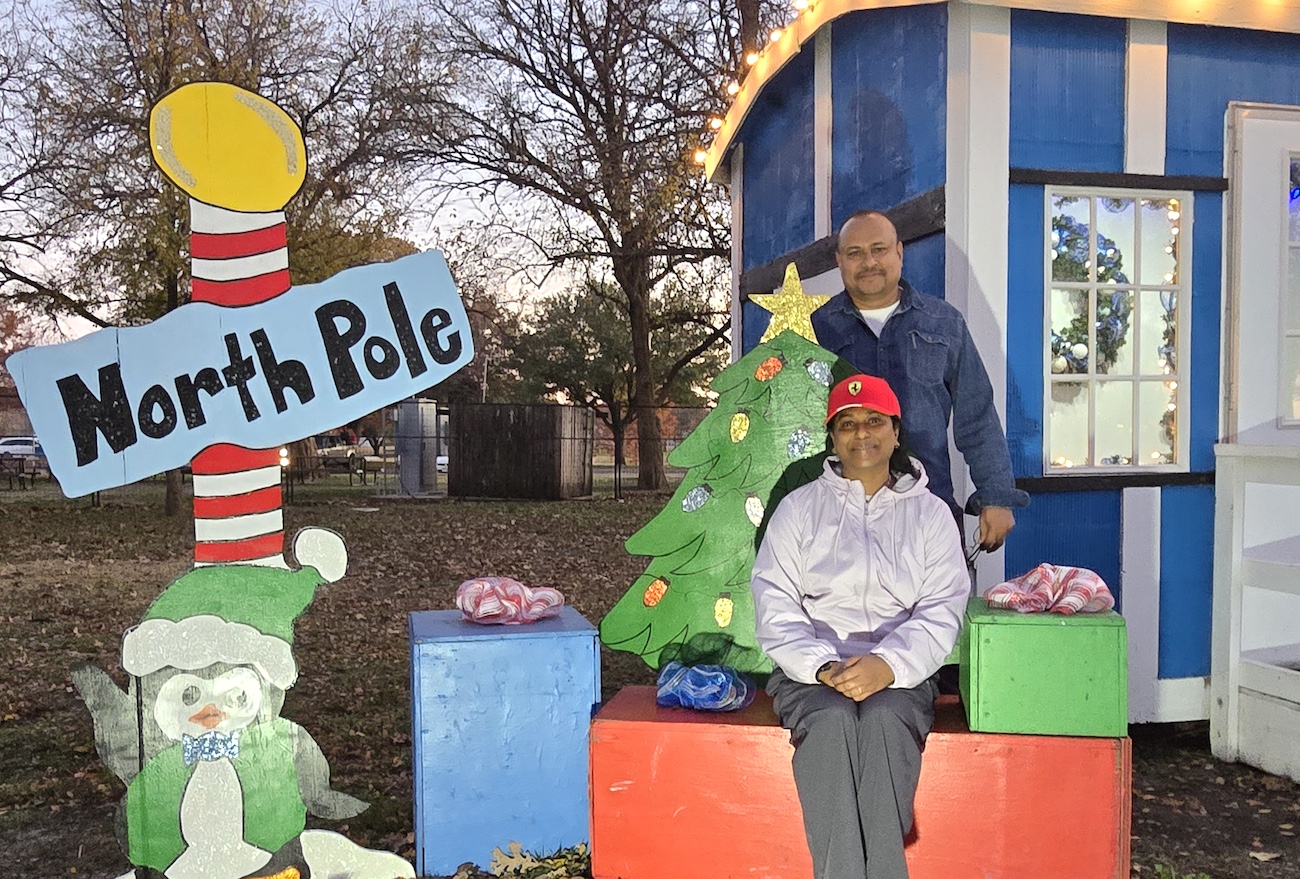
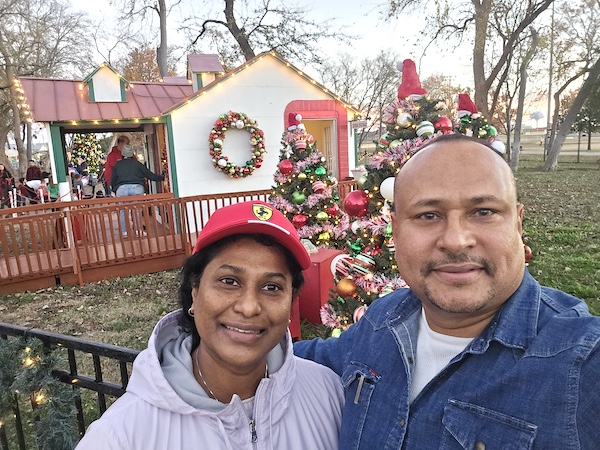
Now, after fall semester ends, our Christmas tradition is to be out and about. Last year we saw global Christmas celebrations; this year we’ve enjoyed a chorale performance at our local park with lights and food. Santa is visible; Jesus less so. At home, I’m planning a simple ginger cake with cutlets, and we’ll visit family for hugs, food, quiet conversation, prayer, and singing.
Kerala Christians have always known this: Christmas doesn’t need markers. Like for the shepherds, to whom the angels sang the first Christmas greetings, and who were on the margins of that society, joy remains. Notwithstanding what the pattern appears like from the outside, Jesus is at the center of the inner pattern. Exactly how it should be.
Jaya John lives in Dallas with her husband. She teaches Literature and English at Texas A&M University and Dallas Baptist University.