



The Genius of ‘Dhurandhar’ Lies in Its Depiction of the Matter-of-Factness of Majoritarian State Power

- The film reflects a political moment that no longer needs to resort to loud hostility. The absence of chest-thumping reflects the reality — authoritarian apparatus does not need constant justification.
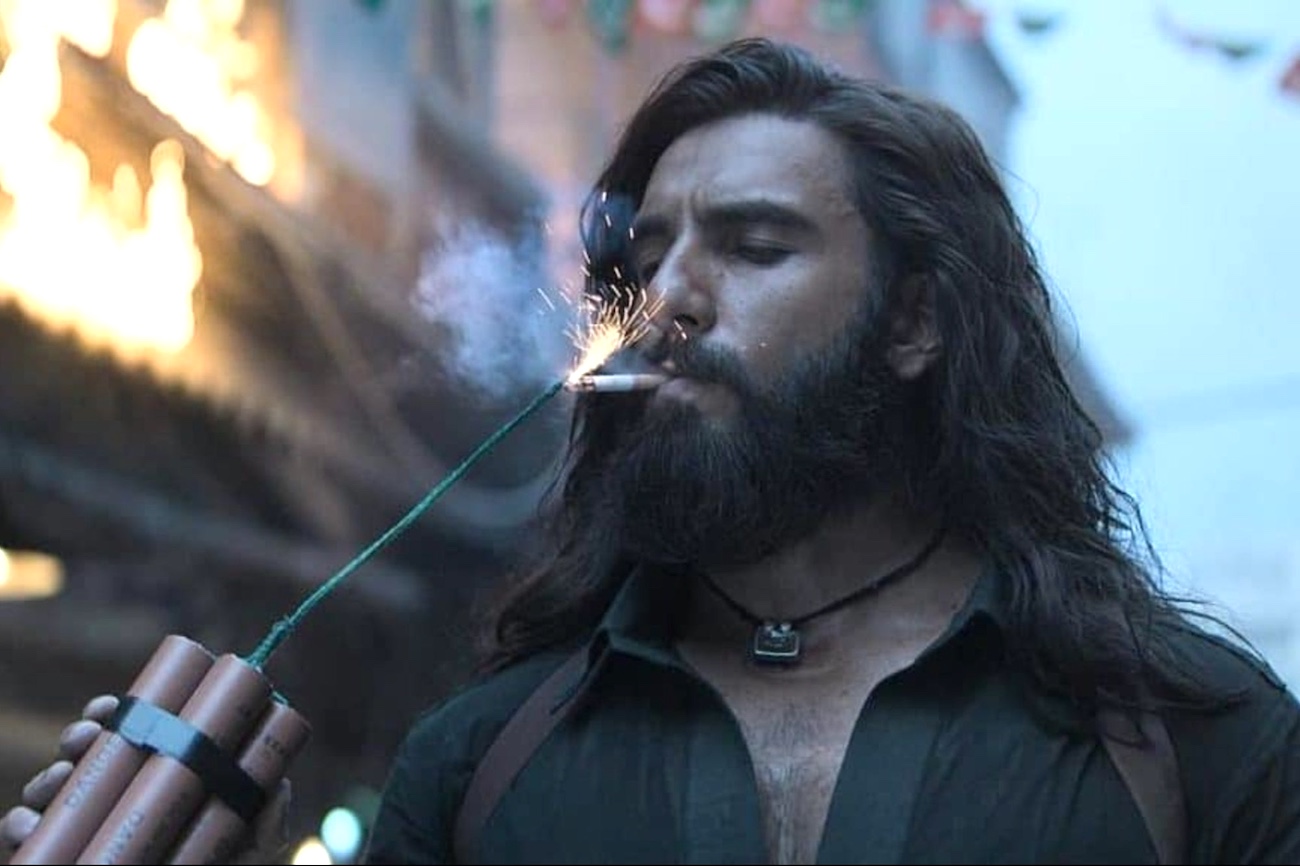

I finally watched “Dhurandhar,” long after its global impact had already been tallied—both in box-office figures and in the polarization it unleashed. What follows is a political reading of the film, stripped of the predictable propaganda, indignation, alarm, moralizing, and chauvinism that dominate contemporary mass media discourse.
Dhurandhar has released at a time when the political meaning in Indian films is usually judged very quickly. Viewers often ask only one thing: Is this film supporting the government or opposing it? But “Dhurandhar” works differently. It does not shout about its politics. Instead, it quietly shows how power functions in India today—especially under a strong, majoritarian political system.
The film neither openly praises nor criticizes this system. It simply assumes that this kind of power is already firmly in place. The government in “Dhurandhar” does not look unsure or threatened. Officers do not ask whether they have the right to act. They already believe they do. Orders are passed calmly and followed without argument. This reflects the current political situation, in which authority feels settled and does not need constant justification.
This attitude becomes even clearer because much of the film is set in Pakistan. In earlier Indian films, Pakistan was often shown as either a land of villains or a place of loud patriotism. There were angry generals, shouting terrorists, dramatic flags, and clear good-versus-evil messages. Pakistan existed mainly to provoke emotion and national pride.
“Dhurandhar” treats Pakistan very differently. Here, Pakistan is not a symbol. It is a location. Streets, offices, and border zones appear ordinary, functional, almost dull. There are no long speeches about enmity, no exaggerated hatred. This choice is important. In today’s political climate, where hostility towards Pakistan is a central part of right-wing rhetoric, the film’s calm handling stands out.
The film does not try to excite emotions or demand loyalty. It is quiet, controlled, and serious. It does not tell the audience what to think. Instead, it shows a system that is comfortable with itself.
By not turning Pakistan into a dramatic enemy, the film shifts focus away from nationalism and towards administration. Indian agents operate in Pakistan with confidence, not anger. Their concern is not revenge or pride, but control, access, and outcomes. This fits perfectly with the film’s main theme: power that is secure and practical, not emotional.
The state in “Dhurandhar” does not need to prove its strength by demonizing Pakistan. It already assumes superiority. This reflects a political moment in which majoritarian power feels so confident that it no longer needs to resort to loud hostility. The absence of chest-thumping is not liberalism—it is certainty.
Like earlier, dissent in the film is not treated as a serious challenge. Any resistance—whether inside India or across the border—is handled through systems and procedures. For example, when information from Pakistan could disrupt an operation, it is quietly controlled rather than publicly exposed. There is no dramatic showdown. This mirrors how dissent is often managed today: not debated, but contained.
The main character represents this attitude clearly. He is not driven by patriotic speeches or big ideals. He succeeds because he understands how the system works. He knows whom to call, which rule to use, and when to stay silent. In one scene, instead of arguing against a wrong order, he finds a legal way to delay it until it becomes useless. In another, instead of reacting angrily to provocation, he focuses on paperwork, permissions, and timing.
This shows that survival depends on intelligence within the system, not on open resistance. Moral questions remain in the background. Surveillance, manipulation, and pressure tactics are shown both in India and Pakistan, but the film does not pause to judge them. These actions are treated as normal tools of governance. This aligns with a political culture that values obedience and smart adjustment over open disagreement.
Visually, the film supports this idea. Whether in India or Pakistan, power looks the same: offices, files, meetings, controlled spaces. Ordinary people are mostly absent. The public matters little in either country. The state operates above daily life. This suggests that the real divide is not between India and Pakistan, but between those who run systems and those who live under them.

Calling “Dhurandhar” propaganda would be too simple. The film does not try to excite emotions or demand loyalty. It is quiet, controlled, and serious. It does not tell the audience what to think. Instead, it shows a system that is comfortable with itself.
In that sense, “Dhurandhar” is a product of contemporary Indian politics less through ideology than through mood. It captures a period in which majoritarian power has shifted from assertion to administration, from rhetoric to routine. The film’s purpose is not to persuade, but to reflect a system comfortable with itself.
That comfort is its most political statement. By depicting a state that operates without visible doubt, “Dhurandhar” reveals how deeply current political realities have shaped cinematic imagination. The film does not challenge the moment—it documents it. And in doing so, it offers a quiet but telling portrait of power when it no longer feels the need to explain itself.
(The story was sourced from a Facebook post)
V.V.P. Sharma is a Delhi-based senior journalist and commentator.