



Not a Retreat, But a Return: Rediscovering Classical Ayurveda for Modern American Lives

- I spent eight days undergoing a structured detox and rejuvenation program. I approached it not as a vacation, but as a deliberate reset—physically, mentally, and energetically.
In an age of biohacking, wearables, supplements, and endless wellness trends, many Americans are searching for something deeper—something that doesn’t merely optimize performance, but restores balance.
For many Hindu Americans, Ayurveda is a familiar word. We grew up hearing about turmeric milk, oil massages, home remedies, and advice from grandparents. Yet for most of us, Ayurveda has remained fragmented—experienced as isolated practices rather than as the complete, classical medical system it was intended to be.
Ayurveda is not a wellness trend. It is one of the world’s oldest living systems of medicine—over 5,000 years old—rooted in the Vedic understanding that health is not simply the absence of disease, but a dynamic state of balance between body, senses, mind, and environment. Its approach is preventative, personalized, and deeply intelligent, working at the level of root causes rather than symptoms.
How Kerala Preserved a Living Tradition
While Ayurveda originated across the Indian subcontinent, its most uninterrupted lineage survived in the southern state of Kerala. Geography played a role—dense forests rich with medicinal plants, a humid climate ideal for oil-based therapies, and generations of physician families who passed knowledge through disciplined guru–shishya traditions.
Equally important, Kerala never abandoned Ayurveda during the colonial period, when many indigenous medical systems were sidelined. Families of vaidyas continued practicing and refining therapies such as Panchakarma, Shirodhara, and medicinal oil treatments with remarkable rigor.
What exists in Kerala today is not a spa adaptation. It is classical Ayurveda, practiced daily as a structured medical system.
My First Immersion into Classical Ayurveda
This understanding became real for me during my recent stay at an Ayurveda hospital in Kerala, where I spent eight days undergoing a structured detox and rejuvenation program. I approached it not as a vacation, but as a deliberate reset—physically, mentally, and energetically.
The setting itself encouraged slowing down. Perched above the Arabian Sea, surrounded by quiet greenery, the environment felt immediately grounding. Mornings began with gentle yoga and meditation, aligning breath, body, and awareness before any treatment began. Ayurveda insists on this inward alignment first: healing works best when the mind is present.
Detox, Purgation, Rejuvenation
What became clear early on was that this was not a collection of disconnected treatments. The entire program was deliberately divided into three equal phases, each serving a distinct purpose.
The first third focused on detoxification—using daily external oil therapies and internal ghee consumption to loosen and mobilize toxins (ama) that had accumulated deep within the tissues over time. This phase prepares the body, gently and methodically, for elimination.
The second third centered on purgation (Virechana)—the decisive cleansing phase. After days of preparation, a castor-oil-based medicinal formulation completed the process, flushing toxins out of the system in a controlled and purposeful way. This was not extreme or chaotic; it felt precise, efficient, and intelligent.
Each day centered around a precisely structured therapy session lasting over two hours. Two therapists worked in perfect coordination, with a level of anatomical awareness that was striking.
The final third was dedicated entirely to rejuvenation—cooling, nourishing, and rebuilding therapies designed to restore strength, stabilize the nervous system, and reestablish balance.
This sequencing revealed something essential: detox without elimination is incomplete, and cleansing without restoration is destabilizing. Ayurveda does not rush healing—it paces it with intelligence.
Why Oil and Ghee
One of the most misunderstood aspects of Ayurveda is its use of oil and ghee during detox. In the Western mindset, cleansing often means restriction or deprivation. Ayurveda takes the opposite approach.
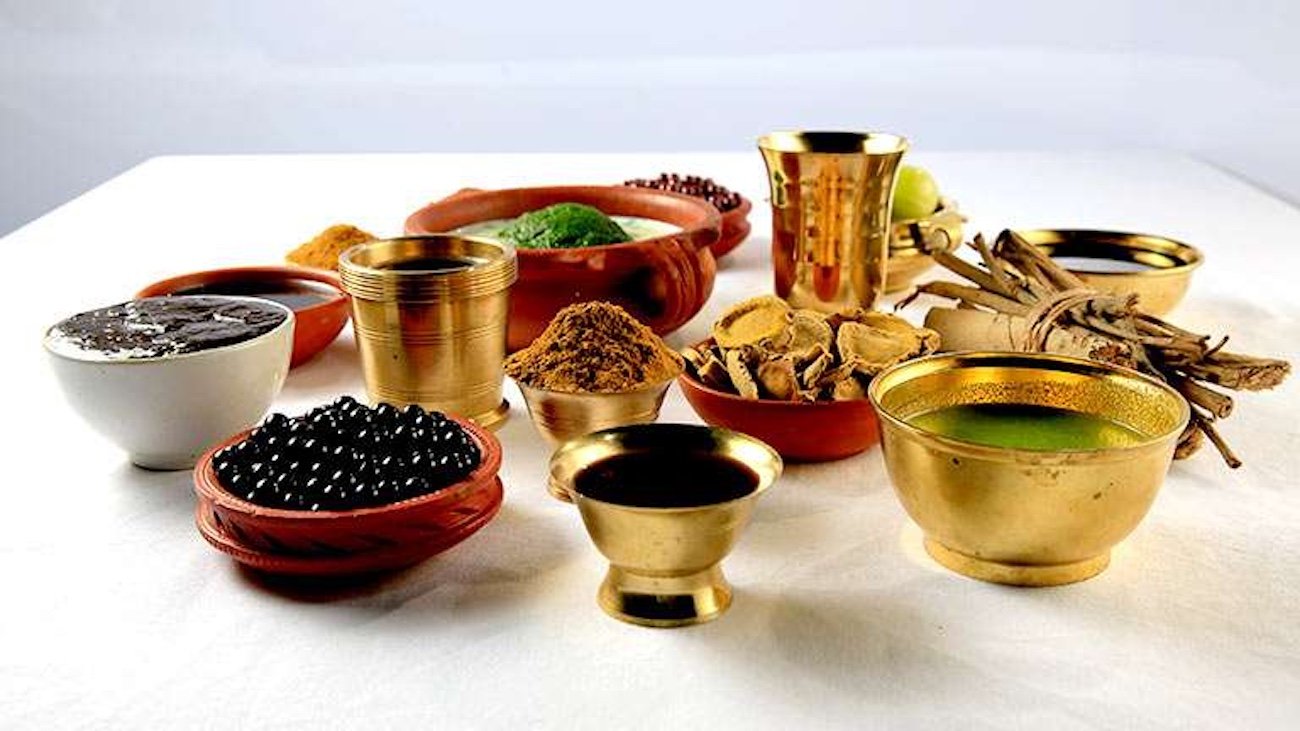
Warm, medicated oils are applied externally because oil penetrates deep tissues, loosening toxins and calming the nervous system. Internally, small quantities of ghee lubricate the digestive tract, balance digestive fire (agni), and draw toxins toward elimination.
Oil on the outside.
Ghee on the inside.
It is a carefully sequenced conversation between the body’s inner and outer systems—never rushed, never forced.
The Rhythm of Healing
Each day centered around a precisely structured therapy session lasting over two hours. Two therapists worked in perfect coordination, with a level of anatomical awareness that was striking. The experience felt almost choreographed—like a traditional Bharatiya dance—beginning gently and gradually transitioning into deeper, more deliberate strokes designed for release.
This was not massage as indulgence. It was therapy as skilled, embodied intelligence.
Over time, digestion steadied, sleep deepened, inflammation reduced, and mental clarity emerged.
When the Mind Learns to Rest
The most profound experience was Shirodhara—a continuous stream of warm oil flowing over the forehead for thirty minutes.
Thoughts slowed. The nervous system softened. The mind unhooked from effort. Sleep deepened in a way few modern practices achieve. It felt less like a treatment and more like permission—to finally let go.
Letting Go—and Rebuilding
Midway through the program came the purgation phase. After days of preparation, I drank a castor-oil-based medicinal formulation with warm water. What followed was intense, efficient, and deeply purposeful.
Ayurvedically, the oils and ghee had already pushed toxins into the gut. This medicine simply completed the journey. By the end of the day, there was unmistakable lightness—less heat, less heaviness, more clarity.
The following day shifted entirely toward restoration. Cooling therapies, dahi-based Shirodhara, and a deeply nourishing treatment using cooked rice dipped in herbal yogurt preparations gently rebuilt strength. The body received a clear message: you’ve released enough; now it’s time to rebuild.
Food as Medicine
Meals were prepared in a pure satvik tradition—simple, fresh, and fully vegetarian. Food here is not indulgence; it is instruction.
Each meal is customized to one’s dosha:
- Pitta types receive cooling, calming foods
- Vata types are nourished with warm, grounding meals
- Kapha types are offered lighter, gently stimulating preparations
Ingredients are minimal and deliberate—vegetables, lentils, grains, mild spices, and herbal soups. Nothing is processed. Even spices are measured for physiological effect, not flavor alone.
Over days, cravings softened, digestion steadied, and energy evened out. The simplicity itself became therapeutic.
Not a Retreat—A Return
Evenings were intentionally quiet: slow walks along the beach, gentle yoga, meditation, and silence. Nature completed what the therapies began.
By the end of the week, the change was unmistakable. This was not about being pampered. It was about feeling clearer, steadier, and more aligned—from the inside out.
For Americans seeking holistic health, Ayurveda offers something rare: a system that respects individuality, prioritizes prevention, and works at the root level.
For Hindu Americans in particular, this is also an invitation to reconnect with a living civilizational inheritance—not as nostalgia, but as a practical, relevant tool for modern life.
You don’t need months.
You don’t need to be sick.
You only need a willingness to pause.
If you consider yourself a holistic seeker—interested in long-term vitality, mental clarity, and balance—I encourage you to experience authentic Ayurveda in Kerala, even if only for a week.
Some journeys help you escape.
This one teaches you how to return—to balance, to rhythm, and to yourself.
J.R. Sandadi is a long-time Carmel, Indiana resident. He migrated to the U.S. in the early 1990s and worked in the IT sector for 25 years before retiring from the corporate world. He volunteers his time with Hindu SwayamSevak Sangh (HSS, USA), and Sewa International USA. Sandadi is also involved with multiple interfaith initiatives across Indiana. He is a founding member of the Indiana Multi-faith Network.