


Listening to ‘Silent Walls, Speaking Stones’: Dr. Nishi Chawla on Writing Ayodhya’s Hidden Stories

- The novelist, poet, and filmmaker discusses her latest work—a meditation on faith, memory, and the spaces between words in one of India's most contested cities.
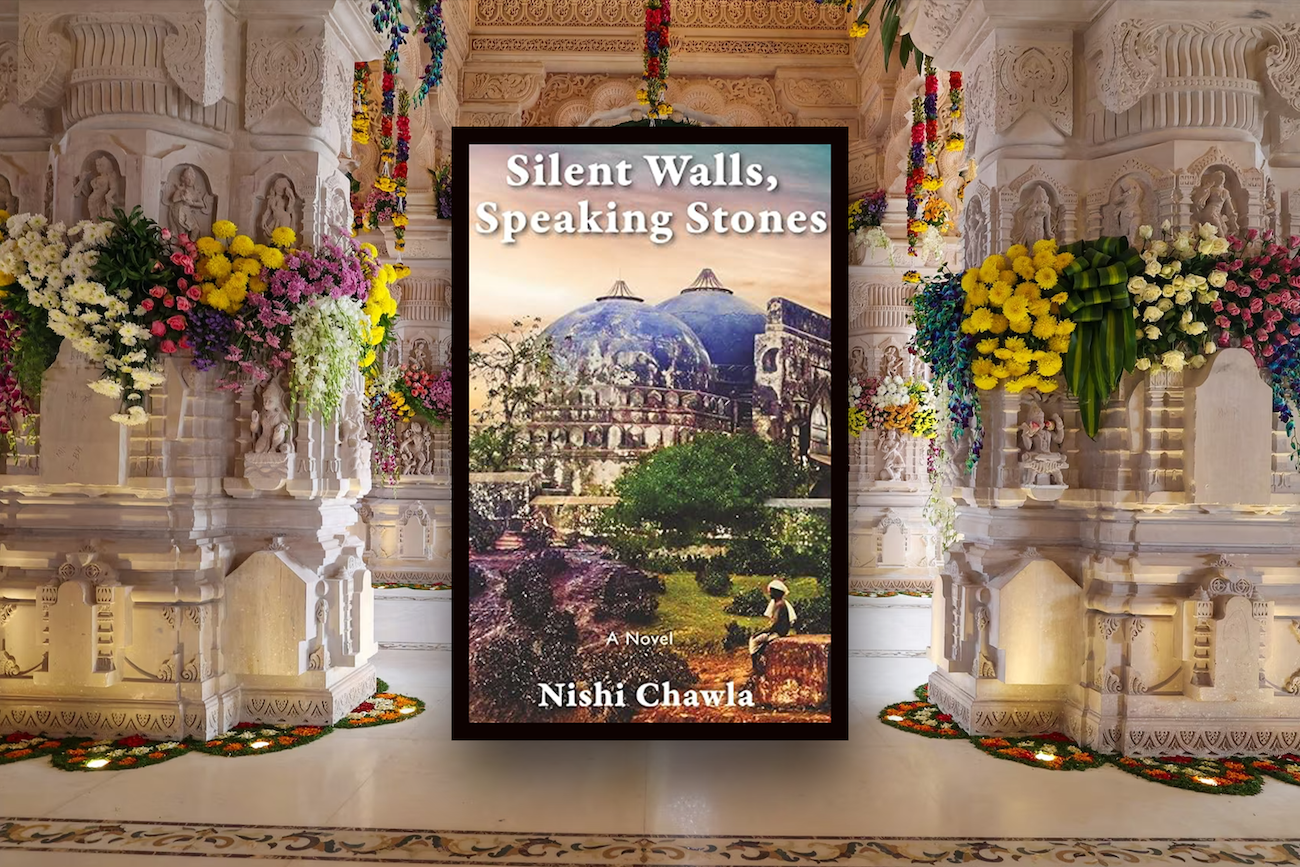
There are cities that exist as geography, and then there are cities that exist as argument. Ayodhya has long been the latter—a place where devotion and discord occupy the same ground, where every stone carries contested meaning, where silence itself becomes a kind of testimony.
Dr. Nishi Chawla’s novel “Silent Walls, Speaking Stones” enters this fraught landscape not with proclamations but with questions. Through the story of Saanvi Trivedi, a young woman raised by her Hindu father while carrying the spiritual imprint of her Muslim mother, Chawla explores what it means to belong to a place—and to people—defined by division.

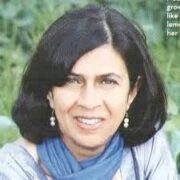
The novel is characteristic of Chawla’s expansive creative practice. An academic, writer, and filmmaker, she has published three novels, eight poetry collections, and ten plays, and has written and directed four award-winning art house films. She holds a doctorate in English from George Washington University and completed postdoctoral work at Johns Hopkins University. After nearly twenty years as a tenured professor of English at Delhi University, she relocated to the Washington D.C. area, where she continues her teaching and literary work.
Chawla is one of the few Indian playwrights to have two plays staged in Manhattan and the third Indian poet invited to read for the U.S. Library of Congress program The Poet and the Poem. She has also co-edited two global poetry anthologies, “Greening the Earth” and “Singing in the Dark,” published by Penguin Random House.
I first met Dr. Chawla in 1984, when she was teaching at the University of Delhi. When “Silent Walls, Speaking Stones”became available, I ordered it immediately. The novel is set in Ayodhya, a city that holds deep personal meaning for me—my maternal family has longstanding ties to this historic place, and I grew up listening to stories from my grandmother and mother, who spent significant portions of their lives in the quiet Ayodhya of the 1940s through the 1980s.
What struck me most was the novel’s refusal to view Ayodhya through purely ideological lenses. Instead, Chawla reveals the emotional terrain beneath—identity, longing, empathy, pain, and grief. Her vivid imagery creates a cinematic experience, while her conversations bring characters alive with striking intensity. Yet it is often the silence in her story that speaks loudest.
The Eloquence of Silence
“Silence, to me, has always been one of the most eloquent forms of speech,” Chawla explains. “When I began writing “Silent Walls,” I was drawn not to the spoken word but to the emotional residue that lingers before and after words are uttered—the spaces where human truth often hides.”
In Ayodhya, she argues, silence is not absence but presence—a force saturated with unspoken histories, deferred griefs, inherited loyalties, and unresolved claims. The novel echoes multiple forms of silence: the silence of a child who senses more than she understands, the silence between lovers torn by faith, the silence communities adopt to avoid reopening wounds.
“I used silence as a narrative tool to explore the unsaid—moments where characters hesitate, withdraw, or simply breathe through conflicts they cannot articulate,” Chawla says. “These silences reveal more about them than any dialogue could.”
In a landscape where religion often manifests as institutional power or political claim, Chawla’s novel takes a different approach—portraying faith through intimate moments: whispers of prayer, ritual, longing, and loss.
The Architecture of Early Memory
One of the novel’s most haunting elements is Saanvi’s earliest memory—a moment at age three when she witnesses an unspoken exchange between her parents. This fragment of childhood perception becomes what Chawla calls “an emotional fossil,” shaping Saanvi’s understanding of identity throughout her life.
“Early memory is porous—part dream, part sensation, part inherited recollection,” Chawla observes. “A three-year-old does not grasp the sociopolitical implications of what she witnesses, but she absorbs the emotional charge with astonishing clarity. Children remember through feeling, not through language.”
Chawla approached these memories not as precise visuals but as atmospheric fragments: the warmth of a mother’s shawl, a father’s trembling breath, the strange silence that follows. “Such memories do not tell a narrative; they haunt it,” she explains. “Saanvi’s life, in many ways, is a long attempt to understand what she felt at three—and to name the emotions her parents themselves could not.”
Faith as Lived Experience
In a landscape where religion often manifests as institutional power or political claim, Chawla’s novel takes a different approach—portraying faith through intimate moments: whispers of prayer, ritual, longing, and loss.
“Faith, in my experience, is never truly doctrinal,” she says. “It is something we carry in our pulse, our breath, our small gestures of hope. I was not interested in religion as a system of rules; I wanted to explore it as a series of private encounters with meaning.”
For Saanvi, faith emerges in her father’s quiet rituals at dawn, her mother’s soft recitations that echo in memory, and her own moments of vulnerability. Faith appears in grief as much as in devotion—and also in doubt.
“I wanted to show that religion does not live only in temples or mosques; it lives in the ways people love, mourn, wait, trust, and forgive,” Chawla explains. “It is not a badge her characters wear but an inheritance they navigate.”
Writing Ayodhya With Honesty and Compassion
Perhaps the most delicate challenge Chawla faced was representing Ayodhya itself—a city layered with devotion, political claim, historical rupture, and deeply personal longing.
“Writing about Ayodhya is a responsibility,” she acknowledges. “My task was not to render judgment but to listen.”
She approached the city as one might approach a living person—with respect for its wounds, complexities, and multiplicity. Her guiding principles: avoid caricature, and prioritize the human over the ideological.
“No community in Ayodhya feels only one emotion,” she notes. “Devotion coexists with fatigue; pride coexists with fear; faith coexists with ambivalence. I tried to honor that spectrum.”
Rather than treating the city as an abstraction, she allowed it to emerge through its people—the shopkeeper who has witnessed decades of change, the mother who fears for her child’s future, the young girl who seeks belonging in a polarized world.


Compassion meant portraying every character with interiority—even the city itself becomes a character. Yet she remained committed to showing the tensions and fractures. “Ayodhya deserved nothing less than a portrayal rooted in both truth and tenderness.”
Identity Shaped by Presence and Absence
Saanvi’s identity presents one of the novel’s central tensions: she is raised by her Hindu father yet carries the spiritual imprint of her Muslim mother. She is shaped equally by presence and absence.
“The challenge lay in writing a character who is shaped as much by what she knows as by what she does not know,” Chawla explains. “Her father is physically present yet emotionally guarded. Her mother is physically absent yet spiritually vivid.”
But Chawla discovered something unexpected: “The most rewarding aspect was discovering how absence can be generative. Saanvi’s longing becomes her imagination; her uncertainty becomes her empathy.”
Ultimately, Saanvi becomes a bridge not only between two religions but between two emotional worlds. “She embodies the truth that identity is not a binary; it is a spectrum shaped by love, loss, longing, and lived experience.”
If the City Could Speak
When asked what Ayodhya would say if it could speak plainly, Chawla offers this: “I believe it would say: ‘I have held your stories long enough. I have carried your devotion and your divisions. Do not carve your fears upon me; carve your compassion instead.'”
In her novel, the city speaks not through declaration but through its silences and streets. “I did not want Ayodhya’s voice to shout; I wanted it to hum beneath the surface of every human interaction.”
Hope in Turbulent Times
What makes “Silent Walls, Speaking Stones” particularly powerful is its quiet insistence on possibility. The novel portrays duality and contradiction with striking nuance—the coexistence of devotion and discord, belonging and division.
Saanvi holds contradictions with grace, reminding readers that shared humanity can exist even amid conflict and historical wounds. What emerges most strongly is hope—hope that compassion, understanding, and everyday moral courage still endure. In its quiet way, the novel demonstrates how people can find connection even in turbulent times, making the idea of resolving conflict feel tangible and attainable.
Neelanjana Singh is a registered dietitian and author of nutrition books including “Our Kid Eats Everything!” (Hachette, 2015) and “Why Should I Eat Healthy?” (TERI Press, 2018). She writes for several digital platforms and curates the newsletter Diet Matters.