


Lasting Impact of Emily Dickinson and Mahadevi Verma’s Poetry, a Comparison

- Even though they lived in different times and cultures, both poets, in their distinct ways, convey universal human longings.
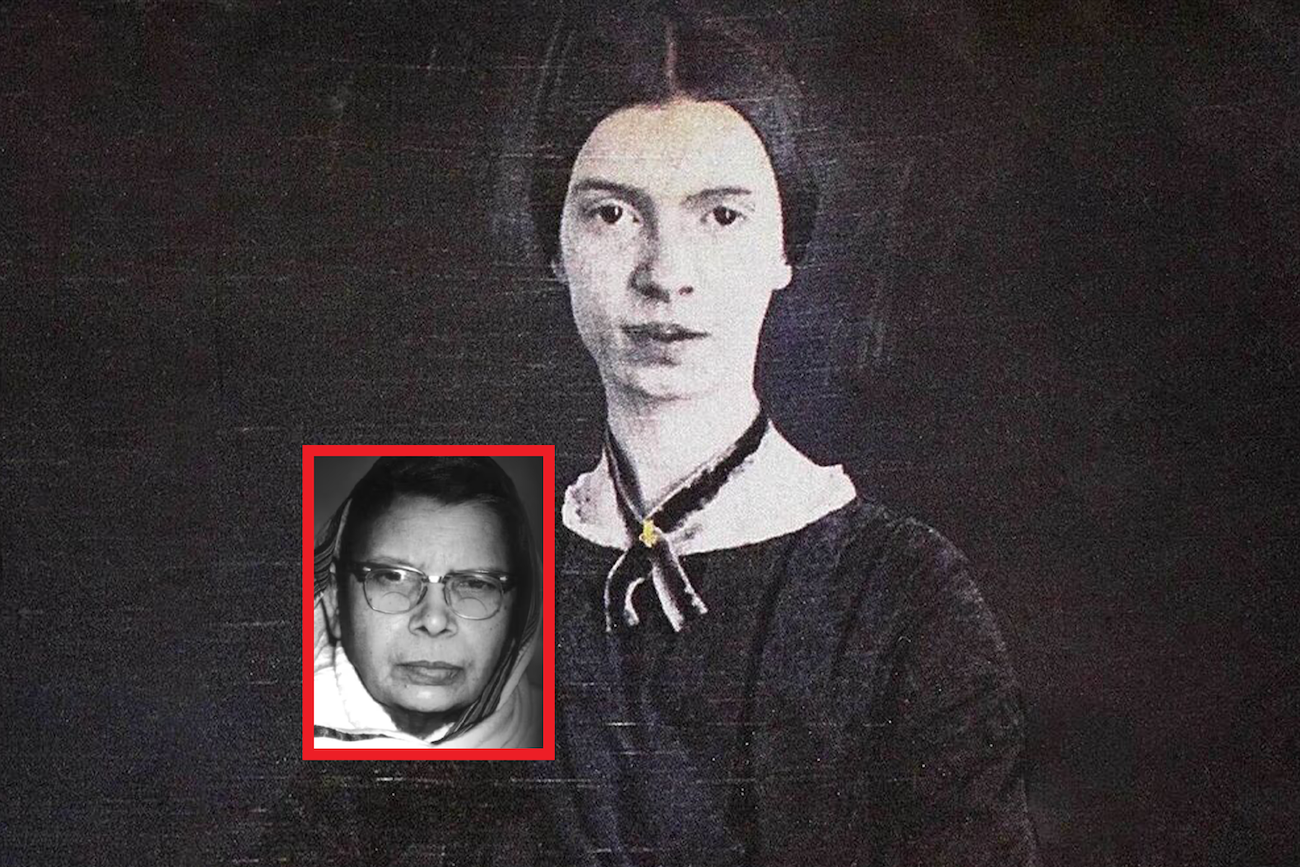

December 10 is the birthday of Emily Dickinson and I’ve been sharing her poems with another poet all day long. I keep thinking about the poem “Adrift” in which she imagines a small boat drifting out to sea, perhaps facing strong winds or moving gently toward a distant island. She asks what hidden force keeps it steady, leaving it to the watcher to guess where it has gone and what holds it up. This quiet reflection on unseen forces is much like the thoughtful searching found throughout Dickinson’s poetry.
Reading Dickinson makes me think of Mahadevi Verma, a twentieth-century Indian poet. I loved her poetry in my Hindi literature class. Even though they lived in different times and cultures, both women focused on exploring the inner life with great sensitivity. Dickinson’s style is marked by sharp, condensed language, unconventional capitalization, and frequent dashes, whereas Verma’s poetry is musical, incantatory, and devotional. Yet, both poets, in their distinct ways, convey universal human longings.
Dickinson’s “Hope is the thing with feathers” exemplifies her approach:
Hope is the thing with feathers
That perches in the soul
And sings the tune without the words
And never stops – at all
And sweetest – in the Gale – is heard
And sore must be the storm
That could abash the little Bird
That kept so many warm
I’ve heard it in the chillest land
And on the strangest Sea
Yet – never – in Extremity,
It asked a crumb – of me.
Here, hope is imagined as a persistent, selfless presence that endures even in hardship. In “I dwell in Possibility,” Dickinson transforms poetry itself into a boundless house:
A fairer house than Prose,
More numerous of windows,
Superior of doors;
Of chambers, as the cedars
Impregnable of eye;
And for an everlasting roof
The gables of the sky.
Her contemplations on mortality appear in “Because I could not stop for Death”:
Despite their stylistic differences, Dickinson and Verma share deep preoccupations with spirituality, nature, love, and identity.
Because I could not stop for Death
He kindly stopped for me
The Carriage held but just Ourselves
And Immortality.
We slowly drove – He knew no hasteAnd I had put away
My labor and my leisure too,
For His Civility
Here, death is not frightening but shown as a gentle, certain companion. The slow, calm pace matches Dickinson’s thoughtful approach to the unknown. Throughout her work, Dickinson examines the soul, using short lines, bold images, and careful word choice.
Mahadevi Verma, in contrast, approaches the interior world through devotional lyricism. In her famous Chhayavaad poem I memorized for elocution in 9th grade “Madhur Madhur Mere Deepak Jal,” the repeated phrase madhur madhur (sweetly, gently) gives the poem a chant-like rhythm, and the lamp (deepak) becomes the soul reaching toward the Divine Beloved. In the English translation of her poem Main Neer Bhari Dukh Ki Badli:
In every heartbeat dwells the stillness eternal,
In my cries, the wounded world laughs in turn.
From my eyes burn lamps of yearning,
On my eyelashes, cascades of light dance.
With every step, my path sings,
From my breath fall dreams like scattered pollen.
The sky weaves new colors through the reeds,
And in my shadow, the breeze of the Malaya blooms.
This madhur peeda, or sweet ache of longing, gives the poem a mystical feeling that is different from Dickinson’s clear, thoughtful style. Verma’s poetry is full of emotion, symbols, and women’s real-life experiences, letting her words grow in spiritual devotion rather than sharp inquiry.
Both poets’ life experiences shaped their unique voices. Dickinson lived quietly in Amherst, Massachusetts, and wrote almost 1,800 poems, most of which were not published during her lifetime. Her Puritan-Calvinist background influenced her reflections on immortality, judgment, and the soul, even as she quietly challenged social and religious rules.


Verma, born much later in India, lived a public life as a poet, freedom fighter, feminist, teacher, and reformer, drawing on her spiritual beliefs to inspire activism and social change. As I write, I am reminded to include my favorite piece from Mahadevi Verma’s writing “Mera Parivar”is a moving collection that portrays her affectionate bonds with rescued animals, treating them as family rather than pets. Through stories of creatures like the squirrel Gillu, the peacock Neelkanth, and the doe Sona, Varma explores love, loss, offering a tender, unique perspective on animal lives.
Despite their stylistic differences, Dickinson and Verma share deep preoccupations with spirituality, nature, love, and identity. Dickinson’s spirituality is questioning—God is distant, . and mysterious, —while Verma writes from devotion, picturing the divine as a beloved presence entwined with the soul. Both use nature as a symbol: Dickinson philosophically, Verma emotionally. Dickinson’s approach to love is abstract; Verma’s is romantic, and tied to divine longing.
Even now, both poets have a strong impact on readers. Dickinson’s poems about hope, life, and creative freedom still connect with people ( In my poetry group, one of the poets devoted her entire writing to Emily Dickinson), while Verma’s poetry has inspired many authors, giving them devotional depth, emotion, and a woman’s insight to Hindi literature.
Across countries and generations, Dickinson and Verma demonstrate that poetry shared privately or publicly, can illuminate the hidden depths of the human spirit, offering courage, reflection, and endurance. Even after 139 years, Emily Dickinson’s words resonate across time and borders.
With one foot in Huntsville, Alabama, the other in her birth home, India, and a heart steeped in humanity, Monita Soni writes as a contemplative practice. She has published hundreds of poems, movie reviews, book critiques, and essays, and contributed to combined literary works. Her two books are “My Light Reflections” and “Flow Through My Heart.” You can hear her commentaries on Sundial Writers Corner, WLRH 89.3 FM.