


Indian Apartheid: How Systematic Exclusion of Indian Muslims in Education and Housing is Ghettoizing a Community

- The spatial segregation is not incidental; it is foundational. Where one is allowed to live increasingly determines where one is allowed to learn.
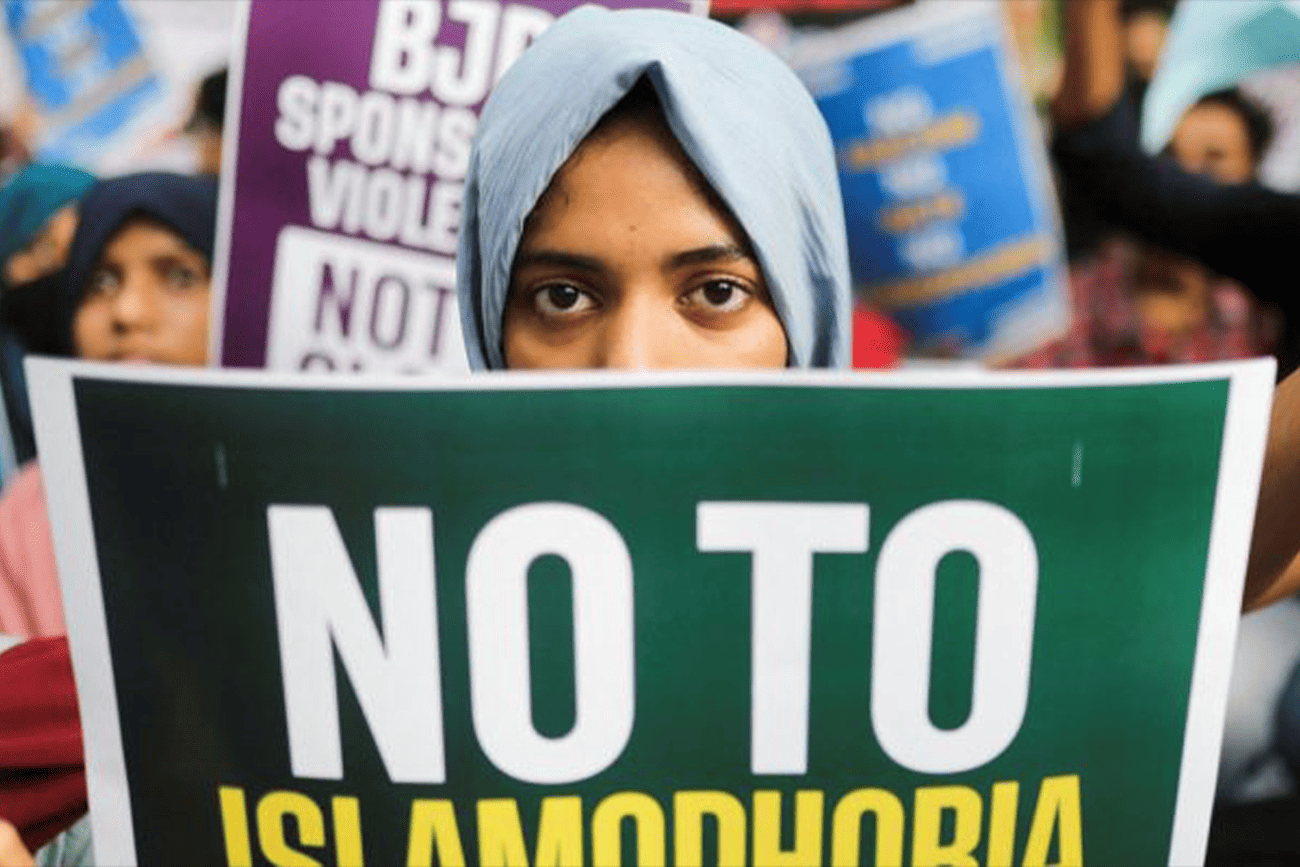

I grew up in Delhi in the 1980s. My school was close to home, and my brothers attended Don Bosco, one of the few boys’ schools available at the time. Education then was largely a matter of proximity and affordability. Religion was not a determining factor. If a family could pay school fees, their children could attend, regardless of whether they were Hindu, Muslim, Christian, or Sikh.
Over the past two decades, this reality has changed profoundly and quietly. What has emerged is not an openly codified system of exclusion, but a deeply entrenched one. A form of segregation has taken root between Hindus and non-Hindus, particularly Muslims, that now shapes access to housing, schooling, and employment. These exclusions are rarely announced, often denied, and yet widely experienced.
Housing as the First Gatekeeper
In many urban centers across India, Muslims increasingly find themselves ghettoized not by law, but by practice. In Hindu-majority neighborhoods, non-Hindus are routinely denied the ability to rent or purchase homes.
Landlords refuse applications. Housing societies reject buyers. Brokers quietly advise families that “this area may not be suitable for you.” As a result, Muslim families are pushed into older localities, peripheral neighborhoods, or overcrowded enclaves with weaker infrastructure and fewer services.
This spatial segregation is not incidental; it is foundational. Where one is allowed to live increasingly determines where one is allowed to learn. Elite private schools often marketed as providing world-class education frequently use residential address requirements as a key admission criterion.
On paper, this appears neutral. In practice, it systematically excludes children from Muslim-dominated neighborhoods. Even families with the financial means to pay high fees are denied access because their address places them on the “wrong” side of the invisible line. Thus, housing discrimination does not merely limit shelter; it becomes a mechanism for educational exclusion.
From Economic Divide to Identity Divide
When I was growing up, the primary social divide was economic: rich versus poor. Educational inequality existed, but it was not explicitly communal. Today, that divide has hardened along religious lines. Identity, not merit or affordability, increasingly determines access to opportunity.
This shift has profound consequences. Children growing up in segregated neighborhoods attend under-resourced schools, travel longer distances, and lack exposure to the networks and preparatory environments that elite institutions provide. These disadvantages compound over time, long before competitive exams or university applications enter the picture.
Attacking Madrasas While Blocking Secular Education
The contradiction at the heart of this system is striking. Hindu fundamentalist groups frequently attack so-called madrasas, portraying them as backward, dangerous, or incompatible with modern education. Demands to shut them down or regulate them harshly are framed as efforts to promote national integration and progress.
At the same time, these same forces work explicitly or implicitly to deny Muslim students access to secular education. Admissions are restricted, residential barriers are enforced, and cultural conformity is increasingly demanded as the price of inclusion. The result is a no-win situation. Religious education is vilified, while pathways into mainstream institutions are narrowed. This dual strategy does not promote integration; it entrenches exclusion.
When Merit Becomes a Threat
Perhaps the most revealing example of how identity now overrides merit is the recent closure of the Shri Mata Vaishno Devi Institute of Medical Excellence (SMVDIME) in Jammu and Kashmir. In its first round of MBBS admissions, conducted through the centralized, merit-based NEET examination, a large majority of admitted students were Muslim. The outcome reflected exam performance and regional demographics.
Yet instead of being upheld as proof of a functioning meritocratic system, the results triggered outrage. Protests erupted. Political pressure mounted. Arguments were made that a shrine-funded institution should not admit so many Muslim students, despite the admissions being legally and academically valid. Soon after, the National Medical Commission revoked the college’s accreditation, citing regulatory issues.
Regardless of the stated reasons, the message was unmistakable: merit is acceptable only when it aligns with majoritarian expectations. When it does not, institutions themselves can be dismantled. This episode sent a chilling signal to students across the country. Academic excellence, it suggested, offers no protection when identity becomes inconvenient.
Exclusion Within the Education Workforce
Discrimination does not end with students. It extends into employment within the education system itself. Qualified teachers who wear the hijab increasingly report being denied positions, irrespective of credentials, experience, or performance. These exclusions are often justified vaguely claims of “institutional culture,” “parent concerns,” or “neutral appearance.”

But the effect is clear: visible religious identity becomes grounds for professional disqualification. Such practices reinforce the message that education is not a neutral space. It is conditional, monitored, and increasingly policed along cultural lines.
Long-Term Consequences
The cumulative effect of these barriers is devastating. Students from elite schools largely drawn from Hindu-majority neighborhoods benefit from superior academic preparation, extracurricular exposure, and institutional guidance. They dominate university entrance exams and gain disproportionate access to international education pathways, including top universities in the United States and elsewhere.
Meanwhile, capable non-Hindu students mostly Muslims , even those whose families invest heavily in education, start from a structurally disadvantaged position. Their schools are weaker, their networks thinner, and their access constrained long before talent can assert itself. This is not about individual failure. It is about systems that quietly but consistently favor one group over others.
Engineering Inequality
What is unfolding is not accidental. By restricting housing, narrowing school admissions, targeting institutions that produce “undesirable” merit outcomes, and excluding educators based on identity, society is engineering inequality. This form of discrimination is rarely acknowledged openly. It operates through silence, normalization, and resignation.
Many non-Hindus have come to accept it as an unchangeable reality, adjusting aspirations downward to fit the space allowed to them. But acceptance does not make injustice benign. Education shapes not only careers, but confidence, belonging, and civic participation.
When access to it is determined by religious identity, the consequences ripple across generations. This is not a failure of individuals to work harder or integrate better. It is a systemic injustice one that is reshaping the future of India by narrowing who is allowed to fully participate in it.
Sabiha Rehman is the founder of Austin-based community organization, ‘Friends of India Texas.’