


Gotcha Activism: A Clipped Video, Selective Outrage, and the Real Costs of Misrepresenting Hindu Voices

- How the Sikh Coalition, Sikh American Legal Defence and Education Fund, and Hindus for Human Rights exacerbate widespread political polarization and division across America.

Indian Americans now constitute the fastest-growing immigrant community in the United States, yet growing visibility has not brought belonging. A recent Carnegie Eurasia Center survey found that fully half of Indian Americans reported facing discrimination based on their skin color, national origin, or religion. That number was recorded before a documented spike in street-level harassment — deportation threats, white nationalist appearances at city council meetings, verbal abuse on and offline — that advocacy groups are still cataloguing. These are serious, documented threats that demand serious, honest responses.
It is in that context that I want to address something that happened recently to the Hindu American Foundation (HAF), which I lead — not to relitigate a dispute between nonprofits but because the tactic used against us carries implications well beyond our community and well beyond this moment.
What Actually Happened
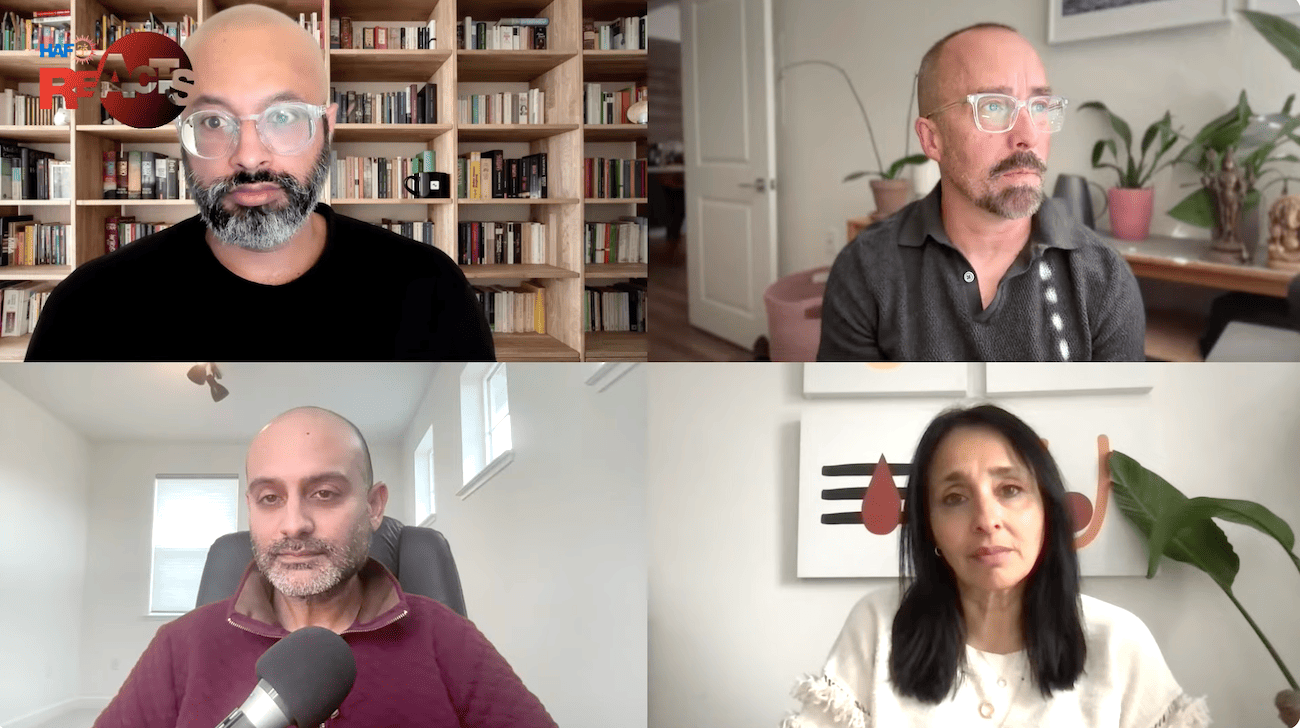
In a recent 30-minute podcast, HAF laid out its position on transnational repression (TNR) in clear and unambiguous terms: no government, including India’s, has any right to surveil, intimidate, or harm individuals on American soil. Any foreign plot targeting activists or dissidents here is an attack on U.S. sovereignty and the rule of law. That is the core message of the podcast. It is stated, clarified, and repeated.
The Sikh Coalition, Sikh American Legal Defence and Education Fund (SALDEF), and Hindus for Human Rights (HfHR) chose not to engage with that message. Instead, they extracted a single jocular, and admittedly off-color, aside from the conversation — roughly 60 seconds out of 30 minutes — where we called out the reckless, incompetent, and unacceptable conduct of Indian government officials described in the DOJ’s press release. They then characterized that statement as HAF “endorsing” TNR against Sikhs and “mocking” Sikh victims of violence. That claim is false. More than false, it directly contradicts what the full recording shows.
None of their conduct is consistent with honest, constructive engagement, but rather the same type of dirty tricks and “gotcha activism” that exacerbate widespread political polarization and division across America.
The request here is simple: play the full podcast. Quote the core message in full. Oppose us by debating us on the issues, not by inciting suspicion, hate, and harassment based on falsehoods.
A Pattern, Not an Incident
This is not the first time these organizations have targeted HAF. Our advocacy opposing the Khalistan movement — a violent separatist effort seeking to partition India along religious lines and which terrorized both Sikhs and Hindus at its peak — has made us a persistent target. In 2016, HAF submitted an edit to describe Dalip Singh Saund as the first Indian origin member of Congress, which was consistent with descriptions of other historic figures along ethnic and not religious lines. The Sikh Coalition and its allies misrepresented the intent of the edit, wrongly claiming it amounted to erasing Sikh history. More recently, the same coalition celebrated a letter addressed to the Trump Administration labeling HAF “foreign agents” and attacked HAF and other groups after we helped defeat California SB 509, a bill that would have applied that label to anyone opposing Khalistani secessionism.
HAF has consistently supported the rights of Sikhs and other communities to represent their perspectives in education and advocacy the same way we do, even while strongly disagreeing with particular groups’ stance on foreign policy or separatist violence. That record is not in dispute; it is simply ignored. And after years of “foreign agent” accusations and the harassment they have generated — documented incidents of threats, doxxing, blacklisting, swatting attempts, temple vandalism, and event disruptions — not a single federal investigation, FARA inquiry, or law enforcement action has been taken against HAF. The accusations have produced no evidence because there is none.
The Legislation That Could Make This Worse
Transnational repression is a documented and serious threat. The foiled 2023 murder-for-hire plot against Gurpatwant Singh Pannun in New York, which led to a guilty plea in February 2026 by the recruited intermediary, Nikhil Gupta was a genuine attack on American sovereignty. HAF has said so, explicitly and on the record.
HAF has consistently supported the rights of Sikhs and other communities to represent their perspectives in education and advocacy the same way we do, even while strongly disagreeing with particular groups’ stance on foreign policy or separatist violence.
We support robust enforcement of existing laws, which include stalking laws, foreign agent registration requirements, and conspiracy charges, against actual state-directed repression. But the actions of organizations like the Sikh Coalition offer one of the clearest and most chilling examples of the risks of the legislation they champion, such as the Transnational Repression Policy Act (H.R. 5829/S, 2025), to Americans of all backgrounds.
Their bill’s definitions in current form are broad by design: covering tactics “deployed by a foreign government, or agents or proxies to intimidate or silence diaspora members.” The difficulty is that “proxy” status isn’t based on direct evidence, but rather inferences based on behavior, affiliation, or community suspicion. In other words, you’re a “foreign agent” if someone, anyone, accuses you of being one. Attending cultural events, holding a political view that “aligns” with a foreign government, opposing a political faction, or photographing a public protest — all of these could be characterized as “advancing” an accused government’s interests. Even the bill’s own text acknowledges “unintended negative impacts on civil liberties” but does nothing to address them.
What happened to HAF illustrates precisely this vulnerability. The organizations now most actively lobbying for TNR are the same ones that have invested considerable resources into calling us “foreign agents” — for years — with zero evidence or corroboration. Now they propose community tip lines that are more likely to devolve into diaspora score settling and diversion of law enforcement resources away from imminent, material threats to community safety, including those originating from a foreign country.


This Is Not Just Our Problem
Every major diaspora community in the United States navigates some version of intra-group faultlines. Whether Chinese, Russian, Iranian, or Cuban American, the risks are the same. When TNR frameworks are applied without strict evidentiary thresholds, political disputes within diaspora communities become securitized, and the communities themselves are treated as suspect by default.
Sikh American communities have legitimate concerns about Indian state-linked activity that deserve serious, evidence-based responses, not counterproductive policy measures. TNR is a complex, murky, and easily politicized issue. Combating it depends on strong evidentiary standards and sophisticated intelligence gathering, not unsubstantiated allegations or securitization of political speech.
Robust due process protections, independent oversight mechanisms, and explicit safeguards against misuse are not obstacles to effective TNR enforcement. They are what makes enforcement legitimate and what ensures that diaspora communities across the political spectrum can continue to participate in American civic life without fear that their advocacy will be treated as espionage.
A Final Word
HAF will continue to do its work — openly, on the record, and rooted in the principles that have guided us for more than two decades. We will also keep making the case that misrepresenting the positions of a civil rights organization, flooding public discourse with unsubstantiated accusations, or undermining American civil liberties are not only ineffective against TNR, but also go against fundamental American values.
As for the Sikh Coalition and their allies, the offer stands, as it always has: good-faith dialogue, full transparency, and principled disagreement on the substance. We don’t expect alignment, nor do we demand it. After all, the more bad faith, unsubstantiated attacks that come our way, the stronger our case against their agenda becomes.
Suhag Shukla is the Executive Director of Hindu American Foundation.