


Educating India: We Built the Largest Education System in Human History. But are the Children Learning?

- In 1960, South Korea and India stood in roughly the same place. Sixty-five years later, the difference is there for anyone to see.
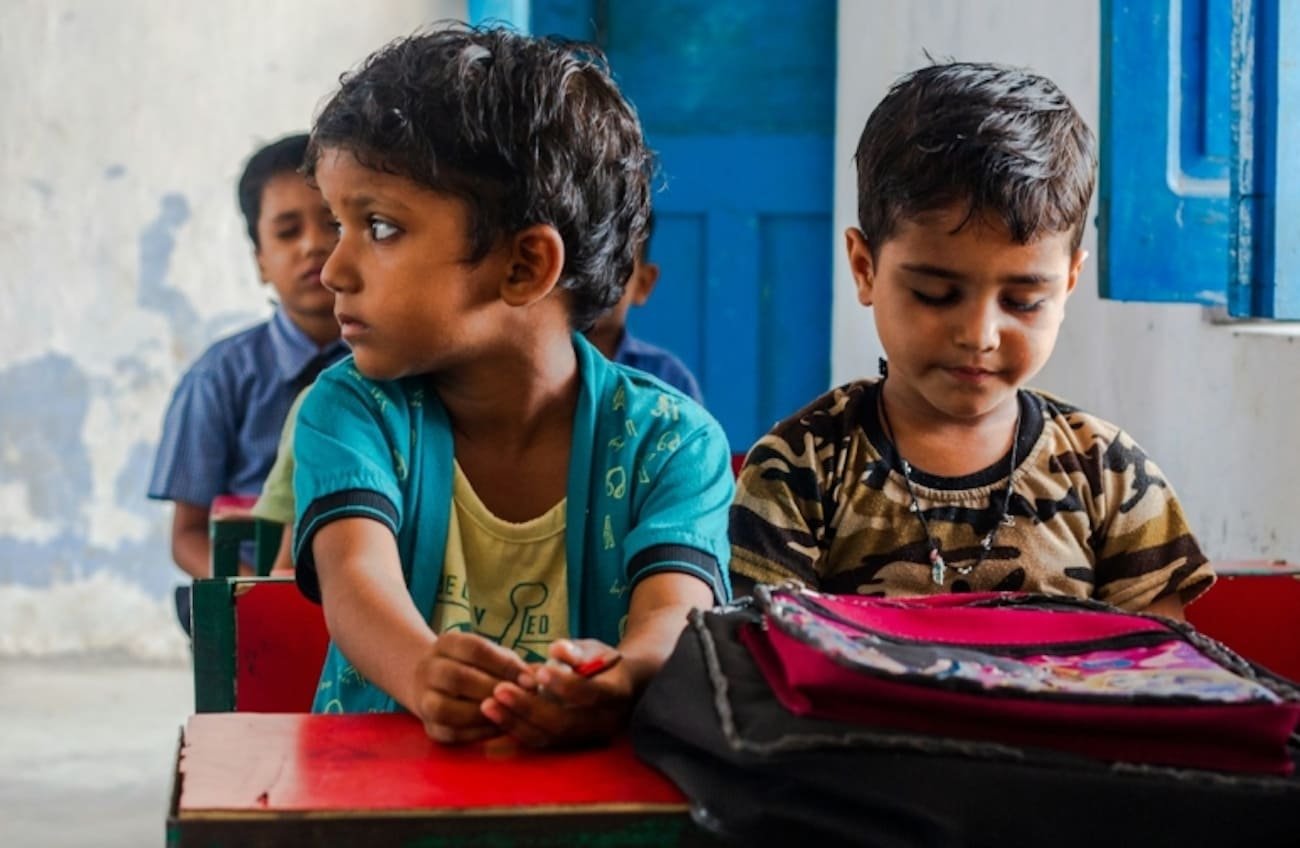

There is a boy sitting in a village in Bihar. He is in the fifth grade. He wears his uniform. He shows up every day. His attendance is perfect. His name is in the register. On paper, he is educated. But he cannot read.
When you hand him a second-grade primer, he recognizes the letters — but cannot assemble them into words. He sees the words — but meaning does not come. His eyes move across the lines the way water moves across stone — without ever soaking in.
From the outside, the classroom looks perfectly ordinary. The teacher is teaching. The children are writing. Words fill the blackboard. The same words fill the notebooks. Everything is happening. Only learning is not. That is my first question — and my deepest one.
Over seven decades, India accomplished something the world had never quite seen before. We built the largest education system in human history — millions of schools, hundreds of millions of children, millions of teachers.
That is not a small thing. It deserves to be said plainly and without apology. But inside this vast edifice, a silence was growing — slowly, quietly, like damp inside a wall. We had made a dangerous assumption: that having a school was the same as having an education.
We counted what was countable — children enrolled, schools built, books distributed. We measured everything that yielded to measurement. But the one question that mattered most — is the child actually learning? — that question, we did not ask. And what goes unasked goes undone.
That was our great failure. Not of intent. Of sight.
In 1960, South Korea and India stood in roughly the same place. Both poor. Both newly free. Both facing the same ancient question that every young nation must answer: what do we do with our people? One country decided its people were its greatest resource and invested in them accordingly. The other built structures — but never quite prepared the soil for learning to take root.
Sixty-five years later, the difference is there for anyone to see. But I raise this comparison not to shame anyone. I raise it as a mirror — to show what becomes possible when a country treats its population not as a burden to be managed but as a force to be unleashed.
An Open Window
India today stands at a threshold that history rarely offers twice. Every year, more than fifteen million young people enter working age. That is a demographic dividend of staggering proportions — an open window. But windows do not stay open forever. And numbers alone are never strength. Strength is what numbers become when they are matched with capability — when every young person carries within them the genuine ability to think, to learn, to grow. That is precisely where we remain weak.
This is nobody’s fault in the way that individual failures are faults. It is not the teacher’s failure, nor the administrator’s, nor the politician’s. It is something more stubborn and more interesting than that — it is institutional nature. Every large system does what is easiest for it to do. And what is difficult — what cannot be seen, what resists measurement — gradually drifts out of its priorities like a boat cut loose from its mooring.
In education, this is exactly what happened. Building a school is visible. Raising enrollment is visible. Distributing textbooks is visible. A politician can stand before a crowd and say: we built ten thousand schools, we enrolled thirty million children. It sounds magnificent. It wins elections.
But he cannot say — children are learning better — because learning is invisible. Learning is hard to measure. And changing learning is harder still. So politics stops where visibility runs out, and learning gets left behind. This is not corruption. It is the logic of systems. And it is precisely what makes those systems so difficult to change.
Step inside that classroom now. The teacher stands alone. Forty children sit before him at varying distances from understanding — some quick, some slow, some arriving from homes full of books and conversation, others the first in their family to hold a pencil. But the system moves them all at the same speed. The teacher teaches the lesson — the syllabus demands it. Those who follow, follow. Those who don’t — fall quietly behind.
Tomorrow there is a new lesson. The day after, another. The child falls further back but keeps getting passed along, grade after grade, year after year. And slowly, without anyone noticing the precise moment it happens, the child arrives at a conclusion about himself: learning is not for him.
This is not defeat. It is exhaustion. And when a child is exhausted, learning stops. That is the moment education breaks — silently, invisibly, in the middle of what looks like an ordinary school day. It is easy to blame the teacher, but he is as much a prisoner of the system as the child. He is expected to teach, to explain, to manage — but he is given almost none of what he needs. No time. No support. No freedom to respond to what he actually sees in front of him. On top of that, he is buried in administrative paperwork.
So he does what the system rewards: he completes the syllabus. Not learning. The syllabus. Here lies the great paradox at the heart of this country. The world’s largest democracy. The world’s largest education system. And yet a child in fifth grade cannot read a second-grade book. This is not an accident. It is the precise result of a system that consistently placed access above quality, process above outcome, and numbers above capability.
Until that ordering changes, nothing else will. But there is something even deeper here that must be said. This is not merely an education problem. It is a question of justice. When a child spends five years walking to school and comes home having learned nothing, what have we done to him? We gave him time — but not capability. We gave him certificates — but not confidence. We took his childhood — and gave him nothing in return. That is not just an economic loss. It is a moral failure. And we ought to call it that.
So what is the answer? This is where the most common and most costly mistake gets made. We seize on a single solution. Someone says: bring in technology. Someone else says: reform the teachers. A third voice insists: fix the policy. There is truth in each of these. But none of them is the whole truth. Education does not change because of one thing.
Tomorrow there is a new lesson. The day after, another. The child falls further back but keeps getting passed along, grade after grade, year after year. And slowly, the child arrives at a conclusion about himself: learning is not for him.
A Full Plate
Think of a meal. If you put only one item on a plate — only rice, or only lentils — a person does not get nourished. Nourishment requires a full plate. Dal, roti, sabzi, all of it together. Learning is no different. For a child to learn, everything must be working at once — a teacher who understands where the child is and meets him there; materials pitched at the right level; sufficient time to actually absorb what is being taught; regular, honest measurement of whether learning is happening; support for those who are falling behind; and a community that watches, asks questions, and holds the system to account.
Remove any one of these and the plate is incomplete. An incomplete plate does not nourish. This is what I call the Full Plate — not a metaphor, but a precise description of how learning actually works. When all the elements are present and pulling in the same direction, learning happens. When even one link breaks, the whole system weakens. That is why half-measures produce half-results. That is why so many well-intentioned reforms leave the classroom exactly as they found it.
We know this is achievable. The world has shown us. South Korea, Singapore, Taiwan — none of them were born prosperous. They were where we are. But each of them made a decision and held to it. They treated the teacher as the most important person in the system — training him, paying him, honoring him. They established one non-negotiable principle in every classroom: the child will learn. And if the child does not learn, the system will change — not the child.
That small shift in language — from “the child is weak” to “the system has failed” — is the precise point where two countries’ stories diverge. They were patient. It took a generation. But the direction never wavered. And gradually, entirely, the economy was transformed. It was not a miracle. It was a decision, sustained.
If we want genuine change, ten decisions must be made and kept.
First: foundations before everything else. Every child must be able to read and count before leaving the fifth grade — not as a goal, but as a floor, below which we will not allow anyone to fall.
Second: teach to the child’s level, not the grade level — start where the child actually is, not where the calendar says he should be.
Third: measure regularly and honestly — not once a year in a high-stakes examination, but continuously, simply, usefully, so the teacher knows who needs what.
Fourth: support the teacher — not just accountability, but time, materials, and genuine collegial help.
Fifth: simplify the curriculum — teach less, but teach it deeply; breadth is the enemy of understanding.


Sixth: use technology as a tool, never as a destination — where it clarifies learning, use it; where it creates confusion or becomes a substitute for thinking, set it aside.
Seventh: bring the community in — when parents ask what their child is learning, classrooms change; when communities watch, systems become answerable.
Eighth: give states the freedom to lead — India is one country but not one problem, and uniform solutions applied to diverse realities are almost always wrong.
Ninth: execution over policy — the graveyard of Indian reform is full of beautiful documents; what is scarce is the unglamorous, persistent work of making things happen on the ground.
Tenth: stay the course — this is not a sprint, not a scheme with a launch date and a closing ceremony; it is a commitment that must outlast election cycles, budget revisions, and the short attention spans of institutions.
There is one more uncomfortable truth. Systems resist change not because they are evil but because they are systems. Every institution has a deep preference for its own continuity. Change threatens that continuity. So institutions bend change, dilute it, absorb it, route it around the parts that actually matter — not through conspiracy but through the quiet, collective instinct of self-preservation.
When a state government genuinely commits to measuring learning outcomes, the first results are almost always alarming. They reveal, plainly and publicly, that the system has not been working. That is an extraordinarily difficult thing for any institution to sit with. So the data gets softened. The findings get reframed. The alarming becomes the acceptable. And reform dissolves before it begins.
This is why meaningful change requires three qualities that rarely travel together: clarity about the true nature of the problem, the courage to accept findings that are politically inconvenient, and the stamina to sustain effort long after the initial enthusiasm has faded. Where all three are present, schools change. Where even one is absent, the system absorbs the reform and returns to exactly what it was.
Diminishing Leverage
India’s window is open. It will not remain open. The demographic composition that makes this moment so extraordinary will shift within decades, and the leverage it currently offers will diminish. The world India’s children are entering is not the world of fields and factories that absorbed generations before them. It is a world in which the ability to think, to adapt, to learn continuously is the only durable form of security.
Old skills are disappearing faster than new ones can be named. In this world, a weak education system is not merely an inconvenience — it is a sentence. It condemns a nation’s young people to the margins of an economy that has no patience for those who cannot keep up. India stands at the midpoint: the numbers are extraordinary, the capability is not yet there. That gap is what this I am talking about.
Strip away every layer of complexity and you come to a single image. A child is sitting in a classroom. Can he read? If he cannot, then everything else — the schools, the schemes, the budgets, the speeches, the five-year plans — is theater performed in an empty house. If he can, then everything becomes possible: the economy, the equality, the dignity that a country owes its people.
Every day that child goes home without having learned is a day that cannot be recovered. And lost days, accumulated across a generation, become a lost generation. The Full Plate means exactly what it says — not half, not broken, not almost. A teacher who is supported. A child who is met where he stands. A system pointed toward learning rather than toward the appearance of learning. A community that watches and asks and refuses to be satisfied with less. And leaders with the particular kind of courage it takes to look at an uncomfortable truth and not look away.
When all of that is in place, that boy in that village in Bihar will read — slowly perhaps, but certainly. And when he reads, the millions like him will read. And when they read, India will change — not in its statistics, but in its foundations, from the inside, from the roots. That is the promise. That is the argument. And that, if we are honest with ourselves about how much time we have left, is the only choice that remains.
Top image, courtesy of www.borgenproject.org.
Satish Jha co-founded India’s national Hindi daily Jansatta for the Indian Express Group and was Editor of the national newsweekly Dinamaan of The Times of India Group. He has held CXO roles in Fortune 100 companies in Switzerland and the United States and has been an early-stage investor in around 50 U.S. startups. He led One Laptop per Child (OLPC) in India and currently serves on the board of the Vidyabharati Foundation of America, which supports over 14,000 schools educating 3.5 million students across India. He also chairs Ashraya, which supports about 27,000 students through its One Tablet per Child initiative.